What's inside
As an Amazon Associate I earn from qualifying purchases. This post may contain affiliate links at no extra cost to you.
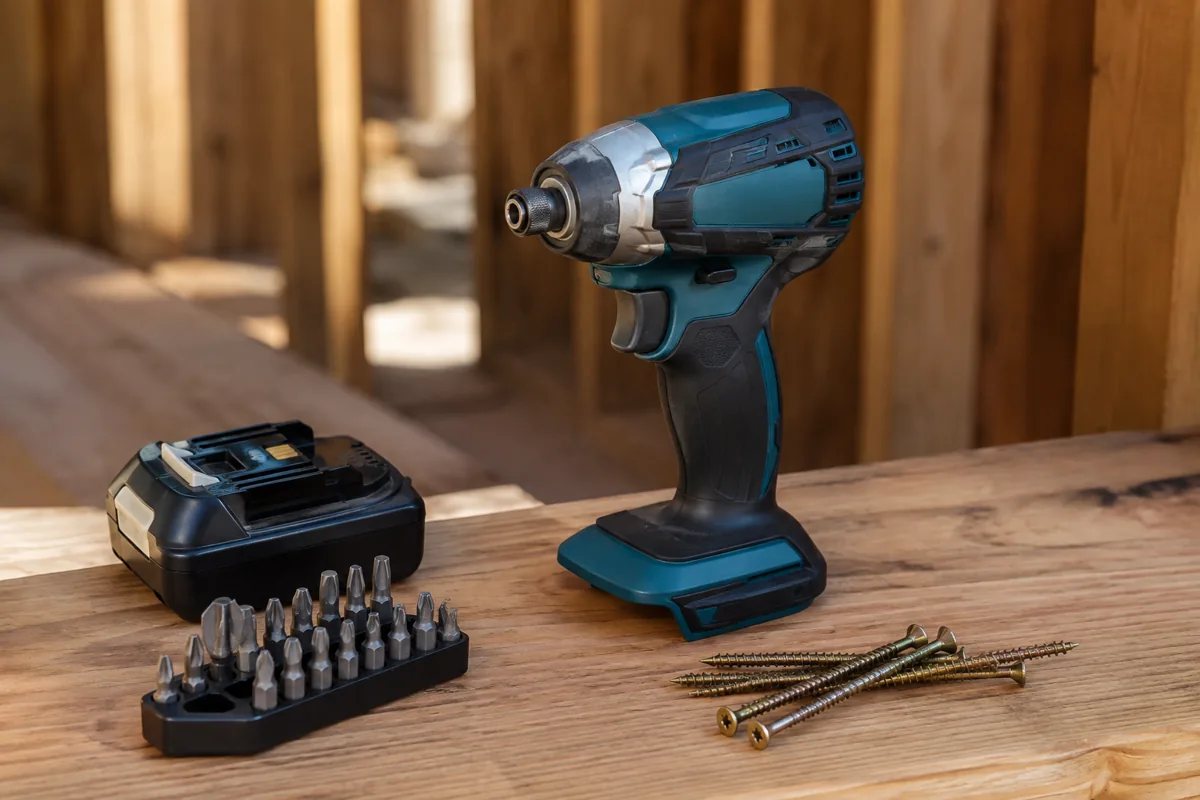
Decking and exterior construction punish cordless impact drivers in ways indoor projects do not. Fasteners are longer, materials are denser, weather is harder on batteries, and a tool may drive hundreds of screws in a day. The best choice is not simply the driver with the highest torque. You need a combination of battery capacity, speed control, bit retention, ergonomics, and an ecosystem that can also power saws, lights, nailers, and other site tools.
As an Amazon Associate we earn from qualifying purchases at no extra cost to you.


What matters for decking
A modern brushless impact driver with a 1/4-inch hex chuck is suitable for most deck screws, structural screws, ledger fasteners, and exterior trim work. For typical 3-inch deck screws, a compact 18V or 20V-class driver has ample power. Longer structural screws and repeated driving into treated lumber expose the differences between tools.
Look for at least three speed or power settings. Full power is useful for structural screws, but it is too aggressive for small trim screws and can strip heads or bury fasteners below the surface. A low setting gives better control, while a medium setting is a practical default for ordinary decking.
Torque claims are poor buying criteria because manufacturers measure them differently. More useful indicators are a brushless motor, a metal gear housing, a responsive variable-speed trigger, and a well-designed electronic brake. The brake should stop the bit quickly when you release the trigger, reducing overdriving and making repetitive work less tiring.
For general deck construction, a brushless cordless impact driver kit is the sensible starting point. A kit with two batteries and a charger costs more initially but avoids stopping halfway through a job. If you already own batteries in a compatible platform, a bare tool is usually the better value.
Voltage, battery size, and runtime
Most tools sold as 18V and 20V Max belong to the same practical class; the naming reflects different ways of stating battery voltage. Do not choose between them based on the label alone. The battery platform, tool selection, warranty, and local availability matter more.
A 2.0Ah or 2.5Ah battery makes an impact driver noticeably lighter. It is a good choice for overhead work, stair stringers, and occasional repairs. A 4.0Ah or 5.0Ah pack lasts longer and usually maintains power better under heavy load, but it adds weight at the handle. For a full day of decking, two medium or large packs are generally more useful than one oversized battery.
Cold weather reduces available runtime, and hot batteries should not be placed directly on a charger immediately after hard use. Let them cool first. Avoid leaving lithium-ion packs in a hot vehicle or exposed to rain. The tool may be weather resistant, but that does not make the battery or charger waterproof.
| Use case | Best battery approach | Main trade-off |
|---|---|---|
| Occasional repairs and trim | 2.0–2.5Ah, one or two packs | Lightweight, but shorter runtime |
| Typical deck installation | 4.0–5.0Ah, two packs | Good runtime without excessive bulk |
| Structural framing and production work | High-output 5.0Ah or larger packs | Best sustained power, more weight and cost |
| Mixed tool collection | One established platform with multiple battery sizes | Less freedom to shop across brands |
The best cordless platform types
For homeowners and serious DIY users, a midrange brushless platform is usually enough. These tools drive deck screws quickly and cost less than premium systems. The cheaper option is fine when you are building one small deck, driving fewer than a few hundred fasteners, or already own compatible batteries.
A premium professional platform becomes worthwhile when the driver will be used weekly, shared by multiple workers, or paired with demanding tools such as circular saws, reciprocating saws, grinders, and cordless nailers. Better platforms often have stronger battery electronics, more durable chucks, brighter work lights, and a wider range of compact tools. Those advantages are real, but they do not make a deck screw hold better.
High-voltage systems can provide more sustained power for large structural fasteners, but they are usually unnecessary for ordinary decking. If you regularly install posts, timber framing, or long ledger screws, consider a high-torque cordless impact wrench instead of forcing an impact driver beyond its intended job. An impact wrench uses a different square-drive socket system and is better suited to large hex-head fasteners.
Ergonomics and controls
Deck work involves awkward angles and long periods of repetitive driving. A short head length helps between joists and around railing hardware. A belt hook is useful when climbing ladders, but it should be reversible and securely mounted. A loose hook can catch on framing or fall off the tool.
Check the mode selector with one hand. Some drivers use a button behind the battery, while others use a selector near the trigger. Either design works if it is easy to see and unlikely to change accidentally. A bright work light around the chuck is more useful than a single light at the base because the bit and screw head cast fewer shadows.
Use impact-rated 1/4-inch hex bits. Standard drill bits and cheap screwdriver bits can twist, chip, or snap under impact pulses. Keep several spare bits on site, especially when working with coated exterior screws. A worn bit causes cam-out, which damages the screw head and can make a correctly driven fastener impossible to remove.
How to avoid common failures
Predrill near board ends and through dense hardwood decking. An impact driver can drive a screw without a pilot hole, but it can still split the board or force the screw off line. Use a countersink or depth stop when appearance matters; relying on trigger timing alone produces inconsistent screw heads.
Do not use an impact driver to tighten every fastener at full speed. Overdriving can crush composite decking, strip threads in metal brackets, or pull a screw head through soft treated lumber. Start slowly, let the screw bite, then increase speed only until the head reaches the intended depth.
Inspect the battery contacts if the tool cuts out under load. Dirt, a poorly seated pack, excessive heat, or a failing battery can look like a motor problem. If the driver smells hot, loses power repeatedly, or develops abnormal gear noise, stop using it. Continued operation can damage the motor, electronics, or battery.
A practical buying recommendation
For most exterior construction, buy a brushless midrange kit with two 4.0Ah or 5.0Ah batteries, a fast charger, three power settings, and a compact head. If low weight matters more than runtime, choose a compact brushless impact driver bare tool and add a small battery for trim work.
Before committing, compare the platform’s charger speed, replacement battery prices, and availability of saws and outdoor tools. A slightly cheaper driver is not a bargain if its batteries cost more than the tool or the platform lacks the cordless hand tools you will want next. For a one-time project, buy the least expensive reputable brushless kit that meets the workload. For ongoing construction, choose the battery ecosystem first and the driver second.
Related guides
- Longest Lasting Lawn Mower Battery: AGM vs Lithium vs Flooded Lifespan and Cost per Season
- Duralast Gold Lawn Mower Battery Review: U1 Fit, CCA and When to Pay for AGM
- Greenworks Pro 80V 21-Inch Mower Review: Runtime Math, Push vs Self-Propelled and Yard Fit
- Bosch High Pressure Washer Gun Replacement: Fittings, Adapters and What Fits Your Model