What's inside
As an Amazon Associate I earn from qualifying purchases. This post may contain affiliate links at no extra cost to you.
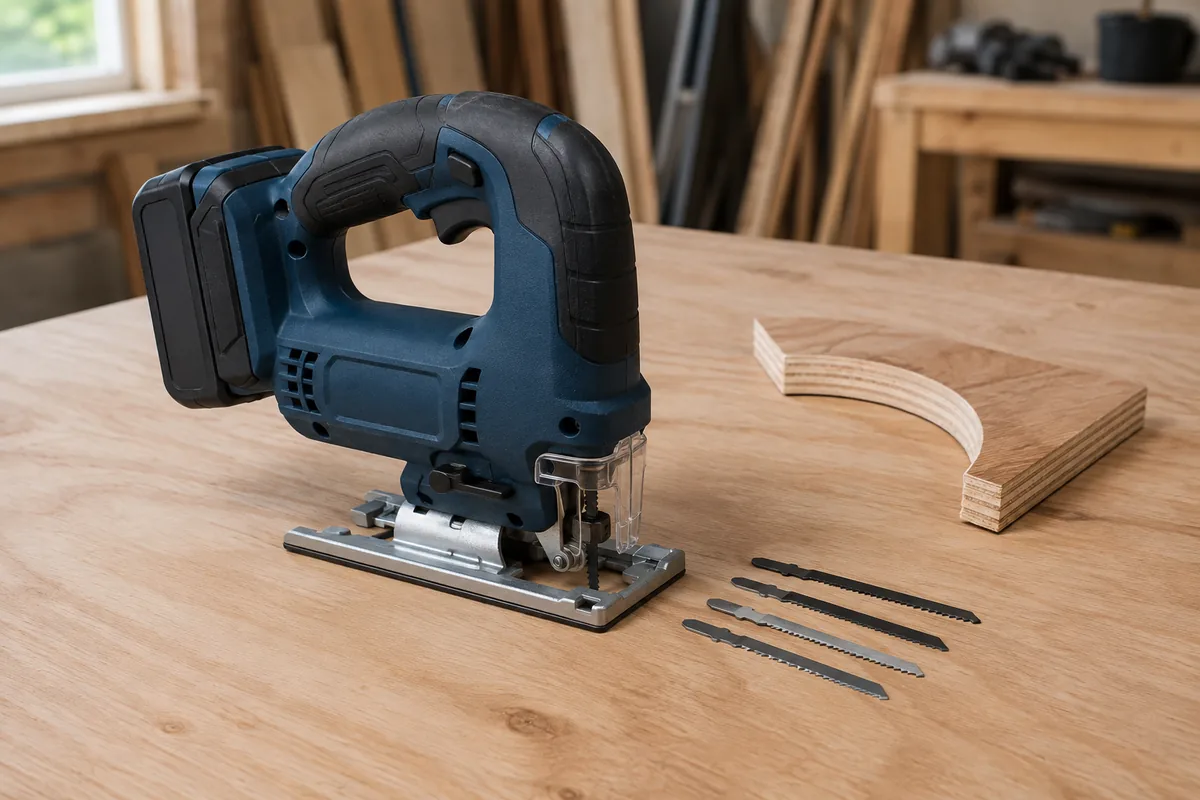
A cordless jigsaw is a practical tool for cutting sink openings in laminate, butcher block, and other wood-based countertops. It is less suitable for quartz, granite, porcelain, or ceramic slabs, where a wet-cut diamond grinder or professional stone-cutting equipment is the safer choice. For ordinary countertop work, the best saw is not necessarily the fastest one. Control, clean cutting, battery compatibility, and the ability to make a plunge cut without damaging the finished surface matter more.
As an Amazon Associate we earn from qualifying purchases at no extra cost to you.



What to look for in a cordless jigsaw
Choose a jigsaw with a variable-speed trigger, orbital-action adjustment, a tool-free blade clamp, and a reasonably rigid base plate. A 3/4-inch stroke is common and works well for countertop material. Orbital action speeds up cuts in wood, but it makes the cut more aggressive and can increase chipping. The option to turn orbital action off is important when cutting laminate or when starting a plunge cut.
A brushless motor is useful but not mandatory. It normally provides better runtime and holds speed more effectively in thick material. For one sink opening, a brushed saw is perfectly adequate if you already own compatible batteries. Buying into a new battery platform solely for this job rarely makes financial sense.
For most users, a compact cordless brushless jigsaw is the best general choice. A 4.0Ah or 5.0Ah battery gives a useful balance of runtime and weight. A small 2.0Ah pack makes the saw lighter for overhead work, but it may run down quickly in thick hardwood or when the blade is dull.
| Feature | Why it matters for a sink cutout | Practical target |
|---|---|---|
| Battery | Determines runtime, balance, and whether the saw is already part of your tool collection | 4.0Ah to 5.0Ah for repeated cuts; 2.0Ah for a single light job |
| Speed control | Reduces heat and chipping in laminate | Variable trigger or several electronic speed settings |
| Orbital adjustment | Fast cutting versus smoother edges | At least three settings plus off |
| Base plate | Keeps the blade square and protects the countertop surface | Rigid steel or aluminum plate with a smooth underside |
| Blade visibility | Helps follow the marked opening without wandering | Open front with a bright work light |
The best battery platform is usually the one you own
Jigsaws are moderate battery users. A single sink opening in a laminate countertop may consume only a small portion of a healthy 4.0Ah pack. Thick butcher block, repeated test cuts, or a long drainboard opening will use more. If you already have batteries and a charger from a major cordless platform, buying a tool-only jigsaw is generally the cheaper and more sensible option.
Platform selection matters more if this is your first cordless tool. Look beyond the jigsaw. A battery system that also offers drills, impact drivers, sanders, lights, and compact saws will be more useful than a lower-priced kit tied to a limited range of tools. Compare the cost of a kit with battery and charger against a bare tool. The cheapest jigsaw can become expensive if its batteries are proprietary or difficult to replace.
For occasional DIY use, a cordless jigsaw kit with battery and charger is fine, especially when it costs little more than the bare tool. For a contractor or frequent remodeler, stay within the battery ecosystem already used for your drill and impact driver. The convenience of shared chargers often outweighs small differences in cutting performance.
Use the right blade for the countertop
Blade choice has more effect on the result than a small difference in motor power. For laminate over particleboard or plywood, use a fine-tooth laminate or down-cutting jigsaw blade. A down-cut blade puts the cleaner edge on the top face, but it can make the saw harder to steer and may leave a rougher underside. A standard fine-tooth wood blade is easier to control and works well when the cut edge will be hidden by the sink rim.
For butcher block and solid wood, use a sharp blade with roughly 8 to 12 teeth per inch. A longer blade is not automatically better: a 3-inch cutting length is usually enough for a 1-1/2-inch countertop. For plastic solid-surface material, use a fine-tooth blade and reduce the speed if melting or smeared plastic appears.
Do not force a dull blade. Excessive pressure bends the blade, causing the cut to drift below the template line. It also heats the material and can burn wood or melt plastic. Keep at least two spare blades available. A blade that starts pulling sideways, leaves burn marks, or requires noticeably more pressure is finished.
How to make the cut without ruining the counter
Confirm the sink manufacturer’s template and minimum cabinet clearance before marking anything. The template is not always centered on the cabinet, and an undermount sink may require a much tighter, more accurately positioned opening than a drop-in sink. Mark the opening on painter’s tape so the pencil line remains visible and the laminate is less likely to chip.
Drill a 3/8-inch or 1/2-inch starter hole just inside each corner. The hole must be large enough for the blade to turn without contacting the finished edge. For a rounded sink corner, use a hole close to the specified corner radius rather than making a sharp corner and hoping the sink covers it.
Support the waste section from below or tape it securely to the countertop. Near the end of a cut, the waste can drop and tear the laminate, or pinch the blade. Set orbital action to off or low, start at a moderate speed, and let the saw reach full speed before entering the material. Keep the base flat. If the saw rocks, stop and add support rather than trying to correct the angle while cutting.
A fine-tooth jigsaw blade set for laminate is inexpensive insurance. Make the cut about 1/16 inch inside the line if you plan to finish the edge with a router or file. For a drop-in sink, the rim usually hides minor variation, but do not rely on it to cover an opening that is too large. Test-fit the sink before applying sealant.
When to choose another tool
A jigsaw is the wrong primary tool for engineered stone, granite, quartz, and most porcelain countertops. Dust, heat, blade wear, and the risk of cracking make these materials a different job. If the counter is already installed, the plumbing and cabinets also make dust control harder. For stone, hire a fabricator or use equipment designed for wet diamond cutting.
For a perfectly straight, exposed cut in thick wood, a track saw followed by a router can produce a cleaner edge. For one concealed sink opening in laminate or wood, however, a cordless jigsaw is usually faster, cheaper, and easier to control. The best purchase is the compatible tool with a stable base, good blades, and a battery you can use on other cordless hand tools.
Related guides
- Longest Lasting Lawn Mower Battery: AGM vs Lithium vs Flooded Lifespan and Cost per Season
- Duralast Gold Lawn Mower Battery Review: U1 Fit, CCA and When to Pay for AGM
- Greenworks Pro 80V 21-Inch Mower Review: Runtime Math, Push vs Self-Propelled and Yard Fit
- Bosch High Pressure Washer Gun Replacement: Fittings, Adapters and What Fits Your Model