What's inside
As an Amazon Associate I earn from qualifying purchases. This post may contain affiliate links at no extra cost to you.
A cordless ratchet earns its space when a fastener is awkward to reach but still needs a socket-driven tool. Under an intake manifold, behind a radiator fan, or beside a bracket, its slim head can save repeated wrist turns. It is not a substitute for a breaker bar or impact wrench: most cordless ratchets are meant to spin loose fasteners, not break stubborn ones free.
As an Amazon Associate we earn from qualifying purchases at no extra cost to you.


What matters in an engine bay
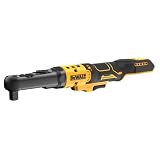
Head size and neck length matter more than headline torque. A compact head is easier to position between hoses and brackets, while an extended-neck tool can reach recessed fasteners without an extension. The longer the neck, though, the more likely it is to flex or collide with nearby parts. If possible, compare the tool’s head dimensions and overall length with the space you actually need to reach.
Most cordless ratchets run on 12-volt batteries, which are a practical fit for under-hood work: they keep the tool relatively light and usually provide enough speed for nuts and bolts already loosened by hand. Check the bare-tool weight and battery size. A small battery makes overhead work less tiring; a larger one can improve runtime but may make the handle bulky in a cramped bay.
Drive size is another real trade-off. A 1/4-inch drive suits small fasteners and tight access, but it limits socket size and leverage. A 3/8-inch drive is more versatile for general automotive work, though its head may be larger. Choose based on the fasteners you service most, not the idea that one size does everything.
Quick comparison
| Type | Best for | Main trade-off |
|---|---|---|
| Compact 1/4-inch ratchet | Small fasteners and narrow gaps | Less useful with larger sockets |
| 3/8-inch ratchet | General engine-bay and chassis work | Often bulkier around obstructions |
| Extended-neck ratchet | Recessed bolts behind components | Longer tool can be harder to position |
| High-torque ratchet | Frequent shop use and faster spinning | More weight, cost, and risk of overtightening |
Choose by access and battery platform
For occasional repairs, a compact 3/8-inch cordless ratchet is a sensible starting point if it fits your existing 12-volt battery system. Buying a bare tool can save money when you already own compatible batteries and a charger. Check compatibility carefully: batteries within one brand may not fit every voltage platform, and a tool-only listing does not include a battery or charger.
If you already own small-drive sockets and regularly work around wiring or thin brackets, a 1/4-inch model may be the better first tool. For a bolt hidden several inches behind a component, consider an extended-neck design instead of relying on a universal joint and a stack of extensions. That arrangement can work, but it may wobble, bind, or take up more room than expected.
Compare 12-volt 3/8-inch cordless ratchets by head profile, bare-tool weight, and the battery platform you already use. If access is the problem, search extended-neck options separately rather than assuming a longer tool is automatically slimmer: inspect the head and neck dimensions.
A cheaper ratchet is fine for occasional work, especially if it includes a battery and charger you need. Pay more only for a useful difference—such as a smaller head, better reach, a stronger warranty, or a platform shared with tools you plan to buy. An expensive tool does not make a corroded fastener safe to spin off under power.
Use it without damaging fasteners
Use a hand ratchet or breaker bar to crack the fastener loose first. Then use the cordless ratchet to spin it out. When installing, run the fastener down gently and finish with a torque wrench to the vehicle maker’s specification. A ratchet’s trigger may be variable, but it is not a reliable torque limiter. Continuing to pull after a bolt seats can strip threads, snap a small fastener, or damage a plastic housing.
Keep fingers, cables, and hoses clear of the rotating head. A ratchet can bind suddenly if a socket catches on a bracket or the fastener tightens against a shoulder. Hold the tool so your hand will not hit an edge if it stalls, and avoid using it where the battery or body forces you to twist your wrist against a sharp component. If the socket is tilted or the head cannot sit square, reposition rather than forcing it.
Do not use a cordless ratchet as an impact tool unless the manufacturer specifically rates it for that use. Many ratchets have a manual drive feature, but that does not make them suitable for loosening seized fasteners with a long handle. Excessive force can damage the ratchet mechanism. Penetrating oil, careful hand leverage, or an appropriately rated impact tool is a better choice when a fastener will not move.
A practical buying checklist
Before ordering, confirm drive size, battery voltage, whether the listing includes a battery and charger, and whether the tool’s head will clear the tightest spot you work in. Look for a locking or easily controlled trigger, a visible direction selector, and a work light if you often work beneath the intake or dash. A low-profile head can matter more than a high advertised speed.
Compare compact 1/4-inch cordless ratchets if most of your work involves smaller fasteners, or look at extended-neck cordless ratchets for recessed access. Match the tool to the space and fasteners, then use hand tools for breakaway torque and final tightening. That division of labor is what makes a cordless ratchet useful in an engine bay without asking it to do a job it was not built for.
Related guides
- Longest Lasting Lawn Mower Battery: AGM vs Lithium vs Flooded Lifespan and Cost per Season
- Duralast Gold Lawn Mower Battery Review: U1 Fit, CCA and When to Pay for AGM
- Greenworks Pro 80V 21-Inch Mower Review: Runtime Math, Push vs Self-Propelled and Yard Fit
- Bosch High Pressure Washer Gun Replacement: Fittings, Adapters and What Fits Your Model