What's inside
As an Amazon Associate I earn from qualifying purchases. This post may contain affiliate links at no extra cost to you.
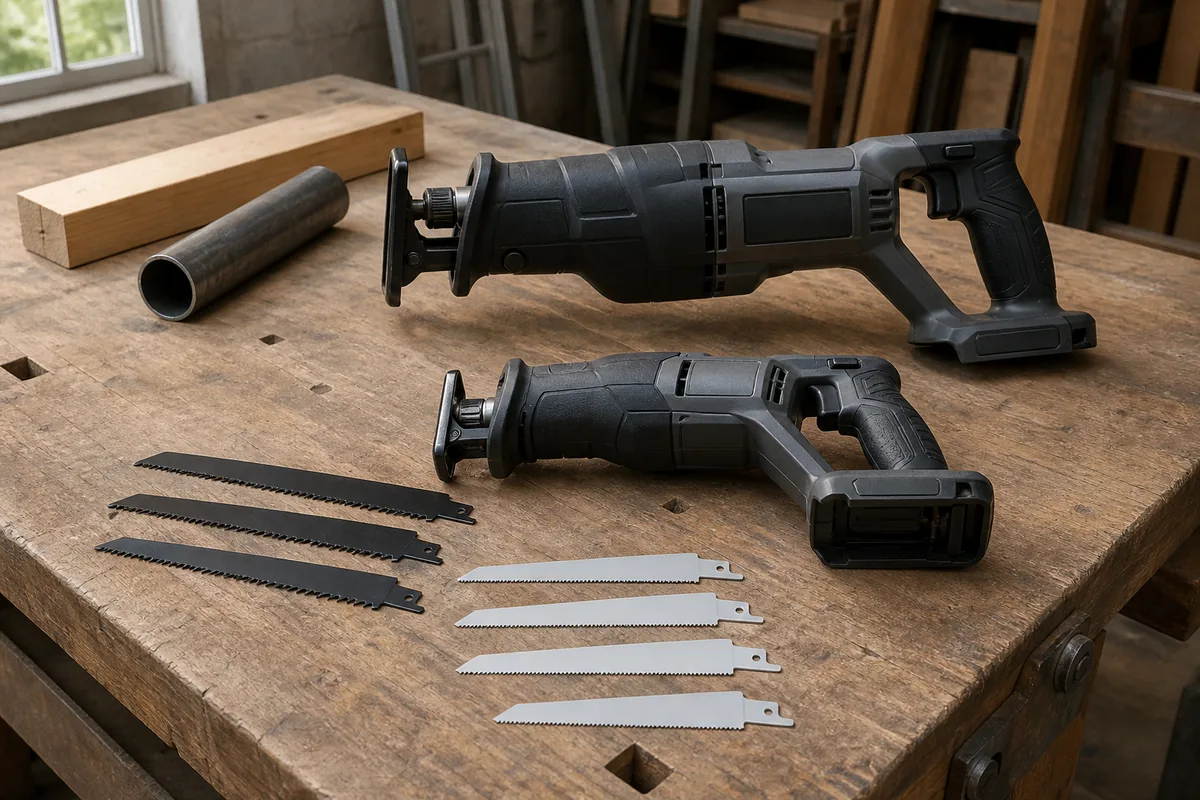
A cordless reciprocating saw is one of the most useful demolition tools for plumbers and mechanical contractors. It cuts cast iron, copper, steel pipe, PVC, threaded rod, ductwork, wood blocking, and fasteners without dragging a cord through a work area. The right saw is less about maximum speed than control, vibration, battery capacity, and whether your existing batteries can keep it working all day.
For most trade work, a full-size saw with a brushless motor, variable-speed trigger, orbital-action control, and a 1-1/8-inch stroke is the best starting point. Compact saws are easier to use between studs and under sinks, but they give up cutting speed and often have shorter strokes. Before buying, check the battery platform you already own. A bare tool is usually much cheaper than starting a second battery ecosystem.
As an Amazon Associate we earn from qualifying purchases at no extra cost to you.


What matters for plumbing and mechanical demolition
Stroke length and speed: A longer stroke removes material faster, especially in wood and plastic pipe. Around 1-1/8 inches is common on full-size professional saws. A shorter stroke can feel smoother and is easier to control in tight spaces. Variable speed matters when starting a cut in stainless steel, thin-wall conduit, or finished surfaces. Full trigger speed can overheat a blade and make it wander.
Orbital action: Orbital action moves the blade in a slight elliptical path. It speeds up cuts in wood, plywood, and demolition lumber, but it is usually the wrong setting for metal pipe. Turn it off for steel, stainless, cast iron, and flush cutting. If the saw has no orbital switch, it can still cut metal, but it is less versatile for mixed demolition.
Vibration control: Anti-vibration features are not just comfort items. Long cuts through cast iron or structural steel can leave your hands numb and make it harder to keep the blade square. Look for a counterbalanced mechanism, a rubberized grip, and a shoe that can pivot against the work. No cordless saw eliminates vibration; a sharper blade and a stable stance often make as much difference as the saw itself.
Battery size: A compact 2.0Ah or 3.0Ah battery keeps the saw light for overhead work and short cuts. A 5.0Ah or larger pack is the practical choice for repeated pipe and metal cutting. High-output batteries can improve sustained performance on some platforms, but they add weight. For demolition, two medium or large packs are usually more useful than one oversized pack.
Best saw types for the job
| Saw type | Best use | Main advantage | Main compromise |
|---|---|---|---|
| Full-size brushless | Cast iron, steel pipe, framing, heavy demolition | Fastest cutting and strongest sustained performance | Heavier and less convenient in cramped spaces |
| Compact reciprocating saw | Under-sink work, wall openings, conduit, small pipe | Better reach and control in tight areas | Slower through thick metal and wood |
| One-handed compact saw | Quick service cuts and overhead work | Light, maneuverable, easy to position | Less stable and less capable for long cuts |
| High-voltage professional saw | Continuous heavy demolition and large pipe | Closest cordless performance to a corded saw | Expensive, bulky, and battery-hungry |
For a general plumbing truck, start with a brushless cordless reciprocating saw on the battery platform you already use. Brushless motors generally run cooler and deliver better runtime under load than older brushed designs. A cheaper brushed saw can still be perfectly adequate for occasional PVC, wood, and light-gauge metal, but it is a poor choice for daily cast-iron removal.
Battery platform and runtime
Battery compatibility should outrank small differences in advertised cutting speed. A saw that shares packs with your drill, impact driver, light, and grinder is easier to keep working. It also lets you buy the saw as a bare tool and spend the savings on blades and another battery.
Expect metal cutting to consume batteries much faster than PVC or wood. Cutting several sections of 2-inch steel pipe can drain a compact pack, particularly if the blade is dull or the shoe is not supported. A 5.0Ah pack is a reasonable baseline for heavy work; keep a second charged pack available rather than stopping to wait for a single battery to recharge. If your platform offers a rapid charger, it can be worthwhile for crews that cycle batteries continuously.
Do not judge runtime only by amp-hour rating. Heat, blade choice, pressure, and material thickness matter. For example, forcing the saw through a jammed blade can trip thermal protection long before the battery is empty. Let the teeth cut. Excessive downward pressure slows the mechanism and can damage the blade clamp.
Blade selection and cutting technique
The saw is only half the system. Keep separate blades for wood, general demolition, thin metal, thick metal, and cast iron. Bi-metal blades are suitable for ordinary steel pipe and fasteners. Carbide-tooth blades cost more but are often the economical choice for cast iron, hardened bolts, stainless steel, and abrasive demolition. A blade that stays sharp for several cuts is cheaper than burning through a box of inexpensive blades.
For plumbing work, a carbide reciprocating saw blade set for cast iron is worth carrying. Use a shorter blade when possible. A long blade flexes, vibrates, and can strike hidden pipe or framing behind the target. Support the saw shoe firmly against the work, start at low speed, and increase speed once the teeth have established a kerf.
When cutting pipe, clamp or support it so it cannot rotate. Rotating pipe pinches the blade and can throw the saw backward. For flush cuts against a wall or fitting, use a flexible blade and keep the blade nearly flat. Check for water, electrical wiring, refrigerant lines, and stored pressure before cutting. A reciprocating saw will cut through a live cable or pressurized line just as readily as an abandoned one.
When a cheaper saw is enough
A budget cordless saw makes sense for occasional DIY demolition, PVC drain work, pallet breakdown, and a few wood cuts. If you already have compatible batteries and only use the saw a few times per year, paying extra for advanced vibration control may not be justified. Spend the difference on a quality mixed reciprocating saw blade assortment.
Choose the more expensive professional saw when the tool will cut metal every week, operate overhead, or be used for long demolition sessions. The useful upgrades are a brushless motor, better counterbalance, stronger blade clamp, tool-free shoe adjustment, and reliable battery protection. LED lights and belt hooks are convenient, but they should not decide the purchase.
Maintenance and common failures
After cutting cast iron or masonry-adjacent material, blow dust away from the blade clamp and vents with low-pressure air. Remove the battery first. Inspect the shoe, clamp, and trigger for packed debris. A loose blade clamp causes crooked cuts and can eject a blade; repeated overheating can shorten motor and battery life. Replace blades when they bend, smoke, require heavy pressure, or leave a visibly polished rather than biting cut.
For most plumbers and mechanical tradespeople, the best setup is a full-size brushless saw for heavy cuts, a compact saw for access work, two 5.0Ah-class batteries, and dedicated blades for metal and cast iron. That combination costs more than a bargain kit, but it prevents the two failures that waste the most time: a saw that cannot finish the cut and a blade that destroys itself halfway through the job.
Related guides
- Longest Lasting Lawn Mower Battery: AGM vs Lithium vs Flooded Lifespan and Cost per Season
- Duralast Gold Lawn Mower Battery Review: U1 Fit, CCA and When to Pay for AGM
- Greenworks Pro 80V 21-Inch Mower Review: Runtime Math, Push vs Self-Propelled and Yard Fit
- Bosch High Pressure Washer Gun Replacement: Fittings, Adapters and What Fits Your Model