
What's inside
As an Amazon Associate I earn from qualifying purchases. This post may contain affiliate links at no extra cost to you.
Our Top Picks
 Graco Benton 5-in-1 Convertible Crib29.2"L x 55"W x 41.7"H29.72 x 56.73 x 41.68 inches42 poundsCheck on Amazon
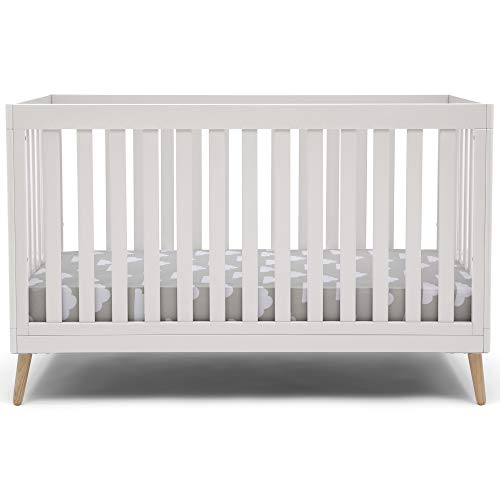 Delta Children Essex 4-in-1 Convertible Baby Crib54"L x 29.5"W x 34"H54 x 29.5 x 34 inches45 poundsCheck on Amazon

Best Cribs for Safe, Comfortable Sleep
The best crib for most families is a full-size model with a firm, snug-fitting mattress, a stable frame, and at least three mattress-height positions; choose a convertible design only if its later configurations suit your space and you can verify that the conversion parts will remain available. Safety compliance matters more than extra features, while adjustment range, assembly quality, and how the finish holds up determine whether a crib works well beyond the first months.
Shortlist by situation
| Family’s priority | Best-fit crib type | Trade-off to check |
|---|---|---|
| Everyday use and room to grow | Full-size convertible crib with three or more mattress positions | Conversion kits may be sold separately; confirm compatibility and availability. |
| Small bedroom or shared room | Compact mini crib, preferably with wheels that lock | Uses a smaller mattress and sheets; the child may outgrow it sooner. |
| Lower initial cost | Simple fixed-side full-size crib with standard mattress dimensions | Basic models can still be durable, but inspect the hardware and finish rather than paying extra for decorative details. |
| Frequent relocation | Lightweight crib with a straightforward frame and clearly labeled hardware | Repeated disassembly can loosen joints; a folding or portable design is not automatically a substitute for a full-time crib. |
Safety first: what to verify before buying
In the United States, look for a crib that complies with current Consumer Product Safety Commission (CPSC) requirements and applicable ASTM International crib standards. Check the exact model and manufacture date against CPSC recalls before purchase, including when buying secondhand. Certification language in a listing is not a substitute for confirming the model, using the correct parts, and following the assembly instructions.
As an Amazon Associate we earn from qualifying purchases at no extra cost to you.


Choose a fixed-side crib; drop-side cribs are prohibited in the United States. The mattress should be firm and fit the crib with no noticeable gaps around the edges. Use only a fitted sheet made for that mattress. Keep pillows, quilts, bumpers, positioners, and toys out of the sleep space. Follow current safe-sleep guidance from the American Academy of Pediatrics, and ask a pediatrician about questions specific to your child.
A mattress is often sold separately. For a full-size crib, the standard mattress is approximately 28 by 52 inches, but the mattress must meet applicable size and fit requirements for the crib. Mini cribs use different dimensions, so do not assume that a standard crib mattress or sheet will fit. Buy or confirm the mattress before final assembly, then check fit as directed in both product manuals.
Features that make a practical difference
Mattress-height adjustments
Three or four mattress positions are useful: the highest setting makes it easier to lay down a newborn, while lower settings provide more containment as the child develops. Lower the mattress as soon as your baby can push up on hands and knees, or sooner if the manufacturer directs it. Move it to the lowest position before the child can pull to stand. A crib with a wide adjustment range is only useful if the support is secure at every setting and the instructions make the change clear.
Convertible designs and real long-term value
Many full-size cribs convert to a toddler bed and, on some models, a daybed or full-size bed. This can extend the frame’s use, but a conversion is not guaranteed value: rails, bed frames, or other kits may cost extra, and the child may outgrow the original crib before you use every stage. Before paying more, check which parts are included, which are sold separately, whether the kit fits the exact model and production version, and whether replacement parts are still obtainable.
A simple cost-per-stage estimate helps compare options. If a convertible crib costs $300 and the required toddler conversion kit is $100, the two stages cost $400 before buying a mattress or bedding. A $220 fixed crib replaced later by a $180 toddler bed also totals $400. These are illustrative figures, not price quotes; the better choice depends on local prices, kit availability, and whether you have storage for unused parts.
Materials and finish
Solid hardwood can tolerate years of assembly and use, but wood species alone does not prove that a crib is safe or durable. Engineered wood can also be suitable when the frame, joints, and hardware are well designed. Look for a smooth, even finish without splinters, sharp edges, exposed fasteners, or chipped areas. Ask the manufacturer about the finish and cleaning instructions, especially if the crib will be reused or handed down. Avoid repainting or modifying a crib unless the manufacturer permits it.
Full-size versus mini: dimensions and ownership trade-offs
| Specification | Full-size crib | Mini crib |
|---|---|---|
| Typical mattress size | About 28 × 52 in | Varies by model; commonly about 24 × 38 in |
| Typical outside footprint | About 54–56 × 29–31 in | About 38–40 × 25–27 in |
| Room saved by footprint | Reference size | Roughly 25–35% less floor area, depending on model |
| Best for | Longer use and easier access to standard-size mattresses and sheets | Tight rooms, some shared spaces, or temporary arrangements |
Dimensions are typical planning ranges, not universal specifications. Measure the actual crib, mattress, and room before buying; include clearance for opening drawers, walking around the frame, and lowering the mattress. Mini-crib mattress sizes vary, so use only the specific size the manufacturer approves.
Assembly and durability: what listings rarely explain
Cribs often arrive flat-packed, and assembly is easier with two adults, a clear floor, and a second person holding panels square while bolts are tightened. Identify every part first, use the supplied hardware, and follow the sequence in the manual. Do not substitute screws or force a bolt that does not align; misalignment can indicate that a panel is reversed or the frame is not square. Tighten fasteners as instructed, then recheck them periodically and after moving the crib.
The parts most likely to show wear are finish at exposed corners, threaded joints loosened by repeated moves, and conversion hardware that is misplaced or discontinued. Keep the manual, assembly key, and unused conversion pieces together in a labeled bag. Clean with a soft damp cloth and a mild cleaner only if allowed by the manufacturer; abrasive pads and harsh solvents can damage finishes. Do not use a crib with cracked wood, bent hardware, missing components, or a joint that will not stay tight.
How to make the final choice
- Measure first: Record the usable floor area and check the outside dimensions, not just the mattress size.
- Set a full-life budget: Include mattress, fitted sheets, delivery or assembly, and any conversion kit you realistically expect to use.
- Prioritize adjustability: Choose secure mattress supports with positions that suit the crib’s instructions and your changing needs.
- Check the exact model: Verify safety compliance, recalls, included parts, and compatible mattress dimensions.
- Inspect after assembly: Confirm the frame is square, all fasteners are secure, the mattress fits correctly, and there are no loose or damaged parts.
For most homes, a standard-size fixed-side crib with sturdy construction, a well-fitting mattress, and multiple height settings is the most flexible choice. Pick a mini crib when floor space is the deciding constraint, and choose a convertible model when its future bed configuration and added kit costs make sense for your family—not simply because it promises more stages.