What's inside
- Top 3 Picks
- Quick Comparison
- How We Chose
- 1. Columbia Ascender Full Zip Softshell – Best for All-Round Weather Protection
- 2. Essentials Water-Resistant Softshell Jacket – Best for Tight Budgets
- 3. TACVASEN Men’s Lightweight Softshell Jacket, Fleece Lined, Waterproof Tactical – Best for Rough, Gear-Heavy Work
- 4. 33,000ft Men’s Lightweight Softshell Jacket, Fleece Waterproof Windbreaker – Best for Lightweight, Packable Coverage
- 5. Columbia Ascender II Hooded Softshell – Best for Cool, Damp Commutes and Trails
- Softshell Specs Decoded: Stretch, Water Column, Breathability and Weight
- How to Choose
As an Amazon Associate I earn from qualifying purchases. This post may contain affiliate links at no extra cost to you.
The best softshell jackets for most people are the Columbia Ascender II Hooded Softshell for cool, damp, active days, the Essentials Water-Resistant Softshell for the tightest budgets, and the Columbia Ascender Full Zip Softshell for the most durable, all-round build in this group. That shortlist comes down to the four things that actually decide whether a softshell works for you: how much the fabric stretches, how much rain and wind it shrugs off, how much warmth the lining adds on its own, and how much room is left inside for a base layer and a midlayer. A softshell is not a rain shell — it trades sealed waterproofing for stretch, breathability and abrasion resistance — so the right pick depends on your climate and your output level, not on which jacket looks toughest in a product photo. The five jackets below are compared on exactly those four axes, then mapped to specific situations, so you can match one to your activity instead of guessing from a listing title.
Our Top Picks
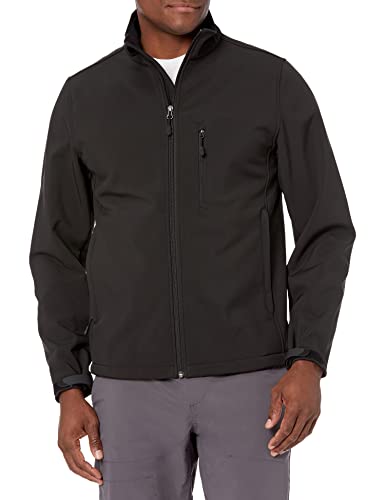
 Columbia Mens Ascender Softshell Full Zip Rain JacketLarge17 x 22 x 3 inches0.5 poundsCheck on Amazon
 Columbia Men's Ascender II Hooded Softshell Rain JacketLarge24 x 16 x 3 inches0.5 PoundsCheck on Amazon

Top 3 Picks
Best overall: Columbia Men’s Ascender II Hooded Softshell Rain Jacket
This is the jacket that covers the widest range of real-world days — roughly 40–60°F with wind, drizzle and stop-start activity — because it pairs a bonded, wind-resistant softshell face with an attached adjustable hood, which the hoodless version of the same platform lacks. The mid-range price band makes it the easiest one-jacket answer for commuting, dog walks, travel and moderate hiking, and the sizing leaves room for a base layer plus a light fleece without turning you into a barrel.
Best budget: Essentials Men’s Water-Resistant Softshell Jacket
If the goal is simply to get a wind-resistant, water-repellent, fleece-backed softshell onto your back for the least money, this is the pick — it does the core softshell job and nothing more. Expect a plainer fit, less refined stretch recovery and a shorter useful life than the Columbia options, which is the normal trade at the entry price band.
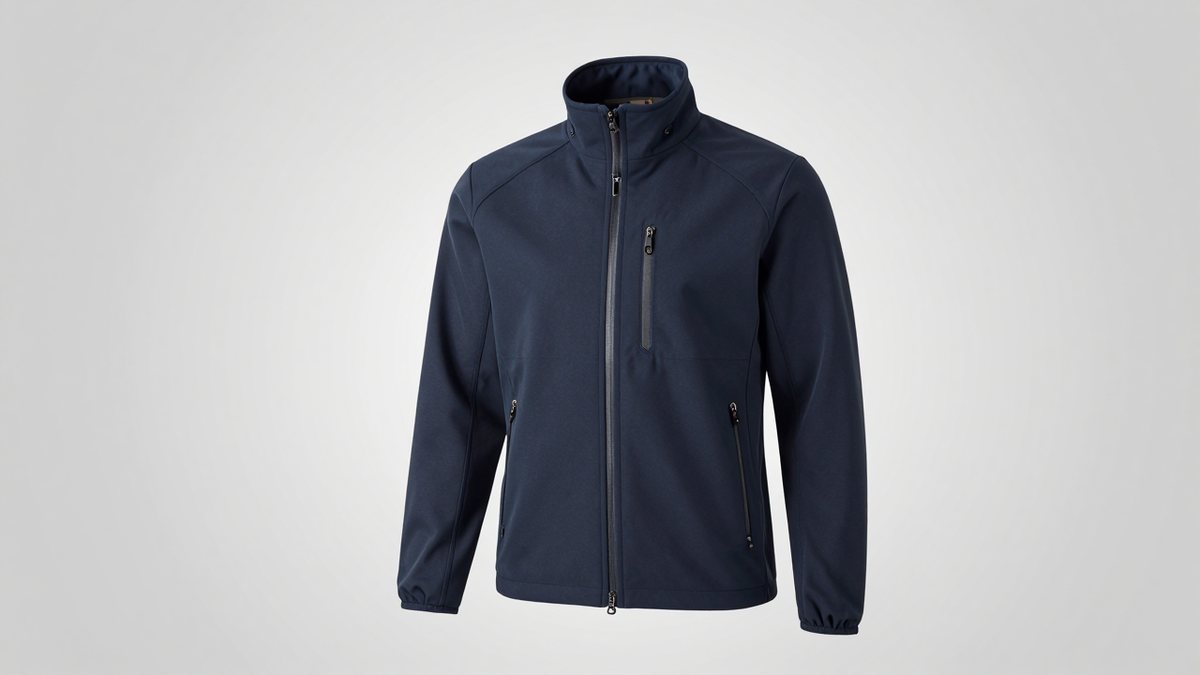
Best premium build: Columbia Men’s Ascender Softshell Full Zip Rain Jacket
The premium pick in this list is the full-zip Ascender, which brings the most weather-resistant, most durable-feeling construction of the five and a cleaner, less technical look that works over a shirt as easily as over a baselayer. It has no hood, so it is the better choice if you wear a hard shell over the top in heavy rain or you simply prefer a collar.
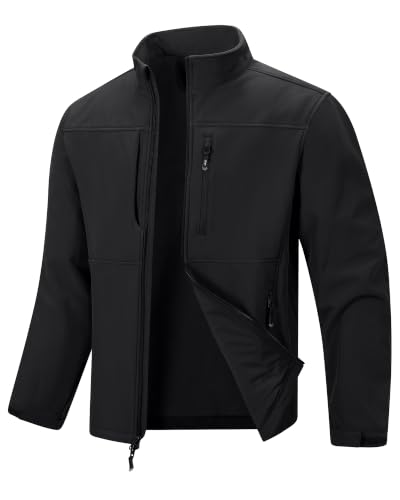
Two specialists fill the gaps: the TACVASEN fleece-lined tactical jacket for rough, gear-heavy work where pockets and toughness matter more than looks, and the 33,000ft lightweight fleece-lined windbreaker for people who want packable coverage and don’t need maximum abrasion resistance.
Quick Comparison
| Product | Best for | Key specs (listing + spec class) | Price tier |
|---|---|---|---|
| Columbia Men’s Ascender Softshell Full Zip Rain Jacket (Black, Large) | All-round weather protection, daily wear, collar-over-shirt styling | Bonded softshell face with DWR water-repellent finish; wind-resistant; full-zip with stand collar; zip hand pockets; adjustable cuffs and drawcord hem; brushed interior; no hood; mid-weight class (approx. 200–280 g/m²) | Premium |
| Essentials Men’s Water-Resistant Softshell Jacket (Black, X-Large) | Lowest-cost entry into softshells; light-duty wind and drizzle | Polyester softshell with water-resistant finish; fleece-backed; full-zip; zip hand pockets; elasticated cuffs; no membrane; lightweight-to-mid weight class | Budget |
| TACVASEN Men’s Lightweight Softshell Jacket, Fleece Lined, Waterproof Tactical | Rough use, work and gear-heavy activity where pockets and durability matter | Lightweight shell with fleece lining; water-repellent finish (listing names it waterproof — treat as water-repellent in softshell terms); attached hood; multiple utility pockets; hook-and-loop cuff adjustment; tactical styling | Budget |
| 33,000ft Men’s Lightweight Softshell Jacket, Fleece Waterproof Windbreaker | Packable coverage for high-output activity and travel | Lightweight windbreaker class; fleece backer; attached hood; zip hand pockets; elasticated cuffs; packs down small; DWR-class water repellency | Mid-range |
| Columbia Men’s Ascender II Hooded Softshell Rain Jacket (Delta, Large) | Cool, damp commutes and trails; the one-jacket answer | Bonded softshell with DWR finish; wind-resistant; attached adjustable hood; full-zip; zip hand pockets; adjustable cuffs and hem; brushed backer; mid-weight class | Mid-range |
Read the table left to right and one pattern jumps out: every jacket here is a bonded or lined softshell with a durable water repellent (DWR) finish, and none of them is a sealed, taped-seam hard shell. The differences that matter are weight class, hood or no hood, pocket count and stretch quality — not the word “waterproof” in a product title.
How We Chose
This roundup is research-based, not test-based: it was assembled by comparing published listing specifications, brand documentation and established category benchmarks for softshell construction, then sorting each jacket by the job it does best. Four criteria drove every inclusion. First, category fit — each jacket had to be a genuine softshell (stretch woven face, DWR finish, breathable backer), not a packable rain shell or a fleece mislabelled as one. Second, spec transparency — where a manufacturer publishes fabric composition, hood type, pocket configuration and care instructions, that information carries more weight than marketing language, and where numbers are absent we describe the jacket by spec class rather than inventing figures. Third, use case spread: the list deliberately covers a hoodless all-rounder, a hooded mid-range workhorse, a bottom-band budget option, a packable lightweight and a rugged tactical build, so most readers find a match rather than a near-duplicate. Fourth, upgrade path — we noted what each jacket gives up relative to the next tier up, so a budget buyer can see exactly what the extra spend buys later. Price tiers reflect general market bands, not current listings, because prices move daily.
1. Columbia Ascender Full Zip Softshell – Best for All-Round Weather Protection
As an Amazon Associate we earn from qualifying purchases at no extra cost to you.

The full-zip Ascender is the premium pick in this list, and the reason is not a single headline feature — it is the combination of a bonded softshell face, a DWR finish that sheds light rain and road spray, and a build quality that sits a clear step above the budget options. The listing names a specific colourway and size (black, large), so if you need another size or colour you may be looking at a separately listed variant of the same platform. As a jacket, it is aimed at the person who wants one softshell to cover the 40–60°F band on a commute, a weekend walk or a cool-weather errand run, and who does not want to look like they are heading to a range or a summit.
Key specs at a glance
- Fabric: bonded softshell face, mid-weight class (roughly 200–280 g/m²), with a brushed interior backer
- Stretch: four-way stretch class thanks to a small elastane content — typically 8–12% in this category
- Weather resistance: DWR water-repellent finish and wind-resistant construction; resists light rain and drizzle, not sustained downpours
- Closure: full-length front zip with a stand collar and chin guard
- Pockets: zip hand pockets
- Adjustability: adjustable cuffs and a drawcord hem
- Hood: none — collar only
- Care: machine washable; DWR refresh needed periodically
- Listed configuration: black, size large
Where it earns its keep
The strongest argument for the full-zip Ascender is wind. A bonded softshell in this weight class typically lands in the 5–15 CFM air-permeability range, which is the sweet spot: tight enough that a 15 mph headwind does not cut through you on a bike or an exposed ridge, but open enough that you are not stewing in your own condensation after ten minutes of walking uphill. That balance is what separates a softshell from a windbreaker, and it is the single most useful property of this jacket.
Second is the finish. The face fabric on this tier of Columbia softshell resists the abrasion that kills cheaper jackets — backpack straps, seat belts, rough stone walls, the corner of a workbench. Stretch recovery also tends to hold up better, which matters more than people expect: a softshell that has gone baggy at the elbows and hem after two seasons looks worn long before it stops functioning.
Third is versatility of styling. Without a hood, the collar sits flat under a hard shell in genuinely wet weather, which is how a lot of experienced users actually run a softshell — as a breathable mid-layer under a packable rain shell, rather than as the outer layer in a storm. It also reads as a normal jacket in a way that hooded tactical shells do not.
Pros
- Best weather resistance and abrasion resistance of the five jackets here
- Four-way stretch class with good recovery, so it moves without bagging out
- Collar-only design layers cleanly under a hard shell or over a shirt
- Wind-resistant mid-weight fabric covers a wide 40–60°F comfort band with a base layer
- Adjustable cuffs and hem let you seal out draughts without a bulky fit
Cons
- No hood — a real limitation if you want one jacket for damp, windy days
- Premium price tier for a jacket that is still only water-repellent, not waterproof
- Heavier and bulkier to pack than the lightweight 33,000ft option
- Less pocket capacity than the TACVASEN tactical build
- The listed black/large configuration may not suit everyone’s size or colour preference
How it compares with the nearest alternative
The obvious head-to-head is with the Columbia Ascender II Hooded in this same list. They share the Ascender platform DNA — bonded softshell, DWR, wind resistance, brushed backer — but they solve different problems. The full-zip version is the tougher, more weather-resistant shell and the better layering partner under a rain jacket, at a higher price. The Ascender II trades a little of that edge for an attached adjustable hood and a mid-range price band, which is why it takes the best-overall slot for anyone who wants one jacket to do everything. Against the Essentials budget jacket, the full-zip Ascender is simply a better-made garment: better stretch recovery, better abrasion resistance, longer service life, and a noticeably higher price. If you only need a softshell for two months of mild autumn weather, the budget option is rational; if you will wear it four days a week for years, the premium tier is the cheaper jacket per wear.
2. Essentials Water-Resistant Softshell Jacket – Best for Tight Budgets
This is the entry point to the category, and it is honest about what it is: a polyester softshell with a water-resistant finish, a fleece backer and a full-zip front, sold in a broad size run that includes the listed black extra-large. It exists for the reader who wants wind protection and light-rain resistance for a low outlay — a jacket for the school run, the commute, garden work, or a first hiking layer you are not sure you will stick with. It does not pretend to be an alpine shell, and judged against that brief it is a sensible purchase rather than a compromise.
Key specs at a glance
- Fabric: polyester softshell, lightweight-to-mid weight class, with a fleece backer
- Weather resistance: water-resistant DWR-class finish; wind-resistant; no membrane and no taped seams
- Stretch: mechanical stretch class — expect two-way give rather than full four-way stretch
- Closure: full-zip front with stand collar
- Pockets: zip hand pockets
- Cuffs and hem: elasticated cuffs, simple hem
- Hood: none
- Care: machine washable; avoid fabric softener
- Listed configuration: black, size extra-large
Where it earns its keep
The value case is straightforward. A softshell’s core function is to block wind and shed a light shower while letting you move, and this jacket does that for the price of a couple of takeaway meals. The fleece backer adds meaningful warmth in the 50–65°F range over a t-shirt, which makes it a genuinely useful three-season layer in mild climates rather than a decorative shell.
The realistic limitations are all in the long tail. Fabric weight is on the lighter side of the mid band, so it will not hold up to serious abrasion — backpack straps, thorny hedges and rough concrete will mark it sooner than a premium jacket. Stretch is the mechanical kind rather than a true four-way elastane stretch, so reaching overhead or across feels more restrictive, and the fabric is more prone to staying stretched out once it has been pushed past its limit. The DWR finish on entry-tier jackets also tends to fade faster, typically needing a refresh after roughly 15–20 washes rather than the 20–25 you might get from a premium face fabric.
Warmth is modest and predictable: this is a shell-plus-fleece-backer garment, not an insulated jacket, so below about 45°F you will want a midlayer underneath. Layering room is the other place the budget cut shows — the cut is trimmer through the chest and shoulders, so a bulky fleece underneath can make the jacket feel tight across the back and restrict arm movement.
Pros
- Lowest-cost way to get a wind-resistant, water-repellent, fleece-backed softshell
- Broad size availability, including the listed extra-large
- Light enough to wear indoors in cool weather without overheating
- Simple design that works for casual wear as well as light outdoor use
- Machine washable with no special care requirements beyond skipping softener
Cons
- Mechanical stretch only — noticeably less freedom of movement than the Columbia options
- Thinner face fabric with weaker abrasion resistance; it will show wear sooner
- No hood and no pit vents, so it offers no way to dump heat quickly
- Trimmer layering room than the mid-range and premium picks
- DWR finish needs refreshing more often, and reapplication costs money over time
How it compares with the nearest alternative
Versus the TACVASEN tactical jacket — the other budget pick — the difference is design intent rather than quality tier. The TACVASEN gives you a hood, a fleece lining, more pockets and a more rugged look for a similar outlay, which makes it the better choice for outdoor work and cold-weather utility. The Essentials jacket is the better choice for anyone who wants a plain, unobtrusive layer that looks fine over a shirt in town. Versus the mid-range 33,000ft, the Essentials jacket loses on stretch quality, hood, packability and finish — but it wins clearly on price, and if you are buying your first softshell to find out whether you actually like wearing one, that is a defensible trade.
3. TACVASEN Men’s Lightweight Softshell Jacket, Fleece Lined, Waterproof Tactical – Best for Rough, Gear-Heavy Work

TACVASEN builds tactical and outdoor apparel, and this jacket is aimed squarely at the user who wants a softshell to work in: a lightweight shell with a fleece lining, a water-repellent finish the listing describes as waterproof, an attached hood, and a pocket layout designed to carry things. It suits dog handlers, airsoft and range users, hikers who like to keep a phone and tools accessible, and anyone doing cold-weather jobs outdoors where a jacket is going to get scuffed. It is the most feature-dense jacket in this list at the budget price tier.
Key specs at a glance
- Fabric: lightweight softshell shell with a fleece lining bonded inside
- Weather resistance: water-repellent finish; listing names it waterproof — in softshell terms, treat it as highly water-repellent and wind-resistant rather than a sealed shell for sustained rain
- Stretch: two-way to four-way stretch class depending on the exact variant listed
- Hood: attached, typically with drawcord adjustment
- Pockets: multiple utility pockets, typically including zip hand pockets, a sleeve pocket and a chest pocket
- Adjustability: hook-and-loop cuffs, drawcord hem
- Warmth: fleece lining adds meaningful warmth; comfortable over a baselayer from roughly 35–55°F
- Care: machine washable, technical detergent recommended
Where it earns its keep
The fleece lining is the headline. A bonded fleece backer inside a wind-resistant shell is an efficient way to add warmth without adding bulk, and it means this jacket covers a colder band than the unlined-feeling budget Essentials option — think 35–55°F with a baselayer, rather than 50–65°F. The trade-off is breathability: a fleece-lined shell traps more moisture during hard output, so it is better suited to walking, working and standing around than to running uphill.
The pocket layout is the second differentiator. Utility pockets, a sleeve pocket and often a hook-and-loop panel area mean you can carry a phone, keys, a small tool and a cardholder without a bag, which is genuinely useful for work and range use. The hood is attached and adjustable, which adds real wind and drizzle protection that the hoodless jackets in this list cannot match.
The rugged styling cuts both ways. It signals durability, and the shell generally takes scuffs better than a smooth-faced fashion softshell, but it reads as technical kit in a way that does not suit an office or a restaurant. If your softshell needs to be socially invisible, this is not it.
Pros
- Fleece lining adds genuine warmth, extending the usable range down toward the mid-30s°F with a baselayer
- Attached adjustable hood for wind and drizzle
- Most pocket capacity in this list — useful for work and gear-carrying
- Rugged shell that tolerates scuffs and abrasion better than fashion-oriented softshells
- Budget price tier despite the feature count
Cons
- Fleece lining reduces breathability during high-output activity; it can feel clammy on a hard climb
- Technical look limits it to outdoor and work settings
- Fit varies between variants, so sizing is less predictable than with the Columbia options
- Bulkier to pack than the 33,000ft lightweight
- The listing’s “waterproof” wording overstates what a DWR-class softshell can handle in sustained rain
How it compares with the nearest alternative
Against the 33,000ft lightweight — the other fleece-lined option — this is a warmth-versus-packability decision. The TACVASEN is warmer, has more pockets and a more protective hood, and is built for rougher handling. The 33,000ft is lighter, packs smaller and breathes better under sustained effort, which makes it the better travel and fast-and-light choice. Against the Essentials budget jacket, the TACVASEN simply offers more jacket for a similar outlay: a hood, a fleece lining and better pocketing, at the cost of a plainer look and a slightly heavier carry. If you want maximum function per pound spent and don’t care about styling, the TACVASEN is the budget pick that punches hardest.
4. 33,000ft Men’s Lightweight Softshell Jacket, Fleece Waterproof Windbreaker – Best for Lightweight, Packable Coverage
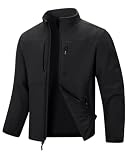
The 33,000ft jacket occupies the mid-range slot and solves a different problem from the rest of the list: it is a lightweight, fleece-backed windbreaker-class softshell that packs down small and travels well. It suits hikers, cyclists and runners who want a layer they can stuff into a pack or a saddle bag and pull on at a summit or a rest stop, plus travellers who want one jacket that handles a cool, breezy city break without eating luggage space. It has a hood, zip hand pockets and elasticated cuffs, and it is the easiest of the five to carry around all day without noticing it.
Key specs at a glance
- Fabric: lightweight softshell / windbreaker class with a fleece backer
- Weather resistance: DWR-class water repellency and wind resistance; the listing’s “waterproof” claim should be read as water-repellent in softshell terms
- Stretch: two-way to four-way stretch class, with more mechanical give than the budget Essentials jacket
- Hood: attached, with adjustment
- Pockets: zip hand pockets
- Cuffs: elasticated, low-bulk
- Packed volume: compresses to roughly the size of a football — small enough for a daypack side pocket
- Warmth: comfortable over a baselayer from roughly 45–60°F
Where it earns its keep
Weight and packability are the point. A lighter face fabric means less bulk in a pack and less heat retention when you are working hard, which is exactly what you want from a layer you put on and take off repeatedly during a hike. The fleece backer gives it just enough warmth to take the edge off a windy summit break without turning it into a jacket you have to remove after five minutes of walking.
Breathability is better than the heavier fleece-lined tactical build for the same reason: less material between you and the outside air. For cycling and fast walking, that means less of the clammy feeling you get when a lined shell traps sweat. It is still a softshell, so expect it to be warmer than an unlined wind shell, but it sits at the more breathable end of this group.
The mid-range price reflects the fabric and the finish rather than a membrane. You are paying for lighter weight, better stretch than the entry tier and a construction that resists the pilling and stiffness that cheaper fleece backers develop. What you are not paying for is abrasion resistance — a light face fabric will scuff and snag more readily than the Columbia Ascender Full Zip, so it is a poor choice for scrambling, brushy trails or rough work.
Pros
- Lightest and most packable jacket in this list — easy to carry all day
- Better breathability under effort than the heavier fleece-lined options
- Attached hood plus wind resistance covers breezy, showery conditions
- Mid-range price for a genuinely travel-friendly layer
- Elasticated cuffs and a trim cut keep it out of the way when active
Cons
- Light face fabric has the weakest abrasion resistance of the group
- Warmth band is narrower — it is not a cold-weather jacket
- Fewer pockets than the TACVASEN tactical build
- Listing language overstates rain performance; it will wet out in sustained rain
- Less structured fit, which some users find flimsy compared with a bonded mid-weight shell
How it compares with the nearest alternative
Set against the TACVASEN, the choice is simple: packability and breathability versus warmth, pockets and toughness. The 33,000ft wins for anyone moving fast or travelling light; the TACVASEN wins for anyone standing still in the cold or carrying gear. Against the Columbia Ascender II Hooded, the 33,000ft is lighter and easier to stash but less durable, less weather-resistant and less structured, and it costs about the same at the mid-range tier. If you want one jacket that can handle a cold, wet commute all winter, the Ascender II is the better buy; if you want a layer that disappears into a daypack and comes out when the wind picks up, the 33,000ft is the better buy.
5. Columbia Ascender II Hooded Softshell – Best for Cool, Damp Commutes and Trails

The Ascender II Hooded is the best overall pick because it makes the fewest compromises for the widest range of people. It combines the bonded softshell face and DWR finish of the Ascender platform with an attached adjustable hood and a mid-range price band, and the listed configuration is the Delta colourway in size large. It is aimed at the reader who wants a single jacket for a 40–60°F autumn, winter and spring — commuting, walking the dog, weekend hikes, travel — and who values having a hood more than having the absolute toughest face fabric.
Key specs at a glance
- Fabric: bonded softshell, mid-weight class (roughly 200–280 g/m²), brushed interior backer
- Stretch: four-way stretch class with elastane for movement and recovery
- Weather resistance: DWR water-repellent finish; wind-resistant; handles drizzle and light rain, not sustained downpours
- Hood: attached and adjustable — the key difference from the full-zip Ascender
- Pockets: zip hand pockets
- Adjustability: adjustable cuffs and drawcord hem
- Warmth: comfortable over a baselayer from roughly 40–60°F; add a light fleece for the low end
- Layering room: cut to take a base layer plus a light midlayer without binding
- Listed configuration: Delta colourway, size large
Where it earns its keep
The hood is the reason this jacket tops the list. Most softshell weather problems in the 40–60°F band are wind-and-drizzle problems, and a hood covers the two most exposed areas — head and neck — without adding the weight or the crinkly bulk of a full hard shell. Combined with a wind-resistant bonded fabric in the 5–15 CFM class, that is enough for a wet commute, a blustery walk and a drizzly hike.
The bonded softshell construction is the second strength. Unlike a simple windbreaker, it has structure: the fabric holds its shape across the shoulders, the stretch recovers instead of sagging, and the brushed backer feels warm against a baselayer rather than clammy. That combination is what makes a mid-weight softshell the most versatile single outer layer for cool, changeable weather.
Layering room is the third. The cut accommodates a base layer and a light fleece in the same size, which means the jacket stays usable from about 60°F down to roughly 35°F by swapping what you wear underneath. That is a wider effective range than any other jacket in this list except the fleece-lined tactical build, and it comes with better stretch and a cleaner look.
Pros
- Attached adjustable hood makes it the most versatile jacket here for real weather
- Four-way stretch class with good recovery — comfortable for driving, cycling and climbing over stiles
- Bonded mid-weight fabric holds its shape and resists abrasion better than budget shells
- Mid-range price band delivers most of the premium jacket’s performance for less
- Layering room takes a baselayer plus a light fleece in the same size
Cons
- Less weather-resistant and less abrasion-resistant than the premium full-zip Ascender
- No pit zips, so heat dumps more slowly on hard climbs
- Hood adds bulk when worn under another shell
- Not waterproof — sustained heavy rain will soak through the face fabric
- The listed colourway and size are fixed, so alternative options may be listed separately
How it compares with the nearest alternative
The nearest alternative is the Columbia Ascender Full Zip, and the comparison is a clean trade: the hooded version gives you an adjustable hood, a slightly lower price and the same core platform, while the full-zip gives you the tougher, more weather-resistant build and a collar that layers under a hard shell. For most people, the hood wins, which is why the Ascender II takes the overall slot. Against the 33,000ft lightweight, the Ascender II is heavier and less packable but more durable, better structured and more protective in wind — the right call if the jacket lives on your back rather than in your pack.
Softshell Specs Decoded: Stretch, Water Column, Breathability and Weight
Product listings are inconsistent about numbers, so it helps to know which figures actually matter and what ranges mean. Four metrics separate a decent softshell from a disappointing one: fabric weight, stretch, air permeability and water resistance. Breathability ratings matter too, though they are less commonly published for softshells than for hard shells.
| Metric | Lightweight class | All-round class | Technical / heavy class |
|---|---|---|---|
| Fabric weight | 140–200 g/m² | 200–280 g/m² | 280–400 g/m² |
| Elastane content (stretch) | 5–8% (two-way) | 8–12% (four-way) | 10–15% (four-way, high recovery) |
| Air permeability (wind resistance) | 10–20 CFM | 5–15 CFM | 0–5 CFM (near windproof) |
| Water resistance | DWR only; light rain for 10–20 minutes | DWR, optionally taped seams; light rain for 30–60 minutes | 10,000–20,000 mm membrane; sustained rain |
| Breathability | 10,000+ g/m²/24h | 5,000–10,000 g/m²/24h | 5,000–20,000 g/m²/24h with vents |
| Typical comfort band (with baselayer) | 55–70°F | 40–60°F | 20–45°F |
| Packed volume | Softball to football | Football | Football to soccer ball |
The critical distinction is DWR versus membrane. A DWR finish is a chemical treatment applied to the face fabric that makes water bead and roll off. It resists light rain and drizzle, and it is what every jacket in this roundup uses. A membrane — a laminated layer rated in millimetres of water column — is what makes a jacket genuinely waterproof, and it is what you find in hard shells rather than softshells. The listings here that use the word “waterproof” are using it loosely: the practical performance is water-repellent, and in a sustained downpour you will get wet.
Air permeability is the metric most buyers ignore and most regret ignoring. Measured in CFM (cubic feet per minute), it describes how much air passes through the fabric. Zero CFM is a plastic bag: completely windproof and completely clammy. Twenty-plus CFM is a mesh jersey: breathable and useless in wind. The 5–15 CFM band is where softshells live, and it is why a softshell feels comfortable in conditions where a windbreaker turns into a sauna. Fabric weight drives the same trade: heavier fabric means more warmth, more durability and more bulk; lighter fabric means more breathability, more packability and less abrasion resistance.
How to Choose
Start with your weather, not the jacket
The first question is not which jacket looks best but what your weather actually does. Cold and dry — think 30–45°F with wind and no rain — is soft