What's inside
- Top 3 Picks
- Quick Comparison
- How We Chose
- 1. Hamwesh Smart Thermostat – Best for the Cheapest No-C-Wire Upgrade
- 2. Sensi Lite Smart Thermostat ST25 – Best for Most Single-Stage Homes
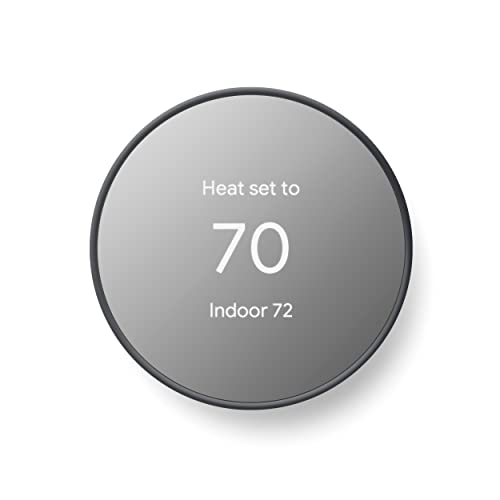
- 3. Google Nest Thermostat (Charcoal) – Best for Google Home Households
- 4. Honeywell Home T5 Smart Wi-Fi Thermostat – Best for Multi-Stage and Heat-Pump Systems
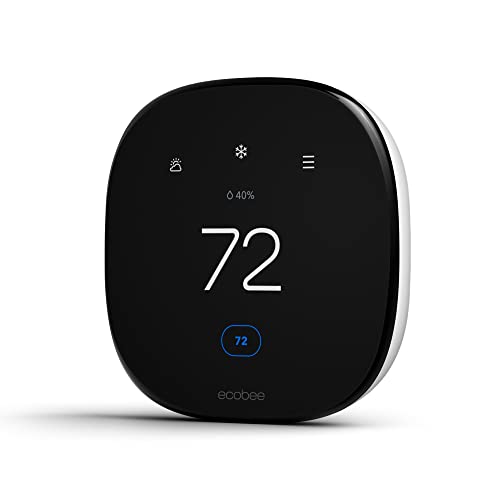
- 5. ecobee Smart Thermostat Enhanced – Best Overall for Homes Without a C Wire
- 6. meross Smart WiFi Thermostat – Best for Homes That Already Have a C Wire
- 7. SASWELL Smart WiFi Thermostat – Best Budget Option for Heat Pumps and Multi-Stage
- 8. Riseem WiFi Thermostat – Best for Simple 1 Heat / 1 Cool Replacements
- How to Choose
- Frequently Asked Questions
As an Amazon Associate I earn from qualifying purchases. This post may contain affiliate links at no extra cost to you.
The best smart thermostat for a home without a C wire is the ecobee Smart Thermostat Enhanced, because it ships with a Power Extender Kit in the box — a small module that installs at your furnace or air handler and synthesizes the fifth wire the thermostat wants, without fishing new cable through finished walls. That makes it the only premium pick here that solves the wiring problem with parts you already own. If the budget is tight, the Hamwesh Smart Thermostat is the cheapest route to a connected, voice-controlled thermostat on a heating system, and the Sensi Lite ST25 is the best middle ground for most single-stage homes: Energy Star certified, battery powered, and DIY-friendly. The rest of this guide sorts eight currently available models by how they actually get their power — batteries, power stealing, an in-box adapter, or a C wire you must supply — because that single detail decides whether a thermostat works in your house at all.
Our Top Picks
 Honeywell Home T5 Smart Wi-Fi Thermostat3.5 x 3.5 inches (1-Pack)4.1 x 1.1 x 4.1 inches0.2 poundsCheck on Amazon



Top 3 Picks
Best overall: ecobee Smart Thermostat Enhanced. It is the most complete answer to the no-C-wire problem because the Power Extender Kit is included rather than sold as an add-on, and it sits at the top of the compatibility ladder with multi-stage and heat-pump support. Buy it if you want a premium ecosystem, room-sensor expansion later, and a wiring solution that does not depend on power stealing behaving itself.
Best budget: Hamwesh Smart Thermostat. Its listing name states “No C Wire Required” outright, which is exactly the promise a four-wire house needs, and it adds WiFi, voice control, and a color LCD at the lowest price tier in this roundup. Buy it if your system is heating-focused, your wiring is simple, and you would rather spend the difference on a smart speaker.
Best mid-range for most homes: Sensi Lite Smart Thermostat ST25. Energy Star certification, Alexa support, and a battery-powered design that tolerates a missing C wire make it the safest default for a single-stage furnace-and-AC setup. Buy it if you want a recognized brand, a straightforward app, and a thermostat you can install in an afternoon without opening the furnace panel.
Quick Comparison
Every model below is currently listed and available. Price tiers are relative bands, not quotes — listings move daily, and bundles change what is in the box, so confirm the included accessories before you buy.
| Product | Best for | How it gets power | System support (per listing) | Notable specs | Price tier |
|---|---|---|---|---|---|
| Hamwesh Smart Thermostat | Cheapest no-C-wire upgrade | No C wire required | Programmable heating per listing name | WiFi, voice control, color LCD | Budget |
| Sensi Lite ST25 | Most single-stage homes | Battery (no C wire needed) | Single-stage conventional and heat pump | Energy Star certified, Alexa, DIY install | Mid-range |
| Google Nest Thermostat (Charcoal) | Google Home households | Power stealing; C wire optional in many homes | Common single-stage and heat-pump setups | Programmable WiFi, Eco mode, app control | Premium |
| Honeywell Home T5 | Multi-stage and heat-pump systems | C wire generally required for WiFi | Multi-stage conventional and heat pump | WiFi, scheduling, contractor-familiar platform | Mid-range |
| ecobee Smart Thermostat Enhanced | Best overall without a C wire | Power Extender Kit included | Multi-stage conventional and heat pump | Energy Star certified, sensor-ready, HomeKit | Premium |
| meross Smart WiFi Thermostat | Homes that already have a C wire | C wire required (sold separately) | Conventional systems | WiFi, app scheduling, budget-adjacent ecosystem | Mid-range |
| SASWELL Smart WiFi Thermostat | Budget multi-stage and heat pump | C-wire adapter included | 3H/2C heat pump and conventional | WiFi, programmable, adapter in box | Budget |
| Riseem WiFi Thermostat | Simple 1 heat / 1 cool swaps | Confirm power method before buying | Single-stage 1H/1C | App remote control, 7-day or 0-day programming | Budget |
How We Chose
This roundup is built from listing documentation, published manufacturer specifications, and category research — not from installing these units in a workshop or a test house. The first filter was the one that matters most in this category: how the thermostat gets its low-voltage power. A model that needs a C wire it cannot supply is not a candidate for a four-wire home, no matter how good its app is, so each pick is sorted by whether it runs on batteries, steals a trickle of current from the existing wires, ships with an adapter, or demands a C wire you must add yourself.
The second filter was compatibility depth. Terminal support decides whether a thermostat can handle a heat pump with auxiliary heat, a two-stage furnace, or a dual-fuel setup, and those requirements eliminate budget models quickly. Third, we weighed the upgrade path: does the platform support remote room sensors, voice assistants, or scheduling that grows with the house, or does it cap out the day you install it? Finally, we looked at ownership realities — battery replacement intervals, adapter availability, documentation quality, and how easy the unit is to reset or reprogram when something goes wrong. The result is a list organized around your wiring situation first and your feature wish list second, which is the order that prevents returns.
1. Hamwesh Smart Thermostat – Best for the Cheapest No-C-Wire Upgrade
As an Amazon Associate we earn from qualifying purchases at no extra cost to you.

The Hamwesh Smart Thermostat suits the homeowner who has pulled the old thermostat off the wall, counted four wires, and decided that running new cable is not happening. Its listing name says the important part directly: no C wire required. That means the unit is designed to operate from the existing low-voltage conductors, which in a typical four-wire bundle are R (power), W (heat), Y (cooling), and G (fan). If your system is heating-focused — and the listing describes it as programmable heating with a color LCD — the install is close to a like-for-like swap, and the whole job stays at the wall plate.
Key specs as listed:
- Power: no C wire required
- Connectivity: WiFi
- Control: voice control plus app control
- Display: color LCD
- Programming: programmable heating schedule per the listing name
- Price tier: budget
The strengths here are price and simplicity. Nothing else in this roundup removes the C-wire barrier at this price tier. Voice control is a genuinely useful addition on a budget thermostat, because adjusting a setpoint by voice is faster than opening an app, and a color LCD makes the current temperature and schedule readable from across a hallway. For a heating-only system — a boiler, a baseboard setup, or a simple furnace without air conditioning — the feature set maps cleanly onto what the equipment can actually do, with no wasted capability you paid for and cannot use.
Pros:
- Explicitly listed as not requiring a C wire
- Lowest price tier in this roundup
- WiFi app control plus voice control
- Color LCD is easier to read than a monochrome segment display
- Install stays at the wall plate for a simple heating system
Cons:
- Described as a programmable heating thermostat — verify cooling support before buying if you have AC
- No Energy Star certification noted on the listing
- No room-sensor expansion
- Smaller brand ecosystem than the mainstream names
- Advanced features such as occupancy sensing are not part of the package
Compared with the Riseem WiFi Thermostat, the nearest alternative at the same tier, the Hamwesh leans on the C-wire promise and the display, while Riseem leans on straightforward single-stage 1 heat / 1 cool coverage with 7-day or 0-day programming. If you know you have air conditioning and a four-wire bundle, read both listings carefully and confirm the power method on each. Compared with the SASWELL, the Hamwesh gives up multi-stage and heat-pump capability but stays simpler and cheaper; SASWELL’s advantage is the included C-wire adapter, which matters only if you want the extra terminals.
2. Sensi Lite Smart Thermostat ST25 – Best for Most Single-Stage Homes

The Sensi Lite ST25 is the model to buy when you want a no-drama replacement for a basic furnace-and-air-conditioner setup and you would rather not think about wiring adapters at all. Sensi’s Lite line is built around battery operation, which is precisely why it tolerates a missing C wire: the thermostat does not need the HVAC transformer to keep its electronics alive, so the existing R, W, Y, and G conductors are enough to switch the equipment. Energy Star certification, Alexa support, and a DIY positioning in the listing name all point at the same buyer — someone replacing a round or rectangular non-smart thermostat on a single-stage system.
Key specs as listed:
- Power: battery powered, no C wire required
- Connectivity: WiFi
- Voice: Alexa support per the listing name
- Certification: Energy Star
- Install: DIY
- Price tier: mid-range
The appeal is that nothing about this thermostat is exotic. Battery power means the Wi-Fi radio is managed conservatively and the unit keeps running through a power outage, which is a real advantage in storm-prone regions. Energy Star certification signals that the scheduling and setback behavior has been evaluated against a recognized efficiency standard, which is more than you can say for most budget listings. Sensi also publishes a compatibility checker, and for a category where the wrong guess costs you a return shipping label, that check is worth two minutes before you order.
Pros:
- Battery operation removes the C-wire requirement entirely
- Energy Star certified
- Alexa voice control
- Well-known brand with published compatibility guidance
- Keeps running during a power outage
Cons:
- Single-stage focus — multi-stage and complex heat-pump systems need a step up
- No remote room sensors
- No built-in voice assistant; you need a separate speaker
- Batteries are a recurring consumable you have to remember
- Fewer comfort features than premium platforms
Compared with the Google Nest Thermostat, the Sensi Lite trades ecosystem polish for predictability. Nest relies on power stealing and an app-based compatibility check, and in some homes that arrangement needs a separately sold power connector; the Sensi Lite sidesteps the question with batteries. Compared with the ecobee Smart Thermostat Enhanced, the Sensi Lite gives up multi-stage support, sensor expansion, and the included Power Extender Kit — but it also costs a tier less and installs in less time. For a single-stage house where nothing is broken and nothing is being upgraded, the Sensi Lite is the least risky purchase in this guide.
3. Google Nest Thermostat (Charcoal) – Best for Google Home Households
The Google Nest Thermostat in Charcoal is the pick for a home already built around Google’s ecosystem — Nest speakers, Google Assistant routines, and a phone with the Google Home app already installed. Its relevance to this guide is that it is designed to work without a C wire in many homes, drawing the small amount of current it needs through the existing heating and cooling conductors rather than requiring a dedicated common lead. Google publishes an app-based compatibility check that tells you in advance whether your specific system is one of the ones that works, which is the responsible way to buy any power-stealing thermostat.
Key specs as listed and by category:
- Power: designed to run without a C wire in many homes; power stealing from existing conductors
- Connectivity: WiFi with Google Home app control
- Programming: programmable schedule with Eco temperature settings
- Design: mirrored display, Charcoal finish
- Compatibility: common single-stage and heat-pump systems — the app checker is authoritative for your wiring
- Price tier: premium
What you are paying for at this tier is ecosystem integration and software maturity. Eco mode, home-and-away behavior, and schedule suggestions are the kinds of features that quietly shave run time off a heating season without you managing them manually. The display is deliberately minimal, which reads as clean in a hallway and frustrating in a dark one, depending on your taste. Voice control runs through Google Assistant devices rather than a built-in microphone, so plan for at least one speaker in the house to get the full benefit.
Pros:
- Works without a C wire in many installations
- Deep Google Home and Google Assistant integration
- Eco settings and scheduling aimed at reducing run time
- App-based compatibility checker before you buy
- Clean, low-profile hardware in a neutral finish
Cons:
- Power stealing can be finicky on some systems; a separately sold power connector may be needed
- Premium price tier for a relatively simple terminal set
- No included remote temperature sensor
- Best value only if you already use Google’s ecosystem
- Minimal on-device interface
Compared with the ecobee Smart Thermostat Enhanced, the Nest Thermostat asks you to gamble on power stealing working in your house, while ecobee hands you a Power Extender Kit that removes the gamble — at the cost of opening your furnace panel during installation. Compared with the Honeywell Home T5, the Nest is the friendlier choice for a single-stage home without a C wire, while the T5 is the better choice when you have multi-stage equipment and can supply a common lead. If you are firmly inside Google’s ecosystem and your compatibility check comes back clean, the Nest is the natural pick.
4. Honeywell Home T5 Smart Wi-Fi Thermostat – Best for Multi-Stage and Heat-Pump Systems
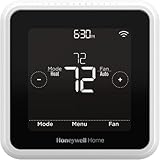
The Honeywell Home T5 is the model to consider when your equipment is more complicated than a single furnace and a single air conditioner. Honeywell Home’s Wi-Fi thermostats are generally documented as wanting a C wire for reliable always-on Wi-Fi operation, which sounds like a disqualification in an article about homes without one — but it is better read as a planning note. If you have a four-wire bundle and multi-stage equipment, you were probably already going to need a wiring solution; the T5 is the model that makes that solution worth the effort, because it can actually use the extra terminals.
Key specs as listed and by category:
- Power: C wire generally required for WiFi operation; plan an add-a-wire kit or plug-in transformer if you lack one
- Connectivity: WiFi with app control
- System support: multi-stage conventional and heat-pump configurations
- Programming: programmable schedules with setback periods
- Voice: works with major voice assistants through the platform
- Price tier: mid-range
The T5’s real advantage is that it is the brand your HVAC contractor already knows. Honeywell Home thermostats sit on an enormous installed base, which means replacement parts, wiring diagrams, and technician familiarity are rarely a problem. For a house with a two-stage furnace or a heat pump with auxiliary heat, that familiarity translates into fewer surprises during installation and easier troubleshooting years later. Scheduling is conventional rather than clever, and the app is functional rather than delightful, but the hardware does the job it was designed to do.
Pros:
- Handles multi-stage and heat-pump configurations
- Widely recognized by HVAC technicians
- Mid-range price tier for the capability
- Reliable scheduling and setback behavior
- Broad voice-assistant support through the platform
Cons:
- Generally needs a C wire for WiFi, adding cost or labor in a four-wire home
- No remote room sensors
- App experience is functional rather than polished
- Overkill for a basic single-stage system
- An add-a-wire kit or transformer is an extra purchase
Compared with the SASWELL Smart WiFi Thermostat, which also advertises 3H/2C support but includes a C-wire adapter in the box at a budget tier, the T5 asks you to solve the wiring yourself in exchange for a mainstream brand and better long-term support. Compared with the ecobee Smart Thermostat Enhanced, the T5 gives up the included Power Extender Kit and the sensor ecosystem. Choose the T5 if you want a familiar name on a complex system and are comfortable adding a common wire; choose one of the adapter-included models if you want the wiring problem solved for you.
5. ecobee Smart Thermostat Enhanced – Best Overall for Homes Without a C Wire
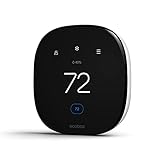
The ecobee Smart Thermostat Enhanced is the best overall answer in this roundup because it is the only premium model that ships with a wiring solution in the box. The Power Extender Kit installs at your furnace or air handler control board, where you have access to the C terminal, and lets a four-wire bundle at the thermostat behave like a five-wire bundle. That is a materially different proposition from power stealing: you are not hoping the electronics can sip current from the heating and cooling conductors, you are giving the thermostat a proper common connection using parts that came with it.
Key specs as listed and by category:
- Power: Power Extender Kit included for homes without a C wire
- Connectivity: WiFi with app control
- System support: multi-stage conventional and heat-pump configurations
- Certification: Energy Star certified
- Ecosystem: supports major voice platforms and Apple HomeKit integrations
- Expansion: compatible with remote room sensors — check whether your bundle includes one
- Price tier: premium
Beyond the wiring kit, the Enhanced earns its tier through scheduling depth. Comfort settings let you define home, away, and sleep profiles with different sensors and setpoints, which is genuinely useful in a two-story house where the thermostat’s hallway location is not where anybody sits. Energy Star certification backs up the efficiency claims. The trade-off is installation effort: the Power Extender Kit requires opening the furnace or air handler panel and matching wires at the control board, which is a step beyond a wall-plate swap and not something every homeowner wants to do.
Pros:
- Power Extender Kit included — no C wire needed
- Handles multi-stage and heat-pump systems
- Energy Star certified
- Room-sensor expansion available
- Broad smart-home integration, including HomeKit
Cons:
- Premium price tier
- Power Extender Kit installation means working inside the furnace or air handler
- Remote sensors may be sold separately depending on the bundle
- More setup decisions than a simple battery thermostat
- Overkill for a heating-only system
Compared with the Google Nest Thermostat, the ecobee Enhanced replaces a compatibility gamble with a hardware solution, which is why it takes the top spot here. Compared with the Honeywell Home T5, it adds the included adapter and the sensor ecosystem while matching the multi-stage support. The nearest genuine alternative is the SASWELL at the budget tier, which also includes a C-wire adapter and advertises 3H/2C capability — but SASWELL asks you to accept a smaller brand, thinner documentation, and a plainer app in exchange for the savings. If you want the wiring problem solved once and never revisited, the ecobee Enhanced is the one to buy.
6. meross Smart WiFi Thermostat – Best for Homes That Already Have a C Wire

The meross Smart WiFi Thermostat is included here as an honest counterpoint: its listing name states that a C wire is required and sold separately. That makes it the wrong purchase for a four-wire home unless you plan to add a common wire or buy the adapter, and the right purchase for a home that already has a spare conductor sitting unused behind the old thermostat. Plenty of houses do — builders often ran five-wire bundles even when the original equipment only used four — and if you are in that group, this is one of the more affordable ways into a connected thermostat.
Key specs as listed:
- Power: C wire required — sold separately
- Connectivity: WiFi with app control
- Programming: programmable schedules through the app
- Ecosystem: meross smart-home platform, which is best known for broad assistant support and simple setup flows
- Install: DIY at the wall plate once a C wire is present
- Price tier: mid-range
The case for meross is value. meross built its reputation on inexpensive smart-home hardware that works with mainstream voice assistants, and a thermostat at the mid-range tier with a C wire available is a reasonable proposition — always-on power means the Wi-Fi radio never has to compromise, so app responsiveness is typically better than on battery models. The catch is that “C wire required” is not a footnote; it is the whole compatibility story. Before ordering, take the old thermostat off the wall and photograph the terminal block, then count the wires.
Pros:
- Straightforward, affordable smart thermostat if you have a C wire
- Always-on power means no battery changes and no power-stealing quirks
- App-based scheduling and remote control
- Fits the broader meross smart-home ecosystem
- Simple wall-plate installation
Cons:
- C wire required and sold separately — the primary limitation
- Adding a C wire costs money or labor if yours is a four-wire bundle
- No remote room sensors
- Fewer advanced comfort features than premium platforms
- Not a fit for heat-pump systems with complex terminal requirements
Compared with the Hamwesh Smart Thermostat, the meross costs more and demands wiring the Hamwesh does not — but it rewards a house that already has the common lead with steadier Wi-Fi behavior and no battery maintenance. Compared with the Honeywell Home T5, the meross is cheaper and simpler, but the T5 handles multi-stage equipment the meross is not positioned for. If you are certain about your wiring, the meross is a sensible mid-range pick; if you are not certain, buy one of the no-C-wire models instead and skip the uncertainty.
7. SASWELL Smart WiFi Thermostat – Best Budget Option for Heat Pumps and Multi-Stage

The SASWELL Smart WiFi Thermostat is the value outlier in this roundup, because it advertises something usually reserved for premium models: a C-wire adapter included in the box, plus 3H/2C support for heat pump and conventional systems. A 3H/2C rating means the thermostat can control up to three stages of heating and two stages of cooling, which covers a heat pump with auxiliary or emergency heat and many two-stage conventional setups. Getting that capability at a budget tier, with the adapter included, is the reason this model earns a spot despite being a less familiar name.
Key specs as listed:
- Power: C-wire adapter included
- System support: 3H/2C for heat pump and conventional systems
- Connectivity: WiFi with app control
- Programming: programmable scheduling
- Install: DIY with the included adapter for homes lacking a C wire
- Price tier: budget
The strength is capability per dollar. If you have a heat pump with auxiliary heat and no C wire, your realistic options elsewhere in this guide start at the mid-range tier and climb; SASWELL undercuts that by bundling the adapter and the extra terminals together. For a rental property, a workshop, or a second home where you want remote visibility of the temperature without paying premium prices, that combination is hard to argue with.
Pros:
- C-wire adapter included — no separate purchase
- 3H/2C support covers heat pumps with auxiliary heat
- Budget price tier
- WiFi app control and programmable scheduling
- Adapter installation keeps the wall-plate wiring simple
Cons:
- Lesser-known brand with thinner public documentation
- App polish and long-term support are less predictable than mainstream names
- No Energy Star certification noted
- No room-sensor expansion
- Fewer published compatibility resources than larger brands
Compared with the ecobee Smart Thermostat Enhanced, SASWELL delivers a similar wiring solution — an adapter that creates a common connection — at a fraction of the tier, but without the sensor ecosystem, the polished app, or the brand support network. Compared with the Riseem WiFi Thermostat, SASWELL offers substantially more system capability for a similar outlay, which makes Riseem the pick only for a plain single-stage system where nothing more is needed. If your heat pump needs auxiliary heat support and your budget is firm, SASWELL is the strongest budget answer here.
8. Riseem WiFi Thermostat – Best for Simple 1 Heat / 1 Cool Replacements

The Riseem WiFi Thermostat is the plainest tool in this box, and that is its appeal. The listing describes a single-stage 1 heat / 1 cool thermostat with app remote control and either 7-day or 0-day programming — the latter meaning you can effectively run it without a schedule at all and control it entirely from your phone. That combination targets a specific homeowner: someone with a basic furnace and air conditioner, a four-wire bundle, and no interest in sensors, geofencing, or efficiency dashboards.
Key specs as listed:
- System support: single-stage 1 heat / 1 cool
- Connectivity: WiFi with app remote control
- Programming: 7-day or 0-day (no schedule) modes
- Power: the listing does not spell out a C-wire requirement — confirm the power method before purchase
- Install: DIY wall-plate replacement
- Price tier: budget
The honest framing on power is important here. Many thermostats in this price class run on batteries, and battery power is what allows them to work in a four-wire home; but because the listing name does not state the power method explicitly, the correct move is to read the full product description or ask the seller before ordering. If it turns out to be a C-wire model, you would need an adapter or a fifth conductor, and the SASWELL or Hamwesh would have been the better buy.
Pros:
- Budget price tier
- Straightforward single-stage 1H/1C replacement
- App remote control for temperature and schedule
- 7-day or 0-day programming gives you a schedule-free option
- Simple feature set means fewer setup decisions
Cons:
- No heat-pump or multi-stage support
- Power method not stated in the listing name — verify before buying
- No Energy Star certification noted
- No room sensors or occupancy features
- Long-term app support from a small brand is uncertain
Compared with the Hamwesh Smart Thermostat, the Riseem offers a slightly broader 1 heat / 1 cool framing while the Hamwesh states its no-C-wire design outright and adds a color LCD and voice control. That difference matters: in a category where wiring determines whether the product works, an explicit statement beats an inference. Compared with the SASWELL, the Riseem gives up the included adapter and the 3H/2C terminals. Buy the Riseem if you have confirmed the power method and want the simplest possible connected thermostat; otherwise the Hamwesh is the safer budget choice.
How to Choose
Start with the wall, not the app store. Turn off power at the furnace switch, pull the old thermostat off its base, and look at the terminal block. You are counting conductors and reading letters. The letters that matter are R or Rc/Rh (24-volt power from the transformer), W (heat), W2 (second-stage heat), Y (cooling), Y2 (second-stage cooling), G (fan), O/B (reversing valve on a heat pump), AUX or E (auxiliary or emergency heat), and C (the common return). A four-wire bundle with R, W, Y, and G is the classic no-C-wire situation this article is about. A five-wire bundle with a spare conductor is a gift — cap it, label it, and you can buy any thermostat in this guide.
Next, understand what the C wire actually does, because the name is misleading. It is not a “charging” wire and it is not optional in a technical sense for every design; it is the return path that completes the 24-volt circuit and lets a thermostat draw continuous power without pushing current through the heating or cooling control circuits. Thermostats that lack it solve the problem in one of four ways, and knowing which method a model uses tells you most of what you need to know.
| Power method | How it works | Typical trade-offs | Best when |
|---|---|---|---|
| Batteries (usually two AA cells) | Thermostat electronics run on cell power; the 24-volt wires only switch equipment | Roughly annual battery replacement; keeps working during outages; radio activity is managed to save power | Four-wire bundle, single-stage system, simple install |
| Power stealing / trickle charging | Unit sips a small current through existing conductors to recharge an internal cell | Can misbehave on some systems and may need a separately sold power connector | You want no batteries and have a compatible system |
| In-box adapter (Power Extender Kit or C-wire adapter) | Module at the furnace or air handler creates the common connection using the existing bundle | Requires opening the equipment panel; adds an install step | Four-wire bundle with multi-stage or heat-pump equipment |
| New C wire or add-a-wire kit | A fifth conductor is run, or an add-a-wire module multiplexes one | Professional runs typically cost in the low hundreds of dollars; add-a-wire kits are far cheaper | You plan to stay in the house and want maximum thermostat choice |
Now do the battery math so the trade-off is concrete rather than abstract. A pair of quality AA alkaline cells holds roughly 2,500 milliamp-hours of usable capacity at low drain. If a thermostat averaged 100 microamps — 0.1 milliamp — the arithmetic would be 2,500 ÷ 0.1 = 25,000 hours, about 2.8 years. Real battery-powered smart thermostats wake their Wi-Fi radio regularly, which pushes average draw far higher, so published expectations usually land near a year. That is why battery models ask you to keep spares in a drawer, and why a home that loses power often is actually better served by batteries than by power stealing: the thermostat keeps its schedule and keeps switching the equipment when the grid is down.
Then match the thermostat to the equipment, not the other way around. Single-stage conventional systems — one furnace stage, one compressor stage — are the easy case, and every model here handles them. A heat pump with auxiliary or emergency heat needs O/B plus AUX or E terminals, which rules out the single-stage-only models immediately. Two-stage equipment needs W2 and Y2. Dual-fuel setups, where a heat pump hands off to a gas furnace, need the thermostat to coordinate the changeover, and that is the point where you stop shopping by price and start reading terminal specifications line by line. If your system includes any of those, the honest answer is that you need a multi-stage-capable thermostat plus a way to power it, and the models that bundle a C-wire adapter are the ones worth your attention.
Consider the physical installation too. Wall-plate swaps take twenty minutes and a screwdriver. Adapter installs mean killing power at the furnace, opening a panel, and matching low-voltage conductors at a control board — a job many homeowners can do and some should not. If you are in the second group, the battery models are not a compromise; they are the correct answer. Wire gauge and transformer capacity are rarely the limiting factor: thermostat cable is typically 18 to 22 AWG, and residential control transformers commonly supply 24 volts AC with 20 to 40 volt-amperes, which is ample for a thermostat plus a furnace board. Where people get into trouble is mixing up Rc and Rh on a two-transformer system, or assuming a spare blue wire behind the wall is actually connected at the furnace. Verify both ends.
Finally, weigh the upgrade path. A budget single-stage thermostat is a dead end — when you replace the furnace, you replace the thermostat with it. A platform with room-sensor support, multi-stage terminals, and an adapter in the box survives an equipment upgrade. That is the argument for spending at the mid-range or premium tier even in a simple house: you are not buying capability for today’s system, you are buying the ability to say yes the next time an HVAC technician asks whether your thermostat can handle a second stage.
Frequently Asked Questions
Can a smart thermostat work without a C wire at all?
Yes. Three approaches make it possible: battery-powered thermostats that run their electronics on cells, power-stealing thermostats that draw a small current through existing conductors, and thermostats that ship with an adapter creating a common connection at the furnace. The model you choose determines which approach applies, so check the power method before buying rather than after.
What does the C wire actually do?
The C wire, or common wire, completes the 24-volt circuit between the thermostat and the HVAC transformer. With it, a thermostat can draw continuous power for Wi-Fi and a display without pushing current through the heating and cooling control circuits. Without it, the thermostat has to find power somewhere else, which is the entire design problem these models solve.
Is a battery-powered thermostat as reliable as a C-wire model?
For switching your equipment, yes — the thermostat still uses the same 24-volt signals to call for heat and cooling. The practical difference is maintenance: you replace batteries roughly annually, and the Wi-Fi radio may respond a beat slower because the design conserves power. In exchange, a battery thermostat keeps working during a power outage, which C-wire models generally cannot do.
How much does it cost to add a C wire?
If a spare conductor already runs from the thermostat to the furnace, the cost is your time. If it does not, an add-a-wire kit is an inexpensive hardware purchase you install yourself, while a professional run of new thermostat cable typically lands in the low hundreds of dollars depending on access and wall construction. That range is worth knowing before you decide a C-wire-required thermostat is a bargain.
What is a Power Extender Kit or C-wire adapter, and do I need one?
It is a small module that installs at your furnace or air handler control board and creates the common connection the thermostat needs, using the four conductors already in your wall. You need one if you have a four-wire bundle and want a thermostat that supports multi-stage or heat-pump equipment. Models that include it in the box save you a separate purchase and a compatibility question.
How do I tell whether I have a C wire?
Turn off power to the furnace, remove the thermostat from its base, and look at the terminal block. If a wire is landed on a terminal labeled C, you have one. If you see a spare conductor that is not connected at either end, you do not — a wire only counts as a C wire if it is terminated at the equipment as well.
Will a no-C-wire thermostat work with my heat pump?
Sometimes, but heat pumps raise the stakes because they need O/B for the reversing valve and often AUX or E for auxiliary heat. Single-stage-only models cannot control those terminals. If you have a heat pump with backup heat, choose a thermostat rated for multi-stage or heat-pump operation and pair it with an included