What's inside
- Quick picks by situation
- What “long range” means in real use
- FRS, GMRS, and licensing
- Head-to-head: the features that affect ownership
- Battery life and charging: the overlooked range limit
- Weather resistance and workshop durability
- Privacy codes are not private conversations
- A buying decision matrix
- Setup mistakes that reduce usable range
- Bottom line
As an Amazon Associate I earn from qualifying purchases. This post may contain affiliate links at no extra cost to you.
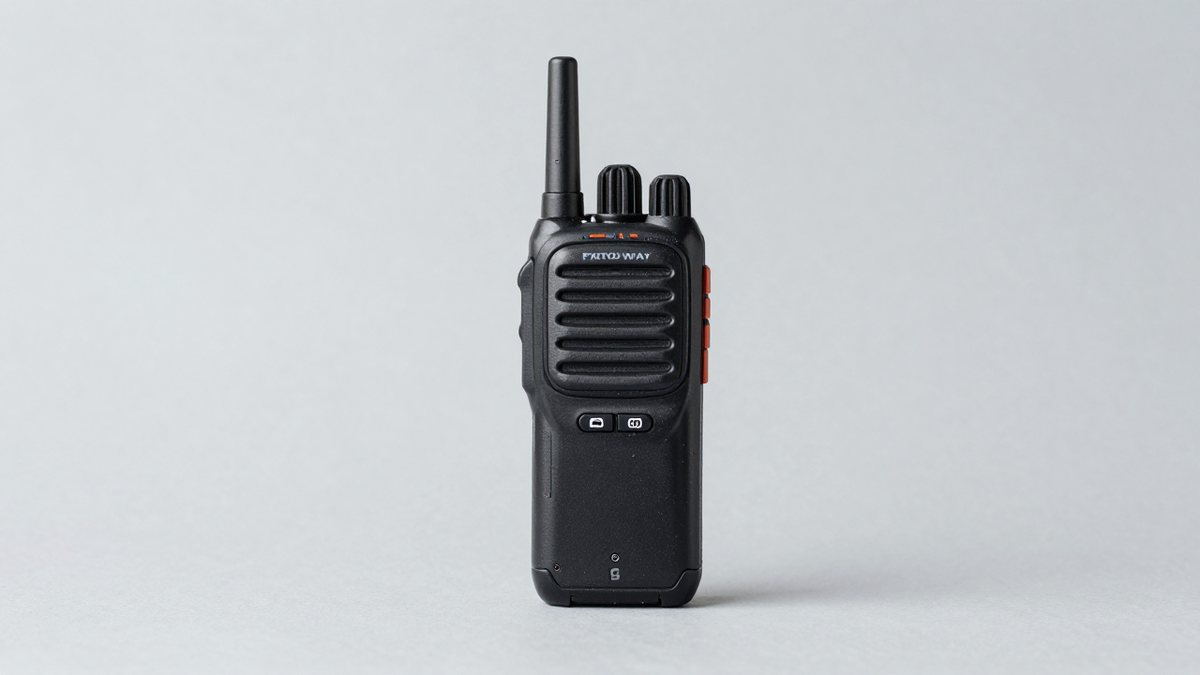
The best two way radios for most buyers are a weather-resistant FRS pair with USB-C charging, a removable or high-capacity battery, and realistic expectations of roughly 1–3 miles in ordinary mixed terrain—not the much larger number printed on the package.
As an Amazon Associate we earn from qualifying purchases at no extra cost to you.



Our Top Picks
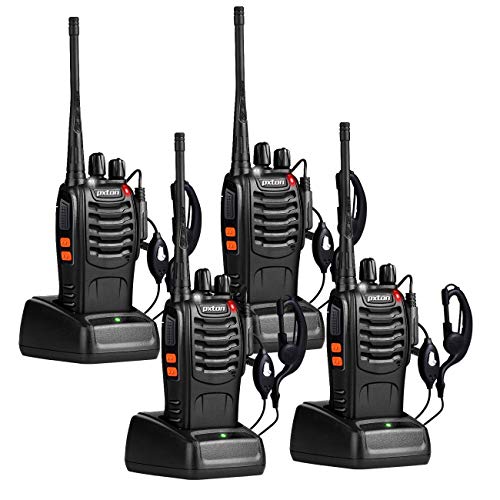
 pxton Walkie Talkies Rechargeable Long Range Two-Way Radios9.9 x 6.9 x 2.2 inches1.39 poundsCheck on Amazon
 Retevis RB48 FRS Walkie Talkies Long Range1.3 x 2.4 x 7.1 inches1.3 x 2.4 x 7.1 inches1.6 PoundsCheck on Amazon

Quick picks by situation
- Best for job sites and property maintenance: A rugged FRS radio with a removable battery, USB-C charging, a belt clip, and an IP rating of at least IP54.
- Best for hiking and exposed terrain: A compact, waterproof FRS radio such as the Rocky Talkie Mountain Radio, provided its fixed antenna and controls suit your group.
- Best for family camping: A simple FRS pair with weather alerts, rechargeable batteries, and a charging dock or multi-radio cable.
- Best for maximum flexibility: A programmable GMRS radio, such as the Midland MXT handheld range or a compatible handheld unit, when you are prepared to obtain the required license.
- Best low-cost option: A basic FRS pair from established lines such as Midland X-Talker, Cobra RX, or Motorola Talkabout—provided you prioritize useful battery and charging specifications over “50-mile” claims.
What “long range” means in real use
Two-way-radio range claims usually describe ideal line-of-sight conditions: two radios held outdoors, with no trees, buildings, hills, vehicles, or electrical interference between them. That is not how most woodworking, property, camping, or event use happens.
| Environment | Typical useful range | What limits the signal |
|---|---|---|
| Open, elevated ground | 2–8 miles for many handheld FRS/GMRS radios | Terrain curvature, antenna height, weather, and power |
| Suburban streets | 0.5–2 miles | Houses, vehicles, trees, and local radio traffic |
| Dense woods | 0.25–1.5 miles | Wet foliage, hills, and absorption by vegetation |
| Large building or workshop | Several hundred feet to about 1 mile | Concrete, steel, machinery, and floor construction |
| Mountain or ridge routes | Highly variable; often several miles with clear sightlines | Ridges can block a signal completely despite short map distance |
As a practical calculation, suppose a manufacturer advertises 36 miles but your route is wooded and rolling. If the usable fraction is only 2% to 5% of the ideal claim, the practical result is about 0.7 to 1.8 miles. That is not a guarantee, but it illustrates why antenna height and obstructions matter more than a large headline number.
FRS, GMRS, and licensing
FRS radios are usually the simplest choice for families, workshops, and casual outdoor use in the United States. FRS operation does not require an individual license, and approved FRS radios have restricted power and integral antennas. You cannot increase their power or attach an external antenna to turn them into a longer-range system.
GMRS can provide more range and better flexibility, especially with higher-power handhelds, repeaters, or a properly installed mobile radio. In the United States, GMRS operation requires an FCC license. The license generally covers the licensee and their immediate family, but it does not make every radio legal on every frequency.
Many dual-service radios can transmit on both FRS and GMRS channels. Use only the channels, power levels, antennas, and accessories permitted for that service. A programmable radio such as a Baofeng UV-5R is not automatically legal for transmitting on FRS or GMRS simply because it can receive or display those frequencies. It also requires careful programming and does not have the same simple compliance path as a purpose-built consumer radio.
Head-to-head: the features that affect ownership
| Radio type or example | Power and service | Charging and battery | Weather resistance | Best fit |
|---|---|---|---|---|
| Basic FRS pair | Low-power, license-free FRS | Usually 3–4 AA or AAA cells; some include USB charging | Often splash-resistant rather than waterproof | Family use, occasional projects, short property distances |
| Midland X-Talker series | Consumer FRS models with multiple channels and privacy codes | Model-dependent; rechargeable packs or alkaline battery support | Varies by model; check the exact IP or JIS rating | Budget-conscious users who want a familiar interface |
| Cobra RX series | Consumer FRS models, often with weather reception | Commonly rechargeable or AAA-compatible, depending on model | Model-dependent; do not assume waterproofing | Camping and general household communication |
| Rocky Talkie Mountain Radio | FRS, compact handheld format | Rechargeable lithium battery; USB charging | Designed for demanding outdoor use; verify the current model rating | Hiking, skiing, climbing, and hands-free carry |
| Purpose-built GMRS handheld | Higher-power GMRS; license required in the US | Often removable lithium-ion battery and USB charging | Frequently more rugged, but rating varies | Large properties, repeaters, and regular long-distance use |
The table shows why “best” is not one model. A small FRS radio can be the better tool if everyone needs to use it immediately, while a GMRS system can be worth the license and setup effort for a farm, construction site, or trail network.
Battery life and charging: the overlooked range limit
Manufacturers often quote standby time or a mixed-use estimate, not continuous transmitting time. Transmitting draws much more power than listening. A realistic planning rule is to expect approximately 8–16 hours of moderate intermittent use from a modern rechargeable handheld, less in cold weather and less when the signal is weak and the radio repeatedly increases its duty cycle or is used at high power.
For a full workday, calculate capacity rather than relying on a runtime headline. If a 2,000 mAh battery provides about 10 hours of mixed use, two radios used for eight-hour shifts need roughly 3,200 mAh-hours combined per day. Carrying one charged spare per radio adds a useful margin for cold conditions, missed charging, and extended conversations.
USB-C is more convenient than a proprietary cradle because the same cable can charge radios, phones, and headlamps. A removable battery is better for long ownership: when capacity declines after several years, you can replace the pack instead of replacing the radio. AA or AAA compatibility is valuable for emergencies, but disposable batteries are less economical for frequent use.
Weather resistance and workshop durability
Look for an explicit IP rating. IP54 indicates limited dust protection and resistance to water splashes; it does not mean the radio can be submerged. IP67 indicates dust-tight construction and temporary immersion protection under specified laboratory conditions. A sealed radio may survive rain, but its speaker can sound muffled until the grille dries.
In a woodworking shop, dust is often a greater threat than rain. Keep radios away from extraction outlets, blow them clean with low-pressure air, and do not poke compressed air directly into the speaker or microphone openings. Inspect the belt clip, battery latch, charging flap, antenna base, and rubber buttons first: these parts usually wear before the electronics fail.
Privacy codes are not private conversations
CTCSS and DCS “privacy codes” do not encrypt speech. They simply keep your radio quiet unless it detects the selected tone or digital code. Someone using the same channel without your code can still hear you, and another group may accidentally use your code and interrupt your conversations.
Use a less congested channel and code for organization, not confidentiality. For sensitive business, security, or personal information, use an authorized encrypted communications system rather than consumer FRS or ordinary GMRS radios.
A buying decision matrix
| Your situation | Recommended choice | Prioritize | Avoid paying extra for |
|---|---|---|---|
| Occasional family use, under $75 per pair | Basic FRS pair | Simple controls, AA/AAA backup, weather reception | Extreme advertised range |
| Daily workshop or property work | Rugged rechargeable FRS or licensed GMRS pair | IP rating, removable battery, belt clip, speaker clarity | Large channel count with no scan or labeling benefit |
| Long hikes with rain and cold | Compact sealed FRS radio | Water resistance, glove-friendly controls, battery retention | Bulky accessories you will leave behind |
| Large rural property or repeat use | GMRS system with a license and possible repeater | Coverage planning, replaceable batteries, compatible antennas | Unlicensed high-power operation |
Setup mistakes that reduce usable range
- Keep the antenna vertical. Hold the radio upright and away from your body or metal equipment.
- Move to higher ground. A small rise or open doorway can help more than switching channels.
- Use the same channel and code. Confirm both radios are on the same service-compatible setting.
- Test from the actual work area. Walk the route before relying on the radios for safety or coordination.
- Use a speaker microphone when appropriate. It keeps the radio accessible, but check that the accessory retains the radio’s water-resistance rating.
- Charge and inspect regularly. Clean contacts, dry wet radios before charging, and replace swollen or damaged lithium batteries.
Bottom line
Choose a well-built FRS radio when convenience, low cost, and license-free operation matter most. Choose GMRS when your group needs more power, removable antennas, repeaters, or a planned system and is willing to follow licensing rules. In either case, judge the best two way radios by their performance in your terrain, battery strategy, weather protection, and repairability—not by the largest range number on the carton.