What's inside
As an Amazon Associate I earn from qualifying purchases. This post may contain affiliate links at no extra cost to you.
Threaded rod is easy to cut, but the wrong cordless saw can turn a five-minute job into a pile of damaged hardware. The main choice is between a compact cordless portable bandsaw and a reciprocating saw. Both can cut all-thread, galvanized rod, and stainless rod, but they differ sharply in speed, control, mess, and how likely they are to damage the threads.
As an Amazon Associate we earn from qualifying purchases at no extra cost to you.


Quick answer
A cordless portable bandsaw is the better tool if you regularly cut threaded rod, especially 3/8-inch, 1/2-inch, or larger rod. Its continuous blade makes a cleaner, straighter cut with fewer sparks and less vibration. It is also easier to use overhead or near finished surfaces.
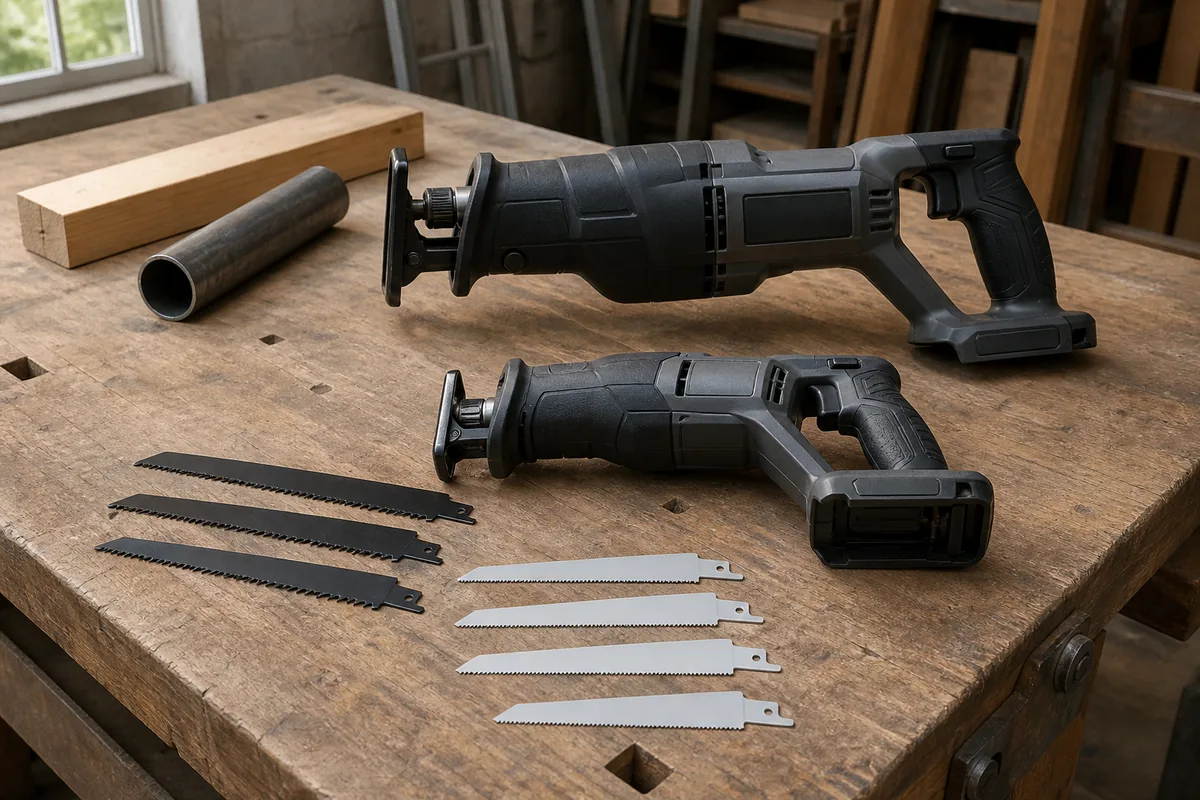
A reciprocating saw is the cheaper and more versatile option. It makes sense if you already own one, only cut threaded rod occasionally, or also need to cut pipe, wood, demolition materials, and sheet goods. Fit it with a fine-tooth metal blade and work carefully. A recip saw can do the job well, but it is less forgiving.
If you are buying specifically for repeated all-thread work, compare cordless portable bandsaws on the battery platform you already use. For occasional work, a cordless reciprocating saw usually costs less and earns its keep in more situations.
Portable bandsaw vs. reciprocating saw
| Factor | Cordless portable bandsaw | Cordless reciprocating saw |
|---|---|---|
| Cut quality | Clean, square cut with little burr | Acceptable to rough, depending on blade and technique |
| Typical threaded-rod speed | Usually 3–10 seconds for common sizes | Often 5–20 seconds, with more operator control required |
| Thread damage risk | Low when the rod is supported | Moderate; vibration can deform the first threads |
| Sparks and debris | Very little | More chips, vibration, and occasional sparks |
| Other uses | Metal stock, conduit, pipe, strut, angle iron | Wood, demolition, plastic, pipe, sheet metal, flush cutting |
| Cost | Higher tool and blade cost | Lower entry cost if you already own the tool |
Why the bandsaw is better for threaded rod
A portable bandsaw uses a continuous loop of blade. The teeth stay engaged with the rod instead of repeatedly striking it. That produces a controlled cut with far less vibration. The blade also tends to track squarely when the saw is held against the work.
That matters because threaded rod is not just round stock. Damaging the first few threads can prevent a nut from starting, particularly with coarse construction rod that has already been exposed to dirt or impact. A bandsaw normally leaves an end that needs only a quick deburring pass. With a sharp blade, it is often possible to run a nut onto the cut end without fighting it.
Portable bandsaws are also quieter and cleaner than a recip saw. They do not throw a long shower of hot metal like an abrasive wheel, and they produce less vibration when cutting rod attached to a bracket or support. Many compact models accept a roughly 2- to 3-inch cutting capacity, which is enough for threaded rod, EMT conduit, small pipe, and metal strut.
The drawbacks are real. The throat limits what you can reach, so a bandsaw is not useful for flush-cutting a rod tight against a wall or plate. Replacement blades cost more than recip blades, and a bandsaw is a specialized tool. It can also be awkward when the rod is buried behind framing or when you need to start a cut in the middle of a large sheet.
When a reciprocating saw is the better buy
A reciprocating saw wins on versatility. One tool can cut threaded rod, nails, PVC, copper pipe, lumber, and demolition materials. If your cordless platform already includes a recip saw, buying a dedicated bandsaw for a few cuts is difficult to justify.
Use a fine-tooth metal-cutting blade rather than a general demolition blade. A blade in the range of 14 to 24 teeth per inch is a practical starting point for common threaded rod. Finer teeth generally make a smoother cut, while coarser blades cut faster but can grab and chatter. For 1/2-inch rod, a 6-inch or 9-inch blade is usually easier to control than an excessively long blade.
The major failure mode is letting the rod bounce. Reciprocating blades cut on the stroke, so unsupported rod can whip, chatter, and strip the threads at the end. Clamp the rod close to the cut, or support it against a solid surface. Use moderate pressure and let the blade cut instead of forcing the shoe into the work. A variable-speed trigger is useful; full speed is not always fastest when the blade is jumping.
For a cleaner finish, install a nut before cutting. After the cut, remove the burr with a file, deburring tool, or grinder, then back the nut off over the cut end. The nut can help realign lightly damaged threads, but it will not repair badly crushed or melted threads. Do not rely on this trick when the rod is structural or when the connection must meet a specified grade or installation method.
Battery platform and running cost
For cordless tools, the battery ecosystem often matters more than a small difference in cutting performance. A bare-tool bandsaw may look affordable, but adding a battery and charger can change the total by a significant amount. If you already own batteries from a platform, staying within that system is usually the cheapest and most convenient route.
For occasional cutting, a compact 18V or 20V-class battery is plenty. A healthy 2.0Ah or 4.0Ah pack can cut many pieces of ordinary steel rod; blade condition and rod size affect runtime more than the nominal voltage. Larger 5.0Ah or 6.0Ah packs add weight, which is noticeable when cutting overhead or holding the saw at arm’s length.
Check charger availability, replacement battery prices, and the brand’s range of cordless hand tools before committing. A tool-only purchase is attractive only if you already have compatible packs. Avoid buying a second battery system solely for a bandsaw unless the tool will see frequent use.
A reliable cutting method
Measure from the end and mark the rod with a paint marker. Leave enough extra length for washers, nuts, and adjustment; cutting a rod 1/8 inch too short is a common and expensive mistake. Secure the rod so it cannot rotate or bounce, and keep the offcut supported if it is long enough to fall or swing.
Wear eye protection. Gloves are useful for handling freshly cut rod, but keep them away from a moving blade and do not use loose clothing. After cutting, remove the sharp burr before installing the rod. If the cut will be made near finished work, shield the surface from metal chips and check for hidden wiring, plumbing, or gas lines.
Choose the metal-cutting bandsaw blades or fine-tooth recip saw blades suited to the tool. A dull blade creates heat, slows the cut, and increases thread damage. For occasional repairs, the recip saw is fine. For repeated installation work, the portable bandsaw quickly pays back its higher price in cleaner cuts and less rework.
Related guides
- Longest Lasting Lawn Mower Battery: AGM vs Lithium vs Flooded Lifespan and Cost per Season
- Duralast Gold Lawn Mower Battery Review: U1 Fit, CCA and When to Pay for AGM
- Greenworks Pro 80V 21-Inch Mower Review: Runtime Math, Push vs Self-Propelled and Yard Fit
- Bosch High Pressure Washer Gun Replacement: Fittings, Adapters and What Fits Your Model