What's inside
As an Amazon Associate I earn from qualifying purchases. This post may contain affiliate links at no extra cost to you.
A cordless grinder naturally produces sparks, heat, and noise. The goal is not to eliminate those things; it is to keep them controlled so the wheel, motor, battery, and workpiece do not overheat. Good battery management matters because a grinder can draw more current than most cordless tools, especially when cutting thick steel or leaning hard on the disc.
Where the Sparks Come From
Most visible sparks come from the abrasive wheel cutting or grinding steel. They are tiny particles of hot metal, not electrical arcing from the tool. A steady fan of orange sparks usually means the disc is doing normal work. A sudden shower, a change in spark direction, or sparks coming from the tool housing is different and needs attention.
Keep sparks away from gasoline, solvents, sawdust, cardboard, insulation, dry grass, and battery charging areas. Hot metal can remain capable of starting a fire after it leaves your view. Check the floor and nearby surfaces after cutting, particularly in garages and workshops with dust buildup.
Electrical sparking can indicate worn motor brushes on older brushed grinders, damaged wiring, a loose battery connection, or a failing switch. Stop immediately if sparks come through the vents, the tool smells like burning insulation, or the motor surges and cuts out repeatedly.
Managing Battery Heat
A grinder heats its battery through high current draw. The battery may feel warm after a demanding cut, but it should not become too hot to hold comfortably, smell sweet or solvent-like, swell, leak, or show melted plastic. Those are failure signs, not normal operating temperature.
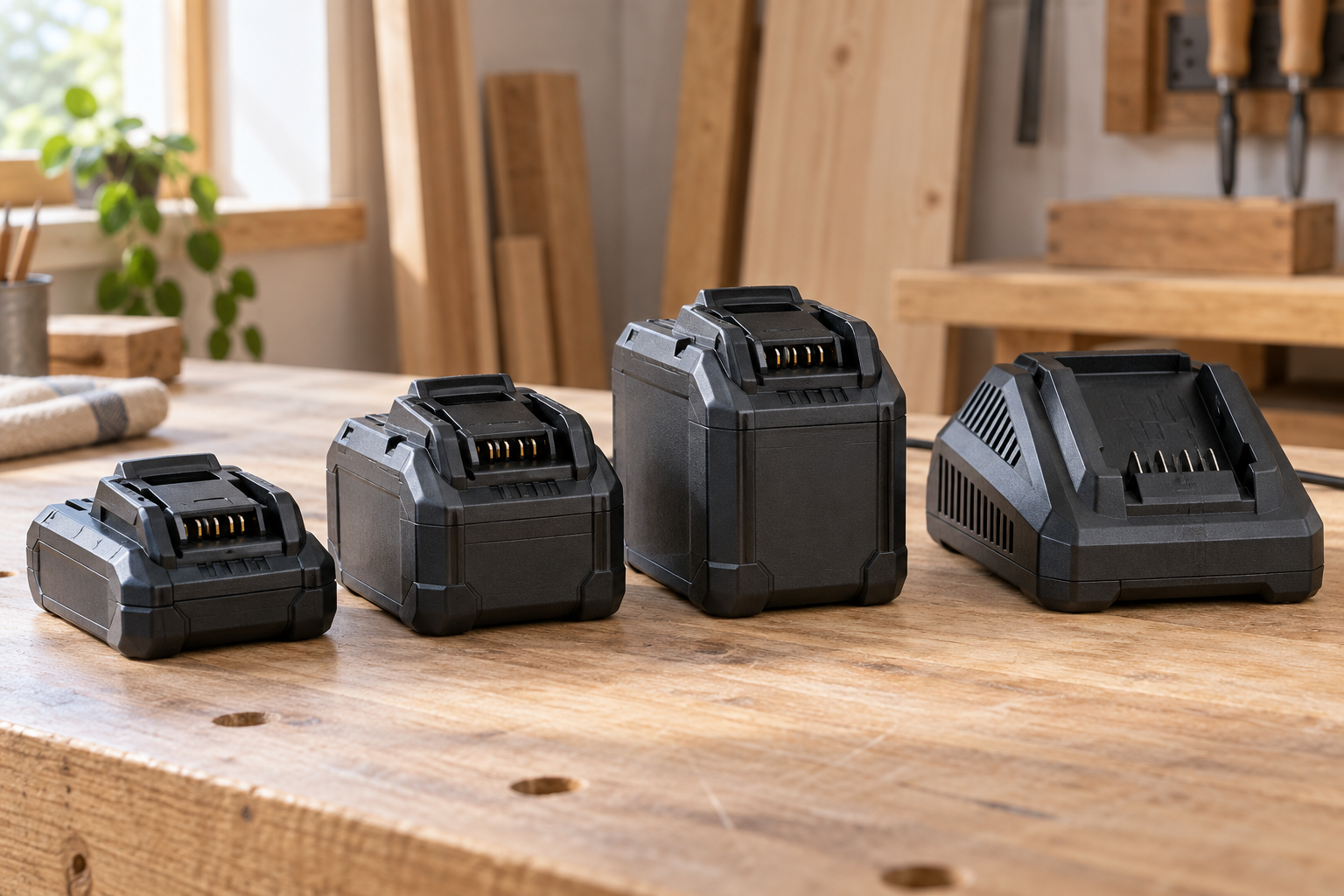
Use the largest compatible battery that makes sense for the job. A higher-capacity pack often has more cells available to share the load, so it can run cooler and maintain power better than a small compact pack. The trade-off is weight and cost. For occasional trimming of bolts, a compact pack is usually fine. For long cuts in plate or repeated grinding, a high-capacity pack is easier on both the tool and the battery.
Do not put a hot battery straight onto a charger. Let it cool in a dry, shaded place first. Chargers commonly pause when a pack is too hot or too cold, but do not defeat that protection or use an unapproved charger. Charging should happen on a nonflammable surface with air around the pack, not inside a vehicle, toolbox, or pile of rags.
If you need a spare for continuous work, buying a second battery in the same platform is generally more useful than buying a higher-powered grinder. A high-capacity cordless tool battery can reduce battery swaps, but it will not make an unsafe wheel or poor cutting technique safe.
Technique That Reduces Heat
Let the disc cut at its rated speed. Forcing the grinder into the work increases motor current, battery heat, and the chance of binding. Use moderate pressure and let the abrasive remove material. If the motor slows noticeably, ease off rather than pressing harder.
Use a thin cut-off wheel only for cutting. Do not twist it sideways, pry with it, or use the flat side for grinding. A thin disc can fracture when pinched. For grinding, use a grinding wheel or a flap disc rated for that purpose. Flap discs are often a good lower-spark choice for cleanup and blending, although they remove material more slowly than a coarse grinding wheel.
Make short passes in thick material and allow the tool to idle briefly between cuts. This gives the motor and electronics a chance to shed heat. Do not set the grinder down with the disc still spinning. Wait for a complete stop, then place it with the wheel facing away from you.
| Job | Useful accessory | Heat and spark trade-off |
|---|---|---|
| Cutting bolts or thin angle iron | Thin cut-off wheel | Fast cutting, concentrated sparks, higher binding risk |
| Removing welds or heavy rust | Grinding wheel | More material removal, substantial sparks and heat |
| Blending welds or surface cleanup | Flap disc | Usually smoother and more controllable, but slower |
| Concrete or masonry cutting | Rated diamond blade | Dust is the main hazard; use dust control and the correct guard |
Inspect the Tool and Battery
Before use, check that the guard is installed, positioned between you and the wheel, and tightened correctly. Inspect the disc for cracks, chips, moisture damage, or an expired condition. Never use a wheel with a maximum rated speed below the grinder’s no-load speed. A damaged or oversped wheel can break apart violently.
Clean the grinder’s ventilation openings with a soft brush or low-pressure air. Packed metal dust restricts cooling and can create conductive paths inside the tool. Keep the battery contacts clean and dry. A battery that fits loosely, disconnects when the grinder vibrates, or shows corrosion should be removed from service until the cause is identified.
After a stall, do not immediately pull the trigger again. Release the trigger, remove the battery if the tool is behaving abnormally, and inspect the wheel and workpiece. A stall can twist the grinder, damage the disc, and stress the battery. If the tool repeatedly shuts down under a reasonable load, it may be hitting thermal or overcurrent protection, or it may have a mechanical fault.
Choosing a Cordless Grinder Platform
For occasional DIY work, the cheaper option is often adequate: a compact grinder, one mid-size battery, and a charger can handle bolt trimming, light rust removal, and small weld cleanup. Spending more becomes worthwhile for frequent metalwork, where brushless electronics, better overload protection, and larger batteries usually improve runtime and durability.
Stay within one battery ecosystem when possible. A platform is more valuable than a small difference in grinder specifications because the same packs may run drills, saws, lights, and inflators. Compare battery availability, charger speed, replacement cost, and local service—not just the tool’s advertised power.
A brushless cordless angle grinder is a sensible choice for frequent use, while a basic brushed grinder can be perfectly serviceable for a few projects. Add a metal cut-off wheel assortment only when the discs match the grinder size and speed rating. For jobs where sparks cannot be tolerated, a cordless grinder may be the wrong tool; use a hacksaw, band saw, or other cold-cutting method instead.
Related guides
- Longest Lasting Lawn Mower Battery: AGM vs Lithium vs Flooded Lifespan and Cost per Season
- Duralast Gold Lawn Mower Battery Review: U1 Fit, CCA and When to Pay for AGM
- Greenworks Pro 80V 21-Inch Mower Review: Runtime Math, Push vs Self-Propelled and Yard Fit
- Bosch High Pressure Washer Gun Replacement: Fittings, Adapters and What Fits Your Model