What's inside
As an Amazon Associate I earn from qualifying purchases. This post may contain affiliate links at no extra cost to you.
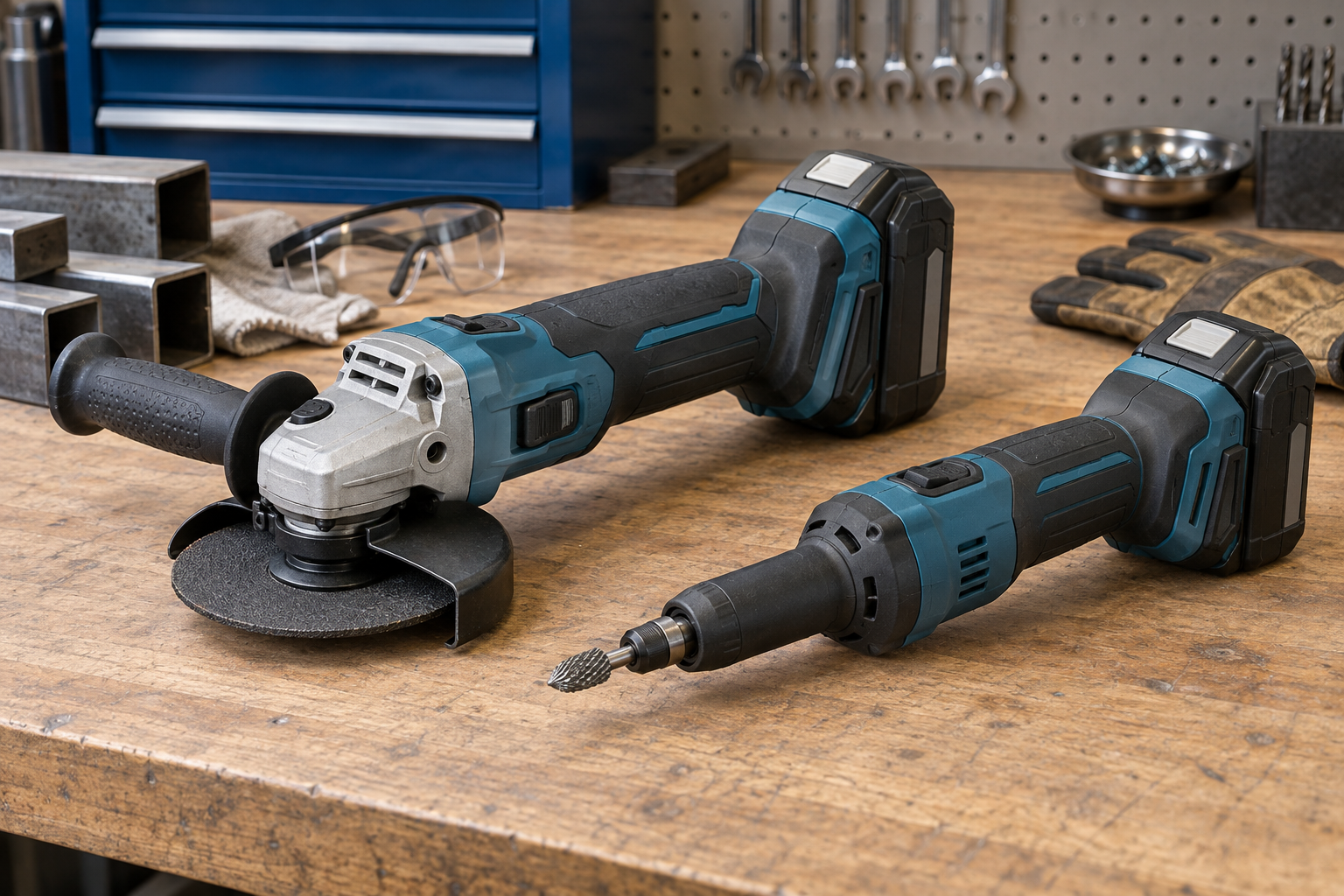
For cutting rebar, both a cordless angle grinder and a cordless cutoff saw can work, but they are built around different jobs. An angle grinder is the more versatile tool: it can cut, grind, clean welds, and handle metal fabrication. A cutoff saw is faster and more comfortable when the main task is making repeated straight cuts through larger bar.
For occasional work on #3 or #4 rebar, a grinder is usually the cheaper and more useful purchase. For a deck, footing, slab, or renovation project involving dozens of cuts, a dedicated cutoff saw saves time and is easier to control.
As an Amazon Associate we earn from qualifying purchases at no extra cost to you.



The basic difference
A cordless angle grinder normally uses a 4-1/2- or 5-inch abrasive or diamond cutting wheel. It is compact and easy to use in tight spaces, but you hold it with both hands and guide the wheel through the bar. Most grinders run on 18V or 20V-max batteries, with high-output packs delivering noticeably better performance than compact 2Ah batteries.
A cordless cutoff saw is larger and usually uses a 6-, 9-, or 12-inch blade. It has a dedicated guard, a more substantial base and handle arrangement, and often a spindle designed for abrasive or diamond blades. The larger wheel cuts deeper in one pass and the tool is generally more stable, but it weighs more and takes up more room.
| Feature | Cordless angle grinder | Cordless cutoff saw |
|---|---|---|
| Best use | Occasional cuts, grinding, tight access | Repeated straight cuts and larger bar |
| Typical wheel size | 4-1/2 to 5 inches | 6 to 12 inches |
| Cutting speed | Moderate; pressure and wheel condition matter | Fast, especially through multiple pieces |
| Portability | Excellent | Good, but heavier and bulkier |
| Other jobs | Grinding, flap discs, wire wheels, sharpening | Limited compared with a grinder |
| Typical battery demand | 5Ah is a practical general-purpose size | 5Ah to 12Ah high-output packs are preferable |
When an angle grinder makes sense
Choose a cordless angle grinder if you need one tool for more than rebar. It can cut rebar, threaded rod, bolts, sheet metal, and wire mesh, then switch to a grinding wheel or flap disc for cleanup. It is also much easier to fit between existing bars or use inside a narrow trench.
A 4-1/2-inch grinder will normally cut common #3 rebar, which is 3/8 inch in diameter, and #4 rebar, which is 1/2 inch, without difficulty. A single cut may take roughly 10 to 30 seconds depending on the wheel, battery, and technique. Larger #5 bar, at 5/8 inch, is still possible, but it takes longer and may require working around the bar rather than forcing the wheel straight through.
The drawbacks are clear. The small wheel has limited depth, and cutting several dozen pieces becomes tiring. Abrasive wheels also wear quickly. If you lean heavily on a thin wheel, it can heat up, cut slowly, or break. Use a metal-cutting wheel rated for the grinder’s speed, keep the guard installed, and do not twist the wheel in the kerf.
When a cutoff saw is better
A cutoff saw is the better choice when rebar cutting is a production task. Its larger wheel reaches through #4, #5, and heavier bar with less repositioning. A 9-inch saw can make a deeper cut than a typical grinder, while a 12-inch model is more appropriate for large bar, pipe, masonry, and demolition work.
The best cordless cutoff saws use a high-output battery and draw substantial current under load. A compact 2Ah pack may run the saw, but it can produce short runtime, early thermal shutdown, and a noticeable drop in cutting speed. A 5Ah or larger pack is a more realistic starting point; if your platform offers a 8Ah, 10Ah, or 12Ah high-output battery, that is often the better match for repeated cuts.
Look at the saw’s maximum cutting depth, blade diameter, no-load speed, and weight with the battery installed. A tool that weighs 15 pounds may be manageable for a few cuts but unpleasant to carry around a jobsite. Some cutoff saws are intended mainly for dry cutting; others accept water delivery for masonry. Do not assume a dust or water feature makes a metal-cutting setup safe without checking the manual.
Choosing the wheel and battery
For ordinary steel rebar, use a wheel specifically labeled for cutting ferrous metal. Thin abrasive wheels, often around 0.045 inch, cut quickly but are easier to damage if twisted. Thicker wheels tolerate rougher handling but remove more material and usually cut more slowly. Diamond metal-cutting blades can last longer and maintain their diameter, but the upfront cost is higher and the blade must be approved for steel rebar.
Battery choice should match the tool rather than just the voltage label. A 5Ah pack from a high-output line may outperform an older 6Ah pack with weaker cells. If you already own a platform, staying within that ecosystem often costs less than changing brands for one tool. Compare the price of the bare tool, two suitable batteries, and a rapid charger—not just the advertised tool price. A useful high-output battery and charger kit can make a bare cutoff saw much more expensive than expected.
Cutting rebar safely
Secure loose rebar before cutting. A piece that rolls or springs after the cut can catch the wheel or strike your legs. Support long stock on both sides, but leave the cut section free so the kerf does not close on the wheel. Keep bystanders away from the spark path, especially around dry grass, fuel, sawdust, insulation, and painted surfaces.
Wear safety glasses under a face shield, hearing protection, gloves suited to the work, long sleeves, and sturdy footwear. Inspect the wheel for damage, install it in the correct direction if marked, and let it reach full speed before contacting the bar. Apply steady pressure and let the abrasive do the cutting. If the wheel binds, release the trigger and wait for it to stop before repositioning the tool.
Rebar may be part of a structural footing, slab, beam, or column. Cutting an exposed end during fabrication is different from cutting reinforcement already embedded in concrete. Before removing installed rebar, confirm that it is not carrying structural loads or serving as part of a utility or anchoring system. For embedded reinforcement, ask a qualified contractor or engineer rather than treating it as ordinary scrap metal.
Which tool to buy
Buy a cordless angle grinder if you expect fewer than about 20 cuts, need to grind or polish afterward, or work in cramped locations. A 5-inch grinder on the battery platform you already own is the sensible low-cost option. A cordless 9-inch cutoff saw earns its cost when you have many straight cuts, larger rebar, or other heavy cutting jobs ahead.
The cheaper option is fine when the job is small. For a handful of 3/8-inch or 1/2-inch bars, buying a cutoff saw adds weight, battery expense, and storage for little practical gain. For repetitive work, however, the cutoff saw’s deeper wheel, better balance, and higher sustained cutting rate justify the additional cost.
Related guides
- Longest Lasting Lawn Mower Battery: AGM vs Lithium vs Flooded Lifespan and Cost per Season
- Duralast Gold Lawn Mower Battery Review: U1 Fit, CCA and When to Pay for AGM
- Greenworks Pro 80V 21-Inch Mower Review: Runtime Math, Push vs Self-Propelled and Yard Fit
- Bosch High Pressure Washer Gun Replacement: Fittings, Adapters and What Fits Your Model