What's inside
As an Amazon Associate I earn from qualifying purchases. This post may contain affiliate links at no extra cost to you.
What matters when ripping framing lumber
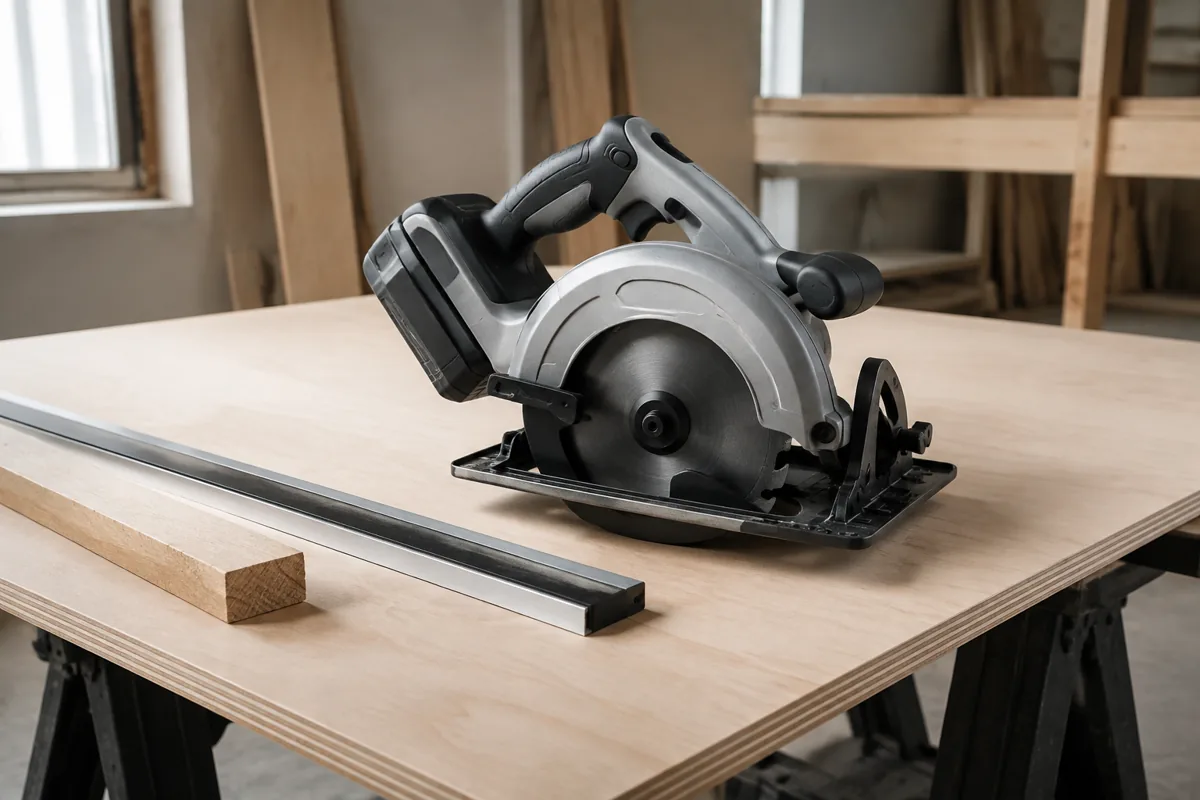
Ripping a 2×4 or 2×6 means cutting along its length, often through knots and changing grain. That puts a steadier load on a saw than a quick crosscut. For framing work, look for a 7-1/4-inch cordless saw with a direct-drive or well-supported brushless motor, a firm base plate, a useful rip fence, and enough battery capacity to keep the saw from slowing on long cuts.
A typical 2×4 is 1-1/2 inches thick, and a 2×6 is 1-1/2 inches thick too; their width changes how long the cut takes, not the depth required. A 7-1/4-inch saw usually cuts roughly 2-1/2 inches deep at 90 degrees, enough for framing lumber in one pass. Check the actual cut depth in the specifications, especially if you plan to use the saw at an angle. A 45-degree cut reduces depth substantially.
As an Amazon Associate we earn from qualifying purchases at no extra cost to you.


For occasional cuts, a compact 6-1/2-inch saw can be easier to handle, but its shallower capacity and smaller blade make it less forgiving when ripping. If ripping framing stock is a regular job, a full-size saw is the practical choice.
Cordless saws compared by job
Brand platforms change, so compare current saws by blade size, bare-tool weight, fence support, and battery compatibility rather than relying on a model name alone. These categories help narrow the choice.
| Saw category | Best fit | Trade-off |
|---|---|---|
| 7-1/4-inch brushless, high-output platform | Frequent ripping, longer cuts, or dense and knotty stock | Higher tool and battery cost; often heavier |
| 7-1/4-inch brushless, standard platform | General framing and occasional ripping | May slow sooner under sustained load than a high-output model |
| 7-1/4-inch brushed or older-platform saw | Infrequent cuts when the tool is already owned | Less efficient under load; battery runtime and cut speed may be limited |
| 6-1/2-inch compact saw | Light cuts, sheet goods, and users prioritizing low weight | Less depth and less margin for difficult ripping |
Choose the platform before the saw
If you already own cordless tools, staying on that battery platform is usually the best-value move. A bare tool can cost much less than a kit, and one battery system means fewer chargers and packs to manage. Check that your existing batteries are compatible with the saw; some brands have multiple voltage or connector generations, and a small pack intended for a drill may not deliver the same sustained power as a high-output pack.
For a new platform, think about the next tools you will actually use. A saw, impact driver, and work light are a sensible starting group. A large battery can help a saw maintain performance, but it adds weight and expense. For occasional short cuts, a mid-size pack may be a better balance. Frequent ripping, especially in wet or knotty lumber, is a stronger reason to buy a high-output battery and a brushless saw.
Compare a brushless 7-1/4-inch cordless circular saw on the platform you own with the cost of a kit if you need a battery and charger too. Don’t buy a higher-capacity pack solely for a claimed runtime number; pack design, saw load, blade sharpness, and lumber all affect how many cuts you get.
Features worth paying for
A good rip fence matters more than decorative features. It should lock squarely, stay put, and be long enough to guide a straight cut. If the saw does not include one, check whether its shoe accepts a compatible fence. For repeated, accurate rips, a straight guide rail or clamped straightedge can outperform a short fence, but make sure the saw’s base stays fully supported and cannot drift away from the guide.
Look for clear depth and bevel scales, an accessible spindle lock, and a blade guard that retracts freely. A saw that feels balanced with the battery installed is easier to steer. Bare-tool weight is not the whole story: include the battery when judging fatigue, especially if you make long cuts or work overhead. An electric brake is useful for stopping the blade quickly after a cut, but it does not make an unsafe setup safe.
For a first cordless saw, a 7-1/4-inch saw kit with battery and charger can be a better buy than a bare tool if you are starting from scratch. If you already have compatible packs, spend the difference on a good framing blade and a spare battery instead.
Blade and battery make a real difference
Use a sharp carbide blade suited to framing lumber. A common 7-1/4-inch framing blade has 24 teeth; it cuts quickly and clears chips well, though the edge is rougher than a fine-finish blade. A dull blade creates heat, drains the battery faster, and encourages the user to push too hard. If the saw bogs repeatedly, stop and check for a dull blade, a pinched kerf, or a weak battery before blaming the motor.
Let the saw reach full speed before entering the lumber, and keep the shoe flat against the stock. For a long rip, support the offcut so it cannot sag and close the cut behind the blade. Pinching can stall the saw or trigger kickback. Never hold a narrow offcut by hand close to the blade; clamp the work and keep hands outside the cutting path. Wear eye and hearing protection, and avoid cutting lumber with hidden nails.
When a cheaper saw is enough
If you already own a compatible brushed 7-1/4-inch saw and only rip a few boards now and then, there is no need to replace it just to get brushless branding. A sharp blade, a healthy battery, and proper support may solve the problem. Upgrade when the saw consistently slows on ordinary stock, the battery platform no longer suits your work, or you need better fence and depth adjustments.
A compact or lower-cost saw is also reasonable for short, occasional cuts in clear lumber. It is a poor bargain if it leaves you fighting stalls, crooked cuts, or limited depth every week. For regular framing, buy the full-size brushless saw that fits your existing battery ecosystem, then spend time setting up the lumber and guide. That combination matters more than chasing the highest advertised speed.
Related guides
- Longest Lasting Lawn Mower Battery: AGM vs Lithium vs Flooded Lifespan and Cost per Season
- Duralast Gold Lawn Mower Battery Review: U1 Fit, CCA and When to Pay for AGM
- Greenworks Pro 80V 21-Inch Mower Review: Runtime Math, Push vs Self-Propelled and Yard Fit
- Bosch High Pressure Washer Gun Replacement: Fittings, Adapters and What Fits Your Model