What's inside
As an Amazon Associate I earn from qualifying purchases. This post may contain affiliate links at no extra cost to you.
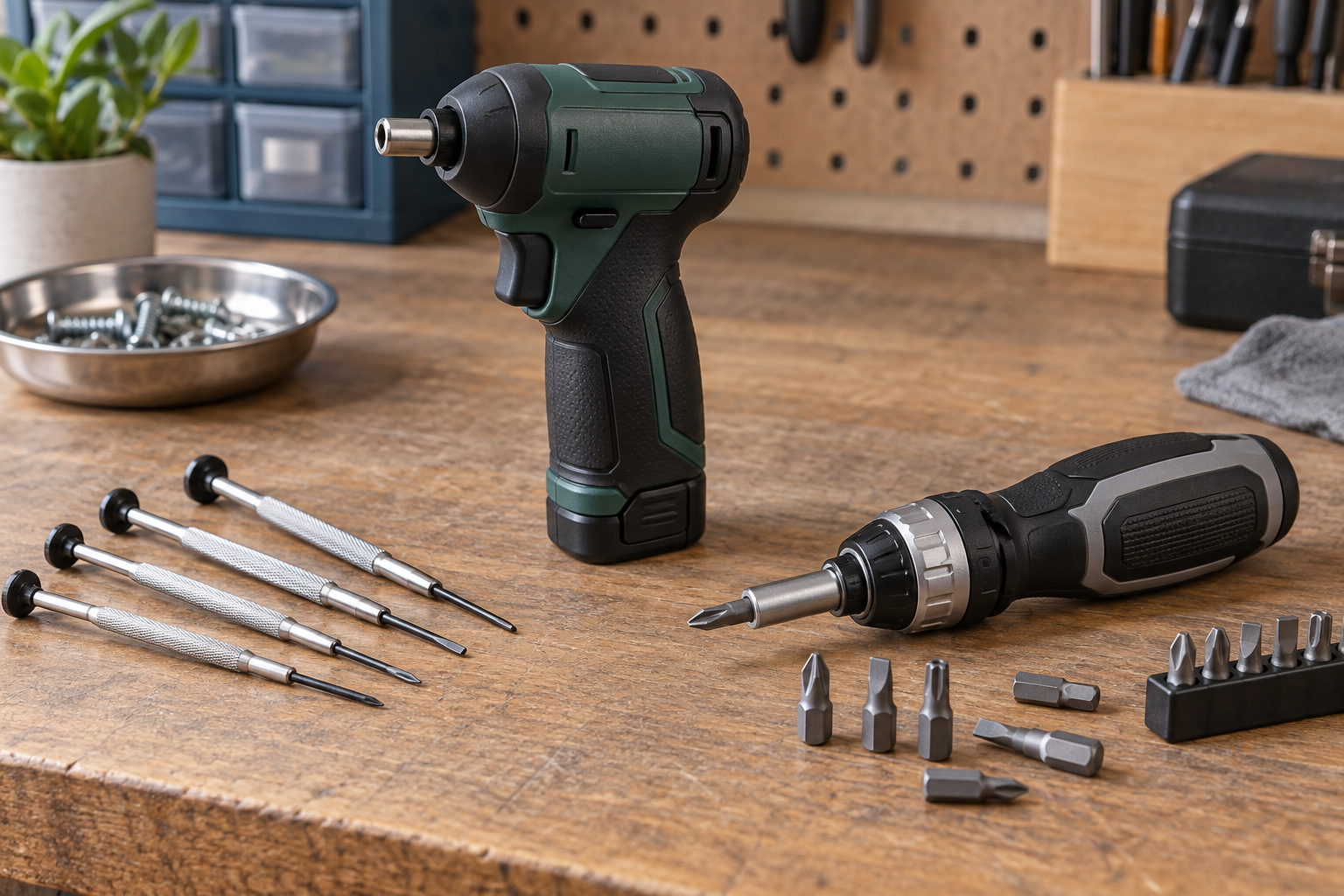
Electrical terminal work is a poor place to rely on a driver’s advertised torque alone. A small cordless screwdriver can save time on repetitive terminal screws, but too much speed or force can damage a screw head, strip a terminal, or crack a device. The best choice is usually a compact tool with a controllable trigger, a clutch you can test, and a bit that fits the screw precisely. For final tightening, follow the device maker’s specified torque and use a calibrated torque screwdriver when one is required.
As an Amazon Associate we earn from qualifying purchases at no extra cost to you.


What matters for terminal work
Look for low-speed control rather than high maximum torque. A useful tool should start gently, let you stop as the screw seats, and have a clutch that slips consistently at low settings. Clutch numbers are not torque measurements: settings vary between brands and can change with battery charge, screw condition, and bit fit. Test the tool on a matching spare terminal or scrap assembly before using it on installed equipment.
Size matters in crowded boxes. A short body and narrow nose are easier to position around neighboring conductors, while a built-in work light can help in dim enclosures. Check whether the tool accepts standard 1/4-inch hex bits; that makes it easier to use correctly sized slotted, Phillips, square, or terminal-maker-specified bits. A magnetic holder is convenient, but avoid letting it pull screws or steel debris toward exposed components.
Cordless screwdriver types compared
| Type | Best for | Trade-off |
|---|---|---|
| Small cordless screwdriver | Repeated light fastening and tight spaces | Limited power; clutch behavior may be coarse |
| Compact 12V drill/driver with clutch | Mixed fastening jobs and users already on a 12V platform | Bulkier, and easy to overtighten at higher settings |
| Manual torque screwdriver | Specified final torque and sensitive terminals | Slower for many screws; requires the correct range and calibration |
For occasional switch, receptacle, or control-panel work, a basic cordless screwdriver is often enough. A larger drill/driver is worth considering if you already own the battery platform and also need it for other jobs. Neither replaces a torque screwdriver where the equipment instructions specify a torque value.
Best fit: a compact cordless screwdriver
Choose a purpose-built cordless screwdriver if the job is mostly small screws and you value access over versatility. A model with variable speed and several clutch settings gives better control than a one-speed push-button driver. Check that the bit holder does not wobble excessively: runout makes a narrow bit skate out of a terminal screw, especially with slotted heads.
Battery capacity is less important here than ergonomics and charging convenience. These tools use little energy on light screws, so a small integrated battery may handle a day of intermittent work. The downside is that an integrated battery cannot be swapped when it wears out. If you already own a compatible tool battery system, a bare tool can be economical, but some platform drivers are too large for crowded boxes. Compare the tool’s nose length and grip shape before buying.
For a dedicated compact option, browse compact cordless screwdrivers with variable speed and a clutch. Prioritize control and fit over a high torque figure.
When a 12V driver makes sense
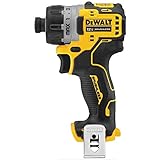
A compact 12V drill/driver is a practical middle ground if you already use that battery ecosystem or need one tool for terminal work and general household fastening. Its removable battery is useful for long shifts, and the platform may also power lights, drills, and other cordless hand tools. The trade-off is bulk: even a compact drill can be awkward inside a shallow box, and its higher available torque can damage small hardware if the clutch is set too high.
Use the lowest clutch setting that reliably seats the screw, keep speed low, and stop immediately if the clutch slips or the screw stops turning. Do not use an impact driver for terminal screws. Impacts deliver abrupt rotational blows that reduce control and can ruin small fasteners. If you are shopping for a platform tool, compare compact 12V drill/drivers with a clutch and check whether a battery and charger are included; bare-tool pricing can be misleading if you are starting from scratch.
A safer way to drive terminal screws
De-energize the circuit and verify it is de-energized with an appropriate tester before working. A cordless driver is not a substitute for safe isolation. Use the exact bit type and size the screw head calls for; if the bit rocks or slips, stop and find a better fit. Slotted screws are especially easy to cam out, while a worn bit can turn a simple job into a damaged terminal.
Start at low speed and approach the screw squarely. Use the clutch only for running the screw down, not as proof that the final connection meets specification. Stop short of the final tightening if the equipment maker provides a torque value, then finish with a suitable torque screwdriver. Common specified values vary by device and terminal design, so do not apply a generic number across receptacles, breakers, and control gear.
Watch for warning signs: a screw that spins without tightening may have damaged threads; a conductor that shifts under a light tug may not be secured; and a stripped head or cracked terminal means the connection needs repair, not extra force. Keep copper strands fully inside the terminal where the instructions require it, and do not trap insulation under the clamping surface. If the terminal is damaged, replace the device or consult a qualified electrician rather than improvising.
Which one should you buy?
Buy a small variable-speed cordless screwdriver for frequent light terminal work in confined spaces. Choose a compact 12V drill/driver if you need a broader tool and already own its battery platform, accepting the extra size and taking care with the clutch. For a few screws at home, a manual screwdriver is often cheaper and gives excellent control; spending more on cordless speed is hard to justify for occasional use. Whatever you choose, keep a correctly sized manual or torque screwdriver nearby for final tightening and damaged-screw recovery.
FAQ
Which one should you buy?
Related guides
- Longest Lasting Lawn Mower Battery: AGM vs Lithium vs Flooded Lifespan and Cost per Season
- Duralast Gold Lawn Mower Battery Review: U1 Fit, CCA and When to Pay for AGM
- Greenworks Pro 80V 21-Inch Mower Review: Runtime Math, Push vs Self-Propelled and Yard Fit
- Bosch High Pressure Washer Gun Replacement: Fittings, Adapters and What Fits Your Model