What's inside
As an Amazon Associate I earn from qualifying purchases. This post may contain affiliate links at no extra cost to you.
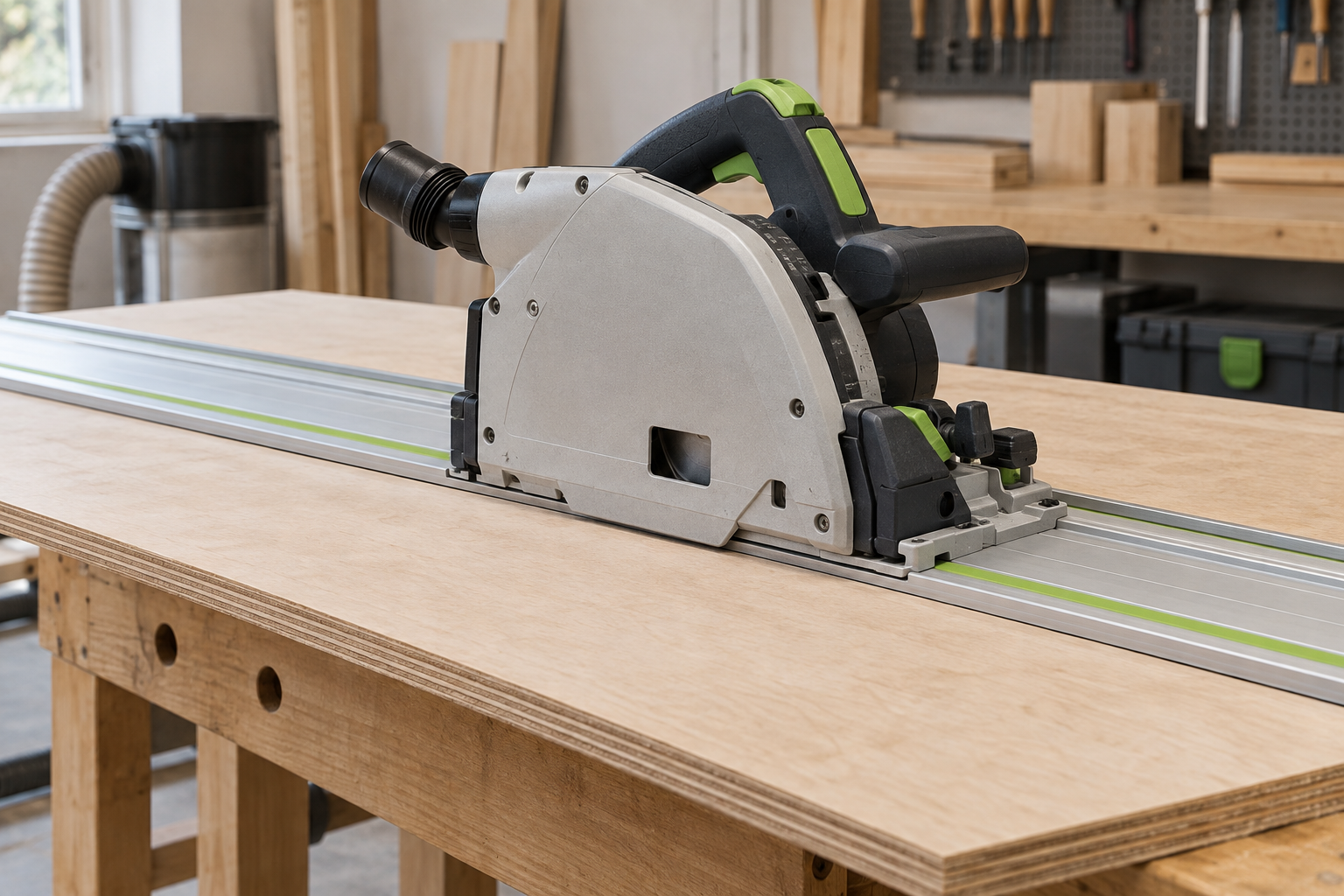
Cabinet panels punish sloppy saw work. A blade that wanders, a track that shifts, or a rail that is a few millimeters short can leave you with a visible gap that no edge banding will hide. A cordless track saw is useful here because it combines a guided cut with the mobility of a battery tool. The best choice depends less on maximum cutting power than on track compatibility, plunge control, dust collection, and the battery platform you already own.
As an Amazon Associate we earn from qualifying purchases at no extra cost to you.


What Makes a Cordless Track Saw Good for Cabinets
For cabinet panels, look for a saw that cuts at least 2-1/8 inches at 90 degrees. That covers typical 3/4-inch plywood, melamine, and many laminated panels while leaving room for a sacrificial sheet underneath. A 1-1/2-inch maximum depth can work, but it gives you less margin when the saw is not perfectly flat on the track.
Plunge action should feel controlled rather than springy. You want to lower the blade into a panel without the saw jumping forward at the start of the cut. A good depth scale also matters: set the blade only 1/8 to 1/4 inch deeper than the material when cutting on foam insulation. Excess depth increases dust and makes the saw more likely to bind if the panel moves.
A brushless motor is preferable for battery life and sustained cutting, but it is not a substitute for a sharp blade. For clean cabinet work, use a fine-finish or laminate blade with roughly 40 to 60 teeth, depending on the material. A general-purpose blade may be acceptable for construction plywood, but it can chip melamine and veneered plywood.
Cordless Track Saw Comparison
| Type | Best use | Main advantage | Main compromise |
|---|---|---|---|
| 18V or 20V compact saw | Occasional panels and smaller shop work | Lower cost and lighter handling | Shorter runtime and less overhead in thick material |
| 36V or dual-battery saw | Repeated cabinet and sheet-goods cutting | More consistent power under load | Heavier and more expensive batteries |
| Premium cordless plunge saw | Furniture-quality cuts and frequent use | Better plunge control, dust handling, and track fit | High tool and rail cost |
| Cordless circular saw with guide rail | Infrequent straight cuts | Cheaper if you already own the saw | Usually lacks true plunge control and track-specific features |
Choosing the Battery Platform
If you already own several batteries, staying within that ecosystem is usually the sensible choice. A bare tool can cost substantially less than starting over with batteries and a charger. Check the manufacturer’s stated rail compatibility before buying; some saws use their own tracks, while others fit a common guide-rail profile or need an adapter.
Battery size affects handling. A compact 4.0Ah or 5.0Ah pack keeps the saw easier to lift and is often enough for a few cabinet panels. Larger 8.0Ah or 12.0Ah packs reduce charging stops but add weight at the rear of the tool. That extra weight is noticeable when starting a cut on a large sheet or making repeated overhead adjustments.
For a new purchase, compare the cordless track saw bare-tool options within the battery system you already use. A bare tool is only a bargain if your existing batteries have enough capacity and are in good condition. Old packs with high internal resistance can trigger overload protection before the saw reaches its rated cutting performance.
Tracks, Accuracy, and Panel Setup
The track is part of the cutting system, not an accessory to ignore. A 55-inch rail is long enough for many cabinet components, but it will not cut across a full 4-by-8-foot sheet in one pass. For full sheets, use a 106-inch rail or join two shorter rails with the manufacturer’s connectors. Poorly aligned rail joints can produce a slight step in the cut and force the saw to change direction.
Measure from the track’s splinter strip, not from the rail’s edge. Make a test cut and label the exact offset for your saw and blade. Even compatible rails can vary slightly in how the saw sits against the guide rib. If the splinter strip is already ragged, replace it; a damaged strip is both a dust problem and a visible indication that the cut line may be less reliable.
Support the sheet continuously with rigid foam insulation or a properly spaced cutting table. Letting a panel sag near the end of a cut is a common cause of pinching. Pinching can stop the blade, trip the battery electronics, or pull the saw away from the rail. Clamp the track when the panel is narrow, slippery, or likely to shift. The rubber strips provide grip, but they are not a replacement for clamps on dusty melamine.
Dust Control and Cut Quality
Connect the saw to a vacuum whenever possible. Cordless saws do not create less dust than corded models, and fine MDF dust quickly clogs filters and coats battery contacts. A compact extractor is easier to move around a jobsite, while a shop vacuum with a clean filter generally provides better sustained airflow.
For veneered plywood, place the finished face down if the blade exits on the top side of the saw, or follow the saw manufacturer’s instructions for blade orientation. Make a shallow scoring pass for especially brittle laminates, then complete the cut. If the saw slows audibly, stop pushing. A feed rate that is too aggressive overheats the blade and leaves a rough, burned edge.
When the Cheaper Option Is Enough
You do not need a premium cordless track saw for two cabinet projects a year. If you already have a quality cordless circular saw, a straight guide or compatible rail can produce accurate cuts when you measure carefully and clamp the guide securely. This approach is fine for utility cabinets, shop furniture, and panels that will receive face frames or edge banding.
Pay more for a true plunge track saw when you need repeatable cuts in finished panels, enclosed cutouts, reliable dust extraction, or frequent full-sheet work. The plunge mechanism, anti-tip controls, and better track fit reduce setup errors that are expensive once a panel has been cut. Shop cordless plunge track saw and guide-rail kits as complete systems, not just as isolated saws.
Buying Checklist
Before ordering, confirm the bare-tool or kit price, battery voltage, maximum depth at 90 degrees, included blade, track length, rail-joining options, and dust-port size. Check whether the saw needs one battery or two, and whether your current charger supports that pack. Finally, budget for a fine-tooth replacement blade and a stable sheet-support setup. Those two items often improve cabinet-cut results more than moving up one price tier.
Related guides
- Longest Lasting Lawn Mower Battery: AGM vs Lithium vs Flooded Lifespan and Cost per Season
- Duralast Gold Lawn Mower Battery Review: U1 Fit, CCA and When to Pay for AGM
- Greenworks Pro 80V 21-Inch Mower Review: Runtime Math, Push vs Self-Propelled and Yard Fit
- Bosch High Pressure Washer Gun Replacement: Fittings, Adapters and What Fits Your Model