What's inside
As an Amazon Associate I earn from qualifying purchases. This post may contain affiliate links at no extra cost to you.
When a cordless track saw makes sense
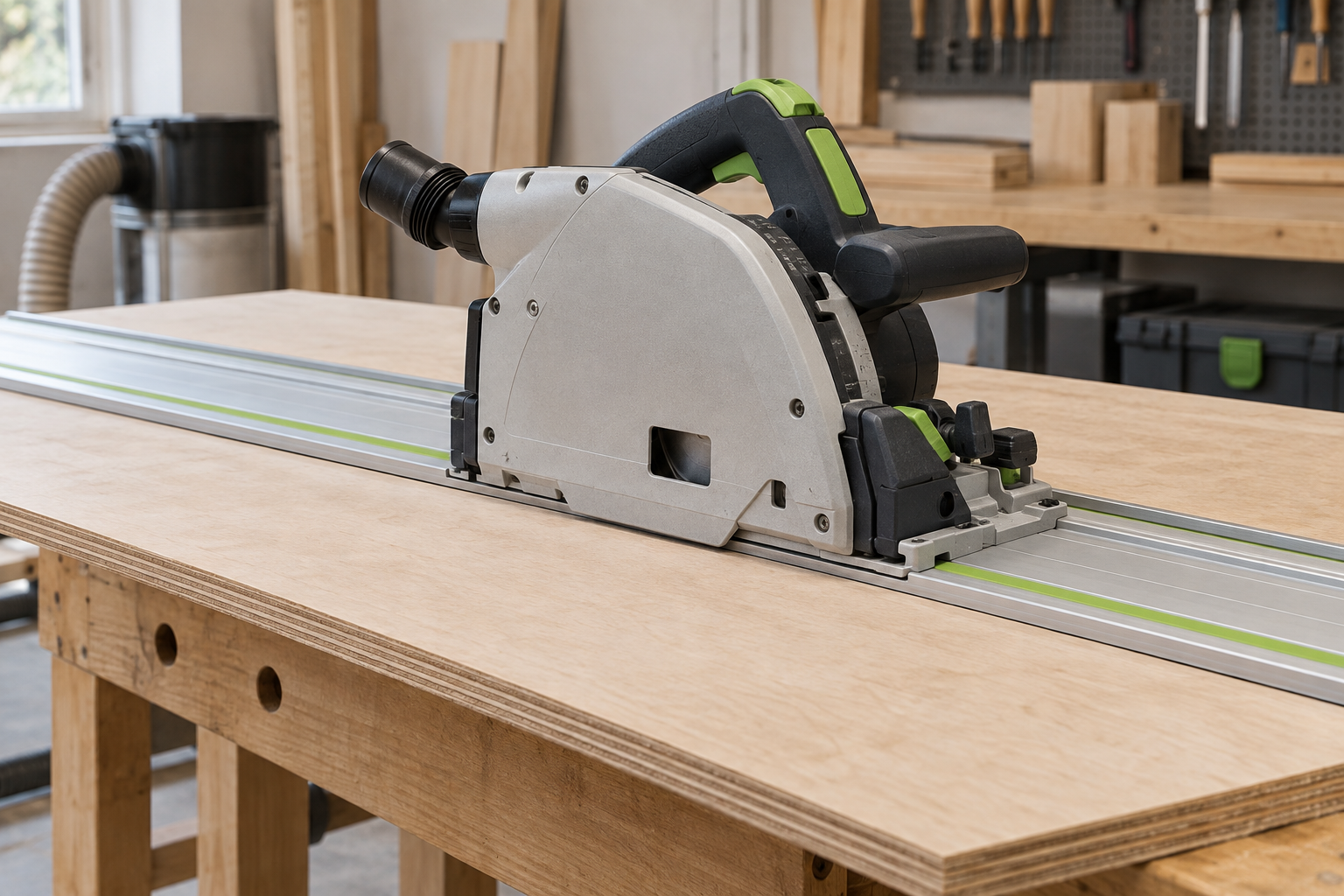
A track saw is useful when you need clean, straight cuts in plywood, MDF, or other sheet goods without wrestling a full sheet across a table saw. The blade travels along a guided track, so you can break down a 4-by-8-foot panel on the floor or a pair of foam boards. A cordless version removes the need to find an outlet or manage an extension cord across the track.
The trade-off is runtime and cost. Thick material, a dull blade, and a fast feed all draw more power. A corded saw is often the better value if you work near an outlet and make long cuts all day. Cordless is most compelling for installation work, remodels, and shops where you already own compatible batteries.
As an Amazon Associate we earn from qualifying purchases at no extra cost to you.


What to compare before buying
Check the saw’s maximum cutting depth, track compatibility, battery requirements, and included accessories. A typical 6½-inch blade saw cuts roughly 2 inches at 90 degrees, enough for most ¾-inch panels with room to spare. Depth drops on bevel cuts, so confirm the stated capacity at 45 degrees if you cut miters.
Battery size matters. A compact pack keeps the saw lighter, but a 5.0Ah or larger pack is a more practical starting point for repeated sheet cuts. Some high-demand saws work best with two batteries or a high-output pack. That adds weight and expense; it does not automatically make the saw more accurate. Track alignment, blade quality, and a steady feed matter more to the cut.
Tracks are not universally interchangeable. Some brands use proprietary rails; others accept compatible tracks with the right profile. Verify fit before buying extra lengths. For a full sheet, a track around 55 inches is useful for crosscuts, while ripping the 8-foot dimension usually requires a longer track or a careful repositioning setup. A pair of track connectors can help join rails, but a slight step or gap can mark the cut or interrupt the saw’s glide.
Cordless track saw buying comparison
| Option | Best for | Main trade-off |
|---|---|---|
| High-output saw on your existing battery platform | Regular sheet breakdown and users with batteries already on hand | Tool-only price can still be high; larger packs add weight |
| Compact or midrange cordless saw | Occasional cabinet, flooring, and remodeling cuts | May feed more slowly in thick stock or with a less efficient blade |
| Corded track saw | Long shop sessions near reliable power | Cord management; less convenient at remote job sites |
| Circular saw with a straightedge | Infrequent cuts on a tight budget | More setup, less integrated dust control, and a greater chance of wandering |
Choose by battery platform, not just saw price
If you already own several batteries and a charger from a brand, start by checking whether that platform has a track saw and whether your packs meet its recommendations. A bare tool can be a sensible purchase when your battery inventory is sufficient. If you are starting from scratch, compare the price of the saw, at least one suitable battery, and a charger—not just the advertised tool-only price.
For frequent cutting, look at the cordless track saw kits available on the battery platform you use. A kit may cost less than assembling the pieces separately, but avoid paying for another charger and small battery if you already have both. For occasional work, a corded track saw can be the better buy if the work stays near an outlet.
Battery ecosystems are a long-term cost as well as a convenience. Before switching brands for one saw, check the price and availability of replacement packs, chargers, and other cordless tools you are likely to need. Adapters are not a universal fix: they may not support every tool or battery feature, and they complicate charging and warranty support.
Setup is what makes the cut accurate
Place the sheet on rigid foam insulation or stable supports that leave the blade clear beneath the cut. Support both sides without pinching the kerf as the cut closes. A pinched blade can bind, stop, or kick the saw back. Clamp the track where practical, especially when cutting narrow pieces or working at an awkward angle.
Set the track’s splinter strip to the blade before relying on it for a finished edge. The strip is cut to match the saw’s blade path; if it is damaged or belongs to a different saw, expect chips. Use a sharp, appropriate blade, and let the saw reach full speed before feeding it into the material. For a long rip, keep the feed smooth rather than forcing the saw. A slowing motor, burning smell, or rising effort is a sign to ease off and check the blade, depth, and battery.
Measure from the track’s cutting edge, not its outside edge. Test the setup on scrap, then check the first cut with a reliable straightedge or square. If a joined track produces a small step, correct the alignment before making a cabinet part: even a minor offset can leave a visible ridge or a panel that will not fit square.
Dust, runtime, and common failures
Track saws generally control dust better than a bare circular saw, but they are not dust-free. MDF and many sheet materials create fine dust. A compatible extractor connected to the saw is preferable indoors; wear suitable respiratory protection when extraction is unavailable. Do not assume a shop vacuum will fit the dust port without an adapter.
Runtime varies with the material, blade, feed rate, battery condition, and pack size. There is no reliable cut count that applies to every setup. Keep a charged spare for a day of repeated breakdowns, and avoid storing packs in extreme heat or leaving them discharged for long periods. If the saw bogs down, first check for a dull or dirty blade, a too-deep cut, a closing kerf, or a low battery rather than immediately blaming the tool.
For a few straight cuts a year, a circular saw and a clamped guide are often enough. If you regularly break down expensive panels or need repeatable cabinet parts, a dedicated cordless track saw can save setup time and reduce edge cleanup. Buy the platform that fits your existing batteries, then budget for the right track length, a suitable blade, and safe sheet support.
Related guides
- Longest Lasting Lawn Mower Battery: AGM vs Lithium vs Flooded Lifespan and Cost per Season
- Duralast Gold Lawn Mower Battery Review: U1 Fit, CCA and When to Pay for AGM
- Greenworks Pro 80V 21-Inch Mower Review: Runtime Math, Push vs Self-Propelled and Yard Fit
- Bosch High Pressure Washer Gun Replacement: Fittings, Adapters and What Fits Your Model