What's inside
As an Amazon Associate I earn from qualifying purchases. This post may contain affiliate links at no extra cost to you.
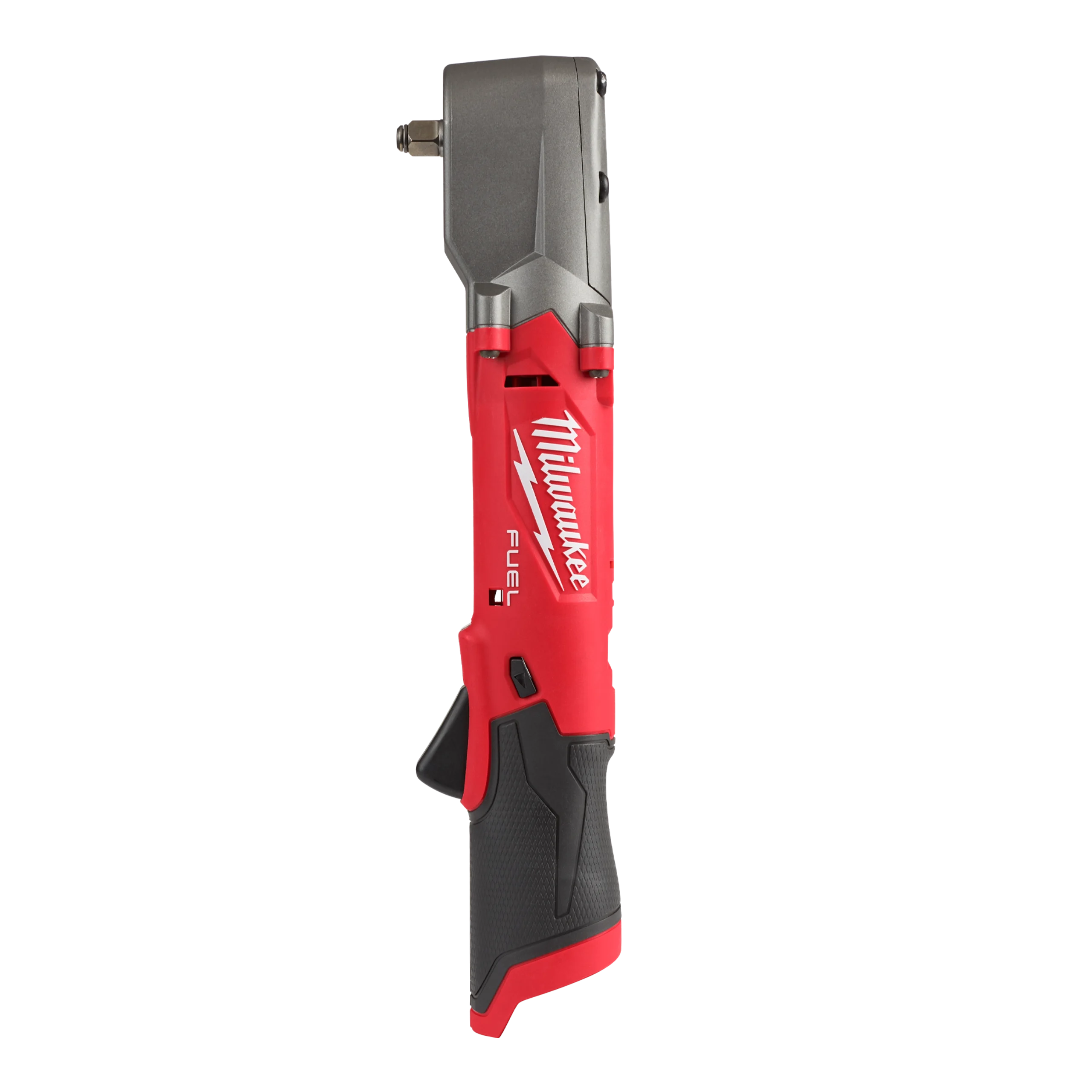
A cordless right-angle impact is a specialist tool for fasteners that a standard impact driver cannot reach. It can save time in an engine bay, behind a cabinet, or inside a machine frame—but it is not a compact substitute for every ratchet or drill. Before buying, check the space around the fastener, the socket size, and whether the tool’s head will actually fit.
As an Amazon Associate we earn from qualifying purchases at no extra cost to you.


What a right-angle impact does well
These tools put an impact mechanism behind a head set roughly 90 degrees to the handle. That lets you drive sockets in places where a straight impact driver would hit a bracket or panel. The hammering action is useful for removing stubborn small- to medium-size fasteners quickly, especially when several need to come out.
“Right-angle” does not mean “tiny.” The head, anvil, and socket still need room to turn, and the battery at the handle may foul nearby surfaces. A 3/8-inch drive is a common choice for mechanical work because it balances access with socket availability. For very small fasteners, a compact ratchet may be easier to position; for large, high-torque fasteners, use a tool designed for that load rather than assuming a small right-angle impact can handle it.
What to compare before buying
| Feature | Why it matters | Practical trade-off |
|---|---|---|
| Head height and width | Determines whether the tool fits between the fastener and nearby parts. | A smaller head improves access, but may come with less power or a less comfortable grip. |
| Drive size | Sets the sockets and fastener range you can use. | 3/8-inch is versatile for many mechanical jobs; 1/4-inch suits lighter work, while 1/2-inch setups are usually bulkier. |
| Speed and trigger control | Useful when starting bolts by hand or working near delicate parts. | High speed saves time, but a sensitive variable-speed trigger matters more for avoiding cross-threading. |
| Battery size | Affects runtime, balance, and clearance at the handle. | A compact pack may fit better and reduce wrist strain; a larger pack can last longer but may block access. |
| Power control | Helps limit damage when tightening. | Modes are useful, but they do not replace a torque wrench for final tightening. |
Choose the tool for the job
For repeated removal of accessible 3/8-inch fasteners, a cordless right-angle impact is a good fit. Compare the head dimensions, bare-tool weight, trigger response, and battery platform—not just the advertised torque. Manufacturers test and report torque differently, and real output drops with a weak battery, long extension, or tight access that prevents a square socket fit.
If you mostly remove small bolts in awkward spots, consider a cordless ratchet instead. It is generally easier to use for controlled fastening and can have a slimmer head, but it is slower on seized fasteners because it does not deliver impact blows. A compact right-angle drill is another option for drilling and light driving; it is not the same as an impact tool and should not be expected to loosen stubborn bolts.
Browse cordless 3/8-inch right-angle impacts if your work calls for socket-driven removal in confined spaces. If you want more control and mainly handle small fasteners, compare cordless 3/8-inch ratchets as well.
Factor in the battery platform
For occasional use, a bare tool from a battery platform you already own is often the economical choice. A second battery system adds cost and charger clutter, and the tool may sit unused for months. If this is your first cordless tool, compare the brand’s other compact tools and battery sizes too; the right-angle impact is only one purchase, while batteries and chargers shape the cost of every later tool.
Check which battery the tool is commonly sold with. A compact pack is often more practical in a mechanical compartment than a high-capacity pack, even if it means swapping batteries during a long job. Some platforms offer smaller packs that reduce handle bulk; confirm compatibility and voltage rather than assuming packs from the same brand all fit every tool.
Use it without damaging the fastener
Start bolts by hand for several turns, then use the trigger gently. An impact can cross-thread a bolt before you notice, particularly in aluminum housings or other soft threads. Keep the socket square to the fastener and use impact-rated sockets; ordinary chrome sockets can crack under repeated impact loading. A wobble extension may help with access, but it can reduce control and transfer less force.
Do not use the tool to judge final torque on wheels, suspension, or other safety-critical assemblies. Impact action is difficult to measure consistently, and the result varies with battery charge, fastener condition, and time on the trigger. Run the fastener down cautiously, then finish with a calibrated torque wrench to the specification for that application.
Common failure modes are predictable: a head that will not fit, a socket that hits a nearby wall, a battery that blocks the grip, and over-tightening a small fastener. Before buying, measure the gap around your tightest target—not just the distance to the fastener—and test the tool with the battery and socket installed if you can. If clearance is too close, a hand ratchet or a low-profile extension may be the safer, cheaper answer.
Related guides
- Longest Lasting Lawn Mower Battery: AGM vs Lithium vs Flooded Lifespan and Cost per Season
- Duralast Gold Lawn Mower Battery Review: U1 Fit, CCA and When to Pay for AGM
- Greenworks Pro 80V 21-Inch Mower Review: Runtime Math, Push vs Self-Propelled and Yard Fit
- Bosch High Pressure Washer Gun Replacement: Fittings, Adapters and What Fits Your Model