What's inside
As an Amazon Associate I earn from qualifying purchases. This post may contain affiliate links at no extra cost to you.
The best Black+Decker cordless leaf blower depends first on whether you want a light 20V tool for patios and small yards or a stronger 40V model for heavier cleanup: batteries generally stay within their voltage platform, so a 20V battery is not interchangeable with a 40V blower battery. Check the exact model and battery included before buying, because the same blower may be sold as a bare tool or in kits with different battery capacities.
As an Amazon Associate we earn from qualifying purchases at no extra cost to you.
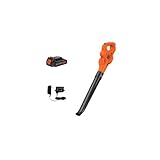

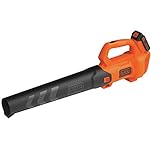

20V or 40V: choose by the work, not just the voltage
Black+Decker’s 20V MAX blowers are the lighter, more compact choice for dry leaves on steps, decks, driveways, and smaller lawns. A 40V MAX blower is usually a better fit when you have more ground to cover, thicker leaf piles, or want to work less slowly. Neither voltage guarantees a particular runtime: battery amp-hours, power setting, debris, and technique all matter.
| Blower | Battery platform | Published air rating | Typical fit | Runtime expectation |
|---|---|---|---|---|
| LB700 | 20V MAX | 90 CFM; 130 MPH | Light cleanup on hard surfaces and small yards | Plan on roughly 10–20 minutes of trigger-on work with a common 1.5–2.0Ah pack; less on a larger or wetter leaf load |
| LBC1200 | 20V MAX | Up to 125 CFM; 130 MPH | Compact cleanup where adjustable airflow is useful | Roughly 10–25 minutes with a 2.0Ah pack, depending heavily on speed setting |
| LBX1540 | 40V MAX | Up to 130 CFM; 120 MPH | Routine lawn and driveway work with a 40V battery system | About 15–30 minutes with a 2.0Ah pack at moderate use; sustained high output can cut that substantially |
| LBBL400 | 40V MAX | Up to 400 CFM; 100 MPH | Moving larger volumes of leaves and heavier routine cleanup | Often around 10–25 minutes with a 2.0Ah pack under demanding use; a larger compatible pack extends the work window |
Ratings and available kits can vary by market and model revision, so confirm the specifications for the precise model number. CFM describes air volume and is useful for judging how much material a blower can move; MPH describes air speed. A high MPH number alone does not mean a blower will shift a broad, deep pile efficiently. The LB700’s 130 MPH sounds higher than the LBBL400’s 100 MPH, but the latter’s much greater stated CFM makes it the more capable choice for moving volume.
Battery compatibility: what shares, and what does not
Black+Decker 20V MAX tools use the 20V MAX battery platform, while 40V MAX tools use a separate 40V platform. That means a 20V battery cannot power a 40V blower, and a 40V pack is not a substitute for a 20V pack. Within a platform, batteries are intended to work with compatible tools, but confirm the model’s battery requirements and fit before relying on a pack from another tool. A battery’s amp-hour rating affects how long it can supply power; it does not change the blower’s voltage class.
For example, if a 20V blower kit includes a 1.5Ah pack and you already own a compatible 20V 2.0Ah battery, the larger-capacity pack may give you more working time. That does not make a small 20V blower equivalent to a 40V model in airflow. If you are choosing between platforms and do not own either, compare the cost of the whole system—tool, battery, and charger—not just the blower’s bare-tool price.
How long does a charge really last?
Manufacturers’ runtime figures, where provided, are usually tied to particular batteries and operating conditions. Real work involves repeated starts, full-power bursts, and material that may be damp or stuck to the ground. The estimates in the table are practical planning ranges, not guaranteed runtimes; allow extra time or a spare charged battery for a large yard.
A useful rough calculation is that doubling amp-hours on the same voltage platform can approximately double available battery energy, but it does not promise exactly double runtime. The blower may draw more current at high speed, and a larger battery can add weight. A 2.0Ah pack used for 15 minutes of demanding blowing offers a reasonable planning baseline; a compatible 4.0Ah pack may extend that session considerably, while heavy, continuous full-speed work still drains it faster than intermittent edging and cleanup.
To stretch a charge, work on a dry day when possible, use the lowest speed that moves the leaves, and sweep debris into small rows rather than holding the trigger at full power. Clear the air intake of grass and dust, and store and charge the battery according to its instructions. Avoid forcing the blower nozzle into piles: blocked airflow makes the job harder and can increase strain on the tool.
Which model makes sense for your yard?
| Your situation | Practical choice | Why |
|---|---|---|
| Small patio, steps, or a few dry leaves | 20V LB700 | Light-duty airflow is usually sufficient, and a compact battery keeps the tool easier to handle. |
| Small yard; want speed adjustment | 20V LBC1200 | Its variable airflow helps balance control and battery use for different surfaces. |
| Regular lawn cleanup and already own 40V tools | Compatible 40V model | Using an existing platform battery can make the purchase more economical; check capacity for the area. |
| Large leaf volume or frequent seasonal cleanup | 40V LBBL400 | Its higher CFM is better suited to moving more leaves, though a spare or larger-capacity battery may be worthwhile. |
Buying details that affect ownership
Check whether a listing is a complete kit or a bare tool. Bare tools can be a good value if you already own the correct battery and charger; otherwise, the apparent savings can disappear when you buy those separately. As general market guidance, compact cordless blowers tend to fall in a lower price range than stronger 40V kits, and kit prices vary with battery capacity and seasonal promotions.
During leaf blower Black Friday promotions, compare the included battery and charger as carefully as the headline price. A discounted kit with a small battery may be less useful for a large yard than a slightly more expensive bundle with a higher-capacity pack. Check current model numbers and compatibility rather than assuming an older kit is identical to a newer one.
A standard blower moves debris with air; it does not automatically become a vacuum. If you are searching for a Black and Decker leaf blower and vacuum, look for a specific blower-vac model designed with vacuum and collection-bag functions. Do not assume the cordless blower models listed here can collect or mulch leaves.
Likewise, a Black and Decker electric leaf blower may refer to a corded model or a battery-powered one. Corded tools avoid battery runtime limits but require a suitable outdoor extension cord and access to an outlet. Cordless models trade uninterrupted power for mobility and a finite work window.
A Black and Decker snow blower is a different category of equipment, not a leaf-blower accessory. A leaf blower may clear a light dusting of dry, powdery snow from a small surface, but it is not a substitute for a snow blower on packed, wet, or deep snow.
Bottom line
Choose a 20V Black+Decker blower for quick, light cleanup and a 40V model when airflow and yard coverage matter more. Keep the battery platforms separate, verify whether your chosen package includes a battery, and size battery capacity to the job rather than expecting a small pack to handle a long full-power session. For most buyers, the right match is the smallest model that comfortably handles their usual debris—with a compatible spare battery if the cleanup regularly outlasts one charge.