What's inside
As an Amazon Associate I earn from qualifying purchases. This post may contain affiliate links at no extra cost to you.
The best DEWALT cordless shop vac depends on the cleanup: choose a 20V MAX model for portable spot cleaning and light debris, or the FlexVolt DCV585 for substantially higher airflow, longer-duty extraction, and demanding jobsite dust. The key difference is not only battery size: typical 20V MAX vacuums produce about 20–31 CFM, while the FlexVolt DCV585 is rated at approximately 125 CFM.
As an Amazon Associate we earn from qualifying purchases at no extra cost to you.


Quick picks by cleanup job
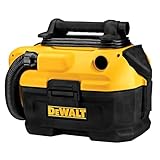
- Best compact option: DEWALT DCV517 20V MAX wet/dry handheld vacuum for vehicles, stairs, benches, and small spills.
- Best everyday portable shop vac: DEWALT DCV580 or DCV581H 20V MAX 2-gallon vacuum for sawdust, chips, and occasional wet pickup.
- Best for corded-or-cordless flexibility: DEWALT DCV584L, which can run from a 20V MAX battery or an AC outlet.
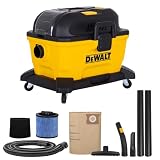
- Best high-airflow choice: DEWALT DCV585 FlexVolt 60V MAX 8-gallon dust extractor for tools, renovation debris, and longer extraction sessions.
DEWALT 20V MAX vs FlexVolt: the meaningful difference
20V MAX vacuums are designed around portability and convenience. Their smaller motors, hoses, and tanks make them easy to carry between rooms or keep in a vehicle, but their airflow is limited. They work well for loose sawdust, leaves, drywall crumbs, and small liquid spills.
The FlexVolt DCV585 uses a 60V MAX battery platform and a much larger motor and filtration system. Its approximately 125 CFM rating gives it far more air-moving capacity than a 20V MAX portable vacuum. That matters when extracting dust directly from a miter saw, track saw, router, sander, or other tool. It also helps when the hose is longer, the filter is beginning to load, or the debris is heavier.
CFM is not the same as sealed suction. A compact vacuum can feel strong at the nozzle, while a high-CFM extractor moves more air through a hose and tool port. For fine dust collection, hose diameter, filter condition, tool shroud design, and the quality of the connection matter alongside the headline CFM number.
Head-to-head specifications
| Model or type | Battery system | Tank capacity | Approx. airflow | Best use |
|---|---|---|---|---|
| DCV517 handheld | 20V MAX | 0.5 gal | About 20 CFM | Vehicle interiors, benches, small spills |
| DCV580 / DCV581H | 20V MAX | 2 gal | About 31 CFM | General portable cleanup and light wet pickup |
| DCV584L | 20V MAX or AC cord | 2 gal | About 31 CFM | Workshops needing battery and outlet operation |
| DCV585 | FlexVolt 60V MAX | 8 gal | About 125 CFM | Tool extraction, renovation, and heavy-duty dust collection |
Published airflow can vary by measurement method and operating condition, so these figures should be used for relative comparison rather than as a guarantee of suction at the hose end. The 20V MAX figures are suitable for general debris; the FlexVolt figure places the DCV585 in a different performance class.
Real-world runtime by battery size
DEWALT does not provide one universal runtime number for every vacuum and battery combination. Runtime changes with the filter, hose restriction, debris load, wet or dry operation, and whether the motor runs continuously. The ranges below are practical planning estimates for a clean, dry filter and intermittent-to-continuous use, not official guaranteed runtimes.
| Battery size | 20V MAX portable vacuums | FlexVolt DCV585 | Best interpretation |
|---|---|---|---|
| 2Ah | About 10–18 minutes | Not a suitable FlexVolt choice | Short spot-cleaning sessions |
| 4Ah | About 22–35 minutes | About 12–20 minutes when compatible with the tool | Good portable balance |
| 5Ah | About 28–42 minutes | About 15–24 minutes | Useful general-purpose size |
| 6Ah | About 35–50 minutes | About 18–28 minutes | Longer 20V work or moderate FlexVolt use |
| 8Ah | About 45–65 minutes | About 25–38 minutes | Extended cleanup and tool extraction |
| 9Ah FlexVolt | About 50–75 minutes in 20V MAX tools | About 30–45 minutes at 60V | Maximum single-battery endurance |
A 9Ah FlexVolt battery is a 60V-class pack that can also power compatible 20V MAX tools. It is not the same as a small 20V 9Ah battery in physical design or electrical configuration. On the DCV585, expect more power and airflow than a 20V MAX vacuum, but not necessarily more minutes per amp-hour: the larger motor consumes energy faster.
A useful runtime calculation
Suppose a 20V MAX 5Ah battery gives roughly 35 minutes of practical vacuuming and your cleanup consists of ten two-minute passes. That is 20 minutes of motor time, leaving a reasonable reserve for clogged filters, hose repositioning, and brief continuous runs. If the same job requires 45 minutes of uninterrupted extraction, a second 5Ah battery is more dependable than assuming the advertised battery capacity will translate directly into operating minutes.
Which vacuum fits your situation?
| Your situation | Recommended direction | Why |
|---|---|---|
| Occasional vehicle or home cleanup | DCV517 with 2Ah or 4Ah battery | Small, light, and quick to deploy |
| Small workshop with limited storage | DCV580 or DCV581H with 4Ah or 5Ah battery | More capacity without an 8-gallon footprint |
| Already own several 20V MAX batteries | 20V MAX 2-gallon model | Lowest platform cost and easy battery sharing |
| Need to work near an outlet or away from one | DCV584L | Battery and AC flexibility reduce interruptions |
| Frequent sanding, routing, or sawing | DCV585 with 8Ah or 9Ah FlexVolt battery | Higher airflow and larger capacity suit extraction |
| Renovation debris and long hose runs | DCV585 | More airflow reserve when the system is restricted |
What the product listing may not tell you
Filter loading changes performance
Fine drywall dust and sanding dust load a filter much faster than coarse chips. As the filter surface becomes covered, airflow falls even though the battery is still charged. Empty the tank before it is packed full, use the appropriate filter for wet or dry pickup, and clean or replace filters according to the manual. Do not operate a dry vacuum with a wet filter unless the instructions specifically allow it.
Wet pickup requires a different routine
Remove or prepare the dry filter as specified before collecting liquid, and stop before the tank reaches its shutoff level. After wet pickup, empty and dry the tank, hose, and filter components. Storing a damp vacuum encourages odors and can damage filters or create electrical and mechanical problems over time.
Consumables and wear points
Filters, hose cuffs, seals, latches, and battery contacts are the parts most likely to affect ownership. A cracked hose or loose tool adapter can reduce collection more than a modest difference in battery size. Keep the hose free of sharp bends, avoid dragging the vacuum by its power cord or hose, and inspect the tank seal if suction seems weaker than usual.
20V MAX or FlexVolt: the final buying decision
Choose a 20V MAX shop vac if your priority is low weight, lower initial cost, compact storage, and compatibility with batteries you already own. A 4Ah or 5Ah pack is usually the practical sweet spot for routine cleanup; a 2Ah pack is convenient but better suited to short jobs.
Choose the FlexVolt DCV585 if the vacuum will regularly collect dust from power tools, serve a renovation crew, or run with a larger tank and higher airflow. Pairing it with an 8Ah or 9Ah FlexVolt battery makes sense for longer sessions, while carrying a second pack is preferable when continuous extraction is part of the workday.
In short, match airflow to the job before matching battery capacity: 20–31 CFM is adequate for portable cleanup, while approximately 125 CFM is the more appropriate target for serious tool extraction and demanding workshop use.