Our Top Picks
 KingTool 276-Piece Tool Set Kit with 12V Cordless276 Count (Pack of 1)16.4 x 13.1 x 6.57 Inches1.76 PoundsCheck on Amazon


What's inside
As an Amazon Associate I earn from qualifying purchases. This post may contain affiliate links at no extra cost to you.
This list is not about building things. It is about the leaking, sticking, sagging, rattling stream of small problems that owning a house produces. Nothing here comes out for a weekend project with a plan and a cut list. It comes out because a door will not latch, water is showing up where it should not, or a shelf full of books has started to lean.
That changes what you buy. The best tools for home repair are not smaller versions of workshop tools. Repair happens in bad positions — under a sink, behind a toilet, on the second step of a ladder, inside a cabinet with one arm — and against materials you cannot see until you are already cutting into them. Access, weight and control beat raw power and capacity every time, because a tool that cannot reach the fastener does not count.
As an Amazon Associate we earn from qualifying purchases at no extra cost to you.




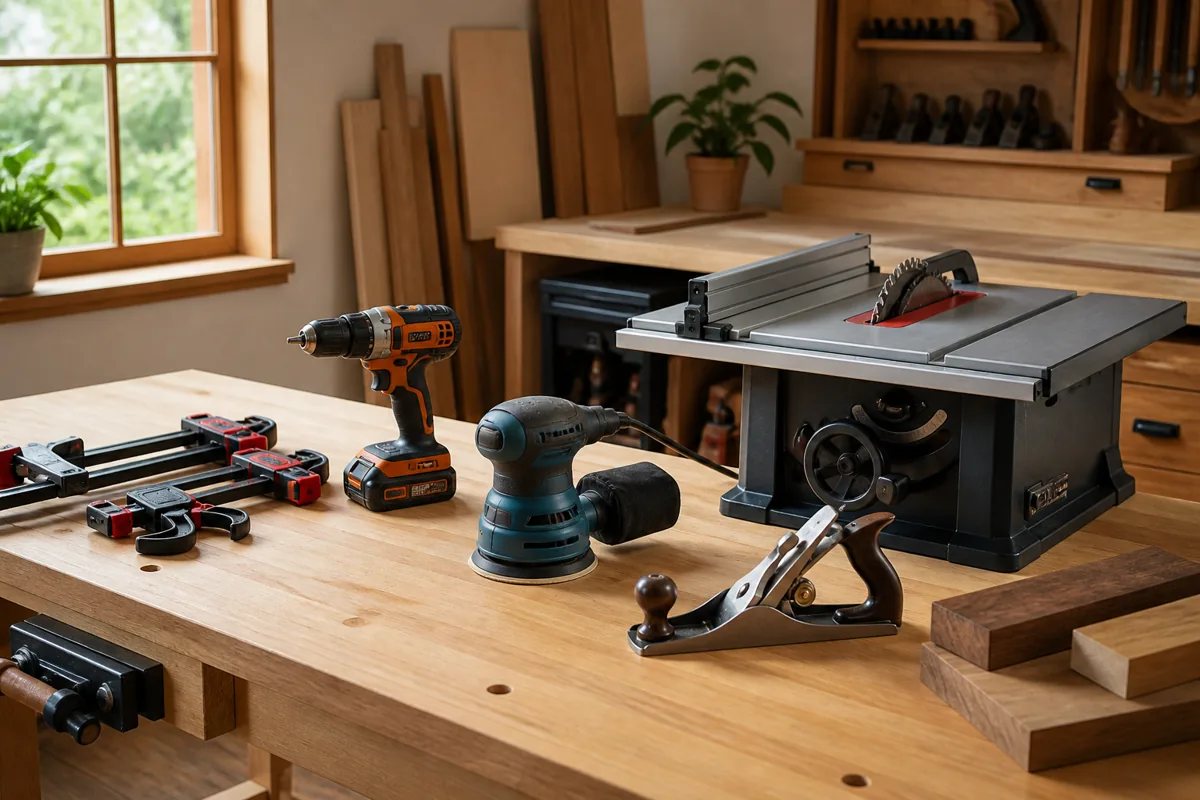
So the kit below is small on purpose. Eight tools and one box of consumables covers the overwhelming majority of what goes wrong in an ordinary house. Everything past that gets bought per problem, and usually rented first.
The core eight
Ordered by how often it leaves the bag, not by price.
1. Cordless drill/driver
Half of everything. Look for a two-speed gearbox, a clutch that clicks predictably, and a keyless chuck. For repairs the compact 12V-class drills often beat the big 18V ones: shorter nose, lighter when your arm is over your head, and small enough to work inside a cabinet or under a sink. You trade torque on large hole saws, which repair work rarely asks for. Buy into a platform with a broad bare-tool range, take two batteries, and add a magnetic bit holder.
2. Oscillating multi-tool
Cuts where nothing else fits, removes grout, undercuts trim. Good ones have tool-free blade clamping, a common blade interface and variable speed — grout and metal want slow, wood wants fast. Blades are the running cost, so buy a mixed pack and treat bi-metal wood-with-nails blades as the workhorse. Bargain kits bundle soft blades that round off in one cut and make the tool feel weak when it is not.
Oscillating multi-tools
Plunge cuts in place, grout removal, flush-cutting nails and dowels. Nothing else solves as many awkward problems.
3. Stud finder
Hanging anything heavy safely. Own both types. A magnetic finder locates the screws and nails in the framing and never needs batteries; an electronic scanner reads a wider band and usually adds live AC detection, which is the feature that prevents the expensive mistakes. Calibrate on a stretch of wall you believe is empty, mark both edges of the stud rather than guessing the center, and confirm with a probe hole where the fixing will cover it.
Stud finders
Scans for framing and live wires. Cheap, and it prevents the two most expensive mistakes in hanging things.
4. Utility knife
With fresh blades, not the one from 2014. A retractable body with blade storage in the handle is the whole trick: you swap blades instead of leaning harder on a dull one, and leaning harder is where the injuries come from. It scores drywall, trims caulk, cuts carpet and shims, and breaks the paint seal on a stuck window. Cheap is fine as long as the blade locks with no wobble under side load.
5. Adjustable wrench and channel locks
Plumbing fittings, appliance connections. Buy two sizes of channel locks so one can back-hold a fitting while the other turns, and judge them on jaw capacity and how positively the adjustment locks, not on handle length. Tape or a strap wrench keeps toothed jaws off finished chrome. The usual damage is over-tightening: plastic supply nuts and compression fittings are hand-tight plus a nudge, and a long handle cracks them without warning.
6. Screwdriver set
Including small precision drivers for electronics and hardware. Tip hardness and fit are everything — a soft Phillips chews out one screw head and then keeps doing it to the next. Cover both common Phillips sizes, two flats, square drive and Torx, which now turns up on appliances and flat-pack furniture. Add a stubby for cabinet interiors. Fixed shafts transmit feel better than a bit holder, which is why they still beat the drill on delicate hardware.
7. Level
24-inch, plus a small torpedo level. Two feet spans a shelf and still fits inside a closet or a cabinet, while the torpedo’s magnetic edge handles pipe, conduit and appliance feet. Test any level before you trust it: read it, flip it end for end in the same spot, read it again. A cheap one that fails that test is worse than no level at all, and a laser is a useful extra for long shelf runs rather than a substitute.
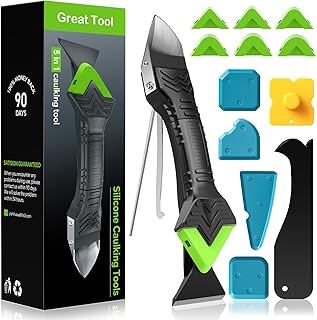
8. Caulk gun
Bathrooms, windows, trim. Want a smooth-rod or ratchet mechanism with a quick release, a built-in cutter and seal punch, and a high thrust ratio if you run stiff sealant in a cold room. The gun is the easy part. The finish comes from prep — cut the old bead out with a knife or multi-tool blade, clean and dry the joint, tape both sides, and tool the bead once in a single pass instead of fussing at it.
Consumables people never have
Repairs stall on a missing anchor or a screw half an inch too short far more often than on a missing tool. Buy these once, keep them in one box, and restock the moment you break into the last of anything.
- ✔ Wall anchors in three sizes — toggle, plastic and self-drilling
- ✔ Assorted screws, not just one length
- ✔ Silicone and paintable caulk, both
- ✔ PTFE tape for plumbing threads
- ✔ Sandpaper and spackle for wall repairs
- ✔ Furniture pads and door shims
Anchor choice follows the wall, not the number printed on the pack: toggles for hollow drywall, sleeves for masonry, self-drillers for light loads in board. Treat rated capacities as optimistic and size up. And keep both sealants, because silicone belongs in wet areas that will never be painted and paintable acrylic belongs anywhere a brush is going to follow.
Wall anchor and fastener kits
Toggles for drywall, sleeves for masonry, and screws in more than one length. This box saves more trips than any tool.
Where the money makes a difference
Entry level
Fine for anything with no moving parts and no precision requirement: utility knives, spackle, sandpaper, anchors, basic drivers, a torpedo level you have checked. What ruins cheap tools is soft steel on driver tips, plastic where there should be gears, and blade clamps that need a hex key you will lose within a month.
Mid-range
Where the drill, the multi-tool, the stud finder and the caulk gun belong, and where most homeowners should stop. The extra money buys tool-free blade changes, variable speed, batteries that still hold a charge in year three, live-wire detection that actually triggers, and a warranty with parts behind it.
Pro grade
Worth it if you are a landlord or handyman using these daily, or if you already own the battery platform and can buy bare tools. For occasional repairs the returns drop off fast. A second battery and a fully stocked consumables box will do more for you than a premium drill.
Mistakes that cost the most
Buying the biggest set instead of the right eight. Piece counts are marketing. A kit is only as good as its drivers, and the rest is padding you carry around for years.
Hanging heavy things on drywall alone. Board holds pictures. Anything with weight and leverage — TV mounts, floating shelves, grab bars, cabinets — goes into framing or into a toggle rated for it.
Forcing dull blades and bits. Nearly every tool that feels underpowered is a tool with a worn cutting edge. Change the blade before you change your grip.
Splitting batteries across platforms. Two chargers and two sets of packs is money spent twice. Pick one voltage family and stay in it.
Who this kit suits, and who can skip parts of it
- House and condo owners: buy all eight, mid band, and be done.
- Renters: skip the wrench and channel locks, since management owns the plumbing, and lean on removable hanging hardware, spackle and touch-up paint rather than anchors you cannot patch.
- Old plaster and lath: lead with the magnetic finder, because electronic scanners get confused by the substrate, and expect masonry bits and toggles.
- Landlords and property managers: pro grade, in duplicate, with consumables bought in bulk.
- Anyone with a woodworking shop: you own half of this already. Buy the multi-tool, the stud finder, the pliers and the consumables box, and stop there.
Repairs this kit handles
Sticking doors, loose hinges, running toilets, leaking traps, sagging shelves, cracked caulk, loose cabinet handles, squeaking floors, broken blinds, damaged drywall, appliance installs, and hanging anything.
The pattern repeats: work out what is behind the surface, get a fastener out or in, cut something in place, then seal or level it. A sticking door is the stud finder to find the jamb framing, a hand driver to reset a hinge, and the multi-tool to shave the strike side if it still binds. A sagging shelf is the stud finder, longer screws, and the right anchor where framing is missing. A running toilet is channel locks, a supply nut and patience.
When to call someone
- ✘ Anything inside an electrical panel
- ✘ Gas appliances and connections
- ✘ Structural changes to load-bearing walls
- ✘ Roof work above single storey
- ✘ Anything requiring a permit in your area
The line is not drawn by difficulty. It is drawn by what happens when you are wrong. A botched shelf costs a patch and an hour; a botched gas fitting or panel job costs far more than the trade would have. Permits belong on that list too, because undocumented work resurfaces at resale and can undermine a claim.
FAQ
Is a tool kit set worth buying? Mid-size ones, yes. The 300-piece bargain sets are mostly sockets you will never use, and the drivers inside them are the first things you will replace. Buy a mid-size kit chosen for its driver selection, hex keys and a case that closes, then add power tools separately.
Cordless or manual screwdrivers? Both. A drill for volume, hand drivers for delicate hardware. The drill wins on cabinet runs, deck screws and anything repetitive; the hand driver wins wherever stripping a head or over-driving into soft wood would create a second job, like hinge screws and switch plates.
What is most commonly missing? Wall anchors and a working stud finder. Runners-up: screws in more than one length, and a fresh pack of blades.
Corded or cordless multi-tool? Corded costs less and never dies mid-cut, which suits bathroom and floor work near an outlet. Cordless earns its keep in attics, crawl spaces and up ladders — and if you already own the platform, the bare tool is the cheaper option anyway.
Buy the eight, stock the box, and add tools only when a specific repair demands one. That order is what keeps a repair kit useful instead of decorative.
See home repair kits →