What's inside
As an Amazon Associate I earn from qualifying purchases. This post may contain affiliate links at no extra cost to you.
The best agricultural drip irrigation complete systems for most small-farm and market-garden use in 2026 are pressure-compensating kit bundles built around 0.5–1 GPH emitters, a 120–200 mesh filter, and a 25–30 PSI regulator — with Rain Bird’s drip kits, DripWorks garden bed kits, and Netafim’s Techline-based packages covering most situations from a few raised beds to several acres of row crops.
As an Amazon Associate we earn from qualifying purchases at no extra cost to you.


What “Complete System” Should Actually Include
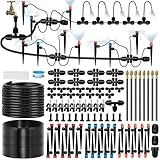
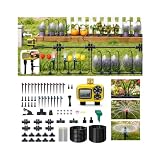
A kit earns the word “complete” only if it covers everything from hose bib to emitter. Anything less means a second order. Check for:
- Backflow preventer — required by most municipal codes, often omitted from budget kits.
- Filter — 120 mesh minimum for clean water, 150–200 mesh for well or pond water.
- Pressure regulator — drip tape and most emitters need 10–25 PSI; household lines run 40–80 PSI.
- Mainline tubing — 1/2″ or 5/8″ poly for runs under ~150 ft; 3/4″ beyond that.
- Lateral/drip tape or emitter tubing — where the actual watering happens.
- Fittings, goof plugs, end caps, and a punch tool — the small parts that stall installs.
- A timer — a genuine differentiator; many “complete” kits skip it.
Top Picks by Situation
Best overall for market gardens: DripWorks complete row crop kits
DripWorks sells configurable kits scaled by number of rows and row length (typically 4–20 rows, 25–200 ft). They pair drip tape or hard-sided drip line with a proper filter/regulator assembly and include a punch tool and ample fittings. Coverage is honest — their charts state actual row-footage rather than optimistic plant counts.
Best for small farms scaling up: Netafim-based commercial bundles
Kits built on Netafim Techline or UniRam pressure-compensating dripline cost more but tolerate sloped ground and long runs without uneven flow. Expect 0.26–0.6 GPH emitters at 12″–24″ spacing, rated for years of burial or UV exposure. The right choice when uniformity matters at half-acre scale and beyond.
Best budget/starter kit: Rain Bird drip irrigation kits
Rain Bird’s garden and landscape drip kits cover roughly 75–150 sq ft per kit with 0.5 GPH emitters, a 25 PSI regulator, and a basic 150-mesh filter equivalent. They’re widely stocked, parts are cheap to expand, and the fittings ecosystem is the largest in the category. Filtration is the weak point for dirty source water.
Best for orchards and perennials: DIG and Mister Landscaper kits
Both offer kits built around adjustable 0–10 GPH button drippers and bubblers on 1/4″ micro-tubing — better suited to trees, shrubs, and vine crops than tape. Adjustable emitters let you match water to a tree’s canopy as it grows, at the cost of more maintenance.
Spec Comparison
| Kit type / brand line | Coverage | Emitter flow | Filter | Regulator | Timer included | Typical price range |
|---|---|---|---|---|---|---|
| Rain Bird garden drip kit | ~75–150 sq ft | 0.5 GPH PC | ~150 mesh screen | 25–30 PSI | Some versions | $40–$80 |
| DripWorks 10-row x 100 ft kit | ~1,000 row-ft | Tape: 0.24–0.34 GPM/100ft | 120–155 mesh disc | 10–15 PSI (tape) | Optional add-on | $200–$400 |
| Netafim Techline bundle (1/2 acre) | ~20,000 sq ft | 0.26–0.42 GPH PC | 120–200 mesh disc | 20–40 PSI | No | $400–$900 |
| DIG orchard/bubbler kit | 10–40 plants | 0–10 GPH adjustable | 150 mesh screen | 25–30 PSI | Often yes | $50–$150 |
Decision Matrix
| Your situation | Pick | Why |
|---|---|---|
| Raised beds / garden under 300 sq ft | Rain Bird kit + add-on tubing | Cheap, expandable, parts everywhere |
| Market garden, 500–2,000 row-ft, seasonal crops | DripWorks row kit with drip tape | Tape is cheap to replace each season; uniform shallow-wetting |
| Half acre+, permanent beds or sloped ground | Netafim PC dripline bundle | Pressure compensation keeps flow even over distance/elevation |
| Trees, berries, vines | DIG or Mister Landscaper bubbler kit | Adjustable flow per plant; 1/4″ spaghetti tubing routes easily |
| Well/pond water, no municipal supply | Any kit + upgraded 200-mesh disc filter | Stock filters clog fast on sediment |
Worked Example: Sizing for 12 Rows x 100 ft
Say you run 12 rows of vegetables, each 100 ft, using drip tape rated at 0.34 GPM per 100 ft at 10 PSI:
- Total flow needed: 12 × 0.34 = 4.1 GPM — well within a standard 5/8″ hose bib (typically 6–10 GPM).
- Zones: one zone is fine; you could split into two 6-row zones to halve flow demand.
- Mainline: 3/4″ poly, since 4+ GPM exceeds comfortable 1/2″ capacity (~2–3 GPM over 100 ft).
- Runtime: tomatoes needing ~1″/week in summer, tape applying ~0.5″/hour over the root zone → roughly 2 hours, 3x per week.
- Kit cost of ~$300 amortized over 4 seasons of use ≈ $75/season — tape replacement adds ~$30–50/year.
Durability and Ownership Realities
- What wears first: drip tape (1–3 seasons with thin-wall 4–8 mil tape; 10–15 mil lasts longer). PC dripline lasts 7–10+ years. Emitter diaphragms and filter screens are consumables — buy spares.
- Clogging is the #1 failure. Flush lateral lines monthly; open end caps and run water 30 seconds. Chlorinate or acid-treat lines for well water with iron/biofilm.
- Rodents and tillage damage shallow tape; burial at 2–4″ helps but invites root intrusion in non-PC lines.
- Common mistakes: skipping the regulator (blown fittings), running >150 ft on 1/2″ mainline (dry tail ends), mixing brands of fittings with mismatched tubing OD (700 vs 710 series are not interchangeable), and winterizing late — trapped water splits fittings at first hard freeze.
Installation Complexity
A garden-scale kit installs in 1–2 hours: backflow → timer → filter → regulator → mainline → punch emitters. A multi-zone farm kit takes a day and benefits from a layout sketch before punching anything. The single most skipped step is flushing the mainline before connecting laterals — construction grit goes straight into the emitters otherwise.
FAQ
Is drip tape or emitter tubing better for vegetables?
Tape is cheaper and applies water very uniformly along the row — ideal for annuals. Emitter tubing is more durable and better for permanent beds or rocky soil.
Do I need a filter on municipal water?
Yes. Sand and scale still clog 0.5 GPH emitters. A 120-mesh screen filter is cheap insurance.
Can I expand a starter kit later?
Yes, if you stay within the same tubing diameter standard and your total flow stays under your source’s GPM. Buy a filter and regulator sized one zone bigger than you think you need.