What's inside
As an Amazon Associate I earn from qualifying purchases. This post may contain affiliate links at no extra cost to you.
Best Angle Grinders for Metalworking: The Short Answer
The best angle grinders for metalworking in 2026 balance three things most spec sheets obscure: sustained motor power under load, thermal protection that survives long grinding sessions, and vibration control you can actually feel after twenty minutes. For most metalworkers, a 4-1/2″ or 5″ grinder with a 10–13 amp motor (or an 18V/20V brushless cordless equivalent) covers cutting, grinding, and surface prep. For heavy stock removal and weld cleanup, step up to a 6″ or 7″ machine — the larger disc depth changes what the tool can do, not just how fast.
What Actually Matters When Choosing
Marketing focuses on amp ratings and RPM. On steel, different things determine whether a grinder works for you or fights you.
As an Amazon Associate we earn from qualifying purchases at no extra cost to you.


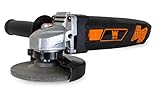

- Motor power (real, not rated): An 11A corded grinder is the practical minimum for grinding welds on mild steel. Brushless cordless models in the 18V/20V Max class now match that performance, but only with a 5Ah or larger battery.
- Disc size: 4-1/2″ discs are cheapest and most versatile; 5″ adds ~13% more cutting depth; 6″ and 7″ are for heavy material and reach. Larger discs run slower surface speeds, which actually helps on stainless by reducing heat tint.
- Speed control: Fixed-speed 11,000 RPM machines are fine for mild steel. Variable speed (roughly 2,800–11,000 RPM) matters for stainless, aluminum flap disc work, and polishing — full speed on stainless burns discs and work-hardens the surface.
- Vibration: Look for anti-vibration side handles or counterbalanced motors. Sustained vibration above ~5 m/s² causes numbness and fatigue quickly. This is where budget grinders quietly cost you.
- Guard adjustment: Tool-free, multi-position guards let you rotate protection when working in corners or tight weldments. If the guard needs a wrench, it stays in one position — or gets removed entirely, which is the most dangerous common mistake.
- Thermal/electronic protection: Overload cutoffs, restart protection, and kickback clutches (electronic or mechanical) are now standard on quality machines. A paddle switch with lock-off is worth prioritizing over a slide switch for safety.
Cutting vs. Grinding: They’re Different Jobs
Cutting thin stock and rebar favors smaller diameter thin-kerf wheels (1mm cutting discs) at high RPM — speed and maneuverability win. Grinding welds, beveling, and heavy stock removal favor bigger discs and higher sustained power — wheel contact area and motor torque under load win. If you mostly cut, a compact 4-1/2″ brushless cordless is ideal. If you mostly grind, corded power or a high-output cordless with a large disc pays for itself in disc life and finish quality.
Spec Comparison: Top Picks for 2026
| Model | Disc Size | Power | Weight | No-Load Speed | Key Features |
|---|---|---|---|---|---|
| Makita GA4530 / 9557PB | 4-1/2″ | 7.5A (6A on 9557PB) | ~4.5 lbs | 11,000 RPM | Compact, tool-free guard, proven durability; budget pick |
| Bosch GWS13-50VS | 5″ | 13A | 5.3 lbs | 2,800–11,500 RPM (variable) | Variable speed, vibration control handle, restart protection |
| DeWalt DWE402 / DCG416B (cordless) | 4-1/2″–5″ | 11A / 20V Max brushless | 6.2 lbs / ~5 lbs bare | 11,000 / 9,000 RPM | Paddle switch, dust ejection system; cordless has kickback brake |
| Milwaukee 2780-20 (M18 Fuel) | 4-1/2″–5″ | 18V brushless | 5.8 lbs bare | 8,500 RPM | Paddle switch, tool-free guard, performs like 11A corded |
| Metabo WEV15-125 (formerly Hitachi line) | 5″ | 13.5A | 5.5 lbs | 2,800–11,000 RPM (variable) | Electronic clutch, mechanical brake, best-in-class safety; premium pick |
| Makita GA7021 / DeWalt DWE4557 | 7″ | 15A | 10.8–11.6 lbs | 8,500 RPM | Heavy stock removal, weld grinding on plate; two-hand work |
Prices: corded 4-1/2″–5″ grinders run roughly $50–$180; brushless cordless bare tools $130–$250; 7″ machines $150–$300.
Which One for Your Situation
| Your situation | Recommended type | Why |
|---|---|---|
| Occasional DIY, cutting bolts and thin stock | Compact 4-1/2″ corded, 6–7.5A | Cheap discs, light, plenty of cutting speed |
| Fabrication shop, weld grinding daily | 5″ corded, 13A+ variable speed | Sustained power, speed control for stainless and flap discs |
| Mobile / on-site work, no outlets | 18V/20V brushless, 5Ah+ batteries | Now matches corded cutting; buy into a battery platform you already own |
| Heavy plate, beveling, large welds | 7″ corded, 15A | Disc depth and torque; two-handed control required |
| Safety-first or newer users | Model with electronic clutch + brake (Metabo, DeWalt cordless) | Kickback stops the wheel in ~1/10 second instead of tearing free |
Ownership Realities
What wears first: On corded grinders, brushes and the paddle/slide switch fail before anything else — brushes are a $5–$15 fix every 100–200 hours. Cordless models eliminate brushes entirely. Gear wear shows up as a whine that gets louder under load.
Consumables cost more than the tool: A 4-1/2″ grinder used weekly will burn through $150–$300/year in cutting and flap discs. Buying discs in bulk (25+ packs) cuts per-disc cost roughly in half. Never store discs flat on a damp bench — moisture ruins resin-bonded wheels.
Common mistakes: Removing the guard for access (rotate it instead), side-loading thin cutting discs to grind (they shatter — use a 1/4″ grinding wheel), and running stainless at full speed (drop to ~6,000 RPM to prevent burning).
Maintenance: Blow out the vents monthly — metal dust plus the grinder’s own magnetic field packs iron filings into the motor. Check the spindle lock and flange nut torque before each disc change; a loose flange is a leading cause of disc wobble and failure.
FAQ
Is 6 amps enough for metalworking?
For cutting with thin discs and light flap-disc work, yes. For sustained weld grinding, an 11A+ motor maintains speed under pressure where a 6A unit bogs down and overheats.
Corded or cordless for a home shop?
If you already own batteries in a major platform, cordless in 2026 genuinely rivals 11A corded performance — but expect roughly 15–25 minutes of hard grinding per 5Ah pack, so keep two batteries. For a bench that never moves, corded is still cheaper per hour of use.
What’s the difference between a grinder rated 4-1/2″ and 5″?
Physically identical tools in most cases — the rating reflects guard clearance. A 5″-rated guard accepts both disc sizes, giving you flexibility.