What's inside
As an Amazon Associate I earn from qualifying purchases. This post may contain affiliate links at no extra cost to you.
The best extension ladders are the ones that provide enough working height without becoming too heavy, too long to store, or difficult to set up; for most homeowners, a 24-foot fiberglass or aluminum ladder with a 300-pound Type IA rating is the most versatile choice.
As an Amazon Associate we earn from qualifying purchases at no extra cost to you.

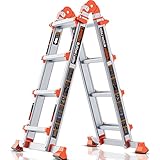


Best extension ladders by situation
| Situation | Best choice | Why it fits | Main compromise |
|---|---|---|---|
| Occasional gutter, roof-edge, and second-story work | 24-foot aluminum Type IA ladder | Good reach-to-weight ratio and commonly available | Conducts electricity and can feel lively when extended |
| Work near electrical service or wiring | 24- or 28-foot fiberglass Type IA or IAA ladder | Nonconductive rails provide an important layer of protection | Usually 10 to 25 pounds heavier than a comparable aluminum ladder |
| Frequent construction or maintenance work | Heavy-duty fiberglass or aluminum Type IAA ladder | 375-pound capacity and more robust hardware tolerate regular use | Higher purchase price and greater carrying weight |
| Small garage or workshop | 16- or 20-foot compact extension ladder | Shorter closed length is easier to rack or store horizontally | May not safely reach a two-story roof edge |
| One person frequently transporting the ladder | Lightweight aluminum model with wide-flared feet | Easier to carry, raise, and reposition | Requires careful exclusion from electrical hazards |
How much reach do you actually need?
A ladder’s advertised length is not its safe working height. Extension ladders must extend above a landing for a secure handhold, and you should not stand on the top four rungs. For access to a roof, the usual planning rule is to have the rails extend at least 3 feet above the landing.
As a practical estimate, a 24-foot ladder gives useful access to a typical two-story roof edge, while a 28-foot ladder provides more margin for taller foundations, sloped ground, or a higher eave. A 16-foot ladder is often suitable for single-story gutters and low roof edges. Measure the ground-to-landing height before buying rather than choosing by the tallest advertised reach.
Reach calculation example
Suppose the roof edge is 20 feet above the ground. Add 3 feet for the portion above the roof edge, then allow for the ladder’s required setup angle. A ladder with at least 23 feet of extended rail length is the sensible minimum, but a 24-foot model may leave little adjustment room on uneven ground. A 28-foot model offers more flexibility, although its greater closed length and weight can make setup harder.
For a ladder leaning against a wall, use the approximate 4-to-1 setup rule: move the base out 1 foot for every 4 feet of vertical height to the upper contact point. At a 20-foot contact height, the base should be about 5 feet from the wall, subject to the manufacturer’s instructions and the actual ground conditions.
Head-to-head: aluminum versus fiberglass
Aluminum extension ladders
Aluminum is usually the best material when carrying weight, storage, and price matter most. A 24-foot aluminum ladder commonly weighs about 35 to 50 pounds, depending on its duty rating and rail design. It also resists ordinary outdoor moisture and does not rust like steel.
The decisive drawback is electrical conductivity. Aluminum should not be used near overhead lines, service drops, exposed wiring, or other electrical hazards. It can also dent if dropped or dragged over rough surfaces. Bent rails, damaged rung locks, and cracked or distorted feet are reasons to remove a ladder from service rather than attempt a casual repair.
Fiberglass extension ladders
Fiberglass is the safer material choice where electrical exposure is possible, although no ladder should contact a power line. It feels stiffer and often has a solid, stable feel on a jobsite. Its drawbacks are weight and cost: a 24-foot fiberglass ladder may weigh roughly 50 to 75 pounds, while a 28-foot model can be substantially heavier.
Fiberglass rails can also degrade after prolonged ultraviolet exposure. Look for fading, surface fibers, cracks, or a chalky finish. Store the ladder out of direct sunlight when practical, and never coat the rails with paint that could hide damage.
Size, weight, and closed-length comparison
The following figures are useful planning ranges rather than a substitute for the exact manufacturer’s specification. Two ladders of the same nominal length can differ considerably because of rail dimensions, duty rating, and features.
| Nominal ladder length | Typical closed length | Typical aluminum weight | Typical fiberglass weight | Useful application |
|---|---|---|---|---|
| 16 feet | 8.5–9 feet | 25–35 pounds | 35–50 pounds | Single-story maintenance and low access |
| 20 feet | 10.5–11 feet | 30–45 pounds | 45–60 pounds | Gutters and moderate residential work |
| 24 feet | 12.5–13 feet | 35–50 pounds | 50–75 pounds | Most two-story home tasks |
| 28 feet | 14.5–15 feet | 45–65 pounds | 60–90 pounds | Taller homes and jobsite versatility |
| 32 feet | 16.5–17 feet | 55–80 pounds | 75–105 pounds | High eaves and commercial-style access |
Check the closed length against your storage location, not just your vehicle. A 24-foot ladder that closes to about 13 feet still needs a clear wall, ceiling rack, or trailer position. Also measure doorways, gates, and the turning space needed to carry it through the property.
Duty rating: do not buy by body weight alone
The duty rating includes the user, clothing, tools, materials, and any accessories. ANSI ratings commonly seen on extension ladders are Type III at 200 pounds, Type II at 225 pounds, Type I at 250 pounds, Type IA at 300 pounds, and Type IAA at 375 pounds.
For household work, Type IA is a sensible minimum when you may carry a tool pouch, paint, or a small pressure washer component. Type IAA is worthwhile for frequent trade use or heavier equipment, but its larger rails and hardware often increase both weight and closed dimensions. A higher rating does not make an improperly positioned ladder safe.
Features that make setup easier
- Rope-and-pulley extension: Reduces the effort required to raise taller sections. Inspect the rope for fraying and replace it according to the manufacturer’s parts guidance.
- Wide-flared base: Improves lateral stability, especially on firm, level ground, but does not compensate for soft soil or a poor angle.
- Pivoting or articulated feet: Help the feet maintain contact on some surfaces. Keep the soles clean and replace worn tread.
- Heavy-duty rung locks: Should engage fully on both rails. Never rely on one lock or on a rung that is only partly seated.
- Tool slots or accessory hooks: Reduce climbing with objects in your hands. Avoid accessories that change the ladder’s balance or exceed its rated load.
- Standoff stabilizer: Keeps the rails away from gutters, siding, or fragile surfaces and can make roof-edge access more comfortable.
Setup and maintenance checklist
- Inspect the rails, rungs, rope, locks, feet, and labels before every use. Remove the ladder from service if any structural part is cracked, bent, loose, or missing.
- Clear the setup area of mud, boxes, cords, vehicles, and people. Never place an extension ladder on a box, scaffold, bucket, or other improvised height adjustment.
- Set the base on firm, level ground and use the 4-to-1 angle as a starting point. Both feet must remain in full contact with the surface.
- Raise and extend the ladder with the locks facing outward where the design requires it. Confirm both locks have engaged before climbing.
- Keep the rails at least 10 feet from overhead electrical lines unless a qualified professional has established a safe method and clearance.
- Climb facing the ladder, keep three points of contact, and use a tool belt or hoist line rather than carrying bulky items.
- After use, wipe off dirt and moisture, check the feet for embedded gravel, and store the ladder supported at several points to prevent warping.
What wears out first?
Feet, rope, pulleys, rung locks, and end caps usually need attention before the rails do. Grit can prevent locks from seating, while ultraviolet exposure hardens rubber feet and weakens fiberglass surfaces over time. Do not drill, weld, paint, or straighten a damaged ladder unless the manufacturer specifically provides an approved repair procedure.
For occasional home use, spending more on a Type IA ladder with replaceable feet and readily available hardware can be better value than buying the lightest model. If you use a ladder ten times per year for five years, a $250 ladder costs about $5 per use before replacement parts; a $500 jobsite ladder used 100 times costs about $5 per use as well. Frequent use changes the buying decision: sturdier hardware and serviceable components can matter more than the lowest initial price.
Bottom line
Choose a 16- or 20-foot ladder for low, occasional maintenance, a 24-foot Type IA model for most two-story homes, and a 28-foot or larger ladder only when the extra reach is necessary and you can safely handle its weight. Select fiberglass near electrical hazards, aluminum when portability and storage are priorities, and Type IAA when regular trade work or heavier loads justify the added bulk. The best extension ladder is not the longest one; it is the shortest, lightest ladder that reaches your work safely with room for proper setup.