What's inside
- Best Inflatable Fishing Kayaks for Stability & Portability
- Quick comparison: three established options
- Choose by the water and the way you launch
- Capacity: leave room for people, gear, and water
- Material thickness, puncture resistance, and what specifications miss
- Setup time: compare the whole launch routine
- Ownership costs and care that extend service life
- Which one fits your situation?
- Bottom line
- Best Inflatable Fishing Kayaks for Stability & Portability
- Quick comparison: three established options
- Choose by the water and the way you launch
- Capacity: leave room for people, gear, and water
- Material thickness, puncture resistance, and what specifications miss
- Setup time: compare the whole launch routine
- Ownership costs and care that extend service life
- Which one fits your situation?
- Bottom line
As an Amazon Associate I earn from qualifying purchases. This post may contain affiliate links at no extra cost to you.
Best Inflatable Fishing Kayaks for Stability & Portability
The best inflatable fishing kayak for most anglers is a 10–12-foot, multi-chamber model with a reinforced floor, a capacity comfortably above the combined load of paddler and gear, and a setup time you can manage at the water’s edge. Choose a lighter, quicker-inflating kayak for frequent carry-and-launch trips; choose a wider, heavier model with a higher load rating for larger paddlers, more tackle, or exposed water.
Capacity figures and weights below are manufacturer-published specifications for representative models; versions and regional specifications can differ. Treat them as a comparison starting point, and confirm the exact model year’s manual before buying. A kayak’s maximum capacity is not a promise of equally good handling at that load.
As an Amazon Associate we earn from qualifying purchases at no extra cost to you.


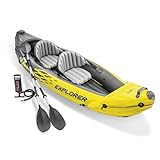

Quick comparison: three established options
| Model | Length | Published capacity | Hull/floor construction | Approx. kayak weight | Typical setup consideration |
|---|---|---|---|---|---|
| Advanced Elements StraitEdge Angler PRO | 10 ft 6 in | 300 lb | Inflatable body with aluminum-frame seat; reinforced fishing-oriented hull | About 45 lb | Multiple chambers and a fitted seat take longer than a simple one-piece recreational inflatable |
| Sea Eagle 385fta FastTrack Angler | 12 ft 6 in | 635 lb | High-pressure drop-stitch floor; reinforced inflatable hull | About 45 lb | Several chambers and a high-pressure floor require a suitable pump and pressure checks |
| Aquaglide Blackfoot Angler 125 | 12 ft 6 in | 600 lb | Reinforced inflatable hull with a high-pressure floor | About 41 lb | Allow time to inflate the floor and hull separately, then fit the seat and accessories |
These models illustrate different trade-offs, not a universal ranking. The StraitEdge is shorter and has a lower stated capacity, while the longer FastTrack and Blackfoot provide more room and load headroom. Published fabric descriptions are not always expressed using a directly comparable “material thickness” figure. When a manufacturer does not give a consistent denier or millimeter specification, do not infer puncture resistance from an unverified thickness comparison.
Choose by the water and the way you launch
- Small lakes, short carries, and occasional outings: Prioritize packed size, manageable carry weight, and a simple chamber layout. A lighter kayak that is easy to transport may get used more often than a heavier, higher-capacity model.
- Longer sessions or a loaded fishing setup: Favor a longer hull, supportive seat, usable mounting points, and substantial capacity headroom. A high-pressure floor can feel firmer underfoot, but it adds inflation work and needs the correct pressure.
- Shallow, snag-prone shorelines: Look for abrasion protection on the underside and reinforced areas around the bow, stern, and likely contact points. Even tough fabric can be damaged by dragging over gravel, shells, or sharp branches.
- Windy or open water: A larger capacity rating alone does not make a kayak safe in wind or waves. Consider tracking, freeboard, your paddling ability, and the forecast; keep within the craft’s intended conditions and carry appropriate safety equipment.
Capacity: leave room for people, gear, and water
Add your body weight, clothing, tackle, battery or fish finder, food, water, and any other cargo. Then compare that total with the kayak’s rated capacity. As a practical buying filter—not a manufacturer rule—aim to keep your planned load around 70–80% of the published maximum when you want comfortable room for gear and changing conditions.
For example, a 190-pound paddler carrying 35 pounds of tackle and accessories has a 225-pound load. On a 300-pound kayak, that is 75% of the rating; on a 600-pound kayak, it is about 38%. The higher-rated kayak offers more headroom, but may be longer, bulkier, and more work to inflate. Also check the manufacturer’s instructions for seat position and cargo distribution: concentrating weight at one end can make the kayak trim poorly even when the total is within limits.
Material thickness, puncture resistance, and what specifications miss
Inflatables commonly use layered PVC or similar coated fabrics, welded or bonded seams, and separate air chambers. A quoted fabric thickness or denier can help compare materials only when the units and construction are genuinely comparable. It does not tell you everything about seam quality, abrasion reinforcement, floor design, or how the kayak behaves after years of folding and UV exposure.
For fishing, inspect the whole protection system rather than chasing the largest thickness number: reinforced bottom panels, covered seams, replaceable wear strips, multiple chambers, and a repair kit matter. A drop-stitch floor uses internal fibers to hold a flatter shape at higher pressure than a basic low-pressure floor. That can improve rigidity, but it does not make the hull immune to hooks, sharp fins, or careless handling.
Fishing hooks are a particular hazard. Keep spare hooks covered, use a landing net, and avoid placing sharp tools loose on the floor. If a puncture occurs, move to shore, identify the affected chamber, and follow the supplied repair instructions. Do not inflate above the stated pressure to compensate for a soft-feeling kayak; temperature changes can also raise or lower pressure.
Setup time: compare the whole launch routine
Manufacturers’ inflation times are difficult to compare because they depend on pump type, starting pressure, temperature, and how long it takes to assemble the seat and fishing accessories. For planning, budget roughly 10–20 minutes for inflation and basic assembly with a suitable pump, then add time for loading and a pressure check. A multi-chamber kayak with a high-pressure floor may take longer than a simple low-pressure design.
Use a pump with the correct valve adapter and pressure gauge. Inflate each chamber in the sequence given in the manual, fit the floor and seat as directed, and recheck pressure after the kayak has sat briefly. A compatible electric pump can reduce effort, but it does not eliminate the need to verify pressure. Keep a hand pump available for topping up or as a backup.
Ownership costs and care that extend service life
- Rinse after use: Freshwater rinsing removes grit, salt, and fish residue that can work into seams and fittings. Let the kayak dry fully before folding to reduce mildew and odor.
- Pack loosely: Repeatedly creasing the same spot can stress coated fabric. Follow the manufacturer’s folding guidance and avoid forcing a cold, stiff kayak into a tight bag.
- Protect it during transport: Keep the hull away from hooks, knives, hot exhaust, and rough cargo edges. Do not drag it across abrasive ground; use a launch mat or carry it where practical.
- Check wear points: Inspect the underside, seams, valves, seat attachments, and accessory mounts before the season and after contact with rocks or debris. A slow leak is easier to locate and repair before a trip.
Expect occasional expenses for a compatible pump, paddle, PFD, dry storage, and replacement repair materials. A listed package may include some accessories but not others, so compare what is actually included rather than assuming the kayak is ready to fish out of the box.
Which one fits your situation?
| Your priority | What to favor | Trade-off to accept |
|---|---|---|
| Limited storage or frequent solo carrying | Lower packed weight, compact bag, straightforward chamber layout | Less deck space and potentially less load headroom |
| Heavier paddler or substantial fishing cargo | Higher capacity, longer hull, stable floor, supportive adjustable seat | More bulk to carry and more inflation volume |
| New inflatable-kayak owner | Clear pressure markings, accessible valves, multiple chambers, useful manual | May cost more than a very basic model |
| Frequent use and rough launch sites | Reinforced underside, durable seams, repair support, replaceable wear protection | Extra material can add weight and does not prevent all punctures |
Bottom line
For a portable fishing setup, compare real carrying weight and setup routine alongside capacity—not capacity alone. The Advanced Elements StraitEdge Angler PRO is a compact choice to investigate for shorter trips and moderate loads; the Sea Eagle 385fta FastTrack Angler and Aquaglide Blackfoot Angler 125 offer more room and substantially higher published capacities for anglers carrying more gear. Before deciding, verify the exact model’s current specifications, included pump and accessories, pressure limits, warranty, and repair support. The best inflatable fishing kayak is the one that fits your actual load and launch routine while leaving enough capacity and stability margin for the water you intend to paddle.