What's inside
As an Amazon Associate I earn from qualifying purchases. This post may contain affiliate links at no extra cost to you.
The best cordless caulking gun for beginners is usually the DeWalt DCE580B for frequent renovation work, while the Milwaukee M12 Fuel 2441-20 is easier to control for occasional indoor repairs and the Makita XGC01Z is the strongest choice for thick sealants and large projects.
A powered caulking gun does not automatically create a neat bead. For a beginner, the important features are low-speed control, an effective anti-drip function, and a carriage that matches the cartridges or sausage packs you actually buy. Excess squeeze-out usually comes from too much feed speed, too much trigger pressure, or using a gun that cannot retract the plunger quickly enough.
As an Amazon Associate we earn from qualifying purchases at no extra cost to you.


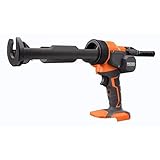

Quick comparison of beginner-friendly cordless caulking guns
| Model | Battery platform | Published speed range | Approx. maximum push force | Common formats | Best fit |
|---|---|---|---|---|---|
| Milwaukee M12 Fuel 2441-20 | 12V | 0–21 inches/minute | 400 lb | 10 oz cartridges | Light-duty interior work and small hands |
| DeWalt DCE580B | 20V Max | 0–21 inches/minute | 900 lb | 10 oz cartridges; versions support larger packs | General renovation and repeated use |
| Milwaukee M18 Fuel 2641-20 | 18V | 0–21 inches/minute | 950 lb | 10 oz cartridges and larger sausage packs, depending on rack | Heavy sealants and high-volume work |
| Makita XGC01Z | 18V LXT | 0–66 inches/minute | 1,100 lb | Cartridges, sausage packs, and bulk containers with the correct holder | Maximum versatility and thick materials |
| Ryobi PCL705 | 18V ONE+ | Variable-speed trigger; manufacturer specifications vary by version | About 500 lb | Commonly 10 oz cartridges | Low-cost entry into powered caulking |
Published speed and force figures are useful for comparison, but they are not a guarantee of bead quality. Actual output depends on nozzle size, sealant viscosity, temperature, cartridge design, and battery charge. Tool-only prices commonly fall between about $100 and $300; batteries and chargers can add substantially to the ownership cost.
Best choices by beginner situation
| Your situation | Recommended type | Why | What to watch for |
|---|---|---|---|
| One bathroom or trim project | 12V, 10 oz cartridge gun | Compact, easier to hold, and less intimidating | Limited force for cold polyurethane or construction adhesive |
| Several rooms or regular DIY work | 18V or 20V, variable-speed gun | Better battery availability and wider material range | Higher weight, especially with a large battery |
| Thick adhesive, roofing sealant, or cold-weather use | High-force 18V gun | Reduces motor strain and stalled plungers | More force can create excess squeeze-out if speed is not reduced |
| Already own several cordless tools | Stay within that battery platform | The battery and charger may cost more than the tool | Check whether the gun is sold tool-only and which holders are included |
| Unsure what materials you will use | Interchangeable carriage system | Supports cartridges and sausage packs with separate accessories | Extra holders can cost $30–$80 or more |
Head-to-head: what separates the leading options
Milwaukee M12 Fuel 2441-20: easiest to handle
The M12 Fuel is a sensible beginner choice when most work involves acrylic-latex caulk, silicone, and small construction adhesive cartridges. Its 12V battery system keeps the tool relatively compact, and its 0–21 inches-per-minute range gives enough low-end control for slowly following a joint.
Its main limitation is force. A 400-pound rating is adequate for many standard 10-ounce cartridges but leaves less margin with cold, thick sealants. It is also primarily a 10-ounce cartridge tool, so it is not the best purchase if you expect to use 20-ounce sausage packs or bulk material.
DeWalt DCE580B: best all-rounder for most beginners
The DCE580B combines a familiar 20V Max platform with a useful low-speed range and substantially more pushing force than compact 12V models. The variable-speed trigger helps beginners start gently, while the tool’s adjustable speed dial limits the maximum output so a full squeeze of the trigger is less likely to flood a joint.
Its anti-drip design retracts the plunger when the trigger is released. That reduces pressure on the cartridge, although it cannot remove every droplet from a low-viscosity silicone. Wipe the nozzle after releasing the trigger rather than assuming the mechanism has stopped all flow.
Choose the exact DCE580 configuration carefully. Holder size and included accessories determine whether it accepts only standard 10-ounce cartridges or also larger sausage packs. The tool is relatively substantial with a battery installed, but that weight can be worthwhile during long runs of adhesive or exterior sealant.
Milwaukee M18 Fuel 2641-20: for demanding materials
The M18 Fuel is aimed at users who need high pushing force and already own M18 batteries. Its approximately 950-pound force rating handles thick sealants more confidently than a compact 12V tool, and the 0–21 inches-per-minute range remains manageable for controlled application.
The trade-off is bulk. A heavier gun can make it harder to keep the nozzle at a consistent angle, particularly when working overhead. For a beginner, the M18 makes sense when material resistance—not merely convenience—is the problem.
Makita XGC01Z: best format flexibility
The Makita XGC01Z stands out for its broad container compatibility when fitted with the appropriate holder. It can be configured for standard cartridges, sausage packs, and bulk material, making it useful for someone who expects to move from household caulk to professional sealants.
Its high maximum speed is useful for long exterior joints, but beginners should start at the lowest setting. Its high force can dispense material faster than expected, especially through a freshly cut nozzle. The tool-only price and additional holders make it less economical for one small project.
Ryobi PCL705: budget-friendly platform choice
The Ryobi option is attractive when you already own ONE+ batteries or want a lower-cost powered alternative to a manual gun. It is best treated as a general 10-ounce cartridge tool for acrylic caulk, silicone, and ordinary adhesive rather than a specialist high-force applicator.
Before buying, verify the current package contents and speed specification. Ryobi has sold tools and kits in several configurations, and a battery, charger, or alternate rack may not be included in the tool-only package.
How speed control prevents a messy bead
Beginners often focus on maximum force, but the useful feature is controlled minimum output. A cartridge may begin dispensing with very little pressure and then suddenly release a thick plug. A dial or trigger that allows a slow start gives you time to match hand movement to material flow.
Use this setup sequence:
- Cut the nozzle at a 30- to 45-degree angle. Make the opening slightly smaller than the finished bead.
- Pierce the inner seal with the tool’s puncture rod or a separate long nail.
- Set the speed to its lowest or second-lowest setting.
- Place the nozzle against the joint before pressing the trigger.
- Move at a steady pace while maintaining light, continuous trigger pressure.
- Release the trigger before pulling the nozzle away.
- Tool the bead immediately if the product instructions allow it.
For a practical starting point, a 10-ounce cartridge contains about 17.3 cubic inches of material. A 1/4-inch bead has a cross-sectional area of roughly 0.049 square inches, so the theoretical coverage is about 350 linear inches. Real coverage is lower because of waste, uneven joints, and material left in the nozzle. At a 3/8-inch bead, theoretical coverage falls to approximately 155 linear inches. Cutting a larger nozzle opening can therefore consume material much faster than expected.
Cartridge compatibility matters more than it appears
Standard cartridges are commonly sold in 9- or 10-ounce sizes, but they are not the only format. Sausage packs often hold 20 ounces or more and reduce packaging waste. Bulk tubes require a dedicated open-barrel container and are mainly worthwhile for frequent users.
Do not assume that a tool’s advertised force means it accepts every container. Check four details:
- The maximum cartridge length and diameter.
- Whether a 10-ounce holder is included.
- Whether sausage-pack or bulk holders are separate accessories.
- Whether the plunger plate matches the material container.
A mismatched plunger can damage the pack, leave material behind, or allow sealant to enter the carriage. For occasional household work, a standard 10-ounce holder is usually the least expensive and simplest option.
Drip prevention and ownership realities
Anti-drip systems generally work by retracting the plunger slightly when the trigger is released. This is valuable, but it does not compensate for an oversized nozzle, excessive speed, or a cartridge with a loose internal seal. A small amount of pressure can remain in thick material, so keep the nozzle pointed toward the joint until flow stops.
The parts most likely to wear are the plunger seal, thrust mechanism, cartridge puncture rod, and nozzle-cutting accessories. Hardened caulk is particularly damaging. Remove the cartridge after each job, wipe the plunger and rack, and prevent cured material from entering the drive housing. Never immerse the powered tool in water or solvent.
Store batteries separately from the tool when it will sit unused for months. Keep spare nozzles and puncture tools in a sealed bag; a blocked nozzle encourages users to increase speed and force, which is a common cause of messy application.
Final buying advice
Choose the Milwaukee M12 Fuel 2441-20 for light indoor work where compact size matters. Choose the DeWalt DCE580B as the safest general recommendation for beginners who want a capable 10-ounce cartridge gun and already use the 20V Max platform. Choose the Milwaukee M18 Fuel or Makita XGC01Z when thick materials, long work sessions, or larger packs justify extra weight and cost. For the neatest results, prioritize adjustable low speed and a correctly sized holder over the highest force number.