What's inside
- Best Massage Guns for Relief and Recovery
- Quick comparison of the leading choices
- Best for maximum power: Therabody Theragun PRO
- Best balance of power and noise: Hyperice Hypervolt 2 Pro
- Best portable option: Therabody Theragun Mini
- When a mid-range massage gun is the smarter buy
- Choose by recovery situation
- How to use a massage gun without overdoing it
- Noise, battery, and attachment details that matter
- Durability and maintenance
- Final recommendation
As an Amazon Associate I earn from qualifying purchases. This post may contain affiliate links at no extra cost to you.
Our Top Picks

Best Massage Guns for Relief and Recovery
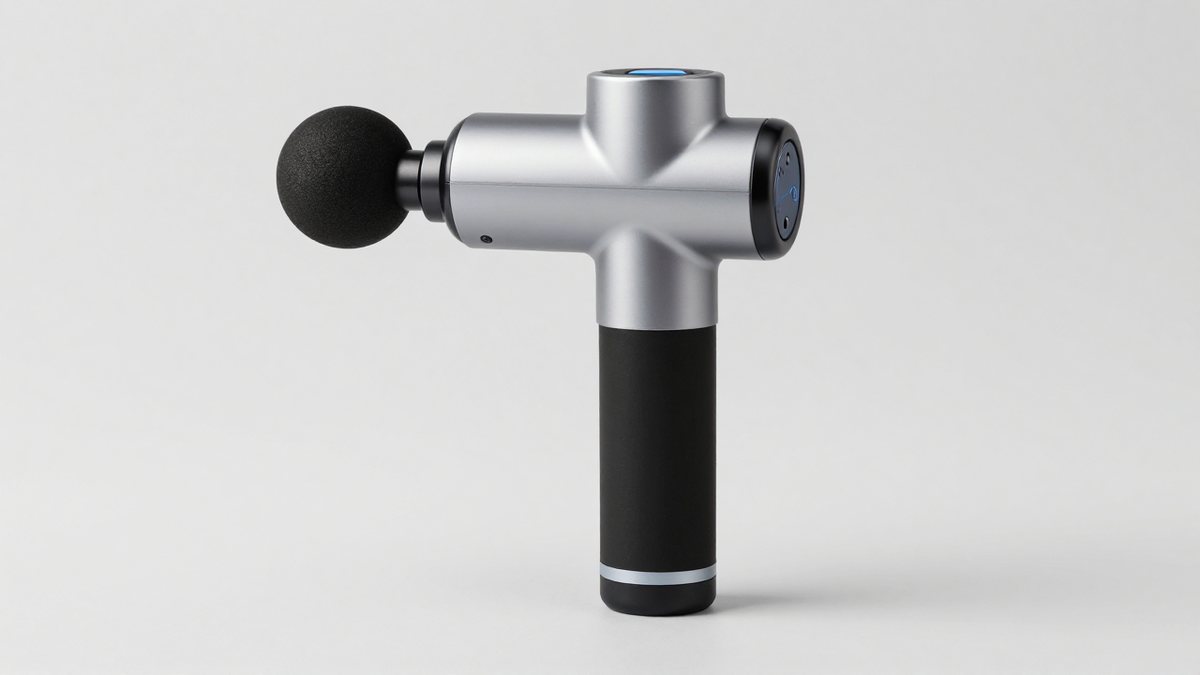
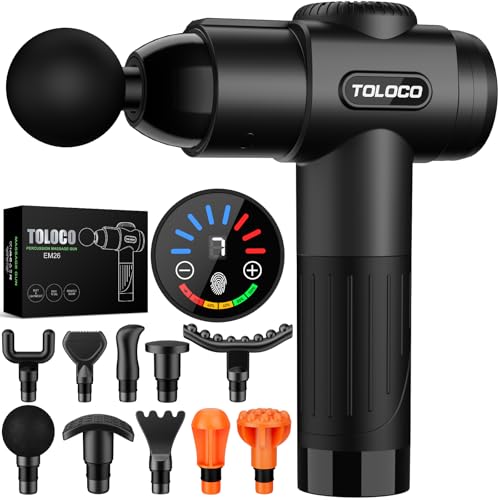
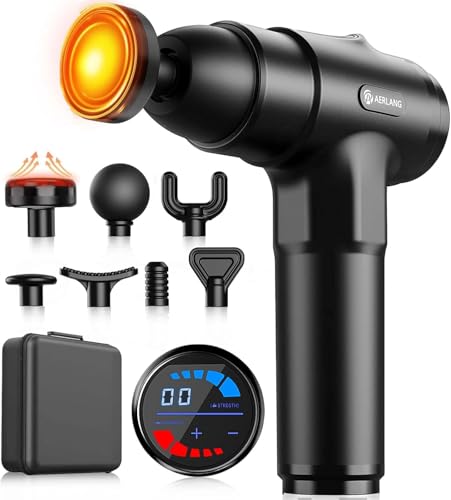
The best massage gun depends on your recovery routine: choose the Therabody Theragun PRO for maximum control and stall force, the Hyperice Hypervolt 2 Pro for a quieter full-size option, the Therabody Theragun Mini for travel, or a reputable mid-range model with adjustable speed and at least 10 mm of amplitude for everyday value.
A massage gun is a percussive massager: its motor moves an attachment rapidly into the body’s soft tissue. The useful specifications are not limited to speed. Stall force indicates how much pressure the motor can tolerate before slowing or stopping, while amplitude describes how far the attachment travels into the tissue. A high-speed motor without adequate stall force may feel less useful than a slower, stronger device.
As an Amazon Associate we earn from qualifying purchases at no extra cost to you.


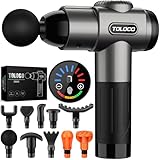
Quick comparison of the leading choices
| Model or type | Speed range | Amplitude | Approx. stall force | Battery and weight | Best suited to |
|---|---|---|---|---|---|
| Therabody Theragun PRO | Up to 2,400 percussions per minute | 16 mm | About 60 lb | Removable battery; about 2.8 lb | Frequent training, powerful deep work, adjustable positioning |
| Hyperice Hypervolt 2 Pro | Approximately 1,000–2,700 percussions per minute | 14 mm | About 60 lb | Up to about 3 hours; about 1.8 lb | Strong recovery with comparatively low operating noise |
| Therabody Theragun Mini | Three preset speeds, up to about 2,400 percussions per minute | 12 mm | Not usually emphasized as a headline specification | About 150 minutes; roughly 0.4–0.5 lb | Travel, office use, calves and smaller muscle groups |
| Mid-range full-size massage gun | Usually 1,800–3,200 percussions per minute | 10–12 mm | Typically 30–55 lb | About 2–6 hours; roughly 1.5–2.2 lb | General users seeking value and everyday recovery |
Specifications vary by generation and region, so treat these figures as buying benchmarks rather than a substitute for the current product manual. Speed and stall-force figures are also measured differently between manufacturers.
Best for maximum power: Therabody Theragun PRO
The Theragun PRO is the strongest choice when stall force, long amplitude, and precise positioning matter more than compactness. Its 16 mm amplitude is unusually deep for a consumer massage gun, and its adjustable multi-grip design helps you reach the back, glutes, hamstrings, and shoulders without bending your wrist as much.
Its strengths are most apparent for people who use a massage gun several times per week, share one device with other household members, or want to apply firm pressure to large muscle groups. The removable battery is also an ownership advantage: a spare battery can extend a long session without waiting for a recharge.
The disadvantages are substantial weight, a relatively bulky case, and a higher general market price—often around $450–$650 depending on the generation and promotions. Its high stall force does not mean it should be pressed hard everywhere. Avoid bony areas, the front of the neck, the spine, open wounds, and areas with unexplained pain.
Best balance of power and noise: Hyperice Hypervolt 2 Pro
The Hypervolt 2 Pro is a strong head-to-head alternative to the Theragun PRO. It offers a 14 mm amplitude, a broad speed range, and enough force for larger muscles while weighing less than many maximum-power models. Its quieter motor is useful if you share a room, use the device near a television, or prefer not to create a loud mechanical sound during recovery.
The conventional pistol-grip shape is easy to understand, although it offers fewer grip positions than the Theragun PRO. Battery life is a major benefit: approximately three hours of rated use can cover many sessions between charges. A five-head attachment kit commonly includes softer and firmer options for general muscles, precision work, and larger areas.
Expect a general market range of roughly $300–$450. Choose it over a cheaper model if reduced noise and a polished full-size design are more important than getting the lowest possible price.
Best portable option: Therabody Theragun Mini
The Theragun Mini is the practical choice for commuters, travelers, and anyone unlikely to use a full-size device consistently. It is small enough for a work bag and light enough to hold one-handed for longer periods. Its 12 mm amplitude is more substantial than many basic travel massagers, while three speed settings keep operation simple.
Portability requires compromises. The Mini has fewer attachment choices, less leverage, and less sustained force than the PRO or Hypervolt 2 Pro. It is well suited to calves, forearms, quadriceps, and glutes, but awkward for reaching your own back. It is also not the best tool for someone who expects a large-area massage after intense training every day.
Prices commonly fall around $150–$220. For occasional use, the smaller device may deliver better value than a powerful model that remains in a closet. A device used three times per week is more useful than a technically superior device used once per month.
When a mid-range massage gun is the smarter buy
A mid-range full-size massage gun can be the best choice for a budget-conscious user who wants meaningful specifications without premium branding. Look for:
- At least 10 mm of amplitude for general muscle work.
- A speed range beginning below approximately 1,500 percussions per minute, allowing gentler warm-up use.
- A published stall-force figure of roughly 30 lb or more, preferably measured using a clear method.
- Four or more attachments, including a soft ball, flat head, and fork or narrow head.
- USB-C charging or a replaceable battery if convenient charging matters.
- A claimed battery life of at least two hours, with an automatic shutoff timer.
Typical prices range from about $100–$250. Extremely inexpensive models may list impressive maximum speeds but omit amplitude, stall force, battery capacity, replacement-part availability, and noise information. Those omissions make long-term value difficult to judge.
Choose by recovery situation
| Your situation | Recommended specification | Best type of choice |
|---|---|---|
| First massage gun and occasional use | 10–12 mm amplitude, low starting speed, 1.5–3 hour battery | Mid-range full-size model |
| Heavy strength training several times weekly | 12–16 mm amplitude, 40 lb or more stall force, multiple grips | Theragun PRO or similar premium model |
| Shared living space or workplace use | Low-noise motor, 10–14 mm amplitude, simple controls | Hypervolt 2 Pro or quieter mid-range model |
| Frequent travel or a small home | Under 1 lb, compact case, at least 90 minutes of battery | Theragun Mini or another travel model |
| Long sessions without frequent charging | At least 2.5 hours of rated runtime or a replaceable battery | Hypervolt 2 Pro or removable-battery model |
How to use a massage gun without overdoing it
Start on the lowest speed and use a broad, softer attachment. Move slowly over the muscle rather than holding the device on one point. A practical starting sequence is:
- Spend 30–60 seconds on a large muscle with light pressure.
- Increase speed or pressure only if the sensation remains comfortable.
- Limit focused work on one area to roughly 15–30 seconds at first.
- Use the device for a few minutes per muscle group, not indefinitely.
- Stop if you feel sharp pain, numbness, unusual tingling, dizziness, or worsening symptoms.
Do not use a massage gun directly over joints, bones, the front or sides of the neck, the spine, varicose veins, bruised tissue, or areas of suspected injury. People with conditions affecting blood clotting, sensation, circulation, pregnancy-related concerns, or recent surgery should ask a qualified healthcare professional before use. A massage gun is not a diagnosis or a replacement for medical care.
Noise, battery, and attachment details that matter
Manufacturers often quote noise in decibels, but testing methods differ. A model rated at 40–50 dB may still sound noticeably louder under pressure because the motor works harder. If quiet operation matters, prioritize independent noise measurements, a brushless motor, and a device that maintains speed without excessive vibration.
Battery claims usually describe low-speed, no-load operation. At high speed with firm pressure, real runtime can be substantially shorter. For example, a device rated for 180 minutes might deliver 90–120 minutes of demanding use. If you use it for 8 minutes per session, 100 minutes of practical runtime equals approximately 12 sessions between charges:
100 practical minutes ÷ 8 minutes per session = 12.5 sessions.
Attachment materials also affect ownership. Closed-cell foam is easy to wipe clean and does not absorb much sweat. Open or porous foam is softer but harder to sanitize thoroughly. A flat head spreads pressure over large muscles; a ball is versatile; a fork can work around—but not directly on—the spine and Achilles area; and a bullet head is better reserved for precise, gentle use.
Durability and maintenance
The parts most likely to wear first are the battery, attachment foam, charging port, and internal motor bearings. Wipe attachments after use with a lightly damp cloth and mild soap, then let them dry completely before storage. Keep the motor body away from water, do not block its ventilation openings, and avoid storing a lithium battery fully depleted for months.
Do not force an attachment onto the shaft or operate the device while an attachment is misaligned. Excessive pressure increases heat, reduces battery runtime, and may shorten motor life. A timed session, moderate pressure, and clean attachments usually matter more for longevity than buying the model with the highest advertised speed.
Final recommendation
For maximum stall force and adjustable ergonomics, choose the Theragun PRO. For a quieter, lighter premium full-size device, choose the Hypervolt 2 Pro. For portability, choose the Theragun Mini. For most first-time buyers, a reputable mid-range model with 10–12 mm amplitude, four useful attachments, a low-speed setting, and at least two hours of realistic battery life offers the best balance of cost and capability.