What's inside
As an Amazon Associate I earn from qualifying purchases. This post may contain affiliate links at no extra cost to you.
What a cordless rotary tool is good for
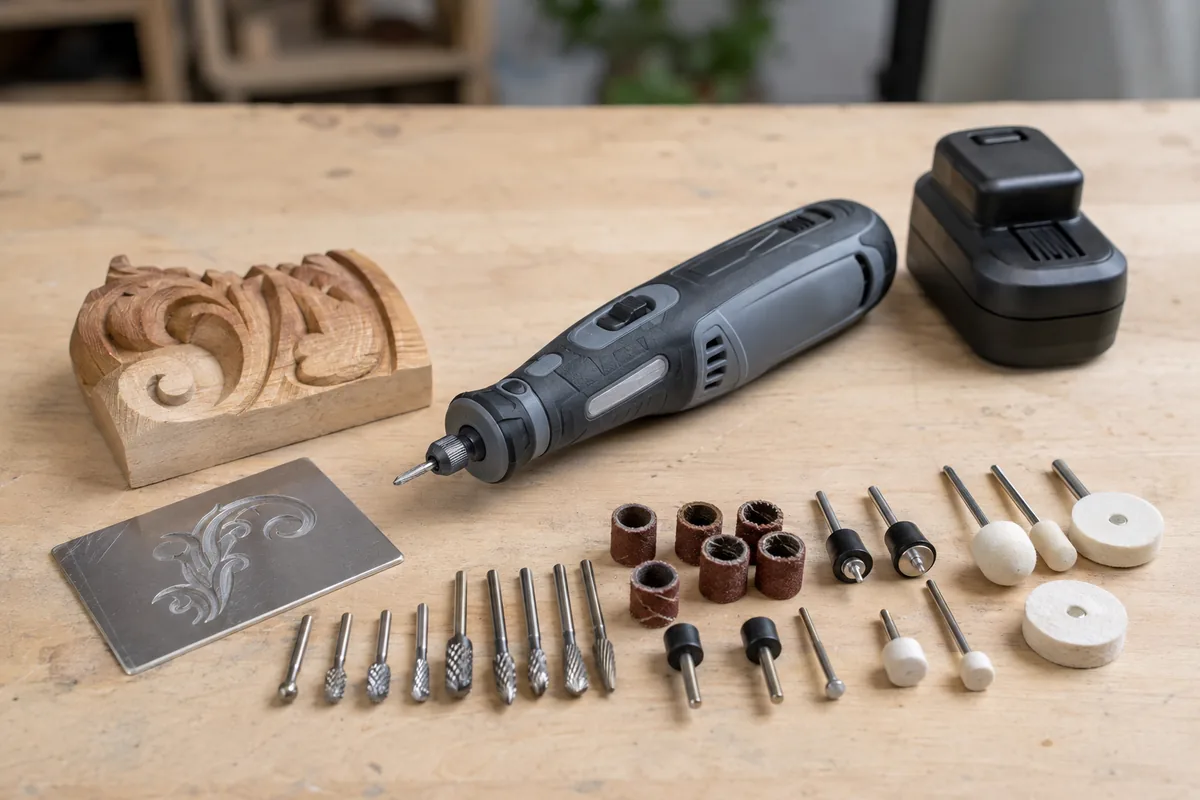
A cordless rotary tool is useful for small jobs that need a spinning bit rather than much force: deburring a cut edge, cleaning rust from a fastener, shaping a small piece of wood, or touching up a craft project. It is not a substitute for an angle grinder, drill, or oscillating tool. Those tools remove material faster and are easier to control on larger work.
For repairs around the house, the useful question is whether you need a tool often enough to justify its battery and charger. If you already own batteries in a compatible platform, a bare tool can be a sensible addition. If not, a corded rotary tool may cost less overall and avoid a mid-job battery swap.
As an Amazon Associate we earn from qualifying purchases at no extra cost to you.


What to compare before buying
Look at speed control, runtime, grip, and accessory compatibility—not just the maximum RPM on the box. Many rotary-tool tasks use small accessories at high speed, but a low-speed setting matters for polishing, working with heat-sensitive plastics, and maintaining control near edges. A tool that starts abruptly or has a slippery grip can be frustrating even if its top speed is impressive.
Check what the kit includes. A case, charger, battery, and a useful selection of bits can make a kit better value than a bare tool, but bundled accessories vary in quality. Small abrasive stones and cutoff wheels wear quickly; do not treat a large accessory count as proof of a better deal. Confirm the collet size, too. Many common accessories use a 1/8-inch shank, but a different collet may require an adapter or replacement.
Cordless options compared
| Option | Best fit | Main trade-off |
|---|---|---|
| Compact tool in a battery platform you own | Occasional repairs and detail work | Often the lowest added cost, but runtime depends on your existing battery |
| Complete cordless kit | First-time buyers who want a matched battery and charger | Higher upfront cost; bundled accessories may be basic |
| Corded rotary tool | Long sessions at a bench or frequent cutting and grinding | No battery swap, but the cord can get in the way |
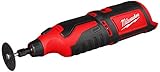
For a buyer already invested in a cordless system, start by checking whether the brand offers a rotary tool compatible with your batteries. Compare the bare-tool price with a complete cordless rotary tool bare tool. Battery compatibility can save money, but a large, heavy pack may make a compact tool tiring to hold. A smaller compatible battery is usually easier for precise work.
Battery and runtime trade-offs
Battery capacity is commonly listed in amp-hours (Ah). A higher Ah rating generally means more stored energy, but it also adds weight and does not guarantee a particular runtime: speed, accessory type, pressure, and material all matter. Rotary tools often run at high RPM, so a small battery can drain quickly during sustained grinding or cutting. For a few minutes of deburring or occasional cleanup, that may not matter. For repeated jobs, keep a second charged battery nearby.
Use the charger and battery system specified for the tool. Batteries from different brands or voltage platforms are not interchangeable just because the connectors look similar. If you do not own compatible batteries, compare the full cost of the tool, battery, and charger with a cordless rotary tool kit with battery and charger. The kit costs more upfront, but it is ready to work and avoids buying components separately.
Choose for the work you actually do
For occasional household fixes, prioritize comfortable handling, variable speed, and a battery you already own. A compact kit with a small battery is often enough for short tasks such as smoothing a sharp edge or cleaning a small metal part. The cheaper choice is fine if the work is light and infrequent; there is little benefit in paying for a larger platform battery that makes the tool harder to maneuver.
For frequent bench work, favor a kit with a charger and spare battery, or consider a corded model if you work near an outlet. Compare total package cost—not only the bare-tool price—and check whether replacement collets and compatible accessories are easy to find. A specialty tool that sits unused is poor value, even when its battery matches the rest of your tools.
Use it with control
Let the accessory do the work. Pressing hard can stall the tool, break a cutoff wheel, or overheat both the accessory and the material. Make several light passes instead of trying to remove a lot in one go. Small cutoff wheels are especially vulnerable to side pressure; they are meant to cut with the edge, not grind with the flat face.
Secure the workpiece, keep the accessory within its rated speed, and wear eye protection. A tiny wheel or abrasive fragment can become a fast-moving projectile. For metal, watch for sparks and keep the work away from flammable dust and liquids. If the tool bogs down, gets unusually hot, or the accessory wobbles, stop and check for a bent shaft, loose collet, damaged bit, or excessive pressure before continuing.
Related guides
- Longest Lasting Lawn Mower Battery: AGM vs Lithium vs Flooded Lifespan and Cost per Season
- Duralast Gold Lawn Mower Battery Review: U1 Fit, CCA and When to Pay for AGM
- Greenworks Pro 80V 21-Inch Mower Review: Runtime Math, Push vs Self-Propelled and Yard Fit
- Bosch High Pressure Washer Gun Replacement: Fittings, Adapters and What Fits Your Model