What's inside
As an Amazon Associate I earn from qualifying purchases. This post may contain affiliate links at no extra cost to you.
A cordless reciprocating saw can cut a thick limb quickly, but it is not a pruning saw in the careful, controlled sense. The long blade can snag, tear bark and kick back if the branch shifts. For occasional cleanup, a saw on batteries you already own may be the sensible buy. For regular tree work, prioritize handling, a suitable blade and a safe way to support the limb—not just maximum power.
As an Amazon Associate we earn from qualifying purchases at no extra cost to you.


What to look for in a cordless saw
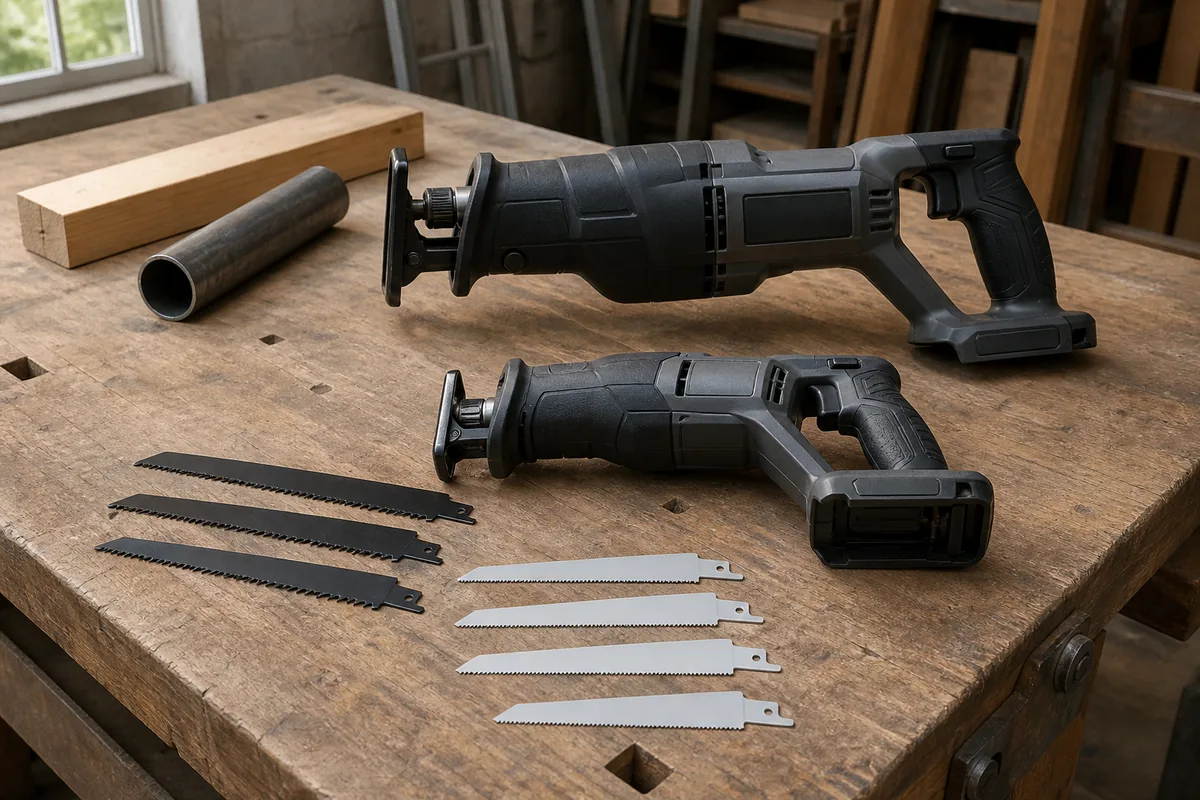
For limbs around 2 to 6 inches in diameter, a full-size saw is usually more comfortable and capable than a compact model. Look for a variable-speed trigger, a secure blade clamp, a shoe that can rest against the work, and a tool-free blade change. A pivoting or adjustable shoe helps keep the blade supported as the cut progresses. Weight matters: a heavy saw held overhead becomes tiring fast, and fatigue makes a moving branch harder to control.
Compact saws are easier to handle in tight spaces and can be fine for smaller limbs, roughly up to 3 inches, depending on the wood and blade. Their shorter stroke and lower power can make larger cuts slow. Full-size saws generally cut faster but are bulkier and more likely to twist or buck if you crowd the blade. If comparing tools, check the bare-tool weight and battery weight together; a large battery can add noticeable heft.
The blade matters as much as the tool
Use a pruning blade with coarse teeth and a profile intended for green wood. A blade around 6 to 9 inches long suits many branches; longer blades can reach through thicker limbs but are easier to bend and harder to control. A dull or fine-toothed blade tends to bind, heat the cut and tear fibers. Replace it when cutting slows or the teeth look worn rather than forcing the saw.
Do not assume a longer blade can safely cut any limb of that diameter. A blade should extend beyond the far side of the wood through the stroke, with enough room that its tip will not hit soil, a fence or another branch. A set of coarse pruning blades is often a better first purchase than upgrading a saw that already cuts well.
Which type fits your pruning jobs?
| Type | Best fit | Main trade-off |
|---|---|---|
| Compact cordless reciprocating saw | Occasional cuts in small limbs and cramped spaces | Lighter and easier to maneuver, but slower on thick or dense wood |
| Full-size cordless reciprocating saw | Repeated cuts in limbs roughly 3 to 6 inches across | Faster and more capable, but heavier and less nimble |
| Dedicated cordless pruning saw | Frequent pruning where control and one-handed handling matter | Purpose-built for branches, but may be less useful for general demolition |
These diameter ranges are practical guidance, not guarantees. Hardwood, knots, blade condition and access all affect cutting speed. For a general-purpose tool, compare bare cordless reciprocating saws within the battery platform you already use. If pruning is the main task, compare cordless pruning saws as well.
Choose around your battery platform
If you already own compatible batteries and a charger, buying a bare tool can save money and avoid another charging system. Confirm compatibility by platform and voltage; batteries from different brands, and often different platform generations, do not interchange. A smaller battery keeps the saw lighter, while a larger one may be useful for repeated cuts. For a few backyard limbs, the battery included in a kit is often adequate.
Battery capacity is not a reliable promise of a particular number of cuts. Limb hardness, blade sharpness, temperature and how often the saw stalls all change runtime. If the battery becomes hot or the tool slows markedly, stop and let it cool. For homeowners without batteries, a kit is convenient; for users already invested in a system, a tool-only saw is usually the more economical choice.
Cutting limbs without pinching the blade
Wear eye protection, hearing protection and gloves. Secure footing, keep both hands on the saw when possible, and avoid cutting above shoulder height. Do not use a reciprocating saw from a ladder while handling a moving limb. If the branch is high, under tension or near power lines, leave it to a qualified tree professional. Even a modest limb can fall unpredictably once cut.
For a supported branch, start with the shoe resting against the wood and use a controlled trigger. Let the blade cut; pushing hard can bend it or make the saw jump. If a limb is resting on the ground or another branch, its weight can pinch the blade near the end of the cut. Make a shallow relief cut on the underside first, then finish from the top slightly farther out. Keep the cut clear of dirt, which quickly dulls teeth.
Stop if the blade binds. Switch off the saw and remove the battery before freeing or changing the blade. Do not twist a running blade sideways to escape a pinch. A blade can snap, and a sudden release can throw the tool back toward you. For a very thick limb, a hand pruning saw or chainsaw may be more appropriate, but only if you have the training and safe access for it.
A practical buying decision
For occasional pruning, the cheaper compact saw—or a bare saw that uses batteries you already own—is fine if the limbs are modest and reachable from the ground. Spend first on a sharp pruning blade and eye protection. Choose a full-size model if you regularly cut thicker limbs and can manage its weight. Choose a dedicated pruning saw if branch work is frequent and tool control matters more than using the same saw for other jobs.
Whichever type you buy, test it on a small, well-supported branch before tackling a thick one. If it cuts slowly, chatters or pulls the blade sideways, stop and check the blade, support and cutting angle. More power will not fix an unstable limb.
Related guides
- Longest Lasting Lawn Mower Battery: AGM vs Lithium vs Flooded Lifespan and Cost per Season
- Duralast Gold Lawn Mower Battery Review: U1 Fit, CCA and When to Pay for AGM
- Greenworks Pro 80V 21-Inch Mower Review: Runtime Math, Push vs Self-Propelled and Yard Fit
- Bosch High Pressure Washer Gun Replacement: Fittings, Adapters and What Fits Your Model