Our Top Picks
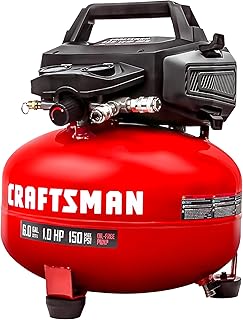
 CRAFTSMAN 6-Gal 150 PSI Oil-Free Pancake Air Compressor15.9 x 16.5 x 17.3 inches31.53 poundsCheck on Amazon
 CRAFTSMAN 6 Gallon 150 PSI Oil-Free Pancake AirMedium15.8 x 16.4 x 17 inches30.8 poundsCheck on Amazon


What's inside
As an Amazon Associate I earn from qualifying purchases. This post may contain affiliate links at no extra cost to you.
A framing nailer is the thirstiest tool most people will ever hang off a hose, so a mismatched air compressor for framing nailer duty fails in an obvious way: the first dozen nails sink flush, the pump never catches up, heads start standing proud, and you finish the wall with a hammer in your other hand. The gun is almost never the problem. The compressor behind it usually is.
Framing is also where recovery rate matters far more than the big number on the gauge. A unit bragging about 150 PSI max can still starve a 21 degree gun, because peak pressure is not delivered airflow. This ranking runs in buying order, not price order.
As an Amazon Associate we earn from qualifying purchases at no extra cost to you.
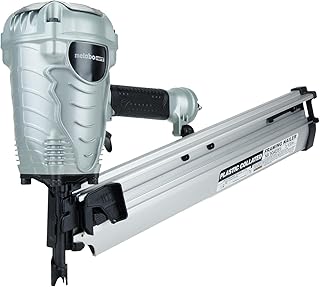

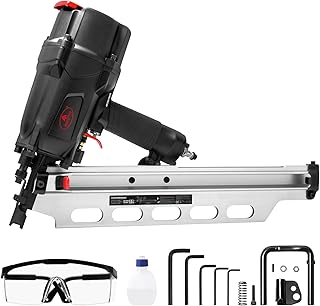
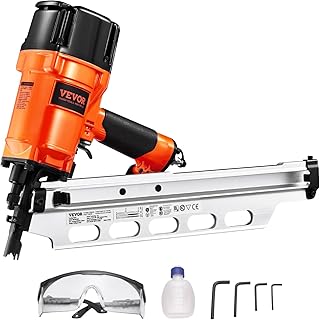


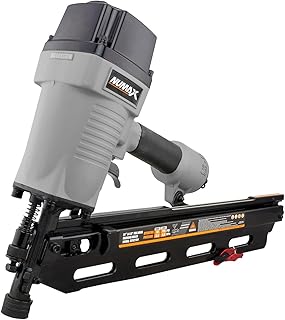
| Compressor class | Buy it for | The job it unlocks |
|---|---|---|
| 6 gallon oil-free pancake | Your first compressor | One framing gun on decks, sheds, remodel walls |
| 4 to 10 gallon oil-lubed twin stack | Repeat framing weekends | All-day nailing without waiting on recovery |
| 4 to 6 gallon ultra-quiet twin tank | Occupied homes and attached garages | Interior framing without clearing the house |
| 20 to 30 gallon wheeled | Two-person crews and shop panels | Two guns at once, sheathing plus walls |
| Gas twin tank | Sites with no power | New builds, remote decks, roof work |
How to size an air compressor for a framing nailer
Three numbers decide this, and only one of them is printed on the front of the box.
SCFM at 90 PSI is the spec that matters. A pneumatic framing gun at a realistic pace draws roughly 2 to 2.5 SCFM at 90 PSI. Buy about 1.5 times that, call it 3.5 to 4 SCFM, and you nail continuously instead of standing around. Two guns on a splitter want 4 to 5 SCFM and up. If a listing shouts max PSI and hides SCFM, that silence is the review.
Operating pressure lives between 70 and 120 PSI, and most framing nailers are happiest at 90 to 100. Every portable jobsite compressor already tops out above that, so what you are really buying is stored headroom, not pressure.
Gallons buy time, not power. A bigger tank holds more usable air above your regulator setting, so the pump cycles less and you notice it less. It does nothing to speed up refill. That is the pump’s job, and it shows up as SCFM.
One hard ceiling: a 120V 15 amp circuit caps you at roughly 2 running horsepower. Anything genuinely larger needs 240V or a gas engine, whatever the label claims.
The ranking, in buying order
1. The 6 gallon oil-free pancake
Correct first compressor for nearly everyone. Mainstream pancakes land around 2.5 to 3 SCFM at 90 PSI, which runs a single framing gun at a homeowner rhythm: plates, blocking, deck framing, fence rails. The job it unlocks: framing a shed, deck, or remodeled wall solo over a weekend, then switching the same tank to a brad nailer for trim.
Blunt version, during sheathing or fast nailing it runs nearly nonstop and depth of drive softens. Annoying, not disqualifying.
- ✔ Cheap enough to own alongside a cordless kit
- ✔ Light enough to carry into a crawlspace or up a ladder
- ✔ Runs a framing gun plus every trim gun you will buy later
- ✔ No oil to check and nothing to level
- ✘ Loud, generally the high 70s to high 80s dBA range
- ✘ Recovery lags during sheathing or fast bursts
- ✘ Direct-drive pumps wear faster than cast iron
- ✘ Marginal with two guns on one hose
6 Gallon Oil-Free Pancake Compressor
The default answer for a first compressor. Look for 6 gallons, 2.5 SCFM or better at 90 PSI, and a regulator you can read at arm’s length. Enough for one framing gun and every trim gun after it.
2. The oil-lubricated twin stack or wheelbarrow
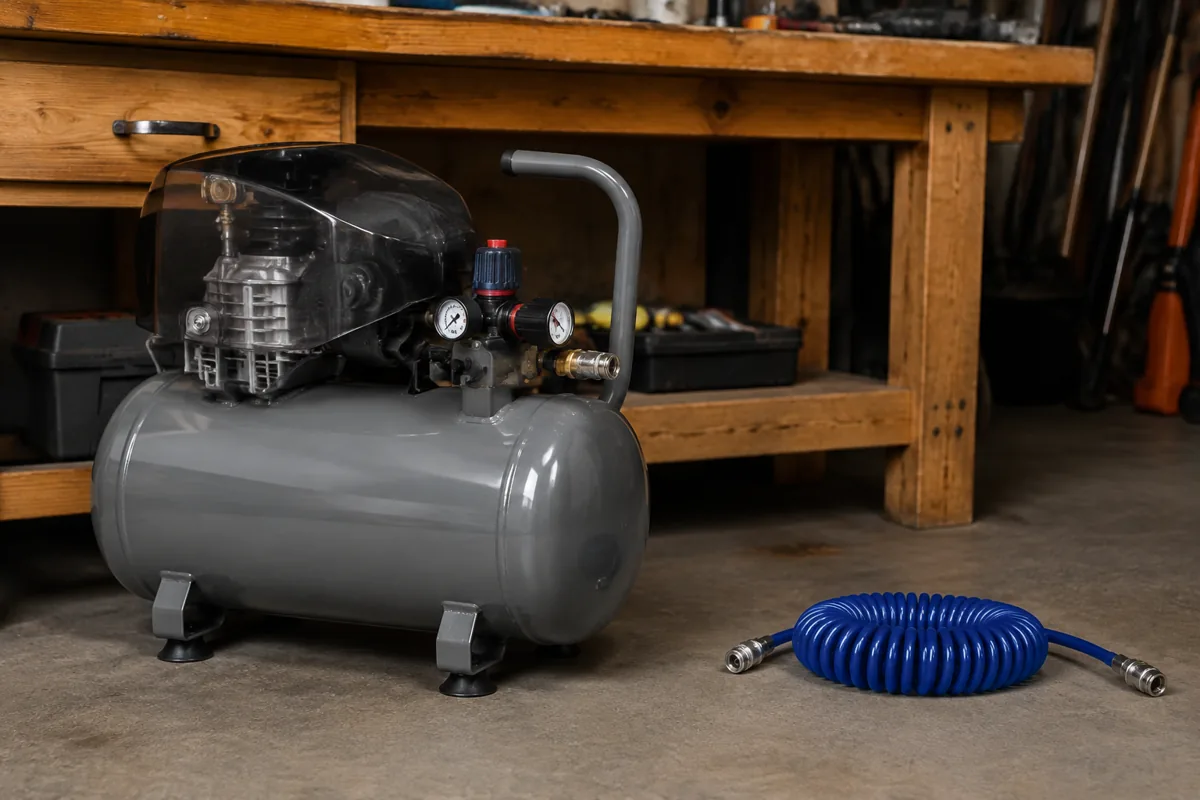
Step up here if you frame more than a couple of weekends a year. Cast iron and big-bore pumps in the 4 to 10 gallon range commonly deliver around 4 SCFM, so the gun never waits. They also run quieter than an oil-free pancake and last longer. Well-known jobsite lines like Makita’s MAC series and Rolair live in this class. The job it unlocks: a full framing day, or a framer plus a sheathing gun, without babysitting the gauge. Trade-off is weight, plus keeping it level and checking the oil.
Oil-Lubed Twin Stack Jobsite Compressor
Worth the extra weight if you frame for whole days. Oil-lubed cast iron pumps near 4 SCFM keep a framing nailer fed nonstop and age better than direct-drive oil-free units. Check the oil level before every use.
3. The ultra-quiet twin tank
Low-RPM quiet compressors advertise noise in the low to mid 60s dBA, against the high 70s to high 80s for a standard pancake. That gap decides whether you can frame a basement while someone works upstairs. The job it unlocks: interior remodels, occupied houses, attached garages, tight neighborhoods. Do not make it your only compressor if you frame hard, since output is usually modest and recovery is slower than the spec sheet suggests.
Ultra-Quiet Twin Tank Compressor
Choose this when noise is the constraint, not output. Quiet twin tanks make interior work bearable, but keep expectations at one gun working a steady pace rather than production framing.
4. The 20 to 30 gallon wheeled unit
Buy this fourth, not first, because it solves a crew problem rather than a nailer problem. The job it unlocks: two framing guns running at once, shop-built wall panels, or a garage setup that also feeds blow guns and tires. It will not ride in a car trunk, and loading one alone is a bad idea.
5. The gas-powered twin tank
Last, and only for one real reason: no power on site. The job it unlocks: new construction before the temporary panel, remote decks, roof work far from an outlet. Loud, heavy, and it needs fuel and oil service. Never run one indoors or in a garage, since exhaust carbon monoxide is the actual hazard, not the noise.
What to skip
1 and 2 gallon trim compressors. Built for brads and pins. A framing gun empties one in a handful of shots.
Any compressor listing max PSI but no SCFM. The number you need is missing on purpose.
Quarter inch hose and coil hoses. For framing, run 3/8 inch ID at 25 to 50 feet. Narrow hose chokes flow and perfectly imitates an undersized compressor.
12V tire inflators sold as portable air compressors. Different tool, no tank, no chance.
A 60 gallon stationary bought for framing. Great in a shop, useless on a deck you cannot wheel it to.
Mismatched quick couplers. Industrial, automotive, and ARO styles look alike and do not seal together. Standardize on one and keep spare plugs.
Setup details that fix most starving-gun complaints
Fill the tank completely before the first nail, set the regulator to the gun’s stated operating pressure, then test depth of drive on scrap of the same lumber. Dense engineered material needs more pressure than softwood studs, but stay inside the gun’s rated range instead of cranking the regulator to the stop. Drain the tank after every use, because water becomes rust and rust ends compressors early.
A few drops of air tool oil in the gun’s inlet each day keeps the driver moving, and winter-weight tool oil prevents the sluggish, half-set nails people blame on the compressor. If you would rather skip hoses entirely, cordless framing nailers exist on the major platforms, including DeWalt 20V MAX XR, Milwaukee M18 FUEL, and Metabo HPT. They cost more, carry heavier, and still leave you without air for trim guns and tires.
FAQ: air compressors for framing nailers
Will a 6 gallon pancake compressor run a framing nailer? Yes, one gun at a time and with pauses. Decks, sheds, and remodel framing are fine, but expect the motor to run almost constantly once you speed up, and expect softer depth of drive at the end of a fast burst.
What PSI should I set for a framing nailer? Start at the pressure listed in the gun’s manual, usually in the 90 to 100 PSI area, then adjust in small steps until heads sit flush in your actual lumber. Denser stock needs more, softwood needs less, and exceeding the gun’s rated maximum damages the tool.
Can two framing nailers share one compressor? Only with real output behind them. Plan on 4 to 5 SCFM at 90 PSI or better, a tank in the 20 gallon class or larger, and 3/8 inch hose to each gun. Two guns on a small pancake means two people waiting.
Buy in order. One 6 gallon pancake covers most DIY framing for years. Move up to an oil-lubed twin stack when waiting on recovery starts costing daylight, add gallons when a second gun joins the hose, and reach for gas only when there is no outlet within reach.
Check prices on Amazon →