What's inside
- Which BLACK+DECKER Circular Saw Should You Choose?
- BLACK+DECKER Circular Saw Models and Key Specifications
- How to Choose the Right Blade
- How to Use a BLACK+DECKER Circular Saw Safely
- How to Make Straighter, Cleaner Cuts
- Common BLACK+DECKER Circular Saw Problems
- Maintenance and Storage
- Frequently Asked Questions
- Final Verdict
As an Amazon Associate I earn from qualifying purchases. This post may contain affiliate links at no extra cost to you.
A BLACK+DECKER circular saw can be a practical choice for DIY woodworking, plywood cutting, shelving, and general home improvement. The right model depends on the thickness of the material, the type of cuts you need, whether you prefer a corded or cordless tool, and the blade specifications.
For many homeowners, a corded 7-1/4-inch saw offers a straightforward starting point. For work away from an outlet, a cordless model may be more convenient, provided you have a compatible battery and charger. Before buying, check the exact model number: BLACK+DECKER sells circular saws with different blade sizes, power ratings, cutting capacities, and regional electrical specifications.
This guide explains how to choose a suitable saw, prepare it for accurate cuts, use it safely, and troubleshoot common problems without assuming every BLACK+DECKER model has identical features.
Which BLACK+DECKER Circular Saw Should You Choose?
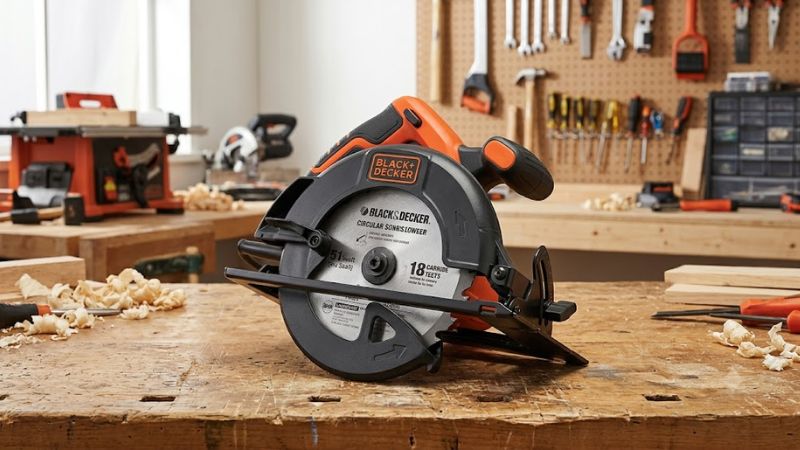
Start with the type of work you expect to do rather than the brand name alone.
- For general DIY projects: Consider a corded 7-1/4-inch circular saw if you regularly cut plywood, dimensional lumber, or boards for home repairs.
- For outdoor projects or locations without convenient outlets: Consider a cordless model, checking its battery platform and whether the battery and charger are included.
- For thinner boards and smaller projects: A compact saw may be easier to handle, but verify its maximum cutting depth before purchasing.
- For angled cuts: Choose a model with a bevel-adjustable base and confirm the available angle range.
- For repeated straight cuts: Look for a compatible rip fence or use an appropriate straightedge guide.
A larger blade does not automatically make a saw better. The blade diameter, cutting depth, motor capability, base design, and intended workload must work together.
BLACK+DECKER Circular Saw Models and Key Specifications
Two useful examples illustrate the differences between corded and cordless saws. These are model-specific reference points, not a claim that either is the best choice for every user.
| Specification | BDECS300C | BDCCS20B |
| Power source | Corded | Cordless |
| Blade diameter | 7-1/4 inches | 5-1/2 inches |
| Motor or platform | 13-amp motor | 20V MAX battery platform |
| No-load speed | 5,300 RPM | 3,700 RPM |
| Maximum cutting depth | 2.5 inches at 90° | Check the model manual |
| Bevel adjustment | 0–45° | Adjustable bevel |
| Weight listed by manufacturer | 9.4 lb | 6.0 lb |
| Battery and charger | Not applicable | Sold separately; tool only |
| Warranty listed | 2-year limited warranty | 2-year limited warranty |
Sources: official BLACK+DECKER product specifications. Figures and warranty terms are model-specific and may vary by region or product revision.
1. BDECS300C: A Corded 7-1/4-Inch Circular Saw
The BLACK+DECKER BDECS300C is a corded circular saw with a 13-amp motor, a 7-1/4-inch blade, a laser cut-line guide, and adjustable bevel cutting up to 45 degrees. The manufacturer lists a maximum cutting depth of 2.5 inches at 90 degrees.
Its main advantage is continuous access to electrical power, so cutting sessions are not limited by battery capacity. It may suit homeowners who regularly cut framing lumber, plywood, or boards for DIY projects.
Consider these limitations before purchasing:
- The power cord limits movement and needs to be kept clear of the blade and cutting path.
- A laser guide helps indicate the intended line but does not replace careful alignment and measurement.
- The saw’s maximum cutting depth must not be confused with its ability to cut every material efficiently.
- You need a suitable power outlet and a safe cable arrangement for the work area.
2. BDCCS20B: A Cordless 5-1/2-Inch Circular Saw
The BLACK+DECKER BDCCS20B is a compact cordless circular saw using the brand’s 20V MAX battery platform. The manufacturer lists a 5-1/2-inch blade, a no-load speed of 3,700 RPM, and a tool weight of 6 pounds. The listed package is tool-only, so the battery and charger are separate purchases.
This model may be convenient for smaller cutting jobs, quick repairs, and projects where moving a power cord would be inconvenient.
Before buying, verify the maximum cutting depth at the angles you intend to use, and confirm battery compatibility using the exact model’s documentation. The 20V MAX designation refers to maximum initial voltage without a workload; the nominal voltage is 18V. Do not assume that a battery from any BLACK+DECKER tool will fit or operate this saw.
How to Choose the Right Blade
The blade affects cut quality, cutting speed, and the type of material you can safely cut. Selecting a blade based on diameter alone is not enough.
Match the blade to the saw
Check these specifications before installing a replacement:
- Diameter: Must match the diameter specified in the saw’s manual.
- Arbor size: The center hole must fit the saw’s spindle correctly.
- Rated speed: The blade’s permitted operating speed must meet the tool’s requirements.
- Material compatibility: Use a blade designed for the material being cut.
- Blade condition: Do not use cracked, warped, damaged, or excessively worn blades.
Never modify a blade’s arbor hole to force it onto a saw. Do not use an accessory that requires removing or defeating a guard.
Choose the tooth design for the cut
| Blade type | Typical application | Main consideration |
| Framing or general-purpose blade | Rough cuts in common lumber | Prioritizes practical cutting speed |
| Fine-tooth wood blade | Cleaner cuts in plywood or finished wood | Often leaves a cleaner edge but may cut more slowly |
| Laminate-compatible blade | Suitable laminate products | Follow the blade’s specific material restrictions |
| Metal-cutting blade | Only where the saw and blade manufacturers explicitly permit it | Never assume a wood-cutting circular saw can safely cut metal |
Tooth count alone does not determine cut quality. Tooth geometry, blade material, workpiece, and feed technique also matter. For plywood or laminated panels, supporting the work properly and using a suitable sharp blade can reduce splintering.
How to Use a BLACK+DECKER Circular Saw Safely
A circular saw can cause severe injuries through direct blade contact, kickback, and flying debris. Prepare the workpiece and inspect the tool before switching it on. OSHA identifies kickback, flying particles, and contact with the blade as important hazards associated with handheld circular saws.
What you need before starting
- The correct BLACK+DECKER circular saw and its model-specific manual.
- A compatible, undamaged blade suited to the material.
- Safety glasses or suitable protective eyewear and hearing protection.
- Appropriate dust protection based on the material and exposure.
- Clamps or other suitable work-holding equipment.
- A stable work surface with enough clearance for the blade and the offcut.
Keep loose clothing, jewelry, and long hair away from moving parts. Do not wear gloves near a rotating blade where they could become entangled. Disconnect the power or remove the battery, as specified by the manual, before changing the blade or making adjustments.
Step-by-step cutting procedure
- Inspect the saw. Check the blade, shoe, handles, power cord or battery, switch, and blade guards. Confirm that the lower guard moves freely and returns to cover the blade. Do not use the saw if a guard sticks or fails to operate correctly.
- Measure and mark the cut. Use a pencil and square or another suitable measuring tool. For repeated straight cuts, use a compatible rip fence or straightedge guide.
- Support the material. Secure the workpiece so it cannot shift, pinch the blade, or cause the cut-off section to fall unexpectedly. Arrange supports so the blade will not strike the bench, clamps, or another obstruction.
- Set the cutting depth. Follow the model’s manual. Where the saw allows it, set the blade to extend only slightly beyond the underside of the workpiece. Verify that the blade will clear the support beneath the cut.
- Set the bevel if needed. For angled cuts, adjust the base to the required angle and lock it securely. Check that the setting is correct before connecting power or inserting the battery.
- Position the saw. Rest the base flat against the workpiece, align the blade with the intended cut, and hold the tool with both hands using the designated handles.
- Start and make the cut. Keep the blade clear of the material when starting. Allow it to reach operating speed before feeding it into the workpiece. Advance steadily without forcing the saw, twisting the base, or pushing through a binding blade.
- Finish safely. Release the switch and keep the saw under control until the blade stops completely. Do not lift or reposition the saw while the blade is still rotating.
- Disconnect before adjustments. Unplug a corded saw or remove its battery before clearing debris, changing the blade, or adjusting the tool.
Never tie the lower blade guard open, hold the workpiece in your hand while cutting, or reach underneath the workpiece near the blade.
How to Make Straighter, Cleaner Cuts
A good result depends on blade condition, workpiece support, alignment, and controlled feeding.
Use a straightedge or rip fence
A marked line is useful for visual guidance, but a straightedge guide can improve consistency over longer cuts. Make sure the guide is secured and positioned so the saw’s base can travel along it without the blade contacting the guide or clamps.
Reduce splintering
For plywood and finished panels:
- Use a sharp blade appropriate for the material.
- Support the panel on both sides of the cut.
- Test the setup on a scrap piece if the finish is important.
- Use a suitable sacrificial backing or other approved method when appropriate.
- Consult the blade and saw manuals for recommendations on cutting direction and technique.
The face that shows the most splintering depends partly on the saw’s blade rotation, tooth geometry, and the material. Test cuts are more reliable than assuming one universal orientation will produce the cleanest result.
Prevent binding and kickback
Kickback can occur when the blade catches or binds in the workpiece. Reduce the risk by maintaining a sharp, appropriate blade, supporting the material correctly, and avoiding cuts that cause the kerf to close against the blade.
If the blade binds, release the switch and hold the saw still until it stops. Disconnect power before investigating the cause. Never pull a running blade backward out of a cut or restart the saw with the blade trapped in the workpiece.
Common BLACK+DECKER Circular Saw Problems
The symptom alone may not reveal the cause. Use the following checks only after disconnecting the tool from its power source.
| Symptom | Possible causes | Safe next step |
| Saw will not start | No power, depleted battery, faulty switch, or internal fault | Check the outlet, cord, battery charge, and model manual |
| Cutting feels slow | Dull or unsuitable blade, excessive feed pressure, or binding | Inspect the blade and workpiece setup |
| Cut wanders from the line | Poor alignment, loose guide, unsuitable technique, or damaged blade | Check the base, blade, guide, and material support |
| Excessive splintering | Unsuitable blade, poor support, or incorrect cutting technique | Test a suitable blade and improve support |
| Unusual vibration or noise | Damaged blade, loose component, or mechanical fault | Stop using the saw and arrange inspection |
| Lower guard sticks | Debris, damage, or a mechanical problem | Do not operate the saw until the guard functions correctly |
| Cordless saw stops during cutting | Low battery charge, overload, or a tool fault | Stop, disconnect the battery, and check the manual |
If the saw produces smoke, a burning smell, repeated electrical interruptions, or unusual mechanical noises, stop using it. Do not open energized equipment, bypass a safety mechanism, or continue operating a saw with a defective guard. Contact an authorized service provider when the cause cannot be resolved through the manufacturer’s permitted checks.
Maintenance and Storage
Regular inspection helps identify problems before the next cutting job. Follow the manual for the exact model rather than applying a universal service schedule.
After each use
- Disconnect the saw from its power source.
- Remove sawdust from accessible areas using the cleaning method allowed by the manufacturer.
- Inspect the blade for damage, missing teeth, resin buildup, or other signs of wear.
- Check the base, blade guard, handles, and adjustment locks for damage or looseness.
- Store the saw in a dry location where the blade and power cord will not be damaged.
Do not spray liquid cleaner into motor openings or use cleaning methods prohibited by the manual.
Battery care for cordless models
Use only batteries and chargers confirmed compatible with the exact tool. Inspect battery packs for cracks, swelling, leakage, or other damage. Do not use or charge a damaged pack, expose it to excessive heat, or store it where metal objects could short its terminals.
For corded models, inspect the cable and plug for cuts, exposed conductors, bent prongs, or other damage. A damaged cord requires appropriate service or replacement before use.
Find the correct manual and replacement parts
BLACK+DECKER’s support guidance explains how to locate manuals and parts lists through its Tool ServiceNet service. Search using the model number and, when requested, the type number printed on the tool. This matters because similar-looking saws can use different parts or specifications.
Frequently Asked Questions
Is a BLACK+DECKER circular saw good for home use?
Yes, a suitable model can handle many common DIY cutting tasks, including lumber and plywood. Choose the blade size and cutting capacity for your material, and do not exceed the tool’s rated applications.
What size blade does a BLACK+DECKER circular saw use?
It depends on the exact model. For example, the BDECS300C uses a 7-1/4-inch blade, while the BDCCS20B uses a 5-1/2-inch blade. Always confirm the blade diameter and arbor requirements in the model’s manual before purchasing a replacement.
Can I use any BLACK+DECKER battery with a cordless circular saw?
No. Battery compatibility depends on the specific tool and battery platform. Confirm the approved battery type and charger in the manual, and do not assume that every battery carrying the BLACK+DECKER name is interchangeable.
Why is my BLACK+DECKER circular saw not cutting straight?
Common causes include incorrect alignment, a loose guide, a dull or damaged blade, inadequate workpiece support, or the blade binding during the cut. Disconnect the saw before inspection, check the base and blade, and use a properly secured straightedge when appropriate. Stop using the saw if you find damage or a malfunctioning guard.
Final Verdict
A BLACK+DECKER circular saw can be a useful addition to a home workshop when its cutting capacity, blade size, power source, and intended workload match the job.
For regular woodworking near an outlet, the corded BDECS300C offers a 7-1/4-inch blade, a 13-amp motor, and bevel adjustment up to 45 degrees. For smaller jobs where portability matters, the cordless BDCCS20B offers a more compact 5-1/2-inch blade format, but requires a compatible battery and charger.
Before purchasing, verify the exact model number, blade specifications, cutting depth, package contents, warranty terms, and regional availability. Before every cut, inspect the guard, secure the workpiece, wear appropriate protective equipment, and follow the manufacturer’s instructions.
The best saw is not necessarily the most powerful or the largest. It is the one that is correctly specified for the work and can be operated safely and consistently.