What's inside
As an Amazon Associate I earn from qualifying purchases. This post may contain affiliate links at no extra cost to you.
What makes a good flooring-repair saw
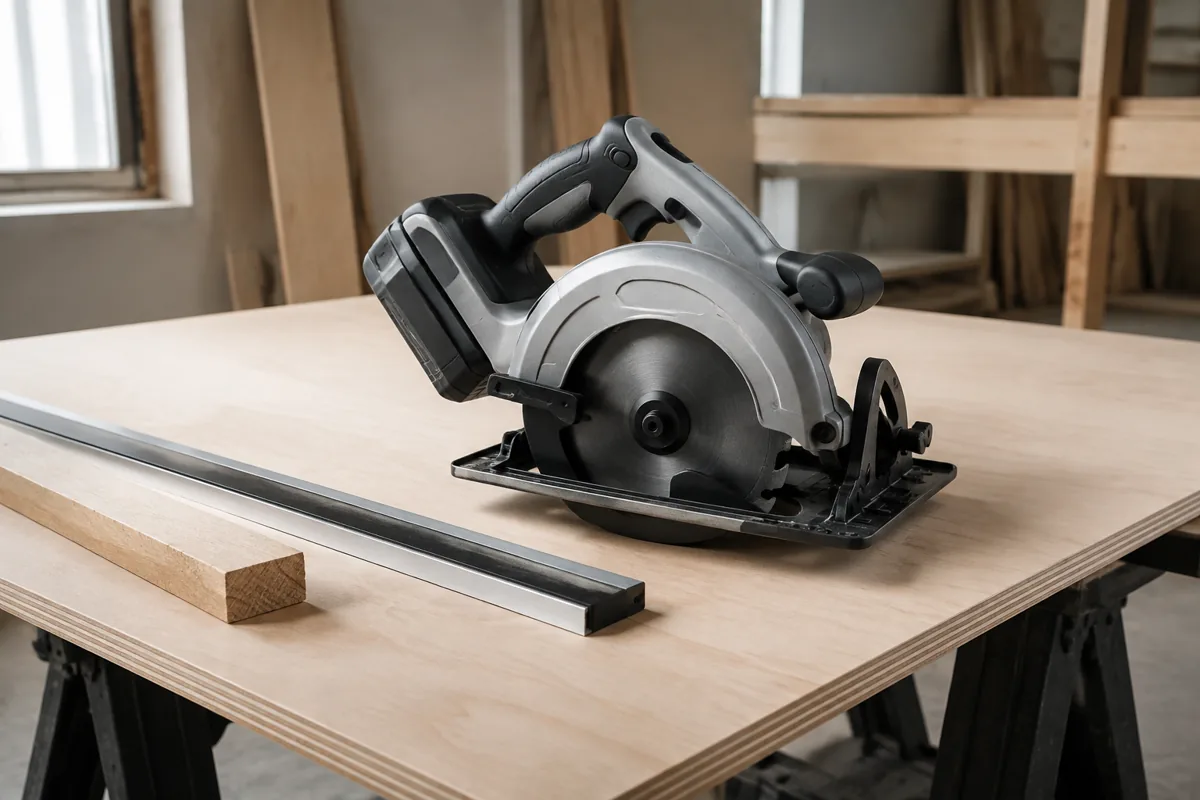
Flooring repairs usually call for controlled, shallow cuts rather than maximum cutting capacity. You may need to remove one damaged laminate plank, trim a replacement board around a door jamb, or cut a relief line through engineered wood without disturbing the subfloor. A compact cordless circular saw is easier to control in these situations than a full-size 7-1/4-inch saw, especially when working on the floor.
For most repairs, look for a saw with a 4-1/2- to 6-1/2-inch blade, a variable or moderate no-load speed, a clear blade guard, and an adjustable shoe that can set a cut depth accurately. A compact saw is not automatically safer: a small blade can still kick back if it binds, and many mini saws have less effective dust collection than full-size models.
As an Amazon Associate we earn from qualifying purchases at no extra cost to you.


If you already own batteries, staying within that platform is usually the best value. The saw may be sold as a bare tool for $50 to $150 less than a kit, and you avoid adding another charger and battery type. If you have no cordless platform, compare the total cost of the saw, charger, and a 4.0Ah battery—not just the advertised bare-tool price.
Best saw types for flooring work
| Tool type | Best use | Typical capacity | Main drawback |
|---|---|---|---|
| 4-1/2- to 5-inch mini circular saw | Laminate, vinyl plank, thin trim, small replacement cuts | About 1-1/4 inches at 90 degrees | Shorter battery runtime and less stable base |
| 5-3/8-inch cordless circular saw | General flooring repairs and engineered wood | About 1-5/8 inches at 90 degrees | Less common blades than standard sizes |
| 6-1/2-inch cordless circular saw | Thicker engineered boards, subfloor patches, repeated cuts | About 2-1/8 inches at 90 degrees | Bigger and heavier in tight spaces |
| Oscillating multi-tool | Flush cuts at jambs, plunge cuts, isolated notches | Shallow cuts controlled by the blade | Slow for long straight cuts |
For occasional laminate and vinyl repairs, a cordless mini circular saw is generally enough. A 4-1/2-inch model can cut a 10- or 12-millimeter laminate plank in one pass with room to spare. For 18-millimeter engineered wood, a 6-1/2-inch saw is more comfortable, particularly if you need to make several cuts in a row.
Cordless platform options worth considering
Ryobi 18V ONE+: This is often the sensible choice for homeowners who do not already own a battery system. Ryobi offers many compact saws, chargers, batteries, lights, sanders, and other DIY tools at moderate prices. The cheaper batteries are fine for a few short flooring cuts, but a 4.0Ah pack makes the saw feel less strained and reduces voltage sag. The trade-off is that some entry-level saws have less rigid shoes and less refined guards than professional models.
DeWalt 20V Max: DeWalt’s 6-1/2-inch circular saws are a good fit when flooring repairs overlap with framing, plywood, or deck work. They are more saw than most small repairs require, but the platform has broad battery availability and strong aftermarket support. Use a compact 2.0Ah battery when access and weight matter; use a 4.0Ah or larger pack for repeated cuts. A large battery can make a compact saw awkward when cutting at floor level.
Makita 18V LXT: Makita’s compact circular saws are typically well balanced, with smooth triggers and useful depth adjustments. The LXT battery system is mature and includes many cordless hand tools. Makita kits can cost more, but the price is easier to justify if you will also buy a drill, impact driver, random-orbit sander, or vacuum. Check the exact blade diameter before buying because “compact” models vary substantially.
Milwaukee M12 and M18: M12 is excellent for small hand tools, but its compact saw options are better suited to light materials and short cuts. M18 is the more practical choice for a flooring saw that may also cut plywood and lumber. Milwaukee batteries and tools are rarely the cheapest route, but the platform is a reasonable investment for frequent renovation work.
If you need a more capable all-around tool, compare cordless 6-1/2-inch circular saws within the battery system you already own. A basic saw is fine when the repair involves only a few laminate boards. Paying for a premium brushless model makes more sense for repeated work, thick material, or a tool that will see regular construction use.
Blades, batteries, and chargers
The included blade is often a compromise. For laminate, use a fine-tooth carbide blade designed for laminate or finish cutting; 40 to 60 teeth is a useful range on a 6-1/2-inch blade. For engineered wood, a 24- to 40-tooth framing or general-purpose carbide blade cuts faster, although it may leave more edge chipping. Vinyl plank usually cuts cleanly with a fine-tooth blade, but check the manufacturer’s instructions because some products are intended to be scored and snapped.
Battery size affects handling more than many buyers expect. A 2.0Ah pack is light and often provides enough energy for 20 to 40 short cuts in laminate. A 4.0Ah pack is a better general-purpose choice. Batteries above 5.0Ah can add roughly 1 to 2 pounds, making overhead or floor-level work tiring. Brushless motors usually deliver better runtime and maintain speed under load, but a brushed saw is not a bad purchase for a single repair.
Do not buy a second charger unless you need faster turnaround. Most platform chargers take roughly 45 to 90 minutes for a medium battery, while rapid chargers can reduce that time at the cost of more heat and a higher price. Store lithium-ion batteries indoors, not in a freezing garage or hot vehicle.
How to make clean flooring cuts
Measure twice and mark the waste side clearly. Set the blade only 3 to 5 millimeters deeper than the material. Excess depth increases the chance of hitting hidden pipes, cables, or the subfloor, and it makes kickback more severe if the blade binds.
For a replacement plank, make a shallow scoring cut first, then complete the cut in a second pass if the surface chips. Support the board close to the cut, keep both hands on the saw where the design allows, and wait for the blade to stop before lifting the tool. Clamp a straightedge when a visible edge matters; relying on the saw’s small shoe alone commonly produces a wandering cut.
When trimming door jambs, an oscillating tool is often better than a mini circular saw because it can plunge into the jamb without cutting a wide access slot. A compact saw is the better choice for long, straight cuts where speed and a consistent edge matter.
Buying checklist
Choose the smallest saw that cuts your thickest material in one controlled pass. Confirm the blade size, maximum depth at 90 degrees, arbor diameter, included accessories, and whether a battery and charger are included. Check that the shoe sits flat and that the depth lever locks firmly; a loose shoe can change the cut by several millimeters. Finally, budget for the correct blade and hearing, eye, and respiratory protection. Those accessories do more for the repair than a small increase in motor speed.
Related guides
- Longest Lasting Lawn Mower Battery: AGM vs Lithium vs Flooded Lifespan and Cost per Season
- Duralast Gold Lawn Mower Battery Review: U1 Fit, CCA and When to Pay for AGM
- Greenworks Pro 80V 21-Inch Mower Review: Runtime Math, Push vs Self-Propelled and Yard Fit
- Bosch High Pressure Washer Gun Replacement: Fittings, Adapters and What Fits Your Model