
Key takeaways
- Compare the best center punches for metal, wood, and plastic, from adjustable automatic models to a pocket punch, with specs on tips, bodies, and impact.
As an Amazon Associate I earn from qualifying purchases. This post may contain affiliate links at no extra cost to you.
- Top Pick: NEIKO 02638A 5-Inch Automatic Center Punch
- Runner-up: NEIKO 02639A 6-Inch Automatic Center Punch
- Also consider: Rennsteig Automatic Adjustable Center Punch RN430229
A drill bit rarely enters metal exactly where you intend. On smooth steel or aluminum, the tip skates sideways the moment it spins, and the hole ends up offset from the layout line. A center punch solves that problem in one motion: it stamps a small, crisp dimple at the marked point, and that dimple gives the bit a seat to settle into so the hole lands where the layout says it should.
This guide covers five automatic center punches, the spring-loaded kind that fire with downward pressure and need no hammer. The picks differ in body length, tip steel, impact adjustment, and whether the point can be replaced, and they span budget, mid-range, and premium tiers. A solid hammer-struck punch set still has its place for heavy plate work, but for one-handed marking at the bench or on a ladder, an automatic punch is the tool that earns its drawer space.
As an Amazon Associate, we earn from qualifying purchases.
Quick answer
For most workshops, the NEIKO 02638A is the pick to beat: a 5-inch automatic punch with an S2 steel tip, a chrome-plated shank, and impact you can dial up or down with the cap. The Rennsteig RN430229 is the premium step up, the General Tools 87 suits pocket carry, and the 6-inch NEIKO 02639A covers heavier marking.
The picks
NEIKO 02638A 5-Inch Automatic Center Punch

The 02638A is the default recommendation for general shop use, and it sits in the budget tier. The 5-inch body is long enough for a full grip without feeling bulky, and the knurled surface keeps it from twisting in the hand as you press. Its tip is reinforced S2 steel, a shock-resistant tool steel chosen for striking tools, and the shank is chrome-plated to resist corrosion in damp shops and jobsite boxes.
Impact force adjusts with the rotating cap on top: turn it one way for a deeper strike on steel plate, the other for a lighter mark on softwood, plastic, or sheet stock you do not want to distort. The ball end cap spreads pressure across the palm during repeated marking. The point is fixed rather than replaceable, so this is a punch to retire when the tip finally dulls, but the S2 tip holds its edge through a long run of layout work before that day comes.
Specs
– Type: Automatic center punch, spring-loaded
– Length: 5 in
– Tip: Reinforced S2 steel
– Body: Chrome-plated shank, knurled grip
– Impact: Adjustable via rotating cap
– Weight: 2.4 oz
NEIKO 02639A 6-Inch Automatic Center Punch
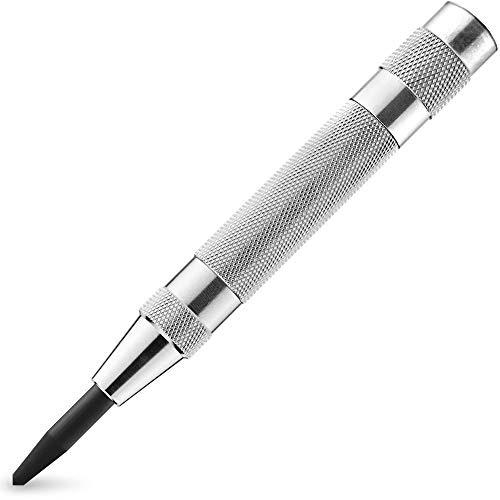
The 02639A is the heavier sibling in the NEIKO line, a mid-range pick built for thicker stock and bigger bits. At 6 inches long and roughly twice the weight of the 5-inch model, it carries more mass behind each strike, which translates into a deeper, wider dimple that seats large-diameter bits with authority. The tip is tempered S2 steel and the shank is chrome-plated, matching the smaller model’s materials in a larger frame.
Operation is one-handed: place the point on the layout mark, press down, and the spring mechanism fires. The adjustable cap tunes the impact for the material at hand, from sheet metal to structural steel. Machinists and fabricators who mark heavy plate all day will appreciate the extra heft, while occasional users may find the 5-inch version easier to control on thin material. The added length also helps when marking inside enclosures or past obstructions where a shorter punch forces an awkward wrist angle.
Specs
– Type: Automatic center punch, spring-loaded
– Length: 6 in
– Tip: Tempered S2 steel
– Shank: Chrome-plated
– Impact: Adjustable, one-handed operation
– Weight: 0.14 kg (about 4.9 oz)
Rennsteig Automatic Adjustable Center Punch RN430229

The Rennsteig RN430229 is the premium pick, made in Germany and built around a replaceable striking pin. That pin is hardened tool steel rated at 58 HRC, and when it eventually wears, it swaps out instead of sending the whole tool to the scrap bin. Striking force adjusts across a published range of 60 to 130 newtons, a wider and more deliberate span than the unmarked caps on most punches, so repeatable marks on a production bench are easier to dial in.
The body is 3/4 inch in diameter, giving it a planted feel, and the handle shape lets you push straight down from the top with the palm while resisting the tendency of round punches to roll off the bench. This is the punch for layout work where the mark has to be identical across dozens of parts, and for buyers who would rather pay once for a serviceable tool than cycle through disposable ones. Replacement pins and the German build put it firmly in the premium tier.
Specs
– Type: Automatic center punch, spring-loaded
– Striking force: Adjustable, 60 to 130 newtons
– Pin: Replaceable, hardened tool steel, 58 HRC
– Body diameter: 3/4 in
– Origin: Made in Germany
General Tools Pocket Automatic Center Punch 87

The model 87 is the pocket option in this group, a pencil-slim punch with a clip that rides in a shirt pocket or apron like a pen. The body is lightweight aluminum, and the point is alloy steel that can be replaced when it wears, extending the tool’s working life well past its budget tier. Spring tension adjusts for light or heavy markings, so the same punch can spot a screw hole in pine in the morning and mark a drill point on sheet steel after lunch.
Reach for this one when the work is light marking, scribing, and spotting nail or screw holes rather than deep dimples in plate. Electricians, installers, and trim carpenters who mark as they move will get the most from it. The slim body gives up some striking mass compared with the steel punches above, which is the honest trade for a tool that disappears into a pocket. General Tools has sold this pattern for decades, and replacement points remain a catalog item.
Specs
– Type: Pocket automatic center punch, spring-loaded
– Body: Aluminum, pencil-slim profile
– Point: Replaceable alloy steel, 1/8 in
– Adjustment: Spring tension, light to heavy markings
– Carry: Pocket clip
MulWark 5-Inch Spring-Loaded Automatic Center Punch MLK-53745

The MulWark entry is a mid-range 5-inch punch with one thoughtful detail the others skip: a palm cushion cap. The padded cap spreads the downward load across the palm, which matters during a long layout session of repeated strikes on steel. The body is chromium vanadium steel, a common choice for striking tools because it tolerates impact without chipping, and the tool weighs just 2.39 ounces.
Impact adjusts at the cap, and the box includes one replacement tip, so a dulled point does not end the tool’s service life on the spot. The published listing rates the punch for wood, metal, and plastic marking, and the hardened point doubles as an emergency window punch, a common secondary role for this tool pattern. For buyers choosing between the two 5-inch punches in this guide, the decision comes down to the cushion cap and spare tip here versus the S2 tip and knurled shank on the NEIKO.
Specs
– Type: Automatic center punch, spring-loaded
– Length: 5 in
– Material: Chromium vanadium steel
– Weight: 2.39 oz
– Cap: Palm cushion cap
– Impact: Adjustable
– Extras: One replacement tip included
How to choose
Decide first between automatic and hammer-struck. An automatic punch fires with downward pressure, works one-handed, and leaves the other hand free to hold the work or a square. A graduated set of solid punches, driven by a hammer, gives you several point sizes for heavy plate while staying in the budget tier, but it ties up both hands and demands bench room to swing.
Tip material is the next filter. S2 and chromium vanadium steels are both shock-resistant grades made for striking tools, and either will outlast an unmarked generic tip. Hardness figures, where published, tell the same story: a pin rated near 58 HRC keeps its point through repeated strikes on steel.
Then weigh adjustability and serviceability. A rotating cap that tunes impact force lets one punch serve softwood and steel alike. A replaceable point or pin turns a wear item into a spare part instead of a new tool. Finally, match size to the work: 5-inch punches balance control and force for general layout, 6-inch models add mass for thick stock, and pocket punches trade striking power for carry convenience.
Who should skip
Skip this category if you drill only wood with brad-point bits, since the brad point already registers in a marked spot without a dimple. Skip it as well if your marking is on leather, fabric, or paper crafts: those trades use hollow hole punches and punch needle tools, which are entirely different implements despite the shared name.
Production machinists who need sub-thousandth layout repeatability should look at optical center punches and edge finders instead, and anyone whose marking work is mostly on hardened tool steel beyond a punch’s reach should move to carbide scribes and layout dye. For everyone else who drills metal, plastic, or hardwood with twist bits, one of the five punches above covers the job.
FAQ
What is a center punch used for?
A center punch stamps a small conical dimple at a marked point on metal, wood, or plastic. The dimple seats the tip of a drill bit so it cannot skate across the surface when the drill spins up, which keeps the finished hole on the layout line.
How is an automatic center punch different from a solid one?
An automatic center punch stores energy in an internal spring and fires when you press down, so it needs no hammer and works one-handed. A solid center punch is a plain tapered rod that you strike with a hammer, which allows heavier blows but occupies both hands.
Can an automatic center punch mark hardened steel?
It can mark many hardened surfaces, but the point wears faster there, and very hard tool steels can dull or chip a tip. Models with replaceable points or pins handle that work best, and lighter cap settings reduce tip damage on borderline material.
How do I stop the punch from slipping off the mark?
Hold the punch vertical, set the point in the layout intersection before pressing, and keep steady downward pressure rather than jabbing. A knurled body helps the grip, and a lighter first strike followed by a firmer one lands the dimple exactly on the cross lines.
Final verdict
For a single punch that covers most bench work, take the NEIKO 02638A and its adjustable S2 tip. Step up to the Rennsteig RN430229 if you want a serviceable pin, a published force range, and German machining. The 6-inch NEIKO 02639A serves heavy stock, the General Tools 87 rides in a pocket, and the MulWark adds palm comfort and a spare tip. Any of the five will keep a drill bit honest.
Related guides
More from Amazon
Programs that pair well with the guide above. Offers and eligibility are set by Amazon and may change.
A free business account with business pricing and bulk-buying tools for work, shop or home office.
Create a business accountFree shipping on eligible items, Prime Video and more. Eligible new members can start with a free trial.
Start a Prime free trialAudiobooks and podcasts to listen to on the go. Eligible new members can start with a free trial.
Try Audible freeAd-free music streaming. Eligible new subscribers can start with a free trial.
Try Music Unlimited freeAs an Amazon Associate we earn from qualifying purchases.


Write Your Review
No reviews yet. Be the first to share your experience!