What's inside
As an Amazon Associate I earn from qualifying purchases. This post may contain affiliate links at no extra cost to you.
What matters in a cordless concrete nailer
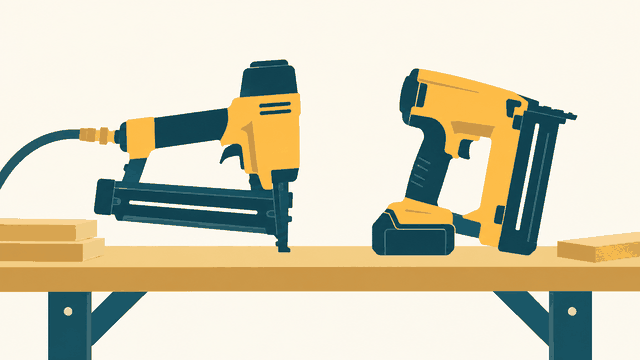
For electrical fastening, a cordless concrete nailer is mainly a productivity tool. It drives hardened pins into concrete, concrete block, and some structural steel without a powder load, compressor, or extension cord. That makes it useful for attaching conduit clips, cable straps, boxes, junction-box supports, and light-duty electrical hardware.
The important limits are fastener size, substrate hardness, and the weight of the tool. Most battery-powered direct-fastening tools are designed around pins roughly 5/8 to 1-1/2 inches long, although the exact range depends on the model and fastener system. A pin that is too short may not hold; a pin that is too long can hit embedded rebar, damage the concrete, or protrude through thin material.
As an Amazon Associate we earn from qualifying purchases at no extra cost to you.
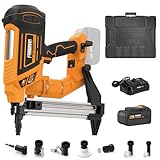
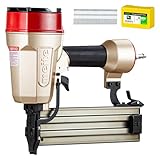
Look first at the manufacturer’s approved pins and clips, not just the tool’s advertised driving energy. Electrical fastening needs a compatible washer, clip, or strap that will not crack when the pin is driven. For a broad selection, compare cordless concrete nailers for electrical fastening alongside their listed fasteners.
Best cordless platform choices
| Platform or tool type | Best for | Main advantage | Main drawback |
|---|---|---|---|
| Professional high-output concrete nailer | Daily electrical and mechanical fastening | Fast cycle time, strong battery support, better accessory availability | High tool and fastener cost |
| Compact battery concrete nailer | Short service runs and overhead work | Lower weight and easier handling | Usually less capacity and fewer compatible accessories |
| Powder-actuated tool | Large commercial fastening jobs | Very high driving power and low battery dependence | More noise, consumables, training, and safety restrictions |
| Hammer drill with anchors | Occasional jobs or heavier mounted hardware | Lower entry cost if you already own the drill | Much slower; drilling dust and anchor installation are required |
If you already own batteries from a major professional system, staying within that ecosystem is usually the practical choice. A bare tool can cost less than a separate kit, and your existing charger and batteries may already be suitable. High-output batteries are not always mandatory, but they generally provide more consistent performance and less slowdown during repeated fastening.
Consider a Milwaukee M18 concrete nailer if you already use that battery platform. A comparable DeWalt 20V concrete nailer makes more sense for an existing DeWalt 20V user. The platform decision matters more than small differences in advertised power when you are buying batteries, chargers, and fasteners together.
Performance on electrical work
For cable and conduit work, the tool should have a usable depth adjustment or a controllable nose. Overdriving can crush a plastic clip, deform a strap, or damage insulation. Underdriving leaves the hardware loose and often results in a second, poorly placed fastening attempt.
Magazine capacity also matters. A tool holding approximately 20 to 40 pins is more convenient for overhead work than one requiring frequent reloads. Expect to reload regularly on a large commercial installation. Fasteners are not cheap, so count the cost per attachment rather than comparing tool prices alone.
Battery runtime varies sharply with the concrete. Soft block and newer concrete may allow several hundred shots per charge, while hard, dense concrete and long pins can reduce that figure substantially. Cold batteries, dirty nose assemblies, and repeated firing at the tool’s maximum setting reduce output further. For a full day of work, two batteries and a charger near the work area are more useful than one oversized battery.
When a cheaper option is enough
A lower-cost cordless nailer is reasonable for a homeowner installing a few conduit straps, low-voltage cable supports, or a handful of box mounts. It is also reasonable when the concrete is relatively soft and the fastener length is short. You may save money by buying a bare tool in the battery system you already own.
Do not choose the cheaper tool solely because the job is small if the substrate is hard structural concrete or the attachment is safety-critical. A tool that struggles will produce bent pins, incomplete drives, and wasted clips. If each failure requires moving a conduit or repairing a damaged box, the apparent savings disappear quickly.
For occasional work, a hammer drill and concrete anchor kit can be the cheaper overall solution. It is slower, but it gives you a more predictable result for heavier equipment. Use mechanical anchors when the manufacturer of the electrical equipment specifies them or when the load exceeds the nailer’s fastening guidance.
Common failures and safe use
A pin that bends immediately usually indicates excessively hard concrete, an unsuitable fastener, a damaged driver, or an attempt to fasten too close to an edge. Keep holes and driven pins away from unsupported edges; cracking can occur even when the pin appears to hold. Never fire into suspected conduit, piping, or embedded wiring. Review drawings and use a scanner where appropriate.
Concrete nailers are loud and can throw fragments. Wear eye protection, hearing protection, and gloves that still allow a firm grip. Keep the nose pressed squarely against the work, and do not defeat the contact safety mechanism. Do not use a nailer for overhead fastening if you cannot control the tool with both hands and maintain stable footing.
Before buying, verify the approved pin lengths, compatible electrical accessories, battery voltage, tool weight with battery, depth control, warranty, and local availability of fasteners. The best cordless concrete nailer is the one that fits your existing battery system, has pins you can reliably source, and drives the exact electrical hardware without repeated corrections.
Related guides
- Longest Lasting Lawn Mower Battery: AGM vs Lithium vs Flooded Lifespan and Cost per Season
- Duralast Gold Lawn Mower Battery Review: U1 Fit, CCA and When to Pay for AGM
- Greenworks Pro 80V 21-Inch Mower Review: Runtime Math, Push vs Self-Propelled and Yard Fit
- Bosch High Pressure Washer Gun Replacement: Fittings, Adapters and What Fits Your Model