What's inside
As an Amazon Associate I earn from qualifying purchases. This post may contain affiliate links at no extra cost to you.
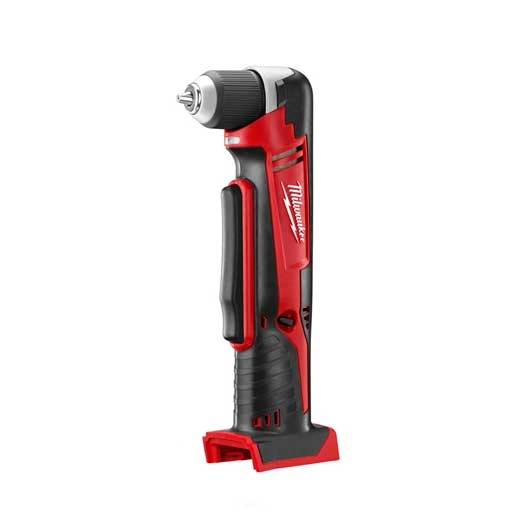
A cordless right-angle drill solves a specific problem: getting a bit into a space where a standard drill’s body will not fit. For cabinet installers, that can mean boring for plumbing or wiring inside a carcass. For framers, it can mean drilling through studs without swinging a brace or dismantling a wall. The right choice depends less on peak torque than on clearance, hole size, battery platform, and how often the tool will be used.
As an Amazon Associate we earn from qualifying purchases at no extra cost to you.


What matters before you buy
Measure the tightest space you need to reach. Check both the drill’s head height and the distance from the back of its head to the center of the chuck; a compact head can still be awkward if the motor housing crowds the work. Also check the bit’s length. A short drill may fit, but a long auger bit can put the cutting edge in the wrong place or hit a nearby panel.
For cabinet work, a compact 12V right-angle drill is often enough for pilot holes and modest holes in plywood or softwood. It is easier to handle inside a cabinet and less likely to damage a finished panel if the bit grabs. For repeated larger holes in framing, a stronger 18V-class tool is the better bet. More power helps keep the bit moving, but it does not prevent a sudden stall from twisting your wrist.
Look for a variable-speed trigger, a side handle or a place to attach one, and a chuck that accepts the bits you actually use. A 3/8-inch chuck suits many cabinet tasks; a 1/2-inch chuck gives more flexibility with larger bits. If you already own batteries and a charger, staying on that platform usually saves more than buying a bare tool from another brand. Compare tool-only and kit prices, since a kit’s battery may be useful—or redundant.
Which type fits the job?
| Type | Best use | Trade-off |
|---|---|---|
| Compact 12V right-angle drill | Cabinet interiors, pilot holes, smaller bits | Less suited to sustained large-hole boring |
| 18V-class right-angle drill | Frequent work in framing and larger holes | Heavier and harder to maneuver in tight cabinets |
| Right-angle attachment for a standard drill | Occasional access to a confined spot | Can be bulky, slower, and less comfortable under load |
| Compact standard drill | Shallow or moderately tight spaces | May not fit where the chuck needs to reach |
Best fit for cabinet work
Choose a compact 12V model if most of your holes are for small fasteners, wiring, or plumbing in assembled cabinets. Its lighter weight matters when you are reaching into an upper cabinet or holding the tool at arm’s length. The limitation shows up with large self-feed or hole-saw bits: the tool may bog down, and forcing it can overheat the motor or damage the workpiece.
For an established 12V battery system, compare 12V cordless right-angle drills by head dimensions, chuck size, and whether a battery is included. A bare tool makes sense if your batteries already fit; otherwise, a kit can be the cheaper way into the platform. For a one-off installation, an attachment may be adequate if the existing drill and attachment physically fit the opening. It is not a good substitute for a dedicated tool when you will be boring repeatedly or working near finished surfaces.
Use a depth stop or tape on the bit when drilling into cabinet sides, and put a scrap backer behind a panel if you can reach the other side. A bit breaking through can splinter veneer or chip a finished face. Start slowly to keep the bit from skating, especially on smooth laminate, and clear chips before they pack around the cutting edge.
Best fit for framing work
For repeated holes through studs, favor an 18V-class right-angle drill with a substantial handle and a chuck suited to your bits. A stronger tool is more productive with larger augers, but a jammed bit can still rotate the drill body abruptly. Keep a firm two-handed grip, stand so a stall will not pull you off balance, and release the trigger as soon as the bit binds. Do not brace the tool against your body.
Check the tool’s instructions for permitted bit types and hole sizes. A large bit in dense or wet lumber can stall a drill that feels powerful in ordinary use. Back the bit out periodically to clear chips, and reduce pressure if the motor slows sharply. If the tool repeatedly stalls, use a smaller pilot hole or a bit intended for the material rather than leaning harder on the trigger.
For contractors already using an 18V platform, compare 18V cordless right-angle drills on head profile, handle setup, and battery clearance. A large battery can make a compact head less useful in a narrow bay. A smaller pack reduces weight and improves access, though it may run down sooner under heavy boring. Keep a charged spare if the drill is doing production work.
When an attachment is enough
A right-angle attachment is the low-cost choice for occasional holes in locations your normal drill cannot reach. It can be fine for a few pilot holes or light-duty cabinet assembly. The catch is that the drill and attachment together may be longer or wider than a dedicated right-angle tool, and some setups offer poor control when a bit catches. Confirm the attachment’s capacity and follow its speed limits; using an unsuitable attachment with a large bit can damage it.
Before buying, test the complete setup with the battery installed, not just the tool head. Check clearance around the chuck, your hand, and any side handle. If you work across several cordless platforms, compare the cost of a bare tool against a kit with batteries and charger, and account for the batteries you will actually need. The best value is the tool that fits the space and handles the bit sizes you use—not necessarily the one with the highest voltage or the biggest battery.
Related guides
- Longest Lasting Lawn Mower Battery: AGM vs Lithium vs Flooded Lifespan and Cost per Season
- Duralast Gold Lawn Mower Battery Review: U1 Fit, CCA and When to Pay for AGM
- Greenworks Pro 80V 21-Inch Mower Review: Runtime Math, Push vs Self-Propelled and Yard Fit
- Bosch High Pressure Washer Gun Replacement: Fittings, Adapters and What Fits Your Model