What's inside
As an Amazon Associate I earn from qualifying purchases. This post may contain affiliate links at no extra cost to you.
Installing hardwood flooring is one of the jobs where the wrong cordless nailer creates problems that may not appear until the floor starts squeaking. The best tool depends on the flooring thickness, the fastener specified by the manufacturer, and whether you are blind-nailing the tongue or face-nailing boards at walls and transitions.
As an Amazon Associate we earn from qualifying purchases at no extra cost to you.



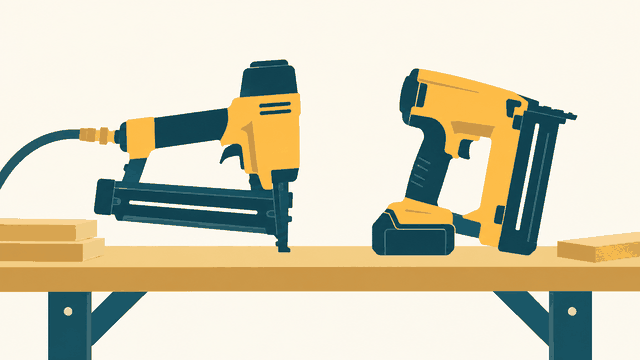
The Right Cordless Nailer for Hardwood Flooring
For most solid hardwood, look first for a cordless flooring nailer that drives 15.5-gauge flooring cleats. These tools are designed to strike the nailer with a rubber mallet, seating the cleat through the tongue at the correct angle. That geometry matters: a regular finish nailer may drive a nail too shallow, too low, or through the visible face of the board.
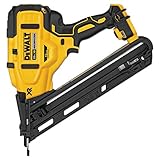
A cordless 16-gauge finish nailer is useful for face-nailing the first and last rows, fastening thresholds, and installing shoe molding. It is not a direct replacement for a flooring nailer on the main field of the floor. An 18-gauge brad nailer is even less suitable for holding hardwood flooring in place, though it is handy for trim and narrow shoe molding.
Before buying, check the flooring instructions. Some engineered flooring accepts 18-gauge or 16-gauge nails; some requires staples; and some floating floors should not be nailed at all. The fastener length usually needs to be about 1-1/2 to 2 inches for typical 3/4-inch flooring, but the flooring manufacturer’s specification takes priority.
Cordless Flooring Nailer vs. Finish Nailer
| Tool type | Best use | Main advantage | Important limitation |
|---|---|---|---|
| Cordless flooring nailer | Blind-nailing the main floor area | Correct angle, depth, and mallet-actuated operation | Heavier and usually more expensive |
| 16-gauge cordless finish nailer | Starter rows, final rows, thresholds, and trim | Versatile and useful beyond flooring | Not ideal for normal blind-nailing across the room |
| 18-gauge cordless brad nailer | Shoe molding and delicate trim | Light, compact, and leaves small holes | Fasteners are too small for most flooring installation |
Best Buying Choice for Most Installers
If you install hardwood regularly, buy a cordless flooring nailer on a battery platform you already own. A dedicated tool costs more than a finish nailer, but it reduces inconsistent seating and saves the time involved in dragging an air hose through every room. Look for a model with an adjustable foot or interchangeable base plates if you install flooring of different thicknesses.
The most important specifications are the approved cleat length range, flooring thickness range, magazine capacity, tool weight, and whether the kit includes a battery and charger. A tool that weighs around 10 pounds with its battery can be tiring over several hours, especially when working near walls. A larger battery may provide more runtime, but it also adds weight at the end of your arm.
For a first hardwood project, compare cordless 15.5-gauge flooring nailers by their supported fasteners and flooring thickness rather than by advertised nail capacity. Magazine capacity is commonly in the range of 80 to 120 fasteners. That is useful, but a clear depth adjustment and reliable contact foot matter more.
When a Finish Nailer Is Enough
A cordless 16-gauge finish nailer is the cheaper and more flexible choice when the job is limited to a small repair, a few starter boards, or engineered flooring that specifically allows finish nails. It is also the right companion tool for a flooring nailer. Use it for the first row, where the wall prevents a flooring nailer from being swung, and for the last rows, where access becomes restricted.
For this role, choose a cordless 16-gauge finish nailer with tool-free depth adjustment, a narrow nose, and a no-mar tip. Plan to test the depth on scrap flooring. Too little depth leaves the nail head proud; too much can crush the tongue or drive through the board’s face.
An 18-gauge nailer is fine for shoe molding and quarter-round. It is less likely to split narrow trim, but its smaller nails have limited holding power. Do not use it as a shortcut for the flooring itself unless the flooring instructions explicitly approve that fastener.
Battery Platform and Runtime
Battery compatibility can matter more than a small difference in driving speed. If you already own batteries and a charger from a major cordless platform, staying within that ecosystem can reduce the real cost substantially. You may be able to buy the bare tool, while a new kit includes a battery you do not need.
A 2.0Ah or 4.0Ah battery is generally easier to handle on a nailer than a high-capacity pack. Runtime varies with wood hardness, nail length, and how often the tool is fired, but a second charged battery is more useful than waiting for one pack to recharge. Keep the battery warm in cold weather; lithium-ion packs lose runtime and may temporarily refuse to deliver full power when chilled.
For a full-room installation, consider a compatible cordless battery and charger kit only if you are entering that platform. Otherwise, buying a bare nailer and using your existing batteries is usually the better deal.
Common Failure Modes
Misfires are often caused by the wrong cleat, an empty magazine, or a contact foot that is not fully pressed against the flooring. Driving too close to the board end can split the tongue. Keep fasteners at least a few inches from board ends unless the flooring instructions specify otherwise, and stagger end joints according to the installation plan.
Protruding heads usually mean incorrect depth adjustment, inadequate pressure, or a battery that is nearly depleted. A nail driven too deep can damage the tongue and allow movement. Test several shots on an offcut before starting the finished floor, then inspect the underside of a scrap board for splitting.
A Practical Buying Recommendation
For a whole-room solid hardwood installation, choose a dedicated cordless flooring nailer and keep a 16-gauge finish nailer available for the edges. For one small room or a floor that allows 16-gauge finish nails, the finish nailer is the sensible lower-cost purchase. For trim only, buy an 18-gauge brad nailer and do not pay for a flooring-specific tool you will rarely use.
Also budget for the correct cleats, a compressor-free work setup, safety glasses, hearing protection, and a scrap board for depth testing. The nailer is only part of the installation: accurate layout, expansion gaps, and proper subfloor preparation prevent more flooring failures than a faster trigger ever will.
Related guides
- Longest Lasting Lawn Mower Battery: AGM vs Lithium vs Flooded Lifespan and Cost per Season
- Duralast Gold Lawn Mower Battery Review: U1 Fit, CCA and When to Pay for AGM
- Greenworks Pro 80V 21-Inch Mower Review: Runtime Math, Push vs Self-Propelled and Yard Fit
- Bosch High Pressure Washer Gun Replacement: Fittings, Adapters and What Fits Your Model