What's inside
As an Amazon Associate I earn from qualifying purchases. This post may contain affiliate links at no extra cost to you.
What a pin nailer can—and cannot—do
A cordless 23-gauge pin nailer is useful for holding small trim, delicate mouldings, and thin parts while glue cures. Its pins leave small holes, often around 0.025 inch wide, and are much less likely to split narrow stock than thicker brads. That makes the tool handy for fine woodworking, but it does not make a pin a structural fastener. Pins have little holding power on their own, especially when driven into end grain or a joint that will be stressed.
For a glued joint, use clamps where they fit and treat pins as temporary alignment aids. A pin can also skid along angled grain, blow through a thin edge, or emerge through the far side of a small part. Test the setup on scrap of the same species and thickness before fastening finished work.
As an Amazon Associate we earn from qualifying purchases at no extra cost to you.

Cordless buying trade-offs
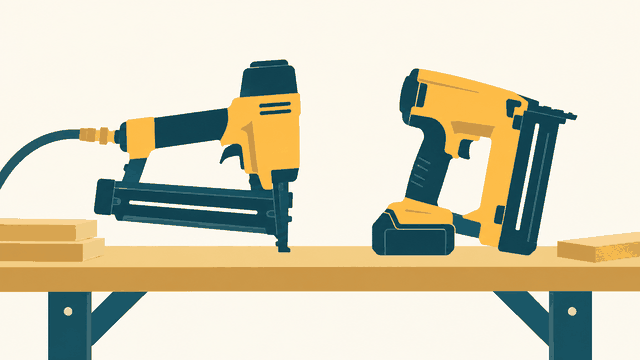
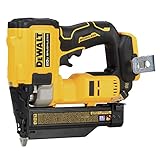
Battery-powered pin nailers avoid a compressor and hose, which is convenient for cabinet work, repairs, and punch-list jobs. The trade-off is added weight in the hand and, depending on the design, a short delay or noticeable kick when firing. Cordless models also cost more if you need to buy into a battery platform just for this tool. If you already own compatible batteries, the extra cost may be easier to justify.
Compare tool-only prices and battery requirements before buying. Some platforms have small batteries that keep the tool lighter; others use larger packs that can make close, one-handed work tiring. For occasional pinning at a bench, a corded compressor setup may remain the better value if you already own one. For cordless convenience, start with a cordless 23-gauge pin nailer that fits a battery system you actually use.
What to compare
| Feature | Why it matters | What to check |
|---|---|---|
| Pin length range | Too short may not hold the parts together; too long can exit the workpiece. | Check the stated range and choose a length that leaves a safe margin before the back face. |
| Depth adjustment | Flush pins are easier to fill and less likely to mar the surface. | Look for a tool-free adjustment, then test it on scrap. |
| Dry-fire lockout | Firing with an empty magazine can leave a mark or tempt a second shot in the same spot. | Check whether the tool stops firing near the end of the strip. |
| Jam access | Fine pins bend and jam more readily than larger fasteners. | Prefer a nose that opens without a complicated teardown. |
| Weight and balance | Small parts often require careful positioning and a steady hand. | Hold the tool with the battery installed, not just in the store or in a product photo. |
Choose by the work you do
For delicate trim and small glued assemblies, prioritize a narrow nose, predictable depth control, and good sightlines over maximum firing speed. A tool with a clear contact point is easier to place accurately near a corner. If you often work in cramped cabinets, balance and battery size matter more than a high shot count per charge.
If you already own batteries from a major cordless platform, compare its pin nailer with the cost of adding a separate battery and charger. A bare tool is usually the economical choice for an established platform. If you do not own compatible batteries, compare the full kit price—not just the tool-only listing. A pin nailer kit with battery and charger may cost less than assembling a new system one piece at a time.
Do not buy a larger brad nailer just because it is easier to find. An 18-gauge brad leaves a more visible hole and can split small mouldings. Conversely, if the joint needs lasting mechanical strength, a pin nailer is the wrong tool; use an appropriate screw, dowel, biscuit, or other joint design instead.
Getting clean results
Set the tool’s depth on scrap first. The pin should sit just below the surface without burying deeply enough to crush the fibres. If the head stands proud, increase depth slightly; if the surface dimples or the pin exits the back, reduce depth or use a shorter pin. Dense hardwood may need a different setting from softwood, even at the same thickness.
Keep the nose square to the surface and support the workpiece close to the firing point. For a narrow edge joint, place pins far enough from the edge to reduce blowout, but not so close to the centre that they pull the parts out of alignment. Two pins driven in slightly different directions can resist movement better than two parallel pins, though angled shots raise the risk of a pin wandering out the side. Use this technique only after testing.
Glue fit matters more than pin count. A pin will not close a badly gapped joint reliably; it can simply hold the gap in place. Apply even clamping pressure where practical, wipe squeeze-out before it hardens, and avoid firing into an area where a pin could hit a clamp or hidden metal fitting.
When the cheaper option is enough
For occasional home repairs or a few pieces of trim each year, a basic pin nailer is often sufficient if it drives the lengths you need and lets you set depth consistently. Paying extra for a premium platform tool makes less sense when you have no compatible batteries and rarely use the nailer. A pneumatic 23-gauge nailer may be cheaper still if you already own a compressor and do not mind managing a hose.
For frequent cabinet installation or shop use, cordless convenience can save setup time. In that case, spend for the battery platform you already rely on, straightforward jam clearing, and a tool that feels controllable in real use. Before committing, confirm pin availability at the lengths you need; specialty fasteners can be less convenient to source than common brads.
Related guides
- Longest Lasting Lawn Mower Battery: AGM vs Lithium vs Flooded Lifespan and Cost per Season
- Duralast Gold Lawn Mower Battery Review: U1 Fit, CCA and When to Pay for AGM
- Greenworks Pro 80V 21-Inch Mower Review: Runtime Math, Push vs Self-Propelled and Yard Fit
- Bosch High Pressure Washer Gun Replacement: Fittings, Adapters and What Fits Your Model