What's inside
As an Amazon Associate I earn from qualifying purchases. This post may contain affiliate links at no extra cost to you.
What to look for in a cordless upholstery stapler
Upholstery is a different job from construction stapling. You are usually fastening fabric to plywood or a hardwood frame, often through foam and batting. The ideal tool is compact, easy to control, and capable of driving short staples without leaving a large hole or pulling the fabric out of position.
For most upholstery work, look for a 3/8-inch crown stapler that accepts staples from about 1/4 to 9/16 inch long. A narrow crown gives enough holding area without making a wide, obvious mark. Short 1/4-inch staples suit thin fabric over plywood. Use 3/8 or 1/2 inch staples for heavier upholstery fabric, batting, and normal seat construction. Longer staples can punch through thin frames, damage finished surfaces, or make removal unnecessarily difficult.
As an Amazon Associate we earn from qualifying purchases at no extra cost to you.



Also check whether the stapler uses a proprietary staple type. A tool that accepts common 3/8-inch crown staples is much easier to keep supplied than one requiring a particular brand or unusual leg length. Before buying, confirm the staple size in the manual—not just the product listing.
The best cordless tool types for the job
| Tool type | Best use | Advantages | Limitations |
|---|---|---|---|
| Compact 12V crown stapler | Upholstery, trim fabric, small repairs | Light, maneuverable, less tiring | Slower and less forceful in hard wood |
| 18V or 20V crown stapler | Furniture production and heavier fabric | More driving power and faster work | Heavier, bulkier, usually more expensive |
| 18V narrow-crown stapler | Light fabrication, cabinets, panels | Better penetration and holding power | Staples may be too large for visible upholstery |
| Battery-powered tacker | Occasional light fastening | Often inexpensive and simple | Less consistent depth and limited staple sizes |
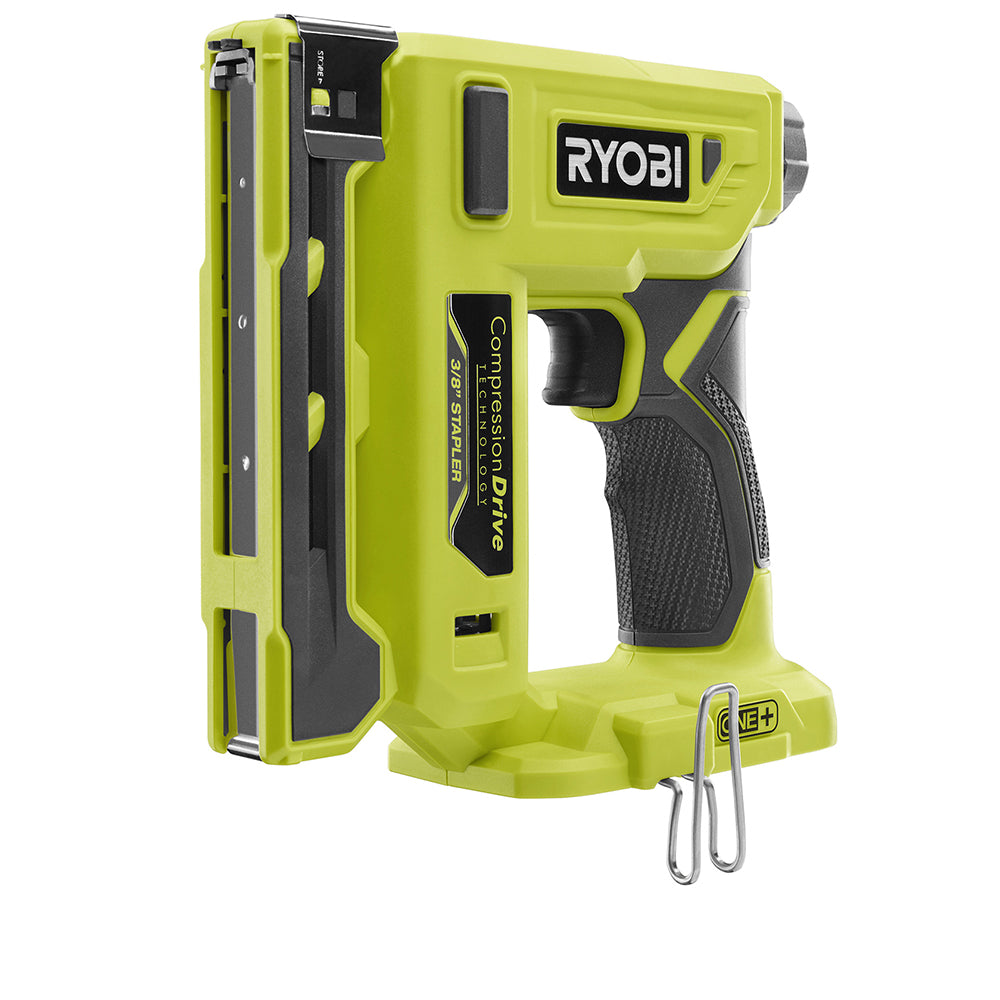
A compact 12V option such as the Milwaukee M12 cordless crown stapler makes sense for recovering dining chairs, ottomans, and small panels. It is easier to hold against a curved frame and less tiring when you are placing hundreds of staples. Its trade-off is driving speed: it may need more time between shots and can struggle more than an 18V tool in dense hardwood.
An 18V or 20V tool is the better choice when the same battery system is already in your workshop. These staplers generally have higher output and larger magazines, but they also add weight at the front of the tool. That matters when you are working overhead or stretching fabric around a chair back.
Battery platforms and running cost
Do not buy a battery platform solely for a stapler unless you expect to add other tools. A bare tool can look affordable, but a battery and charger may add $60 to $150 depending on the platform. If you already own batteries, the cheapest overall option is usually a compatible bare tool.
For occasional upholstery, a small battery is preferable. A 2.0Ah pack is lighter and normally provides enough capacity for a chair or two. A 4.0Ah or larger pack reduces charging stops during production work but makes a compact stapler noticeably less comfortable.
Battery capacity does not fix a poorly matched tool. A stapler with insufficient impact energy will still leave proud staples even with a large battery. Conversely, extra power can overdrive staples into soft plywood. The useful features are adjustable depth, a contact safety, and a clear nose that lets you see exactly where the staple will land.
Match the staple to the material
Use galvanized or stainless staples where humidity, sweat, or outdoor exposure is possible. Standard galvanized staples are adequate for indoor furniture. Stainless staples cost more but resist corrosion in boat cushions, patio furniture, and damp workshops.
Choose the shortest staple that gives reliable holding power. A staple should penetrate the plywood or frame by roughly 1/4 inch after passing through the fabric and padding. If it barely enters the wood, the fabric will loosen. If it penetrates too far, it can split a narrow rail or emerge on the opposite side.
Staples that sit proud usually indicate one of four problems: the material is too hard, the staple is too long, the battery is low, or the tool is not being held squarely. Do not simply increase the depth setting until the staple disappears. That can crush the fabric and leave a permanent dimple. Instead, test on scrap made from the same fabric, foam, and wood.
Using a cordless stapler for light fabrication
For cabinet backs, thin plywood, insulation facing, screen material, and temporary jigs, an 18V narrow-crown stapler is often more useful than an upholstery-specific tool. Search for a cordless narrow-crown stapler if you need longer staples and deeper penetration.
These tools are not substitutes for a finish nailer or a heavy-duty framing stapler. They are suited to material that is already supported by glue, a frame, or mechanical joints. For example, staples can hold a cabinet back while adhesive cures, but they should not be the only fastener in a load-bearing joint.
On plywood edges, keep staples at least 3/8 inch from the edge unless the material is thick and stable. Closely spaced staples can split the edge. A spacing of 2 to 4 inches is normally adequate for fabric, while temporary panel work may need 4 to 6 inches depending on the adhesive and material.
When a cheaper cordless tacker is fine
A basic cordless tacker is reasonable for occasional repairs, craft projects, and thin fabric over softwood. It can be the economical choice if you will fire fewer than a few hundred staples per year. Expect more variation in driving depth, a slower trigger cycle, and fewer staple-size options.
For a full chair, multiple dining seats, or regular furniture work, the cheaper tool often becomes false economy. Misfired staples, jams, and inconsistent depth add time, and removing a badly placed staple can tear fabric or leave a visible hole. In that situation, prioritize a purpose-built cordless upholstery stapler with 3/8-inch crown staples over maximum battery voltage.
A practical buying checklist
Before ordering, verify the staple crown width, supported leg lengths, magazine capacity, depth adjustment, nose visibility, and battery weight. Look for a tool with a dry-fire lockout or at least a visible low-staple indicator. A belt hook is useful, but a jam-release mechanism is more important.
Keep the nose flat against the work and stretch fabric progressively from the center toward the corners. Fire a test staple on scrap first, then inspect the reverse side for breakout. Clean the magazine when changing staple sizes, and stop immediately if the driver begins leaving bent staples. That usually means the wrong fastener, an empty magazine, or a jam—not a need to press harder.
Related guides
- Longest Lasting Lawn Mower Battery: AGM vs Lithium vs Flooded Lifespan and Cost per Season
- Duralast Gold Lawn Mower Battery Review: U1 Fit, CCA and When to Pay for AGM
- Greenworks Pro 80V 21-Inch Mower Review: Runtime Math, Push vs Self-Propelled and Yard Fit
- Bosch High Pressure Washer Gun Replacement: Fittings, Adapters and What Fits Your Model