What's inside
As an Amazon Associate I earn from qualifying purchases. This post may contain affiliate links at no extra cost to you.
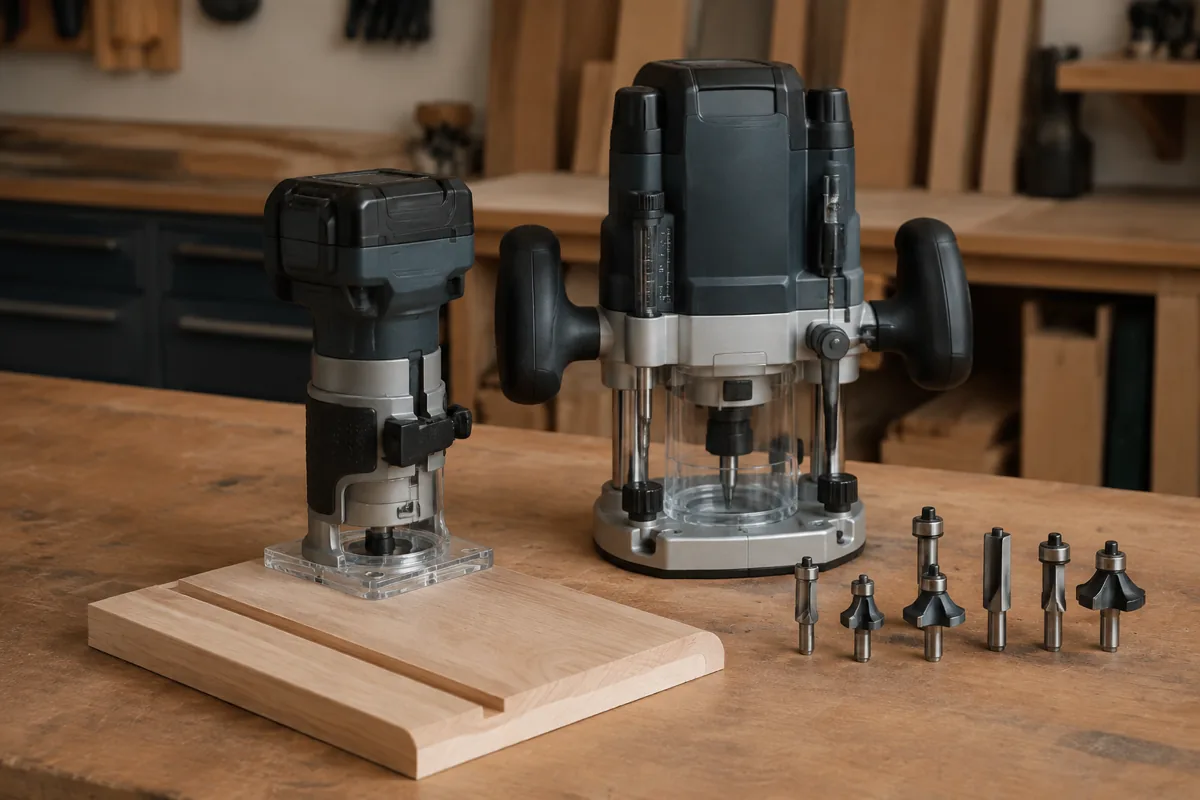
A cordless trim router is one of the most useful small woodworking tools you can buy—provided you match it to the work. It handles roundovers, chamfers, flush trimming, hinge mortises, template routing, and shallow grooves without dragging a cord across the bench. It is less suitable for heavy dadoes, large panel-raising bits, or long runs in hardwood.
For most trim work, choose a compact router with a 1/4-inch collet, variable speed, a plunge or fixed base that fits your work, and enough battery capacity to finish the job without frequent changes. The best choice is often determined less by the router itself than by the cordless platform you already own.
As an Amazon Associate we earn from qualifying purchases at no extra cost to you.


What to look for in a cordless trim router
A good cordless router should have a stable base, easy depth adjustment, a reliable spindle lock, and a clear view of the bit. LED lights are useful, but they do not compensate for a base that flexes or a depth adjustment that slips.
Variable speed matters when you use larger-diameter bits. A 1/4-inch roundover bit can usually run fast, while a 1-1/4-inch bit creates more rim speed and should be run slower. Never exceed the bit manufacturer’s rated speed. Most compact routers are comfortable with bits up to about 1-1/4 inches, but the manufacturer’s manual is the final authority.
Expect roughly 1-1/2 inches of usable depth adjustment on many trim routers. That is enough for edge profiles and shallow joinery, but not always enough for thick template work. A plunge base adds versatility, though it makes the tool taller and can be less convenient on narrow edges.
If you need a router for sign making, hinge mortises, or repeated template work, look for a kit with both fixed and plunge bases. If you mostly soften tabletop edges or flush-trim laminate, a fixed-base tool is lighter, simpler, and generally cheaper.
The best cordless router categories
| Router type | Best for | Main advantage | Main drawback |
|---|---|---|---|
| Compact fixed-base | Roundovers, chamfers, edge trimming | Light and easy to control | Limited plunge work |
| Fixed and plunge kit | General trim work and templates | Most versatile | Costs more and weighs more |
| High-output compact router | Hardwood, repeated cuts, larger profiles | Better speed under load | Uses more battery and can feel bulky |
For a first purchase, a compact fixed-and-plunge kit is the safest recommendation if it is available on your battery platform. A fixed base is quicker for edge profiles, while the plunge base makes stopped grooves and template routing much easier.
Among established platforms, the DeWalt 20V MAX compact router, Milwaukee M18 compact router, and Makita 18V LXT brushless trim router are sensible places to start. Each has a large battery ecosystem and broad availability of chargers, batteries, and compatible cordless tools. Search for a cordless compact router with fixed and plunge bases if you are comparing kits rather than bare tools.
Battery size and runtime
A 2.0Ah battery keeps the router light and is usually adequate for occasional edge work. A 4.0Ah or 5.0Ah pack provides more runtime and tends to hold voltage better under load, but it adds noticeable weight above the workpiece. On a small router, that extra weight can make it harder to keep the base flat on a narrow board.
As a practical estimate, a sharp bit in softwood may let you work for dozens of short edge passes on a compact battery. Continuous routing in hardwood, deep cuts, or a dull bit can consume a battery much faster. Runtime varies too much by material and cutting depth to treat advertised figures as dependable.
If you already own several batteries, buying a bare tool is usually the cheaper option. Otherwise, compare the kit price with the cost of a battery and charger. A router kit that looks inexpensive can become poor value if its battery platform has few other tools you will actually use. See current cordless router kits with battery and charger prices before assuming the bare tool is the bargain.
How to get cleaner, safer results
Take multiple shallow passes instead of removing all the material at once. For a 1/2-inch roundover, two passes are often cleaner than one, especially in hardwood. Keep the router moving at a steady pace. Stopping in the cut can leave a burn mark; moving too quickly can produce chatter or a ragged edge.
Feed direction matters. When routing the outside edge of a board with a handheld router, normally move from left to right when the workpiece is in front of you and the router is on the workpiece side. This keeps the bit’s rotation pushing the tool into the edge. A climb cut can pull the router forward suddenly and should only be attempted deliberately, with a firm grip and a very light pass.
Secure the workpiece with clamps, but keep the clamps clear of the base. Support the router fully on the board before starting the cut. A common failure is tipping the tool as the base leaves the edge, which digs the bit into the corner. For narrow stock, use a wider auxiliary platform or route the profile before cutting the board to final width.
Use sharp, clean bits and inspect the collet. Insert the bit fully, then pull it back slightly—about 1/16 inch—before tightening so it does not bottom out. A bit that slips can destroy the workpiece and damage the collet. Eye protection and hearing protection are essential; dust collection is strongly recommended, particularly with MDF.
When a corded router is still the better buy
Choose a corded router if you routinely cut thick hardwood, run long dados, use large panel bits, or work for hours at a time. Cordless compact routers are excellent for trim work because they are quick to deploy and easy to control, but battery power does not eliminate the limits of a small motor.
The cheaper option is fine when your work consists of occasional roundovers, chamfers, flush trimming, or a few hinge mortises. Spend more for a brushless fixed-and-plunge kit when you expect frequent use, need repeatable depth changes, or want to stay within an existing professional battery platform. Also budget for a straightedge, template guides, and quality bits; those accessories often affect the finished result more than a small difference in router power.
Related guides
- Longest Lasting Lawn Mower Battery: AGM vs Lithium vs Flooded Lifespan and Cost per Season
- Duralast Gold Lawn Mower Battery Review: U1 Fit, CCA and When to Pay for AGM
- Greenworks Pro 80V 21-Inch Mower Review: Runtime Math, Push vs Self-Propelled and Yard Fit
- Bosch High Pressure Washer Gun Replacement: Fittings, Adapters and What Fits Your Model