What's inside
As an Amazon Associate I earn from qualifying purchases. This post may contain affiliate links at no extra cost to you.
Choosing the Right Stapler
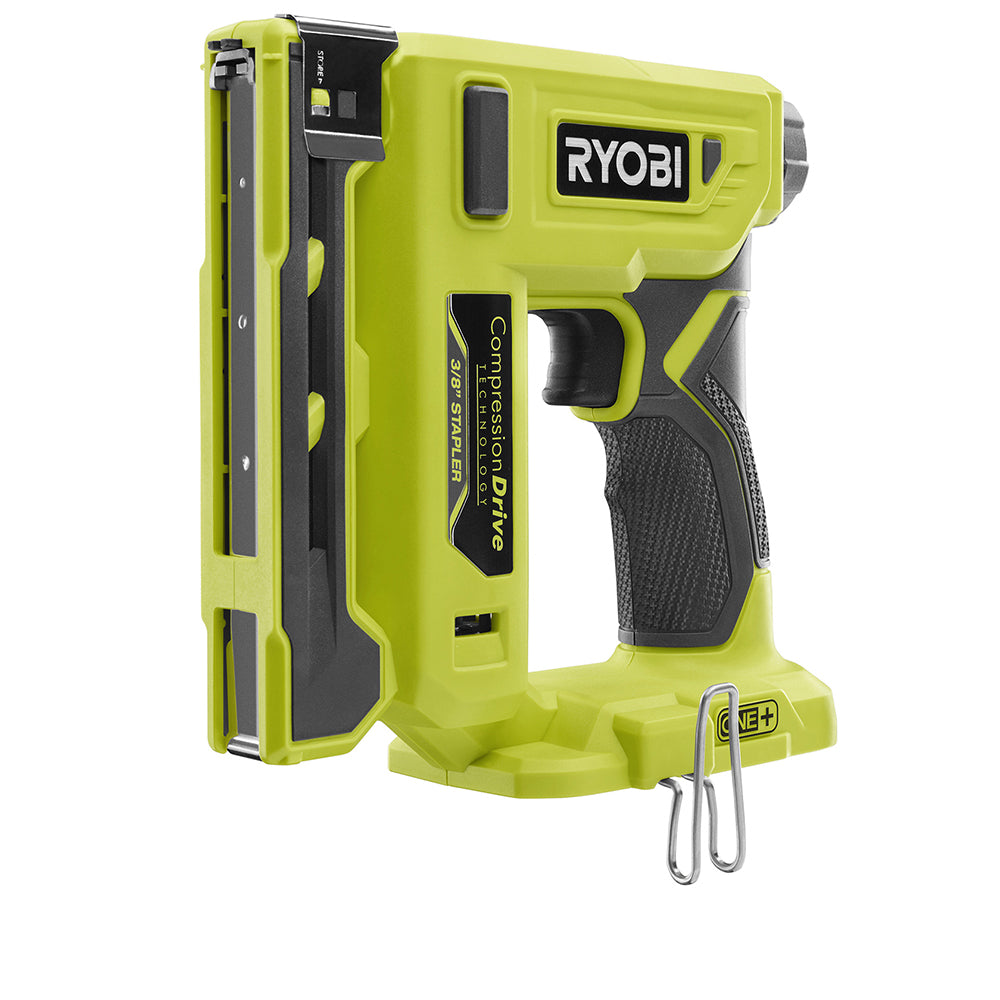
For upholstery and cabinet backing, the useful question is not simply how many staples a cordless tool can fire. It is whether it drives the staple type and length your job needs, fits into the work area, and can be fed by a battery platform you already own. A tool that leaves staples proud or jams in a cabinet corner can cost more time than a manual stapler.
Most fabric work calls for narrow-crown staples, often around 3/8 inch wide. Length depends on the material underneath: 1/4- to 3/8-inch staples can suit thin fabric and light-duty panels, while thicker upholstery stacks or firm backing may need 1/2 inch or longer. Cabinet backs are often thin hardboard or plywood; too much staple length risks poking through the far side. Check the backing thickness and the stapler’s permitted fasteners before buying.
As an Amazon Associate we earn from qualifying purchases at no extra cost to you.


Many cordless staplers sold for finish work are narrow-crown staplers, while some are designed for T50-style staples. These are not interchangeable. Confirm the staple family, crown width, and length range on the tool’s specification sheet, then buy matching staples. A tool’s magazine capacity and firing modes matter, but they cannot make the wrong fastener work.
Cordless Stapler Types Compared
| Type | Best fit | Main trade-off |
|---|---|---|
| Narrow-crown cordless stapler | Cabinet backing, light panel work, and some furniture assembly | Uses a specific staple family; can be too forceful for delicate trim or thin stock |
| T50-style cordless stapler | Fabric, insulation, and general upholstery tasks where compatible staples suit the material | Staples are wider; check drive depth and staple length to avoid crushing or piercing the work |
| Manual hand stapler | Occasional repairs and small upholstery jobs | Slower and tiring over hundreds of staples, but inexpensive and easy to control |
If you already own batteries, start by checking the manufacturer’s lineup for a compatible cordless narrow-crown stapler or cordless T50-style stapler. Names such as “crown” or “tacker” are not enough by themselves: compare the exact staple dimensions and the tool’s supported lengths.
For Upholstery Work
On a dining chair seat or small bench, a cordless stapler saves hand effort and makes it easier to keep staple spacing consistent. A practical starting point is staples about 1/4 to 3/8 inch long for fabric over a thin wood frame, but test first. Dense foam, multiple fabric layers, and hardwood rails can change what drives reliably. If the staple is too short, it may pull out under tension; if too long, it can emerge through the frame or catch on the opposite side.
Test on an offcut that matches the actual fabric layers and frame wood. Set the tool’s depth control, if provided, and fire several staples while holding the nose square and firmly against the surface. The crown should sit flush without cutting the fabric. A staple that sinks too deeply can weaken or tear cloth; one left proud can snag hands or make the next layer sit unevenly. Adjust the setting or staple length rather than trying to compensate by striking the tool.
For fine, tightly woven, or delicate upholstery fabric, a manual stapler can be the better choice. It gives direct feedback and avoids the occasional deep drive from a powered tool. A manual upholstery staple gun is also a reasonable buy for one chair or a few repair jobs. Cordless makes more sense when you are doing several pieces or have an existing battery system.
For Cabinet Backing
Cabinet backs are usually repetitive work, so a cordless stapler can speed up installation and avoid dragging an air hose around a room. The main risk is shooting through thin material. Measure the backing and account for the thickness of the cabinet rail behind it. Use the shortest approved staple that holds securely, and test on a scrap or an inconspicuous edge before working across the panel.
Staple spacing depends on the cabinet and backing material. For light panels, spacing around 3 to 4 inches along the perimeter is a common starting point, with closer spacing where the panel flexes or the manufacturer specifies it. Keep staples far enough from an edge to avoid splitting, but close enough to hold the panel flat. If the backing is bowed or a cabinet is out of square, staples alone will not correct the fit; clamp or square the case before fastening.
A narrow-crown stapler may suit cabinet backing when its fasteners match the panel thickness and the cabinet’s requirements. For very thin hardboard, small brads or screws may be more appropriate, depending on the design. Do not assume that a stapler’s ability to accept a short staple means it will drive that staple cleanly into every material.
Battery Platform, Handling, and Common Problems
For occasional work, a compact battery is often enough; heavy upholstery runs and repeated cabinet installs benefit more from having a spare charged pack than from buying the largest battery available. Check whether the stapler is sold as a bare tool or in a kit, and compare the kit cost with the batteries and charger you already have. Battery platform compatibility is brand-specific: a pack from one tool family usually will not fit another without an adapter, and adapters may affect warranty or performance.
Typical problems include jams from damaged or mismatched staples, partial drives in hard material, and double firing when the nose bounces or the trigger is held in an unfamiliar firing mode. Disconnect the battery before clearing a jam, follow the manual, and do not keep firing into a spot where staples are sitting proud. Keep the magazine clean, use straight strips of the specified staples, and test the contact-trip and trigger behavior before starting a long run.
When comparing models, look for a clear staple specification, a depth adjustment, a nose that lets you see the fastening point, and a magazine that is easy to reload. Tool weight matters during overhead or edge work; battery size adds to the weight in your hand. Firing speed is less important for a few chair seats than predictable depth and a reliable jam-clearing procedure.
Related guides
- Longest Lasting Lawn Mower Battery: AGM vs Lithium vs Flooded Lifespan and Cost per Season
- Duralast Gold Lawn Mower Battery Review: U1 Fit, CCA and When to Pay for AGM
- Greenworks Pro 80V 21-Inch Mower Review: Runtime Math, Push vs Self-Propelled and Yard Fit
- Bosch High Pressure Washer Gun Replacement: Fittings, Adapters and What Fits Your Model