
Key takeaways
- Compare the best hand planes for woodworking, from a premium A2 steel smoother to a budget block plane, judged on iron, bed angle, sole and weight.
As an Amazon Associate I earn from qualifying purchases. This post may contain affiliate links at no extra cost to you.
- Top Pick: Stanley Sweetheart No. 4 Smoothing Plane (12-136)
- Runner-up: Stanley Sweetheart No. 62 Low Angle Jack Plane (12-137)
- Also consider: Jorgensen No. 4 Smoothing Plane (70730)
A manual hand plane does three jobs no sanding block quite matches: it flattens a board face, takes a surface to a finish-ready sheen, and trims end grain and edges with a control a power planer cannot offer at this scale. What separates a strong pick from a frustrating one is published detail. Iron steel and thickness decide how the edge holds up in hardwood. Bed angle and mouth design decide how the plane behaves in figured grain. Sole length decides whether the tool rides over low spots or follows them.
The five planes below span the bench roles a woodworker actually fills, in three clear tiers. Two premium Stanley Sweetheart models cover smoothing and low angle jack work. A Jorgensen No. 4 holds the mid-range with a Bedrock pattern frog and an O1 steel blade. The Amazon Basics No. 4 covers the budget tier in the same size, and a Stanley block plane handles one-handed trimming. Every figure quoted here comes from maker or listing specifications.
As an Amazon Associate, we earn from qualifying purchases.
Quick answer
For most benches, the Stanley Sweetheart No. 4 is the premium smoother to build around, and the Sweetheart No. 62 low angle jack covers flattening and end grain. The Jorgensen No. 4 is the mid-range smoother, the Amazon Basics No. 4 covers the budget tier, and the Stanley 12-220 block plane handles one-handed trimming.
The picks
Stanley Sweetheart No. 4 Smoothing Plane (12-136)

The Sweetheart No. 4 is Stanley’s premium take on the classic bench smoother. Its defining detail is a one-piece base and frog cast together, which removes the frog seating joint where chatter often begins on two-piece designs. The iron is A2 steel ground 1/8 inch thick, double the thickness of the thin irons in hardware store planes, and thickness is what lets a smoother take a fine cut without flexing. A Norris pattern adjuster combines depth and lateral movement in one mechanism and adds a lateral lock, so a setting holds once dialed in. The knob and tote are cherry, and the body is ductile iron, a casting chosen for toughness if the tool ever drops. At 10-5/8 inches long with a 2 inch iron, it is sized for final smoothing passes on panels and table tops rather than rough stock removal. This is the premium tier pick for a dedicated smoother.
Specs
- Type: No. 4 smoothing bench plane
- Body: ductile iron, one-piece base and frog
- Iron: A2 steel, 2 in wide, 1/8 in thick
- Adjuster: Norris pattern, with lateral lock
- Handles: cherry knob and tote
- Length: 10-5/8 in
- Weight: 5 lb
Stanley Sweetheart No. 62 Low Angle Jack Plane (12-137)
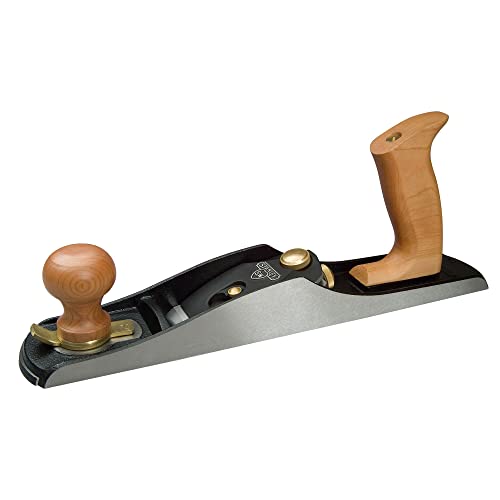
The No. 62 covers the work a smoother cannot: flattening medium boards, shooting end grain and handling reversing grain that tears under a standard angle iron. The iron beds at 12 degrees and cuts bevel-up, so the effective cutting angle comes from the bevel you hone, and changing bevel angles changes the tool’s character without changing planes. The A2 iron is 2 inches wide and 3/16 inch thick, the heaviest blade in this roundup, with no chip breaker to fit. An adjustable mouth closes down for fine work in difficult grain or opens for heavier cuts. Like the No. 4 above, the base and frog are one ductile iron casting, the adjuster is a Norris pattern, and the handles are cherry. It sits in the premium tier beside the No. 4, and the two together cover most bench planing a furniture shop sees.
Specs
- Type: No. 62 low angle jack plane, bevel-up
- Bed angle: 12 degrees
- Iron: A2 steel, 2 in wide, 3/16 in thick
- Mouth: adjustable
- Body: ductile iron, one-piece base and frog
- Handles: cherry knob and tote
- Length: 14 in
Jorgensen No. 4 Smoothing Plane (70730)

Jorgensen builds this No. 4 on the Bedrock pattern, the frog design valued because the blade assembly seats on a wide, flat bed and can be adjusted without removing the iron and cap. The body is ductile cast iron, and the blade is O1 tool steel, a steel many woodworkers favor because it takes a keen edge on simple sharpening gear and touches up quickly, even if it wants honing more often than A2. Published dimensions put the sole at 10 inches long and the weight at 2.24 kilograms, real mass for a mid-range smoother. The listing states a 58 mm blade width, wider than the classic 2 inch No. 4 iron, which suits broad smoothing passes on panel glue-ups.
Specs
- Type: No. 4 smoothing bench plane
- Body: ductile cast iron, Bedrock pattern frog
- Blade: O1 tool steel
- Blade width: 58 mm, as listed
- Length: 10 in
- Weight: 2.24 kg
Amazon Basics No. 4 Smoothing Bench Plane (DS-WPAMZ002)
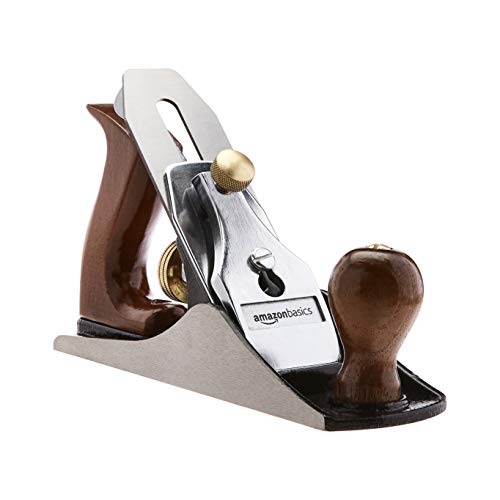
The Amazon Basics entry keeps the No. 4 format at the budget tier: a cast iron body, a 2 inch steel blade and wooden handles, in a plane whose own manual lists a 10 inch body length and a weight of about 4.1 pounds. That manual is the honest guide to what arrives, and it publishes more documentation than many budget planes provide. Expect the usual budget tier trade-offs in fitting and finish, and expect to spend setup time honing the blade and checking the sole before judging the cut; that work is normal for any new plane and matters more at this tier. In return, the buyer gets the standard No. 4 footprint, so skills and sharpening routines carry over if a premium smoother joins the bench later.
Specs
- Type: No. 4 smoothing bench plane
- Body: cast iron
- Blade: steel, 2 in wide
- Handles: wood
- Length: 10 in
- Dimensions: 2.6 x 5.7 x 10 in
- Weight: about 4.1 lb
Stanley Block Plane (12-220)

Every bench needs one plane that works in a single hand, and the 12-220 is Stanley’s long-running answer. The cutter rests at 21 degrees, an angle chosen for cross-grain and end grain trimming, chamfering edges and fitting small parts. The cutter adjusts fully for depth of cut and alignment, so the shaving can be centered and thinned without removing the cap. The base is gray cast iron with precision-ground sides and bottom, and an epoxy coating protects the casting. A finger rest at the front adds control on short strokes. At 7 inches long and 1.83 pounds, it rides in an apron pocket in a way no bench plane here can.
Specs
- Type: block plane
- Cutter: 1-5/8 in wide, bedded at 21 degrees
- Body: gray cast iron, precision-ground sides and bottom
- Finish: epoxy coating
- Adjustment: cutter fully adjustable for depth and alignment
- Length: 7 in
- Weight: 1.83 lb
How to choose
Begin with the job, because plane sizes are job descriptions. A No. 4 smoother takes the final light passes that leave a surface ready for finish. A jack plane, standard or low angle, does the earlier work: flattening, dimensioning and edge jointing on medium boards. A block plane trims, chamfers and cleans end grain one-handed. Most benches end up with one of each rather than one plane forced into every role.
Read the iron next. Thickness matters more than most listings suggest: a 1/8 or 3/16 inch iron resists chatter, holds a setting better than a thin iron, and survives years of honing. Steel type sets the sharpening routine. A2 holds an edge longer in abrasive hardwoods and prefers diamond or water stone sharpening. O1 hones quickly on almost any stone and suits frequent touch-ups.
Bed angle decides grain behavior. A standard 45 degree bench frog handles straight grain well. A low angle bevel-up plane on a 12 degree bed shines on end grain, and the honed bevel can raise the cutting angle for figured stock. Finally, check sole length against your boards: a longer sole bridges hollows and flattens, while a short sole follows gentle contours and works smaller parts.
Who should skip
Skip this entire category if your work is volume thicknessing of rough lumber; a benchtop thickness planer or a powered hand planer removes stock at a pace no manual plane matches, and this site covers those machines in depth. Skip these five if you need a long jointer plane for dead-straight edges on long boards, since no No. 7 or No. 8 appears here. Woodworkers committed to Japanese pull planes will find the push stroke and frog mechanics of these Western patterns a poor fit.
FAQ
What is the difference between a smoothing plane and a jack plane?
Length and intent. A smoothing plane like the No. 4 runs about 9 to 10 inches long and is set for very light final cuts that leave a finished surface. A jack plane runs about 14 inches, takes a heavier cut, and does the flattening and sizing work that comes before smoothing. Its longer sole also bridges low spots instead of following them.
What does a low angle jack plane do better than a standard bench plane?
End grain and difficult grain. With the iron bedded at 12 degrees and cutting bevel-up, a low angle jack slices end grain cleanly, which makes it the tool for shooting board work and trimming tenon shoulders. Because the cutting angle comes from the honed bevel, raising the bevel angle lets the same plane handle figured or reversing grain that tears under a standard frog.
Do new hand planes need sharpening before use?
Plan on it. Makers ship irons with a ground bevel, but the final honed edge is bench work, and published specifications describe geometry rather than a finished edge. A new plane also deserves a sole flatness check and a test cut on scrap before it touches project wood. Budget tier planes usually want more of this setup time than premium ones.
When is a block plane the better tool for the job?
Whenever the work is small, one-handed or across the grain: chamfering an edge, trimming end grain flush, easing a door edge, fitting a drawer part. The low cutter angle and compact body give control a bench plane cannot match at that scale. A block plane is a poor choice for flattening board faces, where its short sole follows every hollow.
Final verdict
Build the bench in the order the work happens. The Stanley Sweetheart No. 62 is the most versatile single premium pick, covering flattening, end grain and awkward grain in one bevel-up tool, and the Sweetheart No. 4 is the dedicated smoother to pair with it. The Jorgensen No. 4 delivers Bedrock mechanics and an O1 blade at the mid-range tier, the Amazon Basics No. 4 makes the budget tier a sensible place to learn, and the Stanley 12-220 fills the block plane slot every bench needs. Choose by role first and tier second, and the five spec sheets above make the comparison direct.
Related guides
More from Amazon
Programs that pair well with the guide above. Offers and eligibility are set by Amazon and may change.
A free business account with business pricing and bulk-buying tools for work, shop or home office.
Create a business accountFree shipping on eligible items, Prime Video and more. Eligible new members can start with a free trial.
Start a Prime free trialAudiobooks and podcasts to listen to on the go. Eligible new members can start with a free trial.
Try Audible freeAd-free music streaming. Eligible new subscribers can start with a free trial.
Try Music Unlimited freeAs an Amazon Associate we earn from qualifying purchases.


Write Your Review
No reviews yet. Be the first to share your experience!