What's inside
- Quick picks by operating situation
- What the bands actually change
- Handheld, mobile, or base station?
- Representative radio specifications
- How to match the antenna to the radio
- A simple range and power reality check
- Setup steps that prevent common beginner problems
- Ownership costs and durability
- Final buying recommendation
- Quick picks by operating situation
- What the bands actually change
- Handheld, mobile, or base station?
- Representative radio specifications
- How to match the antenna to the radio
- A simple range and power reality check
- Setup steps that prevent common beginner problems
- Ownership costs and durability
- Final buying recommendation
As an Amazon Associate I earn from qualifying purchases. This post may contain affiliate links at no extra cost to you.
The best ham radios for beginners are usually a dual-band handheld for portability, a mobile radio for reliable vehicle coverage, or an entry-level HF transceiver for long-distance contacts; the right choice depends more on bands, antenna installation, and operating location than on maximum advertised wattage.
As an Amazon Associate we earn from qualifying purchases at no extra cost to you.

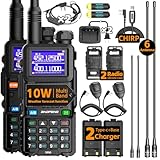

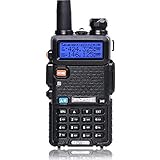
Quick picks by operating situation
| Situation | Best radio type | Practical choice | Typical budget |
|---|---|---|---|
| Lowest-cost introduction | Dual-band handheld | Baofeng UV-5R or similar 5-watt handheld | $25–$80, plus a better antenna and programming cable |
| More robust handheld for regular use | VHF/UHF handheld | Yaesu FT-60R or Icom IC-V86 | $150–$300 |
| Driving, emergency preparation, or local repeaters | 50-watt mobile | Kenwood TM-281A for VHF, or a dual-band mobile | $180–$500, before installation |
| Fixed station with local and digital features | Dual-band mobile used as a base station | Yaesu FTM-500DR or comparable dual-band radio | $450–$800, plus power supply and antenna |
| Long-distance voice and digital contacts | HF transceiver | Icom IC-7300, Yaesu FT-891, or Xiegu G90 | $500–$1,500, plus antenna equipment |
What the bands actually change
“Ham radio” covers several frequency ranges, and each range favors a different kind of communication. VHF, commonly around 144–148 MHz in the United States, and UHF, commonly around 420–450 MHz, are the main bands for handhelds and mobile radios. They are useful for nearby simplex contacts and repeater operation. In normal terrain, a handheld may cover a few miles, while a well-installed mobile or a repeater can extend practical coverage substantially.
HF bands, including 80, 40, 20, 15, and 10 meters, use longer wavelengths and can support contacts hundreds or thousands of miles away. HF requires more antenna planning and is less convenient for casual use. A radio that covers only VHF and UHF cannot replace an HF transceiver simply by transmitting at higher power.
Some radios also support 6 meters, 10 meters, digital voice modes, or receive-only shortwave coverage. Treat these as useful extras rather than substitutes for the bands you actually intend to operate.
Handheld, mobile, or base station?
Handheld radios
A handheld, or HT, is the easiest starting point. It includes a battery, controls, display, and small antenna in one package. Most beginner models transmit at 1–5 watts and support VHF, UHF, or both. They are inexpensive and useful for hiking, public-service events, and repeater access.
The compromise is the antenna. The short flexible antenna supplied with an HT is convenient but inefficient, especially indoors or near your body. A longer replacement antenna can help, but it cannot overcome hills, buildings, or a poorly placed operating position. Battery life is also limited: a 1,800–2,500 mAh battery may provide roughly 6–12 hours of light monitoring and shorter time when transmitting frequently.
Mobile radios
A mobile radio normally draws power from a vehicle or a substantial 12-volt supply and produces approximately 25–75 watts, depending on model and settings. The larger difference is often the antenna: a properly mounted quarter-wave or dual-band antenna on a vehicle roof can outperform a 5-watt HT with a small flexible antenna.
Mobile radios are better for driving, fixed emergency kits, and repeatable local coverage. Installation requires fused power wiring, a suitable mount, coaxial cable, and an antenna designed for the selected bands. A 50-watt radio also creates more electrical noise and heat than an HT, so power and ventilation deserve attention.
Base stations
A base station can be a purpose-built desktop radio or a mobile radio connected to an external power supply. This setup offers the best ergonomics, a larger antenna, and room for accessories. For VHF/UHF, antenna height often matters more than increasing power from 25 to 50 watts.
HF base stations demand the most planning. You may need an antenna tuner, grounding and bonding, lightning protection, feed-line routing, and enough outdoor space for a dipole, vertical, or end-fed antenna. A modest HF radio with a good antenna is generally a better investment than a powerful radio connected to an unsuitable antenna.
Representative radio specifications
| Model or type | Coverage and output | Approximate size and weight | Best fit |
|---|---|---|---|
| Baofeng UV-5R | VHF/UHF; up to about 5 W | About 100 × 52 × 32 mm; roughly 200 g with battery | Budget learning and occasional local use |
| Yaesu FT-60R | VHF/UHF; up to about 5 W | About 110 × 58 × 30 mm; roughly 370 g with battery and antenna | Durable general-purpose HT |
| Icom IC-V86 | VHF; up to about 7 W with suitable battery | About 130 × 60 × 40 mm; roughly 300 g class | VHF-focused users wanting strong handheld output |
| Kenwood TM-281A | VHF; up to about 65 W | About 160 × 43 × 160 mm; roughly 1.2 kg | Vehicle or fixed VHF operation |
| Yaesu FTM-500DR | VHF/UHF; up to about 50 W | About 160 × 40 × 200 mm; roughly 1.3 kg | Feature-rich mobile or base setup |
| Icom IC-7300 | HF and 50 MHz; up to 100 W | About 240 × 95 × 238 mm; roughly 4.2 kg | Fixed-station HF operation |
Dimensions and weights vary with battery, microphone, mounting bracket, and included accessories. Confirm the manufacturer’s specification before building a mounting panel or portable case.
How to match the antenna to the radio
Antenna fit has three parts: frequency, impedance, and installation location. A VHF antenna should be designed for VHF; a UHF antenna should be designed for UHF; and an HF antenna must cover the specific bands you plan to use. Dual-band antennas use matching sections to work across both VHF and UHF.
For a simple quarter-wave antenna, the approximate length in inches is 234 divided by frequency in MHz. At 146 MHz, that gives 1.60 feet, or about 19.2 inches. This is an initial estimate, not a final cutting dimension, because the vehicle body, mounting position, and antenna design alter the result.
Coaxial cable also matters. Very long runs of thin, lossy cable can waste a substantial portion of UHF power. Use quality 50-ohm coax, keep the run as short as practical, protect connectors from water, and check the installation with an SWR meter or antenna analyzer. A high SWR reading can indicate the wrong antenna, a damaged cable, or a poor connector. Do not repeatedly transmit into a badly mismatched antenna.
A simple range and power reality check
Suppose a 5-watt handheld is replaced by a 50-watt mobile. The power increase is 10 times, but radio power is measured logarithmically: 10 times the power is only a 10 dB increase. That can improve the signal margin, but it does not make the range 10 times greater. If both antennas are at the same low height, buildings and terrain may still dominate.
Raising the antenna often produces a larger practical improvement. A handheld used from inside a house may perform poorly, while the same radio connected to an outdoor, properly tuned antenna can work much better at the same power. For local VHF/UHF operation, prioritize antenna placement, height, and clear line of sight before buying the highest-output radio.
Setup steps that prevent common beginner problems
- Obtain the appropriate amateur-radio license and learn the operating privileges for your region before transmitting.
- Program only frequencies, offsets, tones, and modes that you have verified from a current repeater directory or local club.
- Use a programming cable and software when the radio supports them; manual entry is slow and makes tone or offset errors easy.
- Start by monitoring. Confirm that the channel is clear, identify appropriately, and use the minimum power needed for reliable communication.
- Test the antenna and coax before extended transmission. Inspect PL-259, SMA, or other connectors for looseness, corrosion, and damaged center pins.
- Keep spare batteries charged, but replace batteries that swell, become unusually hot, or lose capacity rapidly.
Ownership costs and durability
The radio is often only half of the purchase. A handheld may need a better antenna, programming cable, spare battery, speaker microphone, and drop-in charger. A mobile installation may add $50–$200 for cable, fuse hardware, mount, and antenna, or more if professional installation is required. A base station may need a power supply, coax, antenna supports, grounding equipment, and surge protection.
On frequently used radios, the first wear points are commonly batteries, accessory connectors, control knobs, antenna bases, and microphone cables. Keep radios dry, brush dust from vents and contacts, and avoid storing lithium batteries fully discharged for long periods. Do not seal a high-power mobile radio in an unventilated cabinet.
Final buying recommendation
Choose a dual-band HT if portability and low entry cost matter most, but budget for an improved antenna and spare battery. Choose a mobile radio if you want dependable vehicle coverage or a permanent station. Choose HF only when your goal includes long-distance communication and you are prepared to install an appropriate antenna. Across all three categories, the best ham radios are the ones whose bands, connectors, output, and antenna system match the way and place you will actually operate.