What's inside
- DEWALT DCN680 at a Glance
- What Makes the DEWALT 18 Gauge Brad Nailer Different?
- DEWALT DCN680 Performance: What Do Independent Reviews Say?
- DEWALT DCN680B vs. DCN680D1: Which Should You Buy?
- DEWALT 18 Gauge Brad Nailer Price: What Should You Budget?
- Battery Compatibility and Accessories
- Safety and Maintenance Considerations
- DEWALT DCN680 Alternatives: When Should You Choose Something Else?
- Frequently Asked Questions
- Final Verdict: Should You Buy the DEWALT 18 Gauge Brad Nailer?
As an Amazon Associate I earn from qualifying purchases. This post may contain affiliate links at no extra cost to you.
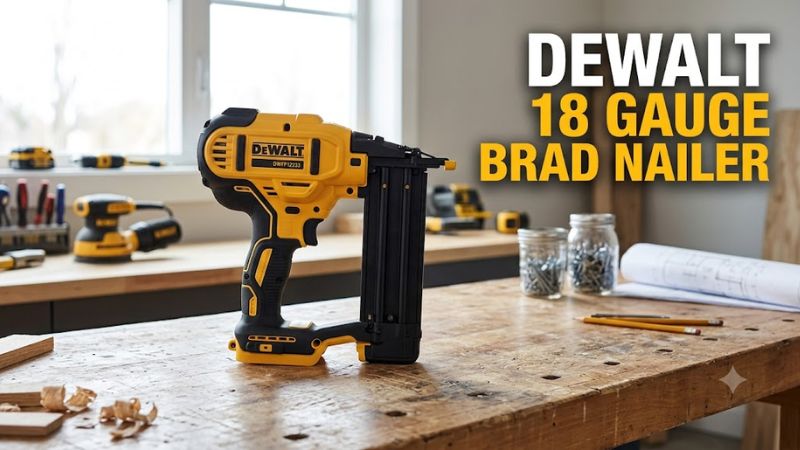
The DEWALT 18 gauge brad nailer DCN680 is a cordless finish-carpentry tool designed for installing trim, molding, shoe molding, and other lightweight woodwork without an air compressor or hose. Its brushless motor, adjustable nail depth, tool-free jam release, and compatibility with DEWALT’s 20V MAX battery platform make it a practical option for contractors and serious DIYers.
Verdict: The DEWALT DCN680 is worth considering if you want cordless convenience, precise nail-depth adjustment, and a nailer that fits into an existing DEWALT 20V MAX tool collection. Its main drawbacks are the initial purchase cost, additional battery weight, and the possibility that a pneumatic nailer will be more economical for a permanently equipped workshop.
This review focuses on the DCN680 cordless 18-gauge brad nailer, particularly the DCN680B bare-tool version and DCN680D1 kit. DEWALT’s product lineup also includes newer nailer models, so check the exact model number before purchasing.
DEWALT DCN680 at a Glance
| Specification | Details |
| Model | DCN680B (bare tool); DCN680D1 (kit) |
| Tool type | Cordless 18-gauge brad nailer |
| Battery platform | DEWALT 20V MAX |
| Nominal voltage | 18V |
| Motor | Brushless |
| Nail type | Straight 18-gauge brad nails |
| Nail length | 5/8–2-1/8 inches (16–54 mm) |
| Depth adjustment | Tool-free |
| Firing modes | Sequential and contact actuation |
| Jam clearing | Tool-free jam-release mechanism |
| Additional features | LED lights, low-nail lockout, stall-release lever, adjustable belt hook |
| Battery and charger | Sold separately with DCN680B; included with DCN680D1 |
| Warranty | DEWALT US listing states a 3-year limited warranty, 1-year free service, and 90-day satisfaction guarantee |
These specifications are based on DEWALT’s product documentation and instruction manual. The 20V MAX designation refers to maximum initial battery voltage without a workload; the nominal voltage is 18V.
What Makes the DEWALT 18 Gauge Brad Nailer Different?
1. Cordless operation without an air compressor
The DCN680 runs on a compatible DEWALT battery rather than compressed air or a gas cartridge. That means fewer hoses and less equipment to move between rooms or job sites.
This setup is especially useful for:
- Installing door and window casing.
- Fitting baseboards and shoe molding.
- Completing trim repairs in occupied homes.
- Building cabinets, shelving, and decorative woodworking projects.
- Working in areas where setting up a compressor would be inconvenient.
The trade-off is that the battery adds weight, and the tool itself represents a larger upfront investment than many pneumatic brad nailers. You also need to keep a charged battery available for uninterrupted work.
2. Brushless motor and adjustable nail depth
DEWALT specifies a brushless motor for the DCN680. Brushless technology can reduce motor maintenance associated with brushes and improve energy efficiency, although actual runtime and service life depend on workload, battery condition, and maintenance.
The tool-free depth-adjustment wheel lets you change how far nails enter the material. This is important when switching between different wood species, trim thicknesses, or finishing requirements.
For example, a nail driven too deeply can leave a larger depression in soft trim, while a nail that does not sit sufficiently below the surface may interfere with filling and painting. Test the setting on scrap material before working on the finished piece.
3. Sequential and contact-actuation firing modes
The DCN680 supports two firing modes:
- Sequential actuation: Position the nailer and fire individual nails for more deliberate placement.
- Contact actuation: Allows faster successive firing when the operating conditions and tool instructions permit it.
For decorative molding, delicate trim, and detailed woodworking, sequential actuation is generally the more appropriate starting point because it encourages deliberate nail placement. Contact actuation prioritizes speed and requires particularly careful control of the tool.
Always follow the manual’s operating instructions, keep the nose pointed away from people, and engage the trigger lock-off when the tool is not in immediate use.
4. Tool-free jam release and stall release
A jam can interrupt trim work, particularly when nails are bent, incorrectly loaded, or unsuitable for the tool.
The DCN680 includes a tool-free jam-release mechanism and a separate stall-release lever. These features help the operator address certain interruptions without immediately needing a service visit.
They do not mean every jam can be cleared safely without inspection. Before clearing a jam, adjusting the tool, or servicing it, engage the trigger lock-off, remove the battery, and unload the magazine as directed by the manual.
5. LED lights and low-nail lockout
The built-in LED lights help illuminate the work area and provide diagnostic indications. The low-nail lockout prevents the nailer from cycling when the magazine runs out of fasteners, reducing unwanted dry firing and marks on the workpiece.
These are useful supporting features, but neither replaces careful alignment, appropriate lighting, or checking the fastener supply before starting a job.
DEWALT DCN680 Performance: What Do Independent Reviews Say?
The DCN680 has received favorable independent assessments, particularly for trim work and depth adjustment. However, published reviews are not a substitute for testing the exact tool configuration you intend to purchase.
Independent review evidence
- Bob Vila: A 2023 review reported firing more than 200 brads of varying lengths into oak, ash, and pine. The reviewer praised the nailer’s depth adjustment and operating features, while identifying its weight and LED-light positioning as drawbacks. The tested configuration was the DCN680D1 kit.
- Tool Box Buzz: An earlier comparative test reported successful brad installation in maple, oak, mahogany, and ipe. The reviewer noted side-to-side movement at the tool head that could affect placement consistency. These observations reflect that test’s conditions, not a guarantee of results in every application.
Together, these reviews support the DCN680 as a capable trim and woodworking nailer, but they also show why handling and placement precision should be considered alongside advertised features.
Is it suitable for hardwood?
It can be suitable for many hardwood trim and woodworking applications, as the independent reviews demonstrate. However, results depend on the wood species, density, thickness, nail length, and required joint.
Test the nailer on offcuts from the actual project. Check whether nails seat consistently without splitting the material or leaving excessive surface damage. Do not assume that every combination of hardwood and maximum-length brad will produce the same result.
Is it fast enough for professional work?
The DCN680 offers contact-actuation mode, but the existence of that mode does not establish a specific nails-per-minute rate. No universal firing-rate or runtime figure should be assumed without a documented test under defined conditions.
For intermittent trim installation and work spread across several rooms, cordless convenience may matter more than maximum firing speed. For continuous, high-volume production in a fixed workshop, compare the DCN680 against a suitable pneumatic nailer using your actual workload.
DEWALT DCN680B vs. DCN680D1: Which Should You Buy?
The two model numbers describe different purchase configurations of the same DCN680 nailer platform.
| Feature | DCN680B | DCN680D1 |
| Purchase format | Bare tool | Kit |
| Nailer | Included | Included |
| Battery | Not included | One 2.0Ah battery |
| Charger | Not included | One charger |
| Best for | Existing compatible battery owners | Buyers who need a battery and charger |
| Main consideration | Additional battery and charging costs | Higher package cost and a small-capacity included battery |
DEWALT confirms the contents of both configurations in its US product listings. Confirm the package contents on the actual retailer listing before ordering, since bundled accessories and regional packages can differ.
Choose the DCN680B if you already own compatible DEWALT 20V MAX batteries and a charger. This avoids paying for equipment you already have.
Choose the DCN680D1 if you need a complete starter package. Its included 2.0Ah battery is convenient for getting started, but consider whether you need a spare battery or a higher-capacity compatible pack for extended work.
DEWALT 18 Gauge Brad Nailer Price: What Should You Budget?
The right price comparison depends on whether you are buying the DCN680B bare tool or the DCN680D1 kit. A bare-tool price is not directly comparable to a kit that includes a battery and charger.
I could not verify a current US selling price for either configuration with a sufficiently reliable, date-specific listing for this review. Rather than publish a potentially outdated deal as today’s price, use the following checklist when comparing offers.
| Cost factor | What to check |
| Bare-tool price | Confirm the listing explicitly identifies DCN680B |
| Kit price | Confirm the listing identifies DCN680D1 and includes the stated battery and charger |
| Additional battery | Include the cost if you need longer working sessions |
| Brad nails | Budget for compatible 18-gauge fasteners |
| Warranty | Verify the seller, purchase region, and warranty eligibility |
| Used or refurbished tool | Check the magazine, nose assembly, firing mechanism, battery contacts, and return policy |
Is the cordless design worth the extra cost?
It depends on how often you work away from a compressor.
The DCN680 can be a sensible investment for contractors, remodelers, and DIYers who frequently move between rooms or job sites. Existing DEWALT battery owners may also find the bare-tool purchase more economical.
On the other hand, a pneumatic nailer may offer better value for someone who already owns a compressor, hose, and suitable fittings. If you only install trim occasionally, compare the complete cost of each setup rather than focusing on the nailer’s sticker price alone.
Battery Compatibility and Accessories
The DCN680 belongs to DEWALT’s 20V MAX cordless platform. Its compatibility should still be checked against the exact battery and charger model rather than inferred solely from brand name or physical fit.
Before buying, verify the following:
- Battery: Use a compatible DEWALT 20V MAX battery specified for the tool.
- Charger: Confirm that your charger supports the battery pack you intend to use.
- Brad nails: Use straight 18-gauge brads within the manufacturer’s specified 5/8–2-1/8-inch length range.
- Fastener dimensions: Confirm the nails’ gauge, length, and other required dimensions against the manual.
- Replacement parts: Match parts to the exact DCN680 model and applicable revision.
An incompatible fastener can cause feeding problems, jams, inconsistent nail depth, or damage. Do not assume every product marketed as an 18-gauge brad nail is suitable.
Safety and Maintenance Considerations
A cordless nailer can cause serious injury if it fires unexpectedly or is pointed toward a person. Its convenience does not reduce the need for careful handling.
Follow these precautions:
- Wear appropriate eye and hearing protection as directed by the manufacturer’s instructions and your working conditions.
- Keep your hands and other body parts away from the nose and potential nail exit points.
- Engage the trigger lock-off when the tool is not in immediate use.
- Remove the battery and unload the magazine before adjustments, jam clearing, or servicing, following the manual’s procedure.
- Inspect the contact trip and related mechanisms before operation. Do not use the tool if a safety mechanism is damaged or not functioning properly.
- Keep the nailer clean, inspect it for damage, and store it with the battery removed.
Never bypass the contact trip or another safety mechanism to speed up work. If a jam cannot be cleared using the documented procedure, stop and consult qualified service personnel.
DEWALT DCN680 Alternatives: When Should You Choose Something Else?
The DCN680 is not necessarily the best choice for every user. The right alternative depends on the materials, workload, and equipment already available.
| Alternative | Better suited to | Main trade-off |
| Pneumatic 18-gauge brad nailer | Fixed workshops with an existing compressor | Requires an air hose and compressor |
| DEWALT pneumatic 18-gauge brad nailer, such as the DWFP12233 | Users prioritizing a pneumatic setup | Requires compatible compressed-air equipment |
| DEWALT DCN210 cordless brad nailer | Buyers comparing DEWALT’s newer cordless nailer lineup | Check its exact specifications, package, price, and compatibility before choosing |
DEWALT lists both the DWFP12233 pneumatic nailer and the DCN210 cordless nailer in its brad-nailer range. They are alternatives to investigate, not proof that one model outperforms another in every application.
Choose the DCN680 when you value its established feature set and cordless operation. Compare the DCN210 directly if buying new, particularly if you want to understand the differences between DEWALT’s older and newer cordless options.
Frequently Asked Questions
1. What size nails does the DEWALT DCN680 use?
The DEWALT DCN680 uses straight 18-gauge brad nails measuring 5/8 to 2-1/8 inches long (16–54 mm). Confirm the required fastener dimensions in the instruction manual before loading the magazine.
2. Does the DEWALT 18 gauge brad nailer need an air compressor?
No, the cordless DCN680 does not require an air compressor, hose, or gas cartridge. It operates using a compatible DEWALT 20V MAX battery, which makes it convenient for mobile trim work.
3. Is the DEWALT DCN680 worth buying for DIY projects?
Yes, it can be worth buying if you regularly install baseboards, casing, shoe molding, or decorative trim and want cordless convenience. For occasional projects, a less expensive pneumatic nailer may be more economical if you already own a compressor.
4. What is the difference between the DEWALT DCN680B and DCN680D1?
The DCN680B is the bare-tool configuration, while the DCN680D1 kit includes the nailer, a 2.0Ah battery, and a charger. Compare the complete package cost and any accessories included in the seller’s listing before deciding.
Final Verdict: Should You Buy the DEWALT 18 Gauge Brad Nailer?
The DEWALT DCN680 is a strong candidate for buyers who want a cordless 18-gauge brad nailer for finish carpentry, remodeling, and detailed woodworking. Its brushless motor, tool-free depth adjustment, jam-release mechanism, selectable firing modes, and low-nail lockout make it a versatile option for these jobs.
Its biggest advantage is convenience rather than a demonstrated universal performance advantage over every competing nailer. The extra weight and cost of a cordless setup may be difficult to justify if your work takes place almost entirely in a workshop with an existing compressor.
Buy the DCN680B if you already have compatible DEWALT 20V MAX batteries and a charger. Consider the DCN680D1 kit if you need both. Before purchasing either, compare its current price with the newer DCN210 and suitable pneumatic alternatives.
For most buyers, the decision comes down to one question: will eliminating the air hose and compressor make your regular work sufficiently easier to justify the cost?