
What's inside
- DEWALT DCS380N-XJ: Quick Review
- What Does the DEWALT DCS380N Offer?
- Cutting Performance: What Can You Expect?
- Is the DEWALT 18V Reciprocating Saw Comfortable to Use?
- DEWALT 18V Battery Compatibility
- DEWALT 18V Reciprocating Saw Price: Is It Good Value?
- Best Alternatives to the DEWALT DCS380N
- Advantages and Disadvantages
- Safety and Maintenance Considerations
- Who Should Buy the DEWALT DCS380N?
- Frequently Asked Questions
- Final Verdict: Should You Buy the DEWALT 18V Reciprocating Saw?
As an Amazon Associate I earn from qualifying purchases. This post may contain affiliate links at no extra cost to you.
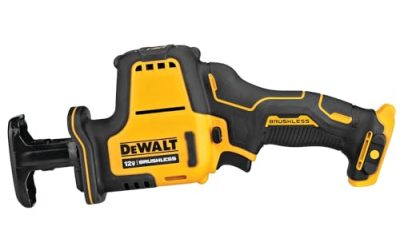
The DEWALT 18V reciprocating saw is worth considering if you need a cordless cutting tool for renovation, demolition, plumbing, or general construction work. However, choosing the right model matters because DEWALT sells several reciprocating saws under its 18V XR platform, including traditional full-size and compact brushless versions.
This review focuses primarily on the DEWALT DCS380N-XJ 18V XR reciprocating saw, a full-size model designed for cutting wood, metal, plastic, and pipes. It examines its specifications, features, limitations, battery compatibility, and price to help determine whether it represents good value.
One important distinction: DEWALT’s 18V XR designation is used in international markets, while its corresponding North American cordless platform is marketed as 20V MAX. These are nominally equivalent voltage classes, but buyers should always verify the exact regional model and battery compatibility rather than relying on the voltage label alone.
Best suited to existing DEWALT 18V XR owners
DEWALT DCS380N-XJ: Quick Review
The DCS380N-XJ is a practical choice for users who want a conventional reciprocating saw with variable-speed control, a relatively long cutting stroke, and a four-position blade clamp.
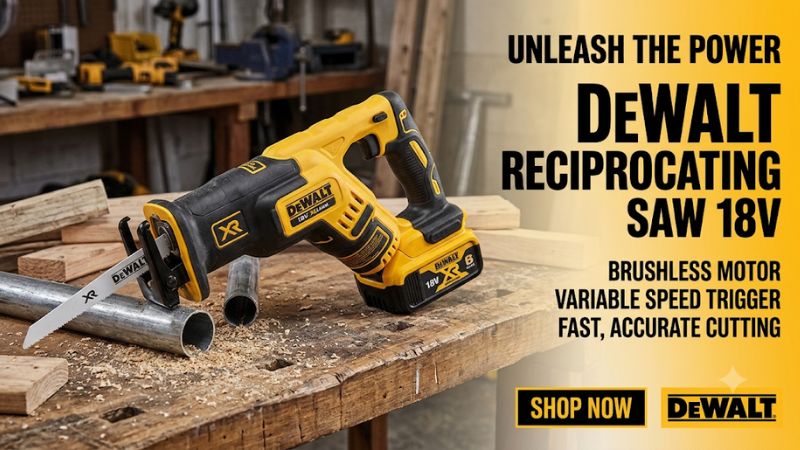
Its main advantage is versatility. Instead of being limited to one cutting direction, the adjustable blade position helps users approach materials from different angles and perform flush cuts where the workpiece allows.
However, this is a brushed-motor model rather than a newer brushless design. Buyers prioritizing maximum efficiency, compact handling, or extended heavy-duty use should also consider DEWALT’s newer alternatives.
| Category | DEWALT DCS380N-XJ |
| Product type | Cordless reciprocating saw |
| Battery platform | 18V XR |
| Motor | Brushed |
| No-load stroke rate | 0–2,950 strokes per minute |
| Stroke length | 28.6 mm |
| Maximum wood cutting capacity | 300 mm |
| Maximum steel section and pipe capacity | 130 mm |
| Maximum PVC cutting capacity | 160 mm |
| Blade clamp | Four-position, tool-free |
| Speed control | Variable-speed trigger |
| Shoe | Pivoting adjustable shoe |
| Tool length | 425 mm |
| Tool height | 195 mm |
| Tool-only weight | Approximately 2.7 kg |
| Package | Bare-tool version; battery and charger excluded |
Specifications refer to the international DCS380N-XJ configuration. Weight and cutting capacities should be checked against the regional product documentation and supplied configuration.
What Does the DEWALT DCS380N Offer?
1. Variable-speed cutting performance
The DCS380N uses a variable-speed trigger with a maximum no-load stroke rate of 2,950 strokes per minute (SPM).
This gives users control over how aggressively the blade moves through different materials. A slower trigger response can help establish a cut, while increasing speed can support faster material removal once the blade is tracking correctly.
Its 28.6 mm stroke length is another important specification. A longer stroke moves more of the blade through the workpiece during each cycle, which can help remove material efficiently. However, actual cutting speed also depends on blade tooth geometry, material thickness, battery condition, and how firmly the shoe is supported.
The DCS380 is suitable for general demolition and maintenance, but its brushed motor and lack of orbital cutting action are limitations compared with newer reciprocating saws.
2. Four-position blade clamp
One of the most useful features is the four-position blade clamp.
The blade can be installed in different orientations, including upside down, allowing users to approach certain cuts from above, below, or the side.
This is particularly useful when:
- Cutting pipes close to walls or floors.
- Removing sections of timber during renovation.
- Working around framing and existing installations.
- Performing flush cuts where conventional blade positioning is difficult.
The lever-action clamp also allows tool-free blade changes. This is convenient for users who regularly switch between wood-cutting and metal-cutting blades.
However, the blade must be correctly secured before operation. Always disconnect the battery before installing or removing accessories.
3. Pivoting adjustable shoe
The adjustable shoe supports the front of the saw against the workpiece.
This feature matters because reciprocating saws generate considerable back-and-forth movement. Without stable contact, the tool can become difficult to control, especially when starting a cut or working with irregular materials.
The pivoting design helps maintain contact as the cutting angle changes. Its adjustable position also allows users to expose different sections of the blade, helping distribute blade wear.
The shoe should remain properly installed during operation. Never use the saw without its designated shoe.
4. Motor and durability
The DCS380N uses a brushed motor.
Brushed motors are generally simpler than brushless designs, but their carbon brushes are wear components that eventually require servicing or replacement. They also produce friction and electrical losses that brushless motors avoid.
For occasional demolition, household repairs, and general maintenance, this does not automatically make the DCS380 a poor purchase.
However, contractors who operate reciprocating saws frequently may benefit from a brushless model with improved efficiency and a more modern design.
The DCS380 also lacks the orbital action found on some competing reciprocating saws. Consequently, buyers looking for aggressive wood demolition performance should compare other models before purchasing.
Cutting Performance: What Can You Expect?
A reciprocating saw is primarily a practical demolition and rough-cutting tool. It is not designed to replace a circular saw, jigsaw, or dedicated metal-cutting saw when precision and clean finishes are essential.
The DCS380’s specifications make it suitable for several common applications.
| Application | Suitability | Recommended blade |
| Cutting timber | Good | Coarse-tooth wood blade |
| Removing wooden framing | Good | Demolition blade |
| Cutting PVC pipes | Good | Fine-to-medium tooth blade |
| Cutting steel pipes | Good with correct setup | Bi-metal metal-cutting blade |
| Cutting metal sections | Suitable within capacity | Metal-specific blade |
| Precision woodworking | Limited | A dedicated precision saw is preferable |
These are application recommendations, not independently measured performance rankings.
Cutting wood
The advertised maximum wood cutting capacity is 300 mm. This describes the manufacturer’s stated capacity, not a guarantee that every 300 mm timber cut will be fast or easy.
Blade selection makes a substantial difference. A demolition blade with larger teeth is generally more appropriate for rough timber removal, while a finer blade may produce better control in thinner materials.
For faster demolition, the DCS380’s lack of orbital action is worth considering. A reciprocating saw with orbital action can provide more aggressive cutting in suitable wood applications.
Cutting metal and pipes
The manufacturer lists a maximum cutting capacity of 130 mm for steel sections and pipes.
Metal cutting requires a suitable blade, controlled feed pressure, and secure workpiece support. Using an unsuitable wood blade can cause premature tooth wear and poor cutting performance.
For thicker metal, a blade specifically designed for the material and thickness is essential. Avoid forcing the saw through the workpiece if cutting progress slows.
Cutting plastic and PVC
The listed maximum PVC cutting capacity is 160 mm.
This makes the saw useful for plumbing modifications, pipe removal, and renovation work. A suitable plastic-cutting blade helps reduce snagging and excessive vibration.
Before cutting installed pipes, confirm what they contain and whether nearby electrical wiring, gas lines, or other services could be affected.
Is the DEWALT 18V Reciprocating Saw Comfortable to Use?
The DCS380N has a traditional full-size reciprocating saw design. Its 425 mm length provides room for a conventional two-handed grip, but it is not the most compact option for confined spaces.
At approximately 2.7 kg without a battery, the tool has a noticeable weight before a battery is attached. The complete working weight will increase according to the battery model and capacity.
This matters during overhead cutting, ladder work, and extended demolition sessions.
A larger battery may offer more energy capacity, but it also adds weight. A smaller compatible battery can make the tool easier to handle for short jobs, although runtime may be reduced.
The DCS380 also has relatively high vibration during operation. Independent testing by Pro Tool Reviews identified vibration control as one of its major weaknesses compared with competing reciprocating saws. Its testing also highlighted that the saw remained capable in metal-cutting applications, despite its older design.
Pro Tool Reviews
For anyone who regularly performs long cutting sessions, vibration and fatigue should be important purchasing considerations.
DEWALT 18V Battery Compatibility
The DCS380N-XJ belongs to the DEWALT 18V XR cordless platform.
If you already own compatible DEWALT 18V XR batteries and chargers, purchasing the bare-tool version can reduce the initial investment.
However, battery compatibility should be checked using the exact tool and battery model numbers. Do not assume that every DEWALT battery fits every cordless product.
There is also an important regional distinction:
- 18V XR: The nominal voltage designation used in many international markets.
- 20V MAX: DEWALT’s marketing designation for its corresponding North American platform.
The 18V and 20V MAX labels describe equivalent nominal voltage classes, rather than two completely different operating-voltage categories. Nevertheless, regional product variants, battery interfaces, and charger requirements must be verified.
Should you buy the bare tool or a battery kit?
| Buyer situation | Better purchase |
| Already owns compatible 18V XR batteries | Bare tool |
| Starting a DEWALT cordless collection | Battery kit |
| Needs an additional battery for longer jobs | Appropriate battery bundle |
| Uses several cordless tools regularly | Bare tool may offer better value |
The DCS380N-XJ is supplied as a bare tool. Its standard package includes the reciprocating saw, not a battery or charger. Check the exact retailer package before ordering because model suffixes and regional bundles can differ.
DEWALT 18V Reciprocating Saw Price: Is It Good Value?
Price is one of the most important factors when evaluating the DCS380N-XJ because it is an older brushed-motor design competing with newer brushless alternatives.
The following prices are observed UK retail listings, not universal manufacturer recommended prices.
UK RETAIL PRICE CHECK — NOVEMBER 13, 2026
| Model | Configuration | Observed price |
| DEWALT DCS380N-XJ | 18V XR, brushed, bare tool | £139.98 |
| DEWALT DCS382N | 18V XR, brushless, bare tool | £129.99 |
| DEWALT DCS369N-XJ | 18V XR compact, bare tool | £159.99 |
| DEWALT DCS367N-XJ | 18V XR brushless compact, bare tool | £189.99 |
Prices were listed by Toolstation and may change with promotions, availability, and retailer location. All four prices refer to tool-only configurations, not complete battery kits.
Toolstation
Is the DCS380 worth its asking price?
At approximately £140, the DCS380 is difficult to recommend over the newer DCS382N, which was listed at a lower price in the same retailer’s catalogue.
The DCS382N offers several meaningful improvements:
- Brushless motor technology.
- Maximum no-load stroke rate of 3,200 SPM.
- 28.6 mm stroke length.
- Maximum advertised cutting capacities of 300 mm in wood, 130 mm in steel sections and pipes, and 160 mm in PVC.
- Approximately 2.3 kg tool-only weight.
These specifications make the DCS382N a particularly attractive alternative for buyers who want a full-size reciprocating saw.
DEWALT+1
The DCS380 becomes more attractive when purchased at a substantial discount, particularly if the buyer already owns compatible batteries and needs a straightforward demolition saw.
Best Alternatives to the DEWALT DCS380N
Before making a purchase, consider these three alternatives.
1. DEWALT DCS382N – Best overall alternative
Best value alternative
The DCS382N is a newer brushless reciprocating saw designed for users who want stronger specifications without moving away from the 18V XR battery ecosystem.
Its maximum stroke rate of 3,200 SPM is higher than the DCS380’s 2,950 SPM. It also has a brushless motor and a tool-only weight of approximately 2.3 kg.
Buy it if: You want a full-size DEWALT reciprocating saw for frequent renovation, plumbing, and construction work.
Skip it if: You specifically need the DCS380’s configuration or find the older model at a significantly lower price.
2. DEWALT DCS367N-XJ – Best compact option
The DCS367N-XJ is a brushless compact reciprocating saw.
It measures approximately 363 mm long and weighs around 2.3 kg without a battery. Its 2,900 SPM maximum stroke rate and four-position blade clamp make it suitable for work in confined areas.
Its smaller body is particularly useful when cutting between studs or accessing awkward sections of an existing installation.
Buy it if: You frequently work in tight spaces or need easier handling during overhead jobs.
Skip it if: You prefer a traditional full-size saw for larger demolition tasks.
DEWALT+1
3. DEWALT DCS369N-XJ – Best one-handed compact design
The DCS369N-XJ is another compact option within the 18V XR family.
Its smaller format is designed for situations where maneuverability matters more than having the handling characteristics of a full-size reciprocating saw.
It is worth considering for lighter cutting tasks, particularly where access is restricted.
Buy it if: Your work involves frequent cuts in confined locations and you prioritize compact handling.
Skip it if: You regularly cut large timber sections or undertake demanding demolition work.
Advantages and Disadvantages
Advantages
- Versatile cutting: Suitable for wood, metal, plastic, and pipe-cutting applications.
- Four-position blade clamp: Provides flexibility for different cutting orientations.
- Variable-speed trigger: Helps control cutting speed according to the material and application.
- Adjustable shoe: Supports the blade and provides greater flexibility when positioning the tool.
- 18V XR compatibility: A practical addition to an existing compatible DEWALT battery collection.
- Tool-free blade changes: Makes switching between cutting applications more convenient.
Disadvantages
- Brushed motor: Less efficient than newer brushless alternatives.
- Noticeable vibration: Can contribute to fatigue during extended cutting sessions.
- No orbital action: Less aggressive for certain wood-demolition applications.
- Full-size design: Not ideal for every confined workspace.
- Battery sold separately: The bare-tool package requires an existing compatible battery and charger or an additional purchase.
- Price competition: Newer DEWALT alternatives may offer better value at similar or lower prices.
Safety and Maintenance Considerations
A reciprocating saw is a powerful cutting tool, and its back-and-forth blade movement creates risks that should not be overlooked.
Follow these precautions when operating the DCS380:
- Wear appropriate eye protection, hearing protection, and task-specific protective equipment.
- Secure the workpiece before cutting, particularly when working with pipes or metal sections.
- Check the cutting area for concealed electrical cables, plumbing, and other services.
- Select a blade appropriate for the material and thickness.
- Ensure the blade extends beyond the shoe and completely through the workpiece during the cutting stroke.
- Maintain a firm two-handed grip and keep the shoe supported against the workpiece.
- Remove the battery before changing blades, cleaning the tool, or performing adjustments.
- Allow the blade to cool before handling it after demanding cuts.
The manufacturer’s DCS380 instructions specifically warn against using blades that are too short and identify the risk of blade breakage. They also advise against using jigsaw blades with the reciprocating saw.
WebstaurantStore+1
For maintenance, regularly inspect the blade clamp, shoe, housing, battery contacts, and ventilation openings. Remove accumulated dust and debris without introducing moisture into the motor or electrical components.
Replace damaged blades and have worn internal components serviced by qualified technicians.
Who Should Buy the DEWALT DCS380N?
The DCS380N-XJ is most suitable for buyers who need a straightforward cordless reciprocating saw and already have compatible DEWALT 18V XR batteries.
It makes sense for:
- DIY enthusiasts handling occasional home renovation.
- Maintenance workers removing old pipes and damaged timber.
- Contractors needing an additional cutting tool.
- DEWALT users looking for an inexpensive second saw when discounted.
However, it is less attractive for professionals who regularly perform demanding demolition work.
If you prioritize brushless efficiency, lower tool weight, and more modern performance specifications, the DCS382N is the stronger purchasing candidate.
If your primary concern is working in confined spaces, the DCS367N-XJ is worth considering instead.
Frequently Asked Questions
1. Is the DEWALT DCS380 a brushless reciprocating saw?
No. The DCS380 uses a brushed motor. Buyers who specifically want a brushless DEWALT 18V XR reciprocating saw should consider the DCS382N or DCS367N.
2. Does the DEWALT DCS380 come with a battery and charger?
No. The DCS380N-XJ bare-tool package does not include a battery or charger. Both must be purchased separately unless the retailer offers a different bundled configuration.
3. Is a DEWALT 18V reciprocating saw compatible with 20V MAX batteries?
Not automatically. Although 18V XR and 20V MAX represent equivalent nominal voltage classes, compatibility depends on the exact regional tool and battery configuration. Check the manufacturer’s compatibility documentation before purchasing or attempting to use another battery.
4. Is the DEWALT DCS380 better than the DCS382?
For most buyers choosing between similarly priced new tools, the DCS382N is the better option. Its brushless motor, higher maximum stroke rate, and lower tool-only weight make it a more appealing choice than the older DCS380.
Final Verdict: Should You Buy the DEWALT 18V Reciprocating Saw?
The DEWALT DCS380N-XJ remains a capable cordless reciprocating saw for general demolition, plumbing, renovation, and maintenance work. Its variable-speed trigger, four-position blade clamp, adjustable shoe, and 28.6 mm stroke length provide useful versatility.
However, its brushed motor, vibration characteristics, and older design make it less competitive against newer DEWALT models.
Our recommendation: Consider the DCS380 if you find it at a genuinely attractive discount and already own compatible 18V XR batteries. At prices close to the newer DCS382N, the brushless alternative offers better overall purchasing value.
For most buyers starting a new DEWALT reciprocating saw purchase, the DCS382N is the more sensible investment. If compact handling is your priority, consider the DCS367N-XJ instead.
Ultimately, choose based on the materials you cut, how frequently you use the tool, and the battery platform you already own—not simply the DEWALT name or advertised stroke rate.
Related guides
More from Amazon
Programs that pair well with the guide above. Offers and eligibility are set by Amazon and may change.
A free business account with business pricing and bulk-buying tools for work, shop or home office.
Create a business accountFree shipping on eligible items, Prime Video and more. Eligible new members can start with a free trial.
Start a Prime free trialAudiobooks and podcasts to listen to on the go. Eligible new members can start with a free trial.
Try Audible freeAd-free music streaming. Eligible new subscribers can start with a free trial.
Try Music Unlimited freeAs an Amazon Associate we earn from qualifying purchases.

Write Your Review
No reviews yet. Be the first to share your experience!