
Our Top Picks


What's inside
- Top Picks at a Glance
- Comparison Table
- 1. Evolution S185CCSL: Best Overall Metal-Cutting Saw
- 2. DEWALT DCS383B: Best Cordless Metal-Cutting Circular Saw
- 3. SKILSAW Outlaw SPT78MMC-01: Best Premium Worm-Drive Metal Saw
- 4. Evolution S355CPSL: Best Chop Saw for Heavy Stock
- 5. VEVOR 7-1/4 in. Cold-Cut Chop Saw: Best Budget Cold-Cut Saw
- 6. DEWALT DCS374B: Best Cordless Band Saw
- 7. WEN BA4664: Best Benchtop Metal Band Saw
- Also Consider
- How to Cut Corrugated Metal Roofing and Panels
- Quick Decision Guide by Metal Type
- Blade and Wheel Care for Metal Saws
- How We Chose
- Buying Guide: Choosing a Metal-Cutting Saw
- Common Mistakes
- Frequently Asked Questions
- Which One Should You Buy?
- Sources
As an Amazon Associate I earn from qualifying purchases. This post may contain affiliate links at no extra cost to you.
The best saw for cutting metal depends on the job: a dedicated metal-cutting circular saw such as the Evolution S185CCSL is the best all-round choice for steel studs, angle iron and sheet, a 5 in. band saw such as the DEWALT DCS374B is best for pipe and tube, and a 14 in. chop saw is best for repeat cuts on heavier stock. This guide to the best saws for cutting metal also covers what to use for corrugated metal roofing and panels, and the blade and safety rules that matter more than the brand name on the saw.
Cutting metal with the wrong saw is slow at best and dangerous at worst. A wood circular saw spins too fast, a standard wood blade will lose teeth in steel, and an abrasive wheel throws sparks across the shop. The saws below are built for metal. Each pick is a real model from the store catalogue, with specs limited to what the listings and manufacturer pages state, and anything unverified is marked as not listed.
As an Amazon Associate we earn from qualifying purchases at no extra cost to you.


Top Picks at a Glance
- Best Overall: Evolution S185CCSL 7-1/4 in. metal-cutting circular saw
- Best Cordless Circular: DEWALT DCS383B 20V MAX XR 7-1/4 in. metal-cutting circular saw (tool only)
- Best Premium Worm Drive: SKILSAW Outlaw SPT78MMC-01 8 in. metal-cutting saw
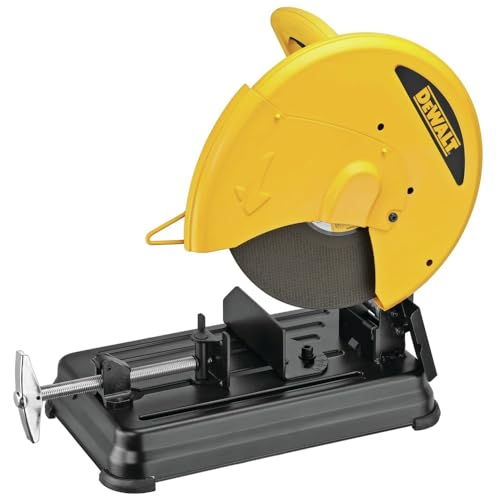
- Best Chop Saw for Heavy Stock: Evolution S355CPSL 14 in. metal-cutting chop saw
- Best Budget Cold-Cut Saw: VEVOR 7-1/4 in. cold-cut chop saw
- Best Cordless Band Saw: DEWALT DCS374B 20V MAX 5 in. band saw (bare tool)
- Best Benchtop Band Saw: WEN BA4664 metal band saw with stand
Comparison Table
| Product | Best for | Key specs | Watch for | Price tier |
|---|---|---|---|---|
| Evolution S185CCSL | Steel studs, angle, plate | 7-1/4 in., 15 A, 3,700 RPM no load, 2-1/2 in. depth at 90 degrees, 11.4 lb | Corded; sparks are low but chips are hot | Mid-range |
| DEWALT DCS383B | Cordless metal sheet and framing | 20V MAX XR, 7-1/4 in., tool only | Battery sold separately; other specs not listed | Premium |
| SKILSAW SPT78MMC-01 | Heavy, repeated metal cuts | 15 A, 8 in., worm drive | Heavy and costly | Premium |
| Evolution S355CPSL | Square and mitred cuts in tube and angle | 14 in. carbide-tipped blade, dry cut, 45 degree miter | Large footprint; needs a bench | Premium |
| VEVOR 7-1/4 in. cold-cut | Light steel on a budget | 1,200 W, 4,000 r/min, 0-45 degree angle, stainless cold-cut blade | Less established support | Budget |
| DEWALT DCS374B | Pipe, conduit, threaded rod | 20V MAX, 5 in. cutting capacity | Bare tool; battery separate | Premium |
| WEN BA4664 | Shop cutting of bar and tube | Metal band saw with stand | Other specs not listed; large item | Mid-range |
1. Evolution S185CCSL: Best Overall Metal-Cutting Saw
- Blade: 7-1/4 in. 40-tooth mild steel TCT blade included, 20 mm bore, 0.078 in. kerf (per the maker and retailer spec pages)
- Motor: 15 amp, 120V, 3,700 RPM no load
- Depth of cut: 2-1/2 in. at 0 degrees, 1-3/8 in. at 45 degrees
- Weight: about 11.4 lb; 10 ft cord; 45 degree bevel
- Rated capacities: mild steel plate to 5/16 in. and box section to 1/8 in. wall
- Warranty: three years, per the maker
Best for: metal framers, fence and gate builders, and DIYers who cut steel studs, angle iron, strut and sheet. Skip if: you only cut metal once; a rented tool or a grinder with a cut-off wheel may be enough.
Metal-cutting circular saws run slower than wood saws. At 3,700 RPM no load, this saw spins at roughly two thirds of a typical 5,300 RPM wood saw. A slower blade speed keeps the carbide teeth from overheating, and the toothed blade removes chips that are cool enough to touch within a moment, though they can still be hot at the moment they fly. The saw also cuts without the shower of sparks you get from an abrasive wheel. That makes it much easier to cut in a garage, though you still need eye protection and clear space around you.
The 11.4 lb weight is a fair amount to carry, and the saw is not designed for wood. The advantage of a dedicated metal saw is that it makes a burr-light, straight edge. Clamp the work, mark the line, and feed steadily. Do not force it; if the saw slows, back off and let it recover.
Pros: low-spark cutting; included mild steel blade; solid depth of cut; multi-year warranty. Cons: corded; heavy; wrong for wood; thick plate is beyond its rated capacity.
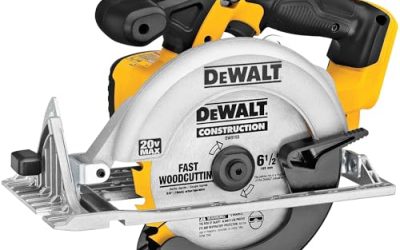
2. DEWALT DCS383B: Best Cordless Metal-Cutting Circular Saw
- Platform: 20V MAX XR, sold as tool only
- Blade size: 7-1/4 in., metal cutting
- Other specs, such as no-load speed and cut depth, are not listed in the title
Best for: roofing, HVAC and steel framing jobs where there is no outlet nearby and you already own DEWALT 20V batteries. Skip if: you need to buy a battery and charger only for this saw.
A cordless metal saw solves a big on-site problem: dragging a cord across a roof deck or through dusty framing. Metal cutting draws a lot of current, so a battery with a higher amp-hour capacity will help runtime. Because the listing names fewer specs, check DEWALT’s manual before you buy a blade, and make sure any replacement blade matches the saw’s arbor and rated speed.
As with all metal saws, keep your free hand away from the line of cut. Hot chips can land on skin and clothing, so long sleeves and safety glasses are sensible.
Pros: cordless freedom; platform battery sharing; dedicated metal design. Cons: bare tool; premium cost; many specs not listed.
3. SKILSAW Outlaw SPT78MMC-01: Best Premium Worm-Drive Metal Saw
- Motor: 15 amp
- Blade: 8 in., metal cutting
- Type: worm drive
- Weight and depth of cut: not listed in the title
Best for: contractors and fabricators who make many cuts in steel stud, strut and sheet every day. Skip if: you are a casual user; the cost and weight are hard to justify.
Worm-drive saws use a gear arrangement that puts torque at the blade rather than at the motor, which is why they are popular for heavy work. The saw sits long and narrow and is typically heavier than a sidewinder, so it feels steadier on long straight cuts and less lively on short ones. The 8 in. blade gives a bit more depth than a 7-1/4 in. saw.
Replacement blades matter here. Keep metal blades in good condition and replace any blade with missing or chipped teeth immediately. Check the maker’s manual for the correct blade type and arbor size.
Pros: torque-oriented drive; larger blade; built for steady production work. Cons: premium cost; heavy; specs partly unlisted.
4. Evolution S355CPSL: Best Chop Saw for Heavy Stock
- Blade: 14 in. carbide-tipped, dry cut
- Miter: 45 degrees
- Type: heavy-duty metal-cutting chop saw
- Other specs, such as motor rating and weight, are not listed here
Best for: shop cutting of square tube, angle, channel and bar to length, again and again. Skip if: you need a portable saw to carry up a ladder.
A chop saw has a fixed vise and a pivoting arm, so every cut lands in the same place. That repeatability is hard to match with a hand-held saw. A carbide-tipped blade running dry avoids the cloud of abrasive dust from a cut-off wheel and leaves a cleaner edge. The cut is clean, but the freshly cut end is hot, so let it cool before handling.
Always clamp the work in the vise, keep the guard in place and stay out of the line of the blade. Cut with steady, unhurried pressure. Do not use the saw for materials the maker does not approve.
Pros: repeatable square and mitred cuts; carbide blade; handles heavier stock. Cons: large and heavy; stationary; premium cost.
5. VEVOR 7-1/4 in. Cold-Cut Chop Saw: Best Budget Cold-Cut Saw
- Blade: 7-1/4 in. stainless steel cold-cut blade
- Motor: 1,200 W, 4,000 r/min
- Cutting angle: 0 to 45 degrees
- Other specs, including weight and capacity, are not listed
Best for: hobbyists and small shops cutting light steel, angle and tube on a budget. Skip if: you need proven service life and warranty support from a long-established maker.
A cold-cut saw uses a toothed blade that carries heat away in the chip instead of heating the workpiece, which gives a cooler cut with fewer sparks than an abrasive chop saw. A 7-1/4 in. unit is small enough for a bench or a work cart. The adjustable angle lets you make mitres for frames and gates.
Budget saws save money at the cost of fit and finish, so check that the fence is square before the first cut and replace the stock blade if the cuts wander. Use a vise, not your hand, to hold the work.
Pros: affordable; compact; adjustable angle; cold-cut style blade. Cons: fewer verified specs; less proven; limited capacity.
6. DEWALT DCS374B: Best Cordless Band Saw
- Platform: 20V MAX, bare tool
- Cutting capacity: 5 in.
- Features: integrated hang hooks, portable design
Best for: cutting pipe, conduit, threaded rod, strut and tube in the field, where a band saw’s quiet, low-spark cut is an advantage. Skip if: you need to cut sheet metal in long straight lines; it is not the right tool for that.
A portable band saw uses a continuous looped blade that cuts in one direction. It is quieter than a circular saw, throws few sparks and makes cuts in round and tubular stock that a circular saw cannot. The 5 in. capacity is enough for most plumbing and electrical pipe. Blade tooth count matters: more teeth per inch for thin-wall tube, fewer for thick solid stock. A good rule is to have at least three teeth in the material at all times, so a thin tube needs a fine blade.
Clamp the pipe or support it well, since a pinched band saw blade can bind and kick. Wear gloves when handling freshly cut ends.
Pros: quiet; low spark; great for round stock; hang hooks. Cons: bare tool; slower on sheet; blade replacements add cost.
7. WEN BA4664: Best Benchtop Metal Band Saw
- Type: metal-cutting band saw with stand
- Specs such as cutting capacity, motor rating and speeds are not listed in the title
Best for: hobby shops and garages that cut bar, tube and flat stock regularly. Skip if: you only need occasional cuts; a hand-held band saw or a hacksaw does the job with less storage space.
A stand-mounted band saw holds the work while the blade moves, which many beginners find easier to control. It gives straight, square cuts without much effort, and it is the best way to cut several identical pieces. Because the specs are not listed in the catalogue title, check the maker’s manual for speed range and capacity before assuming it will handle a particular tube or bar size.
Pros: stable platform; good for repeated cuts; stand included. Cons: large; many specs not listed; needs shop space.
Also Consider
- Makita LW1401 14 in. cut-off saw: an abrasive-wheel cut-off saw for shops that cut thick steel with replaceable wheels. It sparks heavily, so keep the area clear.
- Diablo Steel Demon 7-1/4 in. 48T cermet blade: a replacement blade for compatible metal-rated circular saws. Check your saw’s maximum RPM and arbor first.
- DEWALT 14 in. cut-off wheel (DW8001): an abrasive wheel for chop saws designed to use wheels, not for toothed-blade saws.
- Hanpex 12 in. hacksaw frame with 24 TPI bi-metal blade: the zero-cost-of-power option for occasional small cuts.
How to Cut Corrugated Metal Roofing and Panels
Searchers asking about the best saws to cut corrugated metal usually want a clean cut without bending the ribs. A metal-cutting circular saw like the Evolution S185CCSL works well when the panel is supported flat and the blade is set to cut just through the thickness. Cut with the panel good side up or down according to the saw maker’s guidance, and clamp a straight board as a guide. Wear long sleeves and gloves because the cut edge is sharp, and use eye protection against hot chips. Avoid abrasive wheels on coated panels, since sparks can damage the coating and start fires on roof decks. Snips are a quiet alternative for short cuts.
Quick Decision Guide by Metal Type
| Material | Suggested saw | Blade or setup note |
|---|---|---|
| Steel studs and light angle iron | Metal-cutting circular saw (Evolution S185CCSL) | Mild steel TCT blade; clamp and feed steadily |
| Steel or aluminium pipe and conduit | Portable band saw (DEWALT DCS374B) | Fine-tooth blade; keep three teeth in the cut |
| Square tube cut to length, many pieces | Chop saw (Evolution S355CPSL) or benchtop band saw | Use the vise and a stop block for identical lengths |
| Stainless steel | Cold-cut saw with a stainless-rated blade | Blade must be rated for stainless; keep feed slow |
| Corrugated roofing panels | Metal-cutting circular saw or snips | Support the panel flat; avoid abrasive wheels on coatings |
Blade and Wheel Care for Metal Saws
Metal-cutting blades last longer when you treat them gently. Do not start the saw with the blade pressed against the work, because the teeth chip as they bite. Bring the saw to full speed, then lower it into the cut. Keep the feed pressure steady: too light and the teeth rub and dull, too heavy and the motor bogs and the blade overheats. Inspect the blade before each use for missing or cracked teeth, and replace it rather than trying to nurse it along. Store spare blades flat in their sleeves so the teeth do not knock together.
Abrasive wheels are a different story. They wear down as they cut, and they have a printed maximum speed and an expiry or inspection guidance from the maker. Never use a cracked or damp wheel, and never use a wheel on a saw it was not designed for. For band saws, the blade tension and speed should follow the saw maker’s manual, and a blade that has twisted or lost teeth should be replaced before the next cut. A few minutes of care at the start of the job prevents most of the problems people blame on the saw itself.
How We Chose
This guide is research-based. We did not personally use these products. We pulled real, currently listed metal-cutting saws from the store catalogue, then selected seven that cover the main approaches: metal-cutting circular saws, chop and cold-cut saws, and band saws. We verified the Evolution S185CCSL against maker and retailer spec pages and the DEWALT and SKILSAW models against listing titles. Where numbers were not available, such as weights or capacities for several models, we wrote not listed instead of estimating.
We limited each brand to two picks, balanced portable and benchtop tools, and described cost with budget, mid-range and premium tiers. We did not use star scores or review counts.
Buying Guide: Choosing a Metal-Cutting Saw
Match the saw to the shape of the metal
Flat sheet and plate suit a metal-cutting circular saw. Round pipe, tube and conduit suit a band saw. Repeated square or mitred cuts in tube and angle suit a chop saw or cold saw. If you cut several shapes, pick the saw for the shape you cut most.
Check blade speed and tooth type
Metal-cutting circular saws run at lower speeds, around 3,700 RPM for the Evolution, to protect the teeth. Never fit a metal blade to a saw that spins faster than the blade’s stamped maximum RPM. Carbide-tipped or cermet-tipped teeth cut steel; plain wood blades do not. For band saws, use a rule of at least three teeth in the cut at all times.
Mind the cut capacity
Capacity limits are real. The S185CCSL is rated for mild steel plate to 5/16 in. and box section to 1/8 in. wall thickness. Pushing past a saw’s rating overheats the blade and motor. For thicker stock, move up to a chop saw or band saw.
Corded or cordless
Corded saws provide steady power. Cordless metal saws such as the DEWALT models are convenient on roofs and job sites, but cutting steel drains batteries quickly, so budget for at least two. Add the cost of batteries and a charger to the tool price.
Safety gear and setup
Wear safety glasses or a face shield, hearing protection, gloves and long sleeves. Clamp the work. Remove flammable material from the area. Let freshly cut metal cool before touching it, and deburr edges with a file. Metal dust and chips should be swept up, not blown around. Follow each manufacturer’s manual, and use a respirator when cutting coated or galvanized material in confined spaces.
Common Mistakes
- Using a wood circular saw and wood blade on steel.
- Letting the blade bind in the cut, which can cause kickback or break teeth.
- Skipping clamps and holding the work by hand.
- Choosing an abrasive wheel near flammable materials.
- Cutting galvanized or coated metal without ventilation.
Frequently Asked Questions
What is the best saw for cutting metal at home?
A metal-cutting circular saw like the Evolution S185CCSL is the most versatile choice for home users. It cuts steel studs, angle and sheet, and it makes fewer sparks than an abrasive saw.
Can I cut metal with a regular circular saw?
Only if the saw maker allows it and you use a blade made for metal at a safe speed. Most wood saws spin too fast for metal blades, so a dedicated metal-cutting saw is safer.
What is the best saw to cut corrugated metal?
A metal-cutting circular saw with a supported panel and clamped guide gives clean cuts. For short cuts, aviation snips are quieter. Avoid abrasive wheels on coated panels.
Band saw or chop saw for cutting metal?
A band saw is better for round pipe and tube and is quieter. A chop saw is faster for repeated square cuts in heavier stock. Choose by the shape and quantity of your cuts.
What is a cold saw?
A cold saw uses a toothed blade that carries heat away in the chip, so the work stays cooler and makes fewer sparks than an abrasive cut-off saw. The VEVOR 7-1/4 in. unit and Evolution models in this guide follow that approach.
Do I need special blades for cutting stainless steel?
Yes. Stainless needs a blade rated for it, such as the stainless cold-cut blade listed on the VEVOR saw. Using a mild-steel blade on stainless can dull it quickly. Check the blade’s label.
What protective equipment do I need?
Safety glasses or a face shield, hearing protection, gloves and long sleeves are the minimum. Clamp the work and clear flammable material from the area.
Which One Should You Buy?
For most people, the Evolution S185CCSL is the best first metal-cutting saw. If you work on roofs or in the field and already own DEWALT 20V batteries, the DCS383B for flat stock and the DCS374B for pipe make a strong cordless pair. If you cut tube and angle to length all day, the Evolution S355CPSL chop saw or the WEN band saw will save time. On a tight budget, the VEVOR cold-cut saw is a reasonable starting point as long as you check its fit before use. Whatever you choose, match the blade to the metal, clamp the work and wear proper protection.
Sources
- Evolution Power Tools product pages for the S185CCSL and S355CPSL
- DEWALT product pages for the DCS383B and DCS374B
- SKILSAW product page for the Outlaw SPT78MMC-01
- Retailer listing details for VEVOR and WEN saws
- Manufacturer operator manuals covering blade selection and PPE for metal cutting
Last updated: October 2026
Related guides
More from Amazon
Programs that pair well with the guide above. Offers and eligibility are set by Amazon and may change.
A free business account with business pricing and bulk-buying tools for work, shop or home office.
Create a business accountFree shipping on eligible items, Prime Video and more. Eligible new members can start with a free trial.
Start a Prime free trialAudiobooks and podcasts to listen to on the go. Eligible new members can start with a free trial.
Try Audible freeAd-free music streaming. Eligible new subscribers can start with a free trial.
Try Music Unlimited freeAs an Amazon Associate we earn from qualifying purchases.

Write Your Review
No reviews yet. Be the first to share your experience!