
What's inside
- 1. What Is Included in a DEWALT Drill and Impact Set?
- 2. Drill/Driver vs. Impact Driver: What Is the Difference?
- 3. How to Choose the Right DEWALT Drill and Impact Set
- 4. Which DEWALT Drill and Impact Set Is Best for Different Projects?
- 5. What Accessories Do You Need for a DEWALT Drill and Impact Set?
- 6. How to Use a DEWALT Drill and Impact Set Correctly
- 7. Important Safety Tips When Using DEWALT Drill and Impact Driver Kits
- 8. Common Mistakes When Buying a DEWALT Drill and Impact Set
- 9. Frequently Asked Questions
- 10. Final Verdict: Is a DEWALT Drill and Impact Set Right for You?
As an Amazon Associate I earn from qualifying purchases. This post may contain affiliate links at no extra cost to you.
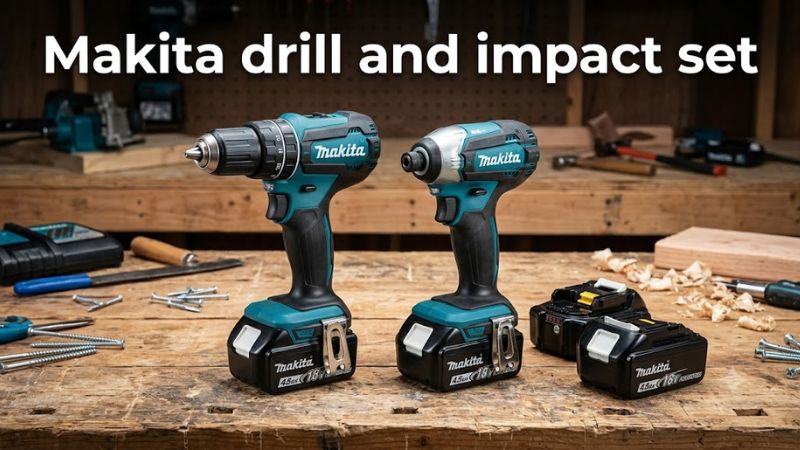
A DEWALT drill and impact set combines two cordless tools designed for different but complementary jobs: drilling holes and driving fasteners. Instead of switching accessories and adjusting one tool for every task, you can use the drill/driver for controlled drilling and general fastening while the impact driver handles longer screws, structural fasteners, and repetitive driving work.
For homeowners, DIY enthusiasts, woodworkers, and contractors, this combination can cover a substantial range of everyday projects. However, not every DEWALT combo kit offers the same performance. Models differ in motor design, battery capacity, speed settings, tool size, and included accessories.
The best approach is to understand what each tool does, identify the battery platform and kit configuration, and choose a set that matches your workload rather than buying based on the number of pieces in the package.
1. What Is Included in a DEWALT Drill and Impact Set?
A typical DEWALT drill and impact set contains two cordless tools, rechargeable batteries, a compatible charger, and a carrying case or bag. The exact contents depend on the model number, so checking the package specifications is essential before purchasing.
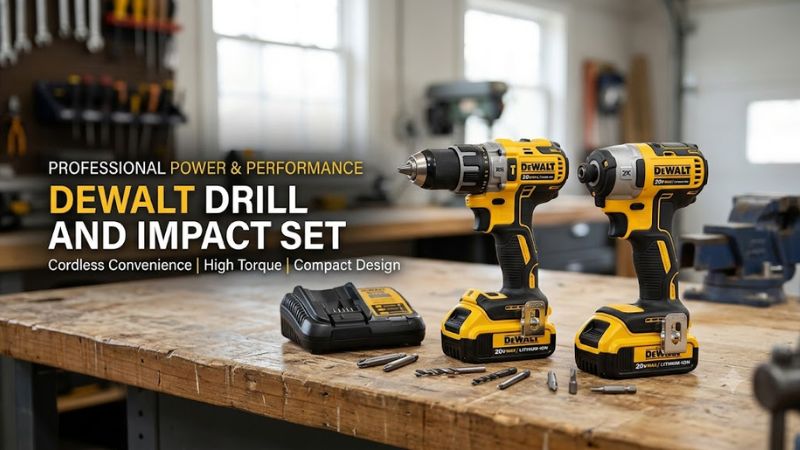
For example, the DEWALT DCK240C2 is a 20V MAX two-tool combo kit with the following components:
| Component | Included equipment |
| Drill/driver | DCD771 1/2-inch drill/driver |
| Impact driver | DCF885 1/4-inch impact driver |
| Batteries | Two 20V MAX 1.3Ah lithium-ion packs |
| Charger | Compatible 20V MAX charger |
| Storage | Contractor carrying bag |
| Warranty | 3-year limited warranty, 1-year free service, and 90-day satisfaction guarantee listed by DEWALT |
This is an established entry-level configuration intended for general drilling and fastening. Its brushed motors and compact batteries should be considered when comparing it with newer brushless kits.
A more modern option is the DCK225D2 ATOMIC combo kit. It includes the DCD794 brushless drill/driver, DCF809 brushless impact driver, two 2.0Ah batteries, a charger, and a carrying bag.
The DCK227D2 is another 20V MAX brushless configuration. It pairs the DCD793 drill/driver with the DCF840 impact driver and includes two 2.0Ah batteries and a charger.
These examples demonstrate why the model number matters more than a general product description. Two DEWALT sets may look similar but contain substantially different tools.
Before purchasing, check:
- Whether both tools have brushed or brushless motors.
- Whether the package includes one or two batteries.
- The battery capacity expressed in amp-hours (Ah).
- Whether the charger is included.
- Whether the kit contains a hard case, soft bag, or no storage solution.
- Whether the exact drill and impact driver models meet your project requirements.
A kit advertised as a two-tool set does not necessarily include every accessory needed for immediate use. Drill bits, screwdriver bits, masonry bits, and specialized attachments may be sold separately.
2. Drill/Driver vs. Impact Driver: What Is the Difference?
Although both tools can install screws, their internal mechanisms and intended applications are different. Understanding these differences helps prevent damaged fasteners, broken bits, and unnecessary wear.
How the DEWALT drill/driver works
The drill/driver uses a rotating chuck to hold an accessory. Its motor turns the chuck continuously, allowing the user to drill holes or drive screws with controlled rotational force.
Most DEWALT drill/drivers include an adjustable clutch, variable-speed trigger, forward/reverse control, and multiple transmission speeds.
The clutch is particularly useful when installing screws. It allows the operator to select a torque range that helps prevent overdriving fasteners or damaging softer materials.
A drill/driver is generally the better choice for:
- Drilling holes in wood and plastic.
- Drilling metal with appropriate drill bits.
- Installing smaller screws.
- Assembling furniture and cabinets.
- Working with hole saws within the tool’s rated capacity.
- Performing tasks that require careful speed and depth control.
For example, when assembling a wooden cabinet, the drill/driver can create pilot holes before screws are installed. This reduces the likelihood of splitting the wood, particularly near edges.
How the DEWALT impact driver works
An impact driver combines rotational movement with repeated internal hammering action. When resistance increases, its mechanism delivers rotational impacts to help turn stubborn fasteners.
This makes it particularly useful for repetitive fastening and applications involving longer or larger screws.
An impact driver is generally suitable for:
- Driving long construction screws into wood.
- Installing deck screws.
- Securing framing components.
- Driving compatible lag screws.
- Removing stubborn threaded fasteners.
- Completing repetitive fastening tasks.
Most DEWALT 1/4-inch impact drivers use a quick-release hex collet rather than a conventional three-jaw drill chuck. This allows fast accessory changes but limits compatibility to suitable hex-shank accessories.
An impact driver should not automatically replace a drill/driver. Its hammering action can make delicate fastening difficult, especially when working with small screws, soft materials, or finished surfaces.
Quick comparison
| Feature | Drill/Driver | Impact Driver |
| Main purpose | Drilling and general fastening | Repetitive and demanding fastening |
| Chuck | Usually 3-jaw chuck | Usually 1/4-inch hex collet |
| Clutch | Commonly adjustable | Depends on model |
| Operating action | Continuous rotation | Rotation with impact action |
| Speed control | Variable-speed trigger | Variable-speed trigger |
| Best application | Holes and controlled screw installation | Longer screws and tougher fastening |
| Typical accessories | Round-shank and compatible hex-shank bits | Impact-rated hex-shank accessories |
The two tools complement each other. Using the drill for holes and the impact driver for fastening can reduce accessory changes and make a project more efficient.
3. How to Choose the Right DEWALT Drill and Impact Set
The best set depends on your workload, available battery platform, and expectations for long-term use. A homeowner completing occasional repairs has different requirements from a contractor installing fasteners throughout the working day.
Consider brushed versus brushless motors
One of the most important differences between DEWALT combo kits is motor construction.
Brushed motors use carbon brushes to transfer electrical current to the rotating motor assembly. They are a traditional design and can provide useful performance for household drilling and fastening.
However, brushes wear over time and may eventually require service or replacement. Friction also creates additional heat and energy losses.
Brushless motors use electronic controls instead of conventional motor brushes. This design reduces brush-related wear and can improve energy efficiency and runtime, depending on the tool, battery, and workload.
Brushless models are worth considering if you:
- Use power tools frequently.
- Complete demanding fastening projects.
- Work in confined spaces where compact tools help.
- Want to expand a cordless tool collection.
- Prefer a newer motor platform.
For occasional household maintenance, a brushed set may still provide adequate functionality. The purchase decision should account for the price difference and expected usage.
Understand the 12V MAX and 20V MAX platforms
DEWALT offers several cordless voltage families. The 12V MAX and 20V MAX platforms serve different tool-size and performance requirements.
A 12V MAX combo kit is generally designed for compact applications, lighter workloads, and situations where maneuverability matters.
A 20V MAX set offers access to a broader selection of DEWALT cordless equipment, including drills, impact drivers, saws, grinders, and other tools.
For example, the DCK221F2 is a 12V MAX brushless drill and impact driver kit. The DCK225D2 and DCK227D2 are 20V MAX brushless configurations.
These platforms are not interchangeable simply because they share the DEWALT brand. Always use the battery and charger specified for the exact tool family.
One additional detail matters when shopping in the United States: DEWALT’s 20V MAX designation refers to maximum initial battery voltage measured without a workload. The nominal operating voltage is 18V. This is normal platform labeling rather than evidence that the battery is incorrectly rated.
Check battery capacity
Battery capacity is measured in amp-hours (Ah), which indicates how much electrical charge a battery can deliver under specified conditions.
A higher Ah rating generally provides more stored capacity, although actual runtime also depends on the tool, material, accessory, temperature, and workload.
| Battery capacity | General consideration |
| 1.3Ah | Compact capacity; found in older entry-level kits |
| 2.0Ah | Convenient balance for lighter cordless work |
| 4.0Ah | More capacity for extended applications |
| 5.0Ah | Useful for longer workloads and compatible tools |
These are capacity comparisons, not guaranteed runtime figures.
A 2.0Ah battery may be sufficient for furniture assembly and occasional drilling. Users who frequently drive long screws or operate several cordless tools may benefit from larger compatible batteries.
Remember that a larger battery can increase tool weight and affect handling, particularly during overhead work.
Evaluate tool size and ergonomics
Compact tools are useful when working inside cabinets, between framing members, or in other restricted spaces.
For example, DEWALT’s ATOMIC DCK225D2 combines a compact drill/driver and impact driver. Its smaller dimensions can be helpful when access is more important than having the largest possible tool configuration.
Check the following before purchasing:
- Overall tool length.
- Grip shape and handle comfort.
- Battery position and balance.
- Trigger accessibility.
- LED placement.
- Belt-hook availability.
- Weight with the intended battery attached.
Manufacturer-listed tool weight and bare-tool dimensions should not be confused with the total working weight. A battery changes the balance and weight of the assembled tool.
4. Which DEWALT Drill and Impact Set Is Best for Different Projects?
Rather than choosing a kit solely by its advertised power, match its features to the work you expect to perform.
For home repairs and occasional DIY
A basic 20V MAX combo kit such as the DCK240C2 can be suitable for household maintenance, furniture assembly, small woodworking projects, and general drilling.
Its DCD771 drill/driver provides a 1/2-inch chuck and two transmission speeds:
- Low speed: 0–450 RPM.
- High speed: 0–1,500 RPM.
The manufacturer also specifies 300 unit watts out (UWO). UWO is a measure of the drill’s delivered power capability, not a torque rating in inch-pounds.
The included 1.3Ah batteries are relatively small, so users planning extended work may prefer a kit with higher-capacity batteries.
For woodworking and furniture assembly
A brushless compact set such as the DCK225D2 is worth considering.
The combination of the DCD794 drill/driver and DCF809 impact driver provides separate tools for pilot holes and fastening.
This arrangement is useful when building shelves, assembling cabinets, constructing furniture, or installing wooden fixtures.
Use the drill/driver for accurate holes and the impact driver for suitable screws. For finished wood, select an appropriate pilot-hole size and test the fastening approach on scrap material before working on the visible surface.
For construction and frequent fastening
A brushless 20V MAX kit such as the DCK227D2 offers a more suitable starting point for frequent use.
Its DCF840 impact driver is specified by DEWALT at up to 1,700 in-lb of torque and 3,200 RPM. These are manufacturer-published maximum specifications, not guaranteed operating values for every fastener or material.
The DCD793 drill/driver provides up to 404 UWO and a maximum speed of 1,650 RPM.
This configuration is worth considering for users who regularly work with larger screws and need a dedicated drilling tool.
However, the impact driver’s advertised torque should not be interpreted as permission to install every structural fastener without considering its manufacturer’s installation requirements.
5. What Accessories Do You Need for a DEWALT Drill and Impact Set?
The tools alone are not enough for every project. Selecting compatible accessories is important for performance, accuracy, and safety.
Drill bits
A basic drill-bit assortment should cover the materials you regularly work with.
| Accessory | Typical application |
| Twist drill bits | Drilling metal and general-purpose holes |
| Brad-point bits | Accurate holes in wood |
| Masonry bits | Drilling brick, concrete, and masonry when the tool is suitable |
| Spade bits | Larger holes in wood |
| Hole saws | Larger circular openings in suitable materials |
| Countersink bits | Preparing recesses for screw heads |
Choose bits with the correct shank, diameter, material rating, and speed requirements.
For masonry, use an appropriate carbide-tipped masonry bit. A standard drill/driver without a hammer mechanism may be unsuitable for demanding concrete drilling.
Impact-rated screwdriver bits
Impact drivers generate repeated rotational impacts, so ordinary screwdriver bits may wear or break more quickly under demanding conditions.
Use accessories explicitly rated for impact-driver applications.
A useful starter selection includes:
- Phillips bits.
- Torx bits.
- Square-drive bits.
- Slotted bits.
- Impact-rated nut drivers.
- Magnetic bit holders rated for impact use.
Match the bit profile to the fastener. A poorly fitting bit is more likely to slip, damage the screw head, or cause loss of control.
Extension accessories
Magnetic bit holders and suitable extensions help reach recessed screws or restricted fastening locations.
However, extensions must be rated for the impact driver’s operating conditions. Avoid using damaged, loose, or unsuitable accessories.
Do not assume every attachment that fits a 1/4-inch hex collet is suitable for impact operation.
6. How to Use a DEWALT Drill and Impact Set Correctly
Using the two tools together is straightforward once you understand their individual roles.
The following process works well for a basic woodworking project involving pilot holes and screw installation.
Before starting: Prepare the correct drill bits and impact-rated driver bits, inspect the tools, and secure the workpiece. Wear safety glasses and use hearing protection when the noise level and working conditions require it.
Step 1: Inspect the tools and batteries
Check both tools for visible damage, loose components, and unusual wear.
Inspect the battery packs for cracks, damaged contacts, swelling, or other signs of damage. Do not use a damaged battery.
Confirm that both batteries belong to the correct DEWALT voltage platform.
If the batteries need charging, use the charger specified for the battery model. Do not attempt to modify battery connections or use an incompatible charging system.
Step 2: Select the correct drill bit
Choose a bit appropriate for the material and required hole diameter.
For woodworking, a brad-point or twist drill bit may be suitable depending on the required finish and hole size.
Check that the bit is straight and sharp. A damaged or dull bit can wander, overheat, or place unnecessary load on the drill.
Step 3: Install the bit in the drill/driver
Remove the battery before changing accessories.
Open the drill’s keyless chuck, insert the bit securely, and tighten the chuck according to the tool instructions.
Check that the bit is centered and firmly held before reinstalling the battery.
Step 4: Adjust the drill settings
Select the appropriate transmission speed and operating mode.
For screwdriving, use the adjustable clutch and begin with a lower setting. Increase it gradually if necessary after practicing on scrap material.
For drilling, select the drill symbol rather than a screwdriving clutch setting.
There is no single speed or clutch setting suitable for every material, bit diameter, and application. Follow the bit manufacturer’s recommendations.
Step 5: Drill the pilot hole
Mark the hole location and position the drill bit squarely against the workpiece.
Hold the drill with a firm, balanced grip and apply steady pressure without forcing the motor.
Allow the bit to cut at its intended speed. Excessive pressure can cause overheating, bit deflection, or motor stalling.
When drilling through thin or splinter-prone wood, a backing block can help reduce tear-out.
Step 6: Prepare the impact driver
Release the trigger and remove the battery before changing the accessory.
Insert an impact-rated hex-shank driver bit into the impact driver’s collet. Check that it is securely retained.
Select a compatible fastener and verify that its length, diameter, and material are appropriate for the project.
Step 7: Drive the fastener
Position the driver bit directly over the screw head.
Keep the tool aligned with the fastener and begin at a controlled trigger speed.
Increase trigger pressure as necessary while maintaining a firm grip.
Stop when the fastener reaches the required position. Avoid continuing to drive after the screw is seated, as excessive impacts can damage the head, workpiece, or fastener.
For delicate surfaces, test the technique on scrap material first.
Step 8: Inspect the finished work
Check that the hole is correctly positioned and the screw is seated appropriately.
Look for splitting, stripped screw heads, damaged material, or loose fasteners.
If a fastener is not properly installed, identify the cause before attempting to correct it. Do not simply apply more power.
Step 9: Shut down and store the tools
Release the triggers and wait for rotating components to stop completely.
Remove the batteries before cleaning, adjusting, or changing accessories.
Wipe away dust and debris using the cleaning method recommended by DEWALT. Store the tools and batteries in a dry location, away from excessive heat and moisture.
7. Important Safety Tips When Using DEWALT Drill and Impact Driver Kits
Both tools are powerful enough to cause injuries when operated incorrectly. Good technique and appropriate protective equipment should be part of every project.
Wear appropriate eye protection. Drilling and fastening can produce flying debris, particularly when working with metal, masonry, or brittle materials.
Secure the workpiece. Use clamps or a suitable workholding system instead of holding small workpieces by hand. A drill can suddenly twist if its bit binds.
Maintain a firm grip. A stalled drill can produce a sudden reaction force. Keep both hands in the recommended operating position when the tool design and application require them.
Keep hands away from rotating components. Do not touch the chuck, bit, or accessory while the tool is operating.
Manage dust and noise. Use appropriate respiratory and hearing protection based on the material and working conditions. Drilling masonry, for example, can produce respirable dust that requires suitable exposure controls.
Remove the battery before adjustments. Disconnect the battery before replacing bits, inspecting accessories, cleaning, or performing maintenance.
Avoid damaged batteries. Stop using a battery if it shows swelling, leakage, unusual heating, cracked housing, or damaged electrical contacts. Follow DEWALT’s battery instructions for storage, charging, and disposal.
Never defeat safety features. Do not modify the tool, bypass protective systems, or use accessories beyond their specified ratings.
If the drill or impact driver produces unusual noises, excessive heat, burning smells, or inconsistent operation, stop using it and follow the manufacturer’s troubleshooting and service instructions.
8. Common Mistakes When Buying a DEWALT Drill and Impact Set
Even a reputable cordless tool set can be disappointing if the configuration does not match the intended workload.
Here are several mistakes worth avoiding.
Buying based only on advertised torque
A higher torque figure does not automatically make an impact driver the best option for every fastening application.
Torque specifications should be interpreted alongside speed control, impact mechanism, accessory compatibility, fastener requirements, and tool handling.
A compact driver with appropriate control may be more useful than a higher-powered model for delicate assembly work.
Ignoring the battery platform
A 12V MAX battery should not be assumed compatible with a 20V MAX tool.
Check the exact battery model and tool specifications before purchasing additional batteries or chargers.
If you already own DEWALT cordless equipment, selecting a compatible kit can reduce the cost of expanding your collection.
Choosing a kit with insufficient battery capacity
Small batteries are convenient for lightweight work, but frequent users may find themselves charging more often.
Consider purchasing a kit with higher-capacity batteries if your projects involve repeated fastening, larger drill bits, or extended operating periods.
Assuming every kit includes accessories
Some DEWALT packages include batteries, chargers, and storage bags, while other configurations may be sold as bare tools.
Read the complete package description rather than relying on product photographs or general advertising language.
Using an impact driver for every drilling task
An impact driver can operate certain specialized drilling accessories, but it is not a universal replacement for a drill/driver.
A conventional drill chuck offers broader compatibility with standard drill-bit shanks and provides better control for many drilling applications.
9. Frequently Asked Questions
Is a DEWALT drill and impact set worth buying?
Yes, a DEWALT drill and impact set can be worthwhile if your projects involve both drilling holes and installing screws. Having dedicated tools reduces the need to repeatedly change accessories and provides more appropriate control for different tasks. For occasional household repairs, a basic kit may be sufficient, while frequent users may benefit from a brushless configuration.
Can you use the same battery for a DEWALT drill and impact driver?
Yes, you can use the same battery when both tools belong to a compatible DEWALT battery platform. For example, compatible 20V MAX drill/drivers and impact drivers can share supported 20V MAX batteries. Always verify the exact model’s battery requirements and use an approved charger.
What is better: a DEWALT 12V MAX or 20V MAX drill and impact set?
A 12V MAX set is generally better for compact, lighter-duty applications where maneuverability is important. A 20V MAX set is a stronger choice for users who need a broader cordless tool ecosystem and more options for demanding applications. Your workload, tool size requirements, and existing batteries should determine the choice.
Can a DEWALT impact driver replace a regular drill?
No, an impact driver should not be considered a complete replacement for a regular drill. Although it can perform certain drilling applications with compatible accessories, a drill/driver offers a conventional chuck, adjustable clutch, and more controlled operation for many drilling and precision fastening tasks. Owning both tools provides greater versatility.
10. Final Verdict: Is a DEWALT Drill and Impact Set Right for You?
A DEWALT drill and impact set is a practical investment for anyone who regularly drills holes and installs fasteners. The two-tool arrangement provides more flexibility than relying on a single drill/driver for every task.
For occasional DIY projects, the DCK240C2 provides a straightforward entry into the 20V MAX platform, although its brushed tools and smaller batteries are worth considering.
For users seeking newer brushless technology and compact dimensions, the DCK225D2 ATOMIC kit is a more modern alternative. Those who regularly handle demanding fastening applications can also consider the DCK227D2.
Before purchasing, compare the exact model numbers, battery capacities, motor types, included accessories, and warranty terms. Prioritize compatibility and working requirements over promotional torque figures or the number of tools advertised.

Write Your Review
No reviews yet. Be the first to share your experience!