
What's inside
- 1. What Is a Wood Drill Bit Set?
- 2. Understand the Different Types of Wood Drill Bits
- 3. How to Choose the Right Wood Drill Bit Set
- 4. How to Match a Wood Drill Bit Set to Your Power Drill
- 5. How to Use a Wood Drill Bit Set Correctly
- 6. Wood Drill Bit Maintenance and Storage
- 7. Wood Drill Bit Safety Tips
- 8. Frequently Asked Questions
- Conclusion
As an Amazon Associate I earn from qualifying purchases. This post may contain affiliate links at no extra cost to you.
Choosing a wood drill bit set is about more than getting a collection of different sizes. The right set helps you drill accurate holes, reduce splintering, create clean openings, and work efficiently across different types of wood. However, not every drill bit is designed for the same purpose. A bit that works well for drilling pilot holes may not deliver the clean, flat-bottomed recesses needed for cabinet hardware or furniture assembly.
For most homeowners and DIY woodworkers, a useful starting point is a set of brad-point bits for accurate drilling, supplemented by conventional twist bits for general-purpose work. Spade bits, auger bits, and Forstner bits become valuable when projects require larger holes, deeper drilling, or specific hole shapes.
This guide explains the different types of wood drill bits, which sizes and materials to consider, how to match a set to your drill, and what to look for before purchasing.
1. What Is a Wood Drill Bit Set?
A wood drill bit set is a collection of cutting accessories designed to create holes in wooden materials. Depending on its configuration, a set may contain several diameters of the same bit style or combine different designs for specific woodworking applications.
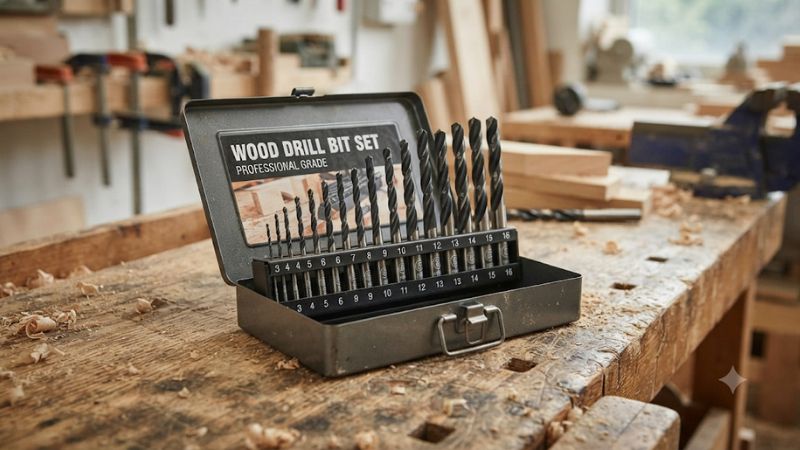
These accessories typically work with cordless drills, corded drills, and compatible drill presses. Their cutting edges and tip geometries are designed to remove wood fibers while allowing chips and sawdust to escape from the hole.
Wood drill bit sets are commonly used for:
- Drilling pilot holes before installing wood screws.
- Creating holes for dowels and furniture joints.
- Installing cabinet handles, hinges, and other hardware.
- Running electrical cables through wooden framing.
- Making holes for plumbing installations.
- Building shelves, cabinets, tables, and wooden structures.
- Creating larger openings for woodworking and renovation projects.
A complete woodworking setup does not necessarily require every type of bit. The best assortment depends on the materials, hole dimensions, drilling depth, and finish quality required by your projects.
2. Understand the Different Types of Wood Drill Bits
The most important purchasing decision is selecting the correct bit geometry. Different designs remove material differently, which affects accuracy, drilling speed, hole quality, and the type of work they can handle.
Brad-Point Drill Bits
Brad-point bits are particularly useful for accurate woodworking. They feature a sharp center point that helps position the bit precisely, along with outer cutting spurs that score the wood fibers around the hole.
This design reduces wandering when starting a hole and helps produce cleaner edges than a conventional twist bit.
Best applications:
- Drilling dowel holes.
- Making furniture joints.
- Installing shelf pins.
- Creating accurate holes in plywood and solid wood.
- Drilling holes where visible surface quality matters.
Brad-point bits are especially useful for cabinetmaking and furniture construction. However, they are not intended to replace Forstner bits when a flat-bottomed recess is required.
Twist Drill Bits
Twist bits have a familiar spiral-shaped design and are commonly included in general-purpose drill bit collections.
Their cutting edges remove material while the spiral flutes help transport chips out of the hole. Although many conventional twist bits are designed for multiple materials, they can also handle routine drilling in wood.
Best applications:
- Small pilot holes.
- General woodworking.
- Drilling holes for screws and fasteners.
- Light household repair work.
- Projects involving different materials.
One limitation is that ordinary twist bits may wander more easily when starting on smooth wood surfaces. They can also produce more tear-out than dedicated brad-point bits when appearance is important.
Spade Bits
Spade bits, also called paddle bits, have a broad, flat cutting head with a central locating point.
Their main advantage is speed when creating relatively large holes in wood. They are frequently used in construction and renovation rather than precision furniture work.
Best applications:
- Drilling openings through wooden studs.
- Running cables through framing.
- Making rough plumbing access holes.
- Creating larger holes in softwood.
- General construction projects.
Spade bits are generally economical and practical for larger openings. However, they may leave rougher edges than brad-point or Forstner bits.
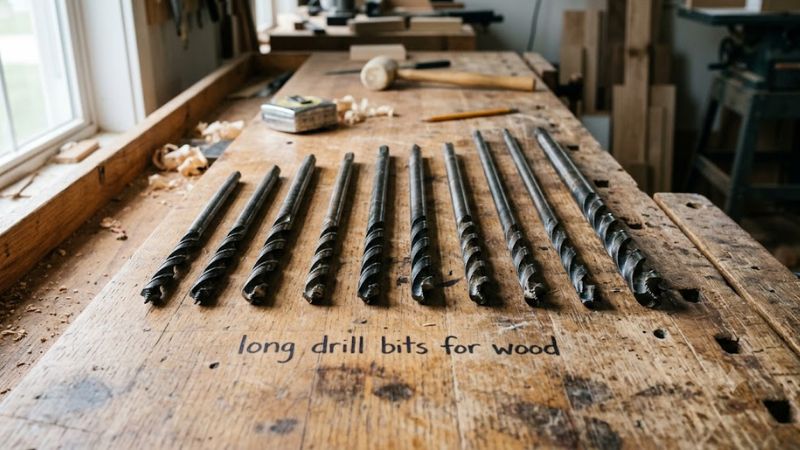
Auger Bits
Auger bits are designed for drilling deeper holes in wood. Their long spiral body helps remove wood chips, while the screw-shaped lead point draws the bit into the material.
They are particularly useful when drilling through thick timber or structural wooden components.
Best applications:
- Drilling through wooden beams.
- Making deep holes in posts.
- Construction framing.
- Working with thick hardwood and softwood.
- Installing cables through structural timber.
Because their lead screws can pull aggressively into the workpiece, auger bits require good control and a compatible drill. Check the drill manufacturer’s instructions before using larger augers, particularly with handheld cordless drills.
Forstner Bits
Forstner bits are designed for clean, accurately positioned holes with flat bottoms.
Unlike conventional twist bits, their circular cutting rim and internal cutting surfaces remove material in a way that allows them to create flat-bottomed recesses. This makes them valuable for furniture construction and cabinet installation.
Best applications:
- Concealed cabinet hinge recesses.
- Flat-bottomed holes.
- Furniture hardware installation.
- Decorative woodworking.
- Overlapping holes and specialized joinery.
Forstner bits can place considerable demands on a drill, particularly in larger diameters. A drill press often provides better control for repetitive or precision work.
Comparison of Common Wood Drill Bit Types
| Bit type | Best application | Main advantage | Main limitation |
|---|---|---|---|
| Brad-point | Precision woodworking | Accurate positioning and clean edges | Not designed for flat-bottomed recesses |
| Twist | General drilling | Versatile and widely available | Can wander or produce tear-out |
| Spade | Large rough openings | Fast material removal | Rougher hole finish |
| Auger | Deep wood drilling | Efficient chip removal | Requires suitable drill power and control |
| Forstner | Cabinet and furniture work | Flat-bottomed, clean holes | Can demand substantial drilling force |
Understanding these differences helps prevent a common purchasing mistake: choosing a large set that contains many bits but does not include the designs needed for your actual projects.
3. How to Choose the Right Wood Drill Bit Set
Once you understand the different bit styles, consider the following factors before purchasing.
Choose a Set Based on Your Woodworking Applications
Start by identifying the type of work you perform most frequently.
For basic household repairs, a conventional twist bit assortment may cover many everyday drilling requirements. If you regularly assemble furniture, install cabinets, or work with wooden panels, brad-point bits are a more useful addition.
For construction and renovation, spade and auger bits can provide the larger diameters and drilling depths that ordinary sets may lack.
A practical selection looks like this:
| Project type | Recommended bit assortment |
|---|---|
| Furniture assembly | Brad-point and twist bits |
| Cabinet installation | Brad-point and Forstner bits |
| General DIY repairs | Twist and brad-point bits |
| Electrical cable openings | Spade and auger bits |
| Thick timber construction | Auger and spade bits |
| Precision woodworking | Brad-point and Forstner bits |
You do not need to purchase every category immediately. Build your collection around recurring tasks and add specialized accessories when a project requires them.
Check the Available Bit Sizes
Bit diameter determines the width of the hole. Therefore, a useful set should provide sizes that match your fasteners, hardware, and woodworking requirements.
For general household applications, smaller bits are useful for pilot holes and fastener installation. Medium-sized bits support furniture assembly and common woodworking tasks, while larger diameters are necessary for cable openings and other construction work.
Before buying, consider:
- The smallest diameter included.
- The largest diameter included.
- Whether the set uses metric or fractional-inch measurements.
- The spacing between available sizes.
- The usable cutting length of each bit.
Metric sets are convenient for projects using metric hardware, while fractional-inch assortments are common in the US market.
Pay particular attention to usable drilling depth. Overall bit length does not necessarily represent how deeply the cutting section can drill.
Consider the Bit Material
Drill bit material affects hardness, wear resistance, and suitability for different woodworking applications.
Common options include:
Carbon steel: Carbon steel bits are generally intended for wood and can be suitable for basic DIY applications. They are not interchangeable with metal-drilling HSS bits and may be more vulnerable to damage from improper use.
High-speed steel (HSS): HSS offers greater heat resistance than ordinary carbon steel and is commonly used for conventional twist bits. It can be suitable for woodworking and other compatible materials, depending on the bit’s design.
Alloy steel: Some wood-boring accessories use alloy-steel construction to provide strength and durability for their intended applications. Exact performance depends on the alloy, heat treatment, and cutting geometry.
Carbide-tipped construction: Carbide is used in certain specialized cutting accessories. Do not assume that a carbide-tipped bit is automatically suitable for every wood-drilling application. Check its intended material and operating instructions.
Look at the Cutting Design and Finish
The quality of the cutting edges is just as important as the material.
For clean woodworking results, inspect the following:
- Sharp, evenly formed cutting edges.
- A properly centered locating point.
- Consistent cutting geometry.
- Smooth flute surfaces for chip removal.
- No visible cracks, bends, or manufacturing defects.
For brad-point sets, the center point and outer spurs should be properly formed. For spade bits, examine the cutting edges and locating point. For Forstner bits, inspect the circular rim and internal cutting surfaces.
A protective coating may help with corrosion resistance or reduce friction, depending on the product. However, coating descriptions alone do not establish cutting performance or durability.
Check Shank Compatibility
A wood drill bit must fit the drill that will operate it.
Most conventional woodworking drill bits have round shanks designed for compatible drill chucks. Some accessories use hexagonal shanks for quick-change holders or specific applications.
Check the following before purchasing:
- Shank diameter.
- Shank shape.
- Drill chuck capacity.
- Whether the accessory is designed for a standard drill or a specialized holder.
- Manufacturer compatibility instructions.
Do not assume that every bit fits every drill simply because both products are designed for woodworking.
Evaluate the Storage Case
A storage case can make a drill bit set easier to organize and maintain.
Look for clearly marked size positions, secure bit retention, and an arrangement that makes frequently used accessories easy to identify.
A good case should also protect the cutting edges from unnecessary contact with other metal accessories.
Piece count should not be your main purchasing criterion. A smaller set containing the right sizes and bit types can be more useful than a much larger assortment filled with accessories you rarely need.
4. How to Match a Wood Drill Bit Set to Your Power Drill
Most wood drill bit sets are designed for conventional corded or cordless drills, but compatibility still depends on the accessory and the drill specifications.
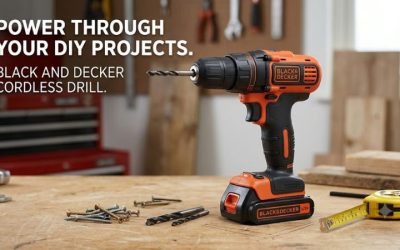
Cordless Drill Compatibility
Cordless drills are convenient for furniture assembly, home repairs, and general woodworking.
Before using a bit, check its shank size against the drill’s chuck capacity. Larger spade, auger, and Forstner bits may require more torque and control than smaller brad-point bits.
A cordless drill’s advertised maximum torque does not automatically establish that it can safely operate every large-diameter accessory.
Battery voltage, battery condition, drill design, speed range, and the manufacturer’s operating instructions all affect suitability.
Corded Drill Compatibility
Corded drills provide continuous access to electrical power without requiring battery replacement.
They can be useful for extended woodworking sessions, although their suitability for larger accessories still depends on the drill’s power, speed range, chuck capacity, and operating limitations.
Check the electrical rating and regional voltage compatibility before purchasing or operating a corded drill.
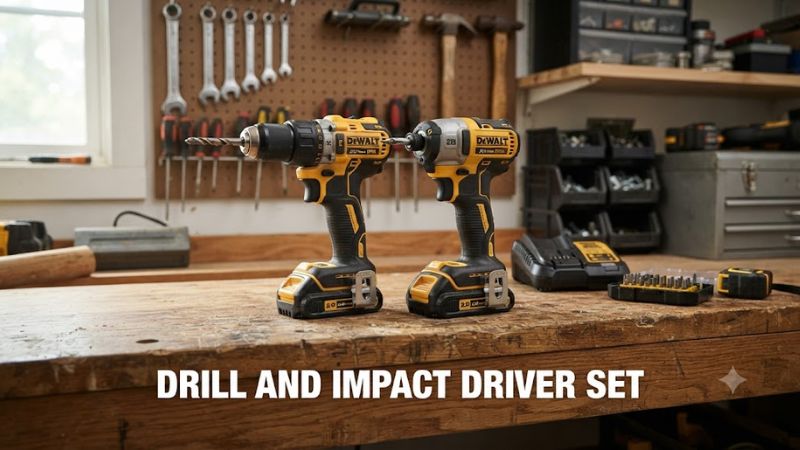
Can You Use Wood Drill Bits With an Impact Driver?
Some wood-boring accessories have hex shanks designed for compatible impact drivers.
However, standard round-shank woodworking bits are not automatically compatible with quick-change impact-driver holders.
Even when the shank fits, the accessory must be rated or approved for the intended tool and application. The repeated impacts and higher reaction forces of an impact driver can create different operating conditions from those of a conventional drill.
For precision woodworking, a standard drill or drill press is generally the more appropriate starting point.
5. How to Use a Wood Drill Bit Set Correctly
Selecting the right bit is only part of achieving a clean result. Proper preparation and drilling technique also matter.
Follow these steps for routine wood drilling.
Step 1: Identify the material
Determine whether you are drilling hardwood, softwood, plywood, or another wood-based panel. Different materials can produce different cutting resistance and surface finishes.
Step 2: Select the appropriate bit
Choose the bit based on hole diameter, drilling depth, and required finish.
For example, use a brad-point bit for an accurately positioned dowel hole or a Forstner bit for a flat-bottomed cabinet recess.
Step 3: Mark the drilling position
Measure carefully and mark the center of the intended hole.
For precision work, use a measuring tool and an appropriate marking method to reduce positioning errors.
Step 4: Secure the workpiece
Clamp the wood to a stable work surface or secure it in a suitable holding device.
Never rely on your hand alone to hold a small workpiece while drilling. A rotating bit can catch the material and cause sudden movement.
Step 5: Install and inspect the bit
Disconnect the drill from its power supply or remove the battery before changing accessories.
Insert the correct shank into the chuck and tighten it securely according to the drill manufacturer’s instructions. Check that the bit is straight and properly seated.
Step 6: Begin drilling with controlled pressure
Position the bit at the marked location and start at a controlled speed.
Maintain alignment and apply steady pressure. Avoid forcing the drill because excessive pressure can damage the cutting edges, increase binding, and reduce control.
For deeper holes, withdraw the bit periodically when necessary to clear accumulated chips.
Step 7: Control breakthrough
As the bit approaches the opposite surface, maintain a firm grip and reduce excessive feed pressure.
For cleaner through-holes, a suitable sacrificial backing board can help reduce breakout on the exit side.
Step 8: Inspect the finished hole
Switch off the drill and wait for the bit to stop completely.
Check the hole diameter, depth, alignment, and edge condition. Remove loose chips and inspect the workpiece before proceeding with assembly.
6. Wood Drill Bit Maintenance and Storage
Proper maintenance helps preserve cutting performance and reduces the likelihood of damaged accessories.
After each project:
- Remove accumulated sawdust and wood chips.
- Wipe metal surfaces clean and dry.
- Inspect cutting edges for chips, cracks, and excessive wear.
- Check straightness if a bit appears to wobble during operation.
- Keep different bit types organized in their designated positions.
- Store the case in a dry environment.
Dull bits can require more pressure and produce excessive heat or poor hole quality. Replace damaged accessories or have suitable bits professionally sharpened according to their manufacturer’s instructions.
Do not attempt to sharpen specialized cutting geometries without the correct equipment and knowledge. Incorrect sharpening can change the cutting profile and affect performance.
If a bit becomes unusually hot, starts binding repeatedly, or produces unexpected vibration, stop the drill and investigate the cause before continuing.
7. Wood Drill Bit Safety Tips
Wood drilling involves rotating cutting edges, flying chips, dust, and potential tool kickback. Appropriate precautions are important even for relatively small DIY projects.
Follow these basic safety practices:
- Wear suitable safety glasses or goggles to protect against flying debris.
- Use appropriate respiratory protection when the material and working conditions create hazardous dust exposure.
- Secure the workpiece with clamps or a suitable holding device.
- Keep hands away from rotating accessories.
- Remove the battery or disconnect the power supply before changing bits.
- Make sure the chuck is tightened and any chuck key is removed before starting.
- Maintain a stable stance and hold the drill firmly.
- Avoid loose clothing and jewelry that could become caught in moving parts.
- Follow the drill and accessory manufacturers’ speed and operating instructions.
Be particularly careful when using large-diameter spade, auger, and Forstner bits. If a bit binds, the drill can react suddenly and twist in your hands.
Do not attempt to release a stuck bit while the drill is running. Switch off the tool, disconnect its power source, and follow the manufacturer’s instructions for safely removing the accessory.
8. Frequently Asked Questions
What is the best type of drill bit for wood?
Brad-point bits are an excellent choice for accurate, clean holes in wood. They are particularly useful for furniture construction, dowel joints, and cabinetmaking. However, Forstner bits are more appropriate for flat-bottomed recesses, while spade and auger bits suit larger or deeper holes.
Can regular drill bits be used on wood?
Yes, conventional twist drill bits can drill wood when their specifications are suitable for the application. However, dedicated wood bits such as brad-point accessories generally provide better positioning and cleaner cutting for precision woodworking.
What size wood drill bit set should I buy?
Choose a set based on the diameters required by your projects rather than its total piece count. A useful assortment should cover your common pilot-hole, furniture assembly, and woodworking requirements. Add larger spade, auger, or Forstner bits when specific projects demand them.
Are wood drill bits compatible with cordless drills?
Most standard wood drill bits can work with compatible cordless drills if their shanks fit the chuck and the drill has suitable operating capacity. Larger accessories may require more torque and careful control, so always check the drill and bit manufacturers’ instructions.
Conclusion
A good wood drill bit set should match your woodworking requirements rather than simply offer the largest number of accessories. Brad-point bits are valuable for precision drilling, twist bits handle general-purpose applications, spade bits create larger openings, auger bits support deeper drilling, and Forstner bits produce flat-bottomed recesses.
Before purchasing, compare bit types, diameter ranges, construction materials, shank compatibility, and storage arrangements. Also consider the drill you already own and the materials you work with most frequently.
For homeowners and DIY enthusiasts, starting with a practical brad-point and twist-bit assortment is a sensible approach. You can expand your collection with specialized wood-boring accessories as your projects become more demanding. The result is a more useful workshop setup, cleaner drilling results, and fewer unnecessary purchases.
FAQ
1. What Is a Wood Drill Bit Set?
Can You Use Wood Drill Bits With an Impact Driver?
What is the best type of drill bit for wood?
Can regular drill bits be used on wood?
What size wood drill bit set should I buy?
Are wood drill bits compatible with cordless drills?
Related guides
More from Amazon
Programs that pair well with the guide above. Offers and eligibility are set by Amazon and may change.
A free business account with business pricing and bulk-buying tools for work, shop or home office.
Create a business accountFree shipping on eligible items, Prime Video and more. Eligible new members can start with a free trial.
Start a Prime free trialAudiobooks and podcasts to listen to on the go. Eligible new members can start with a free trial.
Try Audible freeAd-free music streaming. Eligible new subscribers can start with a free trial.
Try Music Unlimited freeAs an Amazon Associate we earn from qualifying purchases.



Write Your Review
No reviews yet. Be the first to share your experience!