What's inside
As an Amazon Associate I earn from qualifying purchases. This post may contain affiliate links at no extra cost to you.
What fleet shops need from an impact wrench
Fleet maintenance is harder on cordless impact wrenches than occasional automotive work. A shop may remove dozens of wheel nuts in a shift, work outdoors, and switch between light-duty vans, medium trucks, trailers, and equipment. The right wrench is not simply the one with the highest advertised torque. Battery availability, heat control, socket fit, serviceability, and operator fatigue matter just as much.
For most fleet shops, a high-torque 1/2-inch impact wrench should be the primary tool for wheel work and seized fasteners. A compact 1/2-inch or 3/8-inch wrench is useful for engine bays, brackets, and interior access, but it should not be expected to break loose heavily rusted wheel nuts. If the fleet includes larger trucks or heavy equipment, consider a 3/4-inch drive tool or a pneumatic setup for the most stubborn jobs.
As an Amazon Associate we earn from qualifying purchases at no extra cost to you.


Best cordless platforms for fleet maintenance
Milwaukee, DeWalt, and Makita offer the strongest choices for professional fleet shops. Their battery systems have broad ranges of impacts, ratchets, grinders, lights, and inspection tools. That matters because every battery purchased for an impact wrench can also power other equipment.
Milwaukee’s M18 platform has an especially deep selection of automotive tools, including compact impacts, high-torque impacts, ratchets, and diagnostic-friendly lights. DeWalt’s 20V Max system is a good fit where the shop already uses DeWalt drills, grinders, or saws. Makita’s 18V LXT system is known for good ergonomics and a wide tool range, although its automotive selection is not as extensive in every market.
Ryobi’s 18V platform is worth considering for a small shop, municipal garage, or backup station. The tools cost less and the battery ecosystem is broad. The trade-off is less severe-duty support and usually less confidence when a tool is used continuously on truck and trailer work.
| Platform | Best fit | Advantages | Limitations |
|---|---|---|---|
| Milwaukee M18 | Busy professional fleet shops | Excellent automotive range, strong high-torque options, many battery sizes | Tool and battery prices are often high |
| DeWalt 20V Max | Mixed maintenance and construction fleets | Large ecosystem, good availability, strong service network | Some compact tools give up runtime under heavy load |
| Makita 18V LXT | Shops prioritizing balance and ergonomics | Comfortable tools, mature battery system, broad general-purpose range | Fewer specialized automotive choices in some regions |
| Ryobi 18V | Light-duty or budget-conscious shops | Low entry cost and inexpensive add-on tools | Not the first choice for repeated heavy truck work |
The impact wrench types worth buying
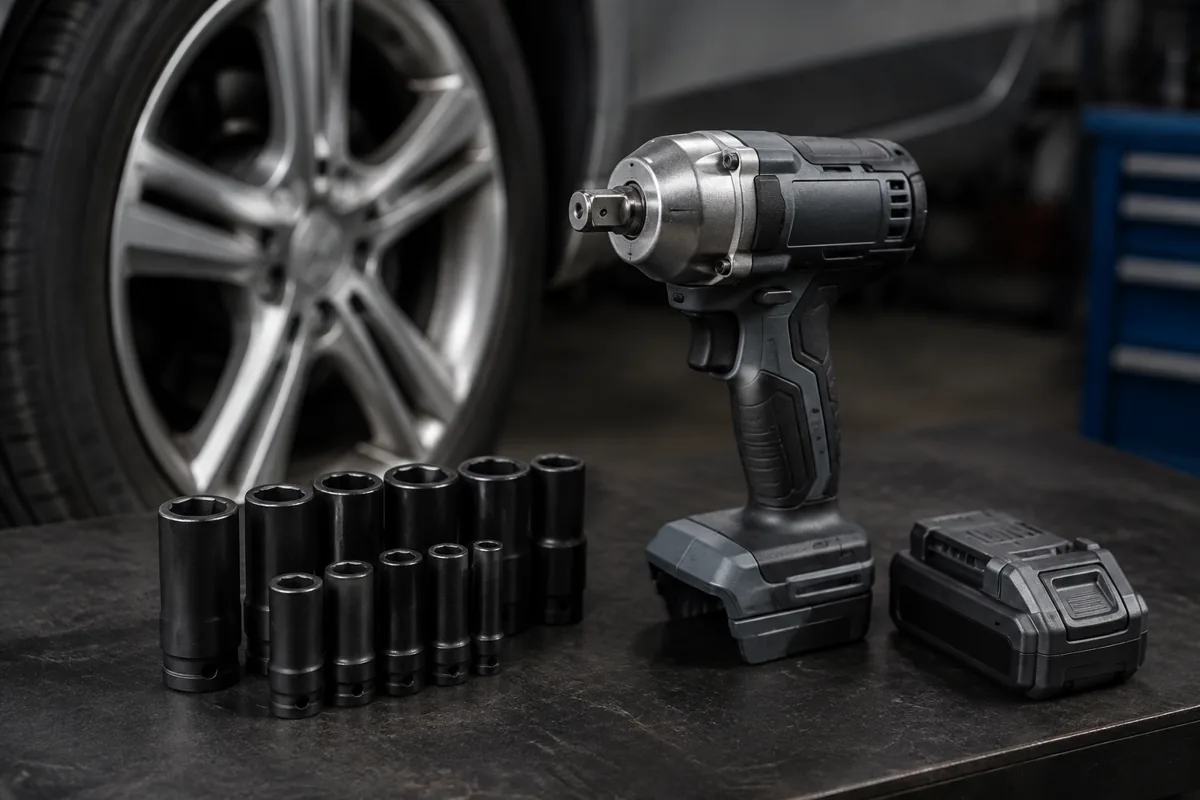
A high-torque 1/2-inch wrench is the main purchase for wheel nuts, suspension fasteners, and corroded chassis hardware. Look for a brushless tool with at least three speed or torque settings, a friction ring or pin detent that matches your socket-control preference, and a claimed fastening torque around 800 to 1,000 lb-ft or more. Advertised breakaway figures are higher than fastening figures and are not directly comparable between brands.
For daily wheel service, buy a cordless high-torque 1/2-inch impact wrench with a large battery rather than the smallest available pack. A 5.0Ah battery is a practical minimum for serious use; high-output 6.0Ah or larger packs usually maintain power better and stay cooler under repeated load. The larger battery adds weight, so keep a compact wrench available for jobs where access matters more than maximum torque.
A mid-torque 1/2-inch impact is often the best everyday tool for light and medium-duty fleets. It is easier to control, less tiring, and less likely to over-tighten small fasteners. It may remove wheel nuts on passenger vehicles and vans, but performance drops quickly with rust, long studs, over-torqued nuts, or cold batteries.
A compact 3/8-inch impact belongs in the engine-bay drawer. Use it for brackets, shields, caliper hardware, and general disassembly. Do not use it as a substitute for a torque wrench, and do not assume its highest setting is safe for small fasteners.
Battery and charger planning
Battery rotation is more important than peak specifications. A shop running two high-torque impacts should normally have at least four large batteries, allowing two to work while two charge. Add more if the charger is slow or the shop has no opportunity to pause between vehicles.
High-output batteries can provide more sustained power, but they are not magic. A battery that is hot from repeated impacts may reduce output or shut down temporarily. Keep a second pack ready, charge batteries away from metal debris, and do not leave them in a freezing service truck overnight. A dual-port cordless tool battery charger can be more useful than an additional small battery in a busy bay.
Budget for batteries and chargers separately when comparing kits. A bare tool may look inexpensive, but two large packs and a rapid charger can add several hundred dollars. If your shop already owns a platform, staying with it is usually cheaper and simpler than switching brands for a small difference in wrench performance.
Torque control and safe use
An impact wrench is a removal and run-down tool, not a final tightening instrument. Torque output varies with battery charge, socket condition, fastener friction, temperature, and trigger time. Run wheel nuts down with the lowest useful setting, then finish with a calibrated torque wrench to the vehicle manufacturer’s specification.
Use impact-rated sockets only. Chrome hand sockets can split under impact loading, sending fragments toward the operator. Replace sockets with rounded drive openings, and inspect the anvil, friction ring, and retaining pin regularly. A worn ring can drop a socket under a vehicle or cause a socket to remain on a wheel nut.
Do not extend an impact wrench with a cheater bar. If the tool cannot remove a fastener, use penetrating oil, heat where safe, a breaker bar, or a larger drive tool. Excessive trigger time can overheat the motor and battery without producing useful torque.
When the cheaper option is fine
A lower-cost cordless impact is reasonable for a small fleet with mostly cars and light vans, occasional wheel work, and an existing battery platform. It can also make sense as a second tool for apprentices or a mobile service truck. It is a poor bargain if it regularly stalls on wheel nuts, overheats, or forces technicians to wait for batteries.
For a professional shop, buy one durable high-torque wrench, one compact or mid-torque wrench, four or more large batteries, and enough chargers to keep the rotation moving. That setup costs more initially, but it reduces downtime and gives technicians the right amount of power instead of making every fastener a test of the biggest tool.
Related guides
- Longest Lasting Lawn Mower Battery: AGM vs Lithium vs Flooded Lifespan and Cost per Season
- Duralast Gold Lawn Mower Battery Review: U1 Fit, CCA and When to Pay for AGM
- Greenworks Pro 80V 21-Inch Mower Review: Runtime Math, Push vs Self-Propelled and Yard Fit
- Bosch High Pressure Washer Gun Replacement: Fittings, Adapters and What Fits Your Model