Our Top Picks
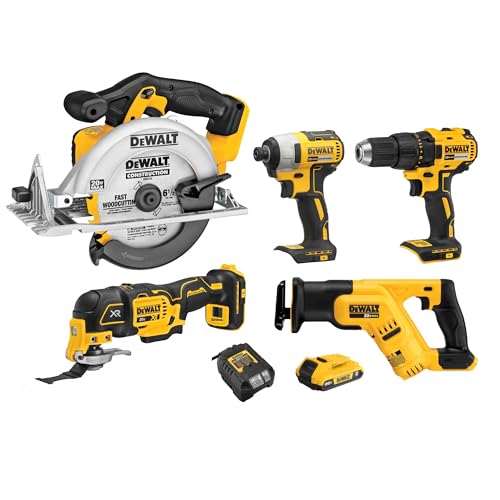
 DEWALT 20V MAX Cordless Drill and Impact DriverOne Size15.06 x 6.4 x 9.88 inches3.6 PoundsCheck on Amazon



What's inside
As an Amazon Associate I earn from qualifying purchases. This post may contain affiliate links at no extra cost to you.
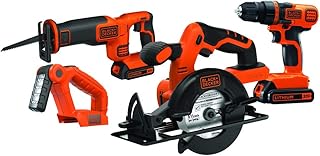
Two combo kits sit on the same shelf, fifty dollars apart, same brand, same battery platform. The cheaper one has the bigger number on the front — four tools instead of two — and it is the worse buy by a margin most shoppers never notice. The best power tool combo kit is rarely the one with the highest tool count. It is the one whose batteries, motors and charger you would have chosen anyway.
Combo kits are the best value in cordless tools and also the easiest place to waste money. The trick is knowing which numbers on the box matter.
As an Amazon Associate we earn from qualifying purchases at no extra cost to you.




Short version: battery capacity matters more than tool count, and tool count above four usually means filler. The rest of this is how to check that on a shelf tag in about ninety seconds.
| Kit size | Typical contents | Who it suits | Watch out for |
|---|---|---|---|
| 2-tool | Drill + impact driver | Almost everyone | Battery size |
| 4-tool | Adds circular saw + light | Homeowners doing projects | Weak saw included |
| 5–6 tool | Adds recip saw, grinder | New trades starting out | Filler tools, small packs |
| 7+ tool | Everything | Rarely worth it | Tiny batteries, tools you never use |
The 2-Tool Kit Is The Honest One
Drill plus impact driver, two batteries, charger, bag. It is the highest-value purchase in the category because both tools get used constantly. Every kit above this size is adding tools you use less often.
The drill earns its place on holes, hole saws and mixing; the impact driver earns its place on every fastener longer than your finger — deck screws, lags, ledgers, cabinet screws. Neither one sits unused for a month, and that is exactly the test the fifth and sixth tools in a big kit fail.
You are also buying a platform, and that decision outlives every tool in the box. Judge the kit partly on the catalogue behind it: how many tools run on the same pack, and whether they include the ones you can already picture wanting.
It suits first-time buyers, homeowners and apprentices. Skip it if you already own packs on a platform you like — buy bare tools instead — or if you truly need two saws this month.
2-tool brushless combo kits
The default recommendation. Check that at least one battery is 4Ah or larger before you buy.
Battery Capacity Is The Hidden Price
Two kits look identical at $199 and $249. The cheap one has two 1.5Ah packs; the other has two 5Ah. A single 5Ah pack often costs $99 on its own, so the “expensive” kit is the better deal by a wide margin. This is the single most common way combo kits mislead buyers.
Amp-hours are the fuel tank, and the sizes do different jobs. Compact 1.5Ah to 2Ah packs are light and fine for drilling and driving overhead. Around 4Ah to 5Ah is the everyday default. Packs of 6Ah and up are for saws and grinders, anything that pulls hard for minutes at a time — put a compact pack on a circular saw and you will spend the afternoon at the charger.
So the ideal pair is not two identical packs. It is one compact and one large. Add up the total amp-hours in the box and compare that number across kits before you compare tool lists.
Small packs are expensive in disguise, because you end up buying real batteries later at full retail — the worst price anyone pays for a battery. A kit built on two 1.3Ah packs is a bare-tool purchase with a deposit attached.
What Separates A Good Kit From A Bad One At Each Price Band
Prices move constantly, so think in bands. Each band has a good version and a bad version, and they sit next to each other in the same aisle.
Entry band
Brushed motors, two compact packs, a slow charger, a soft bag. The good version comes from a brand with a deep catalogue, bought with your eyes open: you are getting a platform and two tools, and a real battery comes later. The bad version is a thin platform, a trickle charger, and torque claims printed larger than the amp-hours. Suits light use — flat-pack furniture, shelves, a gate hinge. Skip it if you are building a deck or working for money.
Middle band
Brushless drill and driver, at least one pack of 4Ah or larger, a charger worth keeping. Value peaks here, and this is where most people should buy. The good version spends the extra money on the battery; the bad version spends it on tool count — five tools, brushed motors, two small packs, same sticker. Between a brushless two-tool kit and a brushed five-tool kit at one price, the two-tool kit is the better set of tools and the better way in.
Top band
Premium brushless tools, two large packs, a fast charger, often a hard case. Worth it if you use tools weekly, or already know you will add several bare tools, because the packs and the charger carry across all of them. Skip it if you are a weekend user paying for duty cycle you will never reach.
When A Bigger Kit Makes Sense
If you are genuinely starting from zero — no tools at all — and you know you will need a circular saw and a reciprocating saw within the year, a 5-tool kit can beat buying separately. Check each included tool individually: a bundled saw that is the brand’s entry model is worth less than the price it adds.
The test takes two minutes. Price each extra tool as a bare tool, add them up, and compare that total against what the bigger kit costs over the two-tool kit. If the premium is at or below that number and you would have bought those tools anyway, the bundle is real. If you had to talk yourself into two of them, it is not.
Some tools survive being basic better than others. A work light is a work light. Circular saws, grinders and oscillating tools are where the compromise shows up as slower, rougher work every time you pick them up.
It suits someone furnishing an empty garage with a real project list. Skip it if your fifth tool is a flashlight.
5-tool starter combo kits
Reasonable if you truly need all five. Compare against buying the 2-tool kit plus the two saws you actually want as bare tools.
Bare Tools: The Smarter Path After Your First Kit
Once you own batteries, buy bare tools. You pay for the tool alone and skip the third and fourth charger you do not need. Almost every serious kit grows this way.
Check two things every time. That the tool takes the exact battery family you own — brands run more than one line, and 12V packs do not fit 18V/20V tools. And that the listing is truly bare, because some “tool only” listings quietly include a charger and price it in.
Bare tools are the wrong move in one case: when you are short on battery. A bare circular saw fed by two compact packs lives on the charger. If that is you, the next purchase is a big pack, not another tool.
Bare tools (no battery)
Once you have three or four packs, this is how you expand. Just make sure the platform matches — bare tools are non-returnable regret if you get it wrong.
The Mistakes That Cost The Most
- Counting tools instead of amp-hours. Tool count is on the front of the box because it sells. Total amp-hours is printed smaller and matters more.
- Buying the discount, not the spec. Sale season is exactly when brushed kits get sold at brushless prices. Check the motor on both tools, not just the drill.
- Choosing the platform by kit price. You are picking the catalogue you will shop from for years, and a cheap entry into a thin range costs more later.
- Ignoring the charger. The slowest charger in a range can take several times longer than the fast one, and it is the part you touch every day.
Checklist Before You Pay
- ✔ At least one battery of 4Ah or more
- ✔ Brushless motors on the drill and driver
- ✔ A charger that is not the slowest model in the range
- ✔ Tools you can name a job for, today
- ✔ A platform with tools you will want in three years
- ✘ Work lights and “bonus” tools padding the count
- ✘ Two 1.3Ah batteries at a premium price
- ✘ Brushed motors sold at brushless prices during sales
- ✘ Kits from platforms with under 50 tools
FAQ
When are combo kits cheapest? Black Friday and Father’s Day in the US, consistently. Deals in those windows are real, not fake markdowns.
Are big-box exclusive kits worse? Not usually worse tools — often smaller batteries. Check amp-hours.
Should I buy two kits to get more batteries? Occasionally the maths works out, but you end up with duplicate chargers. Compare against buying packs directly.
Do I have to stay on one battery platform? No, but each extra platform is another charger, another set of packs and another thing to keep charged. One 18V/20V system for the heavy work, plus a 12V system if you do a lot of compact work, covers nearly everyone.
Strip it back and the decision is short: brushless on both tools, at least one big battery, a charger that does not annoy you, and a platform you would still choose in three years. Everything else in the box is packaging.
Compare combo kits →