What's inside
As an Amazon Associate I earn from qualifying purchases. This post may contain affiliate links at no extra cost to you.
Face frames are easy to damage with an oversized, aggressive sander. For most cabinet work, a compact 5-inch random-orbit sander is the useful cordless choice: it can prep broad rails and stiles, while hand sanding or a smaller detail tool handles inside corners. The battery platform matters too. A sander used for a few minutes at a time may not justify buying into a new system; one used across a shop can.
As an Amazon Associate we earn from qualifying purchases at no extra cost to you.


What to buy for face frames
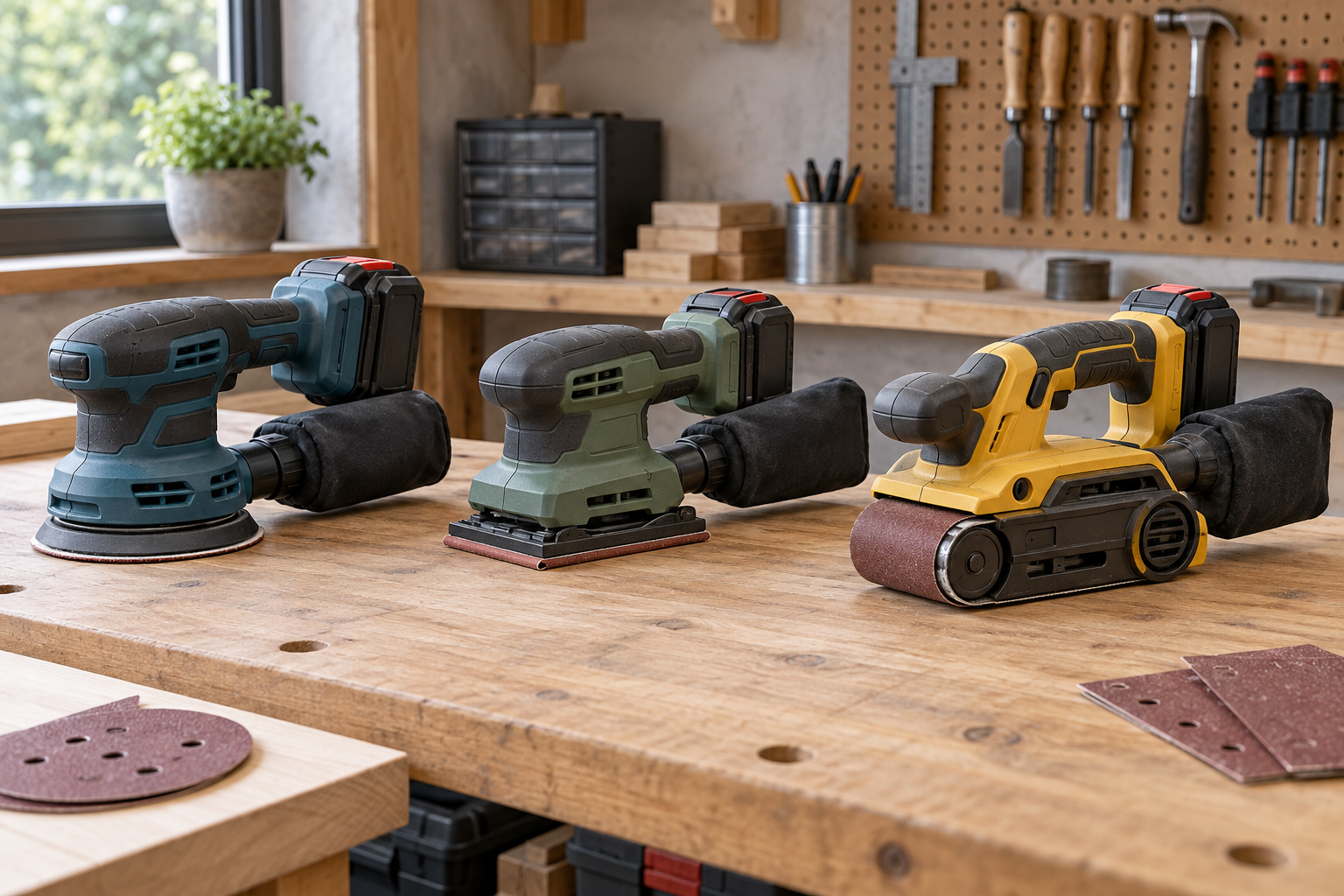
Look for a 5-inch random-orbit sander with variable speed, a dust port that fits your extractor, and a comfortable grip. The random orbit helps reduce visible swirl marks compared with a basic finishing sander, but it does not make sanding foolproof. Keep the pad flat, use light pressure, and let the abrasive do the work. Leaning on the tool can slow it down, leave uneven cuts, and make the finish worse.
A compact sander is usually easier to control on narrow face-frame members than a large, heavy model. If your work is mostly small trim, inside corners, or profiles, a cordless detail sander can reach places a round pad cannot. It is slower on flat areas, so it is a supplement rather than a good all-purpose replacement.
Cordless sander types compared
| Type | Best use | Trade-off |
|---|---|---|
| 5-inch random-orbit | Rails, stiles, broad panels, and general prep | Cannot reach tight inside corners; can round sharp edges if held carelessly |
| Compact detail sander | Inside corners, narrow areas, and small touch-ups | Small abrasive area makes broad surfaces slow to sand |
| Corded 5-inch random-orbit | Long sessions or occasional use when a cordless platform is not already owned | Needs an outlet and cord management, but often costs less than adding batteries and a charger |
Battery and runtime trade-offs
Sanding is a steady load, so runtime depends on the tool, battery, pressure, abrasive, and material. A compact battery keeps the sander lighter and is often enough for intermittent cabinet prep. A larger battery can extend working time, but the extra weight may make it harder to keep the pad level, especially when sanding vertical frames. If possible, try the tool with the battery you expect to use rather than judging it bare.
Do not buy a new platform based on a claimed runtime alone. Manufacturers test under different conditions, and real cabinet work includes starts, stops, corner work, and dust cleanup. If you already own compatible batteries and a charger, staying in that ecosystem is often the economical choice. If you own none, compare the cost of the tool kit against the cost of a corded sander, or look at a cordless 5-inch random-orbit sander in a platform you may use for other tools.
Battery compatibility is brand- and platform-specific; similar voltage labels do not mean packs interchange. Check that the exact battery line fits the exact tool, and compare bare-tool pricing with kit pricing. A kit can be worthwhile if you need a charger and spare pack. If you already have several good batteries, a bare tool may be cheaper and less wasteful.
Dust collection and pad details
Cabinet sanding produces fine dust that can settle on the work and contaminate a finish. A sander’s included dust bag is convenient for a quick touch-up, but it is not a substitute for a well-fitting extractor connection during extended work. Check the port size and available adapters before buying. Poorly matched connections leak dust or pull loose as you move around the cabinet.
Use abrasive discs with the hole pattern required by the pad. A mismatched pattern can reduce extraction and clog faster. Replace discs when they stop cutting or load with finish and dust; pressing harder to compensate can create heat and uneven sanding. Keep spare discs in several grits on hand, and inspect the pad for torn hook-and-loop material. A worn pad can let discs shift or release mid-pass.
How to sand without ruining the frame
For a typical finish-prep job on sound wood, start with the least aggressive grit that removes the existing defects. Around 120 grit is a common starting point for rougher surfaces; 150 or 180 grit may be enough for a clean, previously sanded frame. Move through finer grits as the finish system requires, but do not assume that going very fine always improves adhesion. Follow the coating manufacturer’s prep instructions.
Make overlapping passes at a steady pace, keeping the pad moving. On narrow rails, avoid letting the pad hang over an edge: the unsupported portion can tilt and cut a shallow dish or soften the crisp frame edge. Finish edges and tight corners by hand with a sanding block or use a cordless detail sander for frequent work there. A folded piece of abrasive is cheaper and perfectly adequate for occasional corners.
Before sanding an installed cabinet, protect glass, hinges, counters, and nearby finished surfaces. Vacuum the frame between grits and wipe it with a method compatible with the coating you plan to apply. Dust left in corners can show through paint or spoil a clear finish.
When the cheaper option is enough
For one kitchen or a few cabinet doors, a corded sander may be the better purchase if you have an outlet nearby and do not own batteries in a compatible system. It removes the battery cost and avoids interruptions to recharge. The cord is manageable on a bench or in a small room, provided it stays clear of the abrasive and the work.
Choose cordless when you already own the platform, need to move between rooms, or value working without a cord around cabinets. Choose a detail sander only if corner access is a recurring problem, not because its shape looks more specialized. For most buyers, the practical setup is one well-controlled 5-inch random-orbit sander, compatible dust extraction, and hand sanding for the last awkward spots. A cordless sander kit makes sense when its battery and charger will serve other tools too.
Related guides
- Longest Lasting Lawn Mower Battery: AGM vs Lithium vs Flooded Lifespan and Cost per Season
- Duralast Gold Lawn Mower Battery Review: U1 Fit, CCA and When to Pay for AGM
- Greenworks Pro 80V 21-Inch Mower Review: Runtime Math, Push vs Self-Propelled and Yard Fit
- Bosch High Pressure Washer Gun Replacement: Fittings, Adapters and What Fits Your Model