What's inside
As an Amazon Associate I earn from qualifying purchases. This post may contain affiliate links at no extra cost to you.
The best lawn aerator for most homeowners is a core (plug) aerator rather than a spike model: a manual coring tool like the Yard Butler ID-6C suits small lawns, a tow-behind plug aerator such as the Agri-Fab 45-0299 or Brinly PA-40BH suits riding-mower owners with larger yards, and a rented engine-driven drum aerator is the most effective choice for compacted lawns once a year.
Aeration relieves soil compaction so water, air and fertilizer reach the roots. Which tool is “best” depends almost entirely on lawn size, soil type and what you already own to pull it. The sections below are organized by those factors rather than by brand.
As an Amazon Associate we earn from qualifying purchases at no extra cost to you.

Core vs Spike: Settle This First
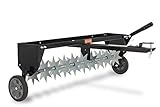
Core aerators pull out plugs of soil, leaving open holes that let the surrounding soil relax. Spike aerators simply punch holes, which pushes soil sideways and can add compaction around each hole in clay. Spike tools are fine for a quick surface opening before overseeding on loose or sandy soil, but for compacted lawns, extension services and turf professionals generally recommend core aeration.
| Feature | Core (plug) aerator | Spike aerator |
|---|---|---|
| Removes soil | Yes, 2-3 in plugs | No |
| Effect on clay | Relieves compaction | Can compact hole walls |
| Typical hole depth | 2-3.5 in (engine models), 1.5-3 in (tow/manual) | 1-2 in |
| Best use | Annual aeration, compacted or high-traffic turf | Light seedbed prep on loose soil |
| Price range | $30-$60 manual, $150-$300 tow-behind | $20-$40 manual, $80-$200 tow-behind |
Recommended Aerators by Lawn Size
Under 2,000 sq ft: Yard Butler ID-6C manual core aerator
The ID-6C is a step-on tool with two hollow tines that pull roughly half-inch plugs. On a small front lawn, along heavily walked paths or around a dog run, it is a cheap, storable way to core without renting anything. It is slow, so it makes sense only for small areas or spot treatment.
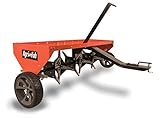
Half acre to 2 acres with a riding mower: Agri-Fab 45-0299 48-inch tow plug aerator
The Agri-Fab 45-0299 uses a series of plug-cutting knives on a 48-inch rotating assembly, with a weight tray on top. Its width matches most 42 to 48-inch lawn tractor decks, so you can aerate in a pattern similar to mowing. It needs added weight to penetrate firm soil, typically concrete blocks or sandbags, and it works best when the soil is moist.
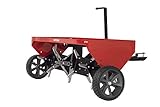
Smaller tractor or tight gates: Brinly PA-40BH 40-inch tow plug aerator
Brinly’s 40-inch plug aerator is a narrower option for tractors with 42-inch decks or yards with gates and tight spacing. It also uses a weight tray and has a transport wheel arrangement for moving between areas without coring the driveway.
Compacted clay or any size lawn, once a year: rented drum core aerator
Rental centers commonly stock walk-behind drum or reciprocating aerators from established makers such as Ryan, Billy Goat and Classen. These engine-driven machines pull deeper, more consistent plugs than tow-behind units and are the closest thing to professional aeration. Expect half-day and full-day rental rates in roughly the $60 to $120 range. They are heavy, often 200 lb or more, so you need a truck or trailer and two people to load them.
Decision Matrix
| Your lawn | Soil | Equipment you own | Best choice |
|---|---|---|---|
| Under 2,000 sq ft | Any | None | Manual core tool (Yard Butler ID-6C) |
| 2,000-10,000 sq ft | Clay or compacted | Push mower | Rent an engine core aerator |
| 2,000-10,000 sq ft | Loam or sandy | Push mower | Rent, or hire a lawn service |
| 0.5-2 acres | Loam | Lawn tractor | Agri-Fab 45-0299 or Brinly PA-40BH |
| 0.5-2 acres | Heavy clay | Lawn tractor | Tow plug aerator with maximum weight, or rent |
How Long the Job Takes
A worked example helps decide between buying and renting. Assume a 10,000 sq ft lawn (about a quarter acre):
- Manual core tool: Pulling plugs every 4 to 6 inches means roughly 4 to 6 plugs per square foot. That is tens of thousands of steps for 10,000 sq ft; it is not practical beyond small areas.
- Engine drum aerator (about 19-inch width) at walking speed: Roughly 1 to 1.5 hours including turns, with two passes for heavily compacted soil.
- 48-inch tow aerator behind a tractor: About 30 to 45 minutes, though hole density per pass is lower than a drum aerator, so a second pass at an angle is common.
If you aerate once a year and have a push mower only, renting usually beats buying. If you own a tractor and aerate more than one area or more than once a year, a tow-behind unit pays for itself within two or three seasons compared with rental fees.
Getting Good Results
- Water first. Soak the lawn with about an inch of water one or two days before. Dry, hard soil defeats every aerator, especially tow-behind models.
- Mark obstacles. Flag sprinkler heads, shallow irrigation lines and invisible dog fence wire before you start.
- Time it to growth. Aerate cool-season grasses such as fescue and bluegrass in early fall or spring; warm-season grasses such as Bermuda and zoysia in late spring to early summer.
- Leave the plugs. Cores break down in one to two weeks and return soil and microbes to the surface. Mowing over them speeds this up.
- Overseed and fertilize right after. The open holes give seed and nutrients a direct path into the root zone.
What Wears and Breaks
- Tines and knives wear shorter and blunter in rocky or sandy soil; replace them when penetration drops noticeably.
- Bearings on tow-behind units take a beating from added weight; grease fittings where provided and check for play each season.
- Weight trays crack if overloaded with sharp-edged blocks. Use sandbags or strap the weight so it cannot shift.
FAQ
Do aerator shoes work?
Strap-on spike shoes make shallow holes and do little for real compaction. They are not a substitute for core aeration.
How often should a lawn be aerated?
Once a year is typical for clay soils and high-traffic lawns. Sandy, lightly used lawns may need it only every two to three years.