What's inside
As an Amazon Associate I earn from qualifying purchases. This post may contain affiliate links at no extra cost to you.
The best lawn tractor for most 1 to 2-acre properties in 2026 is the John Deere S120, a 42-inch, 22 hp V-twin hydrostatic tractor with strong dealer support, while the Cub Cadet XT1 LT42 IntelliPOWER is the better value under 1.5 acres and the John Deere S160 or Husqvarna TS 148X makes more sense once you need a 48-inch deck.
Lawn tractors are a mature category, so the differences that matter are deck width relative to your acreage, engine type (single-cylinder vs V-twin), transmission, and how close you are to a dealer who can service the machine. Here is how the leading models compare on those points.
As an Amazon Associate we earn from qualifying purchases at no extra cost to you.
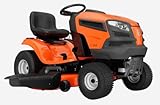

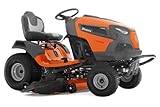

The Models Worth Shortlisting
| Model | Engine | Deck | Transmission | Recommended acreage | Typical price range |
|---|---|---|---|---|---|
| Cub Cadet XT1 LT42 IntelliPOWER | 547cc single-cylinder | 42 in, 13-gauge stamped | Hydrostatic (Tuff Torq), cruise control | Up to 1.5 acres, mostly flat | $2,200-$2,600 |
| John Deere S120 | 22 hp V-twin | 42 in | 2-pedal hydrostatic | 1-2 acres | $2,500-$2,900 |
| John Deere S130 | 22 hp V-twin | 42 in | 2-pedal hydrostatic, electric PTO | 1-2 acres | $2,600-$3,000 |
| John Deere S160 | 24 hp V-twin | 48 in | 2-pedal hydrostatic | 1.5-3 acres | $2,900-$3,300 |
| Husqvarna TS 148X | 23-24 hp V-twin (Kawasaki, Briggs or Kohler by variant) | 48 in, 3-blade | Hydrostatic | 1.5-3 acres | $2,800-$3,200 |
Prices vary by dealer, region and seasonal promotion. Financing offers from the major brands can change the effective cost more than the list price does.
Picks by Situation
Best value under 1.5 acres: Cub Cadet XT1 LT42 IntelliPOWER
The current XT1 LT42 uses a Cub Cadet single-cylinder engine with an electronic governor (IntelliPOWER) that holds blade speed when the grass thickens. It has a 13-gauge stamped deck with a wash port, 12 cutting heights from 1 to 4 inches, cruise control and a 16-inch turning radius. Cub Cadet rates it for up to 1.5 acres of mostly flat ground with few obstacles, which is exactly the profile of many suburban and rural-edge lots.
Best overall for 1 to 2 acres: John Deere S120
The S120 steps up to a 22 hp V-twin, which runs smoother and has more torque reserve than a single-cylinder engine in tall or wet grass. The two-pedal hydrostatic control (one pedal forward, one reverse) is simple for new riders. The deciding factor for many buyers is Deere’s dealer network, which makes parts and service easy to find. If you want an electric PTO switch instead of a manual lever, the S130 adds it for a modest premium.
Best for 2 to 3 acres: John Deere S160
The S160 pairs a 24 hp V-twin with a 48-inch deck. That extra 6 inches of width cuts mowing time noticeably on open ground, and the bigger engine keeps the wider deck at full blade speed.
Best 48-inch alternative: Husqvarna TS 148X
The TS 148X is sold with Kawasaki, Briggs & Stratton or Kohler V-twins depending on the variant, all with a 48-inch, three-blade reinforced deck and hydrostatic drive. It typically undercuts the Deere S160 slightly and is widely available through both dealers and big-box retailers.
Deck Width vs Mowing Time
Use this rough calculation to decide between 42 and 48 inches. A tractor mowing at 3.5 mph with about 10 percent overlap covers:
| Deck | Effective cut width | Acres per hour (theoretical) | Realistic acres per hour with turns | Time for 2 acres |
|---|---|---|---|---|
| 42 in | about 38 in | about 1.3 | 0.9-1.0 | about 2 hr to 2 hr 15 min |
| 48 in | about 43 in | about 1.5 | 1.0-1.2 | about 1 hr 40 min to 2 hr |
| 54 in | about 49 in | about 1.7 | 1.2-1.4 | about 1 hr 30 min |
On 2 acres, moving from 42 to 48 inches saves around 15 to 25 minutes per mow, which adds up to 6 to 10 hours over a 25-week season. On a 1-acre lot with many trees and beds, the narrower deck is often faster because it maneuvers more easily.
Lawn Tractor or Zero-Turn?
- Choose a lawn tractor if you have slopes, want to tow a cart, spreader, aerator or sweeper, or plan to add a snow blade or bagger.
- Choose a zero-turn if your lawn is mostly flat, has many obstacles to circle and speed matters more than towing.
Steering-wheel tractors are also more stable and predictable on side slopes than lap-bar zero-turns. Always follow the manufacturer’s slope limit, commonly around 15 degrees for lawn tractors.
Ownership Costs and What Wears First
- Blades: Sharpen two or three times per season; replace when they are thin or nicked. A dull blade tears grass and makes the engine work harder.
- Deck belt: The most common wear item. Expect to replace it every few seasons depending on hours and debris.
- Oil and filters: Change engine oil and the oil filter (where fitted) every 50 hours or annually, plus air and fuel filters on schedule.
- Battery: Small lead-acid tractor batteries typically last three to five years; a maintainer over winter extends that.
- Tires: Check pressure monthly; low rear tires cause uneven cutting.
Buying Checklist
- Measure gate widths and shed doors before choosing a 48-inch or wider deck.
- Confirm the nearest authorized service dealer for warranty work.
- Prefer hydrostatic over manual gear drive for ease of use and smoother speed control.
- Ask whether a bagger, mulch kit and towing hitch are available for the specific model.
- Choose a V-twin if you mow more than about 1.5 acres or regularly cut tall, wet grass.